Beginner plants that still look good
Five easy houseplants with leaves worth a close look: pothos, snake plant, ZZ plant, spider plant, and peperomia. Each one forgives a missed watering when you check the soil first, and each grows well in ordinary home light.
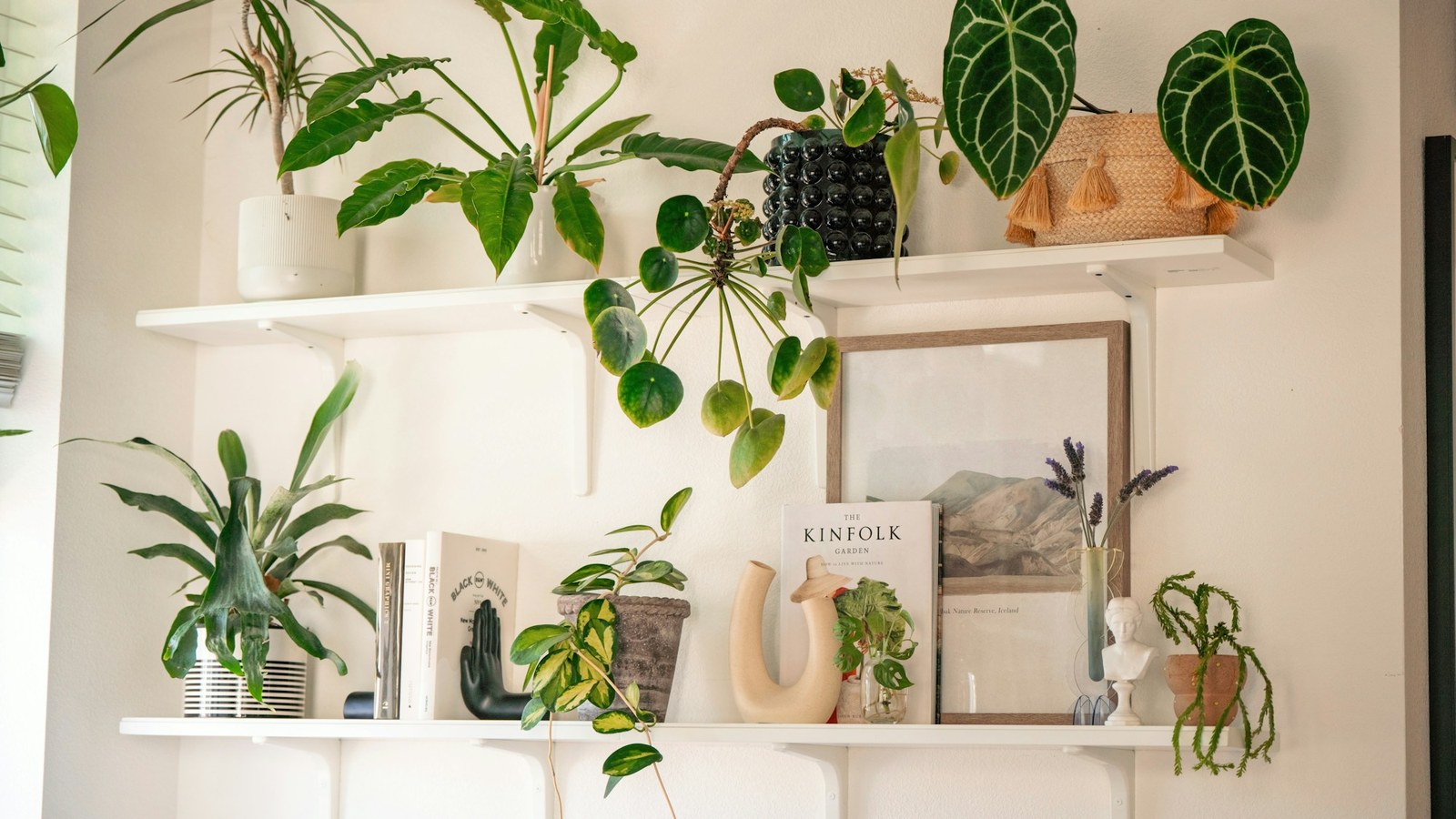
Quick pick: which beginner plant fits your shelf?
| Plant | Look | Best light | Watering check | Shelf role |
|---|---|---|---|---|
| Pothos (Epipremnum aureum) | Glossy heart-shaped vines; gold, neon, or cream variegation | Bright indirect; tolerates lower light | Water when mix is dry through the top | Trailing edge or climb |
| Snake plant (Dracaena trifasciata) | Tall striped blades; gold edges on classics like 'Laurentii' | Bright to low; colors richest with more light | Water only when mix is fully dry | Vertical accent |
| ZZ plant (Zamioculcas zamiifolia) | Thick glossy leaflets on upright stems | Bright indirect to low; avoid full sun | Water only after mix is completely dry | Bold upright accent |
| Spider plant (Chlorophytum comosum) | Arching striped leaves; dangling plantlets | Bright indirect; adaptable to medium | Water when mix has dried slightly | Basket or wide shelf |
| Peperomia (Peperomia species) | Compact fleshy leaves; stripes, ripples, teardrops | Bright indirect; some low-light tolerance | Water when mix has dried between drinks | Small pot, front row |
In Grove, a watering task is a check: does this plant need water today. Guidance lives in the task. No watering task on today's list means leave the can alone.
Pothos (Epipremnum aureum)
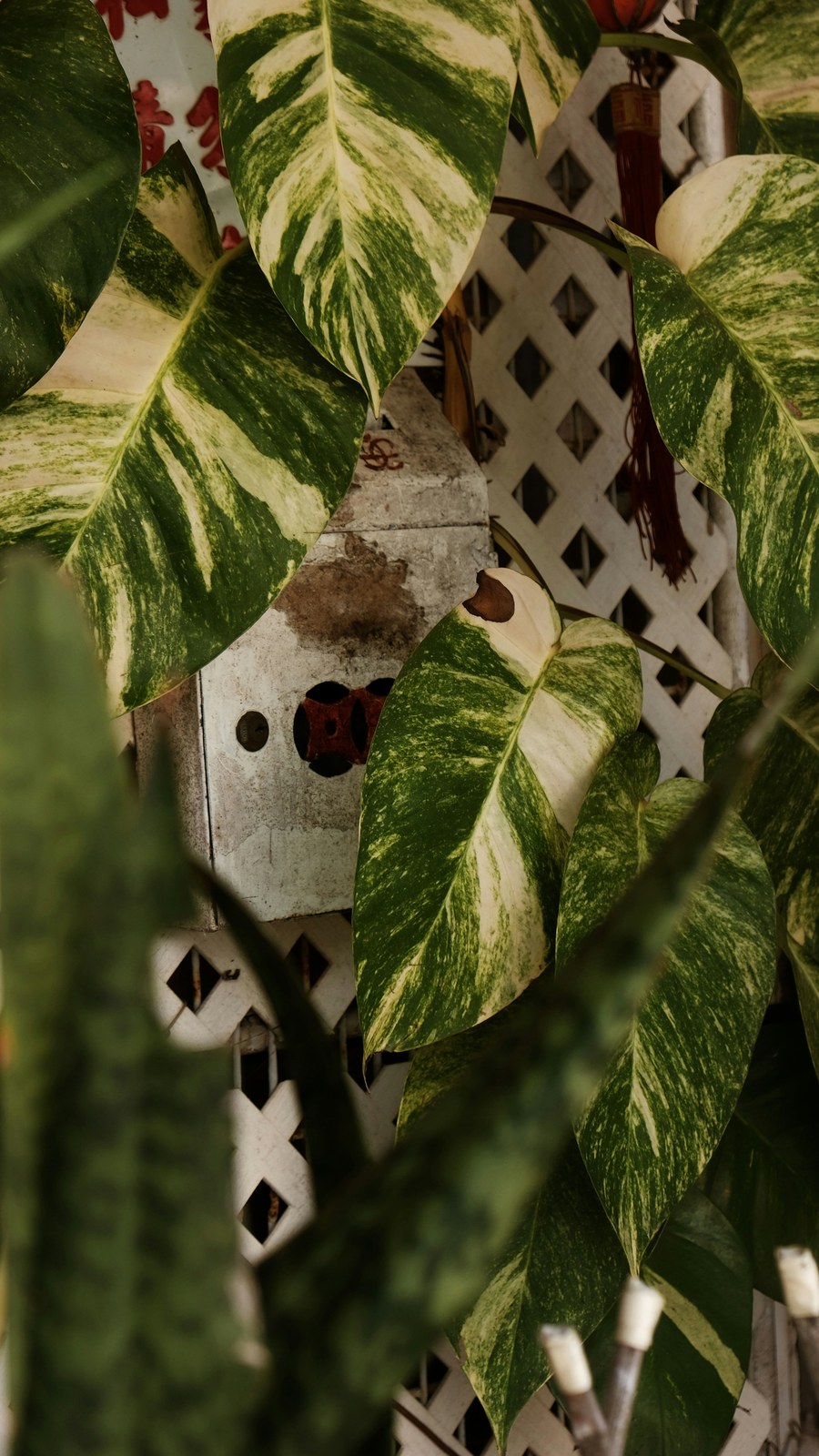
Look. Shiny, slightly heart-shaped leaves grow on trailing or climbing vines. Golden pothos carries yellow marbling. 'Neon' reads lime. 'Marble Queen' and similar cultivars push cream and white. Indoors, leaves stay a few inches long and fill a pot into a soft green curtain.
Light. Clemson Cooperative Extension prefers bright, indirect light and notes that lower light is tolerated, though variegation can fade. Keep the plant out of harsh direct sun that scorches tissue. Light matters here because faded variegation makes the vine look flat and plain.
Watering check. Allow the mix to dry between waterings, then water thoroughly so moisture reaches the roots. Penn State Extension and Clemson both flag overwatering as the main risk (root rot). Temporary droop from dryness usually recovers after a drink. When in doubt, let the mix stay slightly dry for another day and check again.
Why it looks good. Vines look full and tidy when you let them spill from a shelf edge or train them up a simple pole. Prune above a node to keep the shape neat. That trailing line makes pothos a natural fit for the front edge of a shelf.
Snake plant (Dracaena trifasciata, formerly Sansevieria)
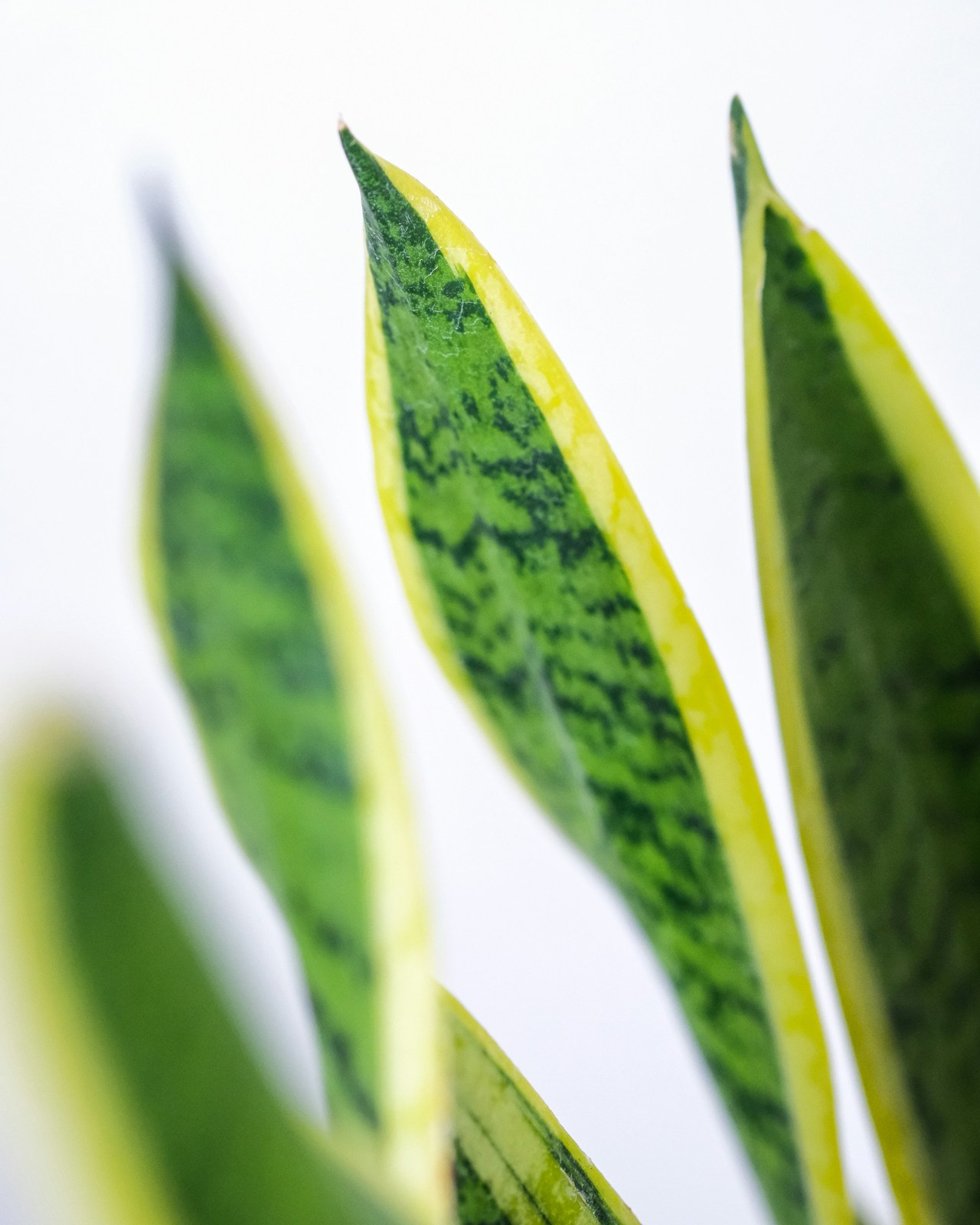
Look. Stiff, upright, succulent blades grow in a clump. Classic forms show transverse bands of green. 'Laurentii' adds yellow margins. Dwarf 'Hahnii' types form short funnel rosettes. Mississippi State University Extension calls out vertical structure and gold-edged cultivars as room brighteners.
Light. North Carolina State Extension places the plant in partial light (about 2 to 6 hours of direct sun) and notes strong low-light tolerance. Colors look cleaner with brighter indirect light. Protect from hot afternoon sun outdoors or on a blazing sill. More light keeps the stripes clear, and low light muddies the banding.
Watering check. Thick leaves store moisture. Let the soil dry completely between waterings in the growing season. In winter, North Carolina State notes that the soil can stay dry for a month or two between drinks, so check the mix before you water. Use a well-draining mix (cactus or succulent blends work well) and a pot with drainage holes. Overwatering is the usual failure mode. That deep dry-down is why this plant survives weeks of neglect.
Why it looks good. One tall clump gives a shelf a clean vertical line. Pair the clump with a trailing plant so the composition has height and soft edges.
ZZ plant (Zamioculcas zamiifolia)
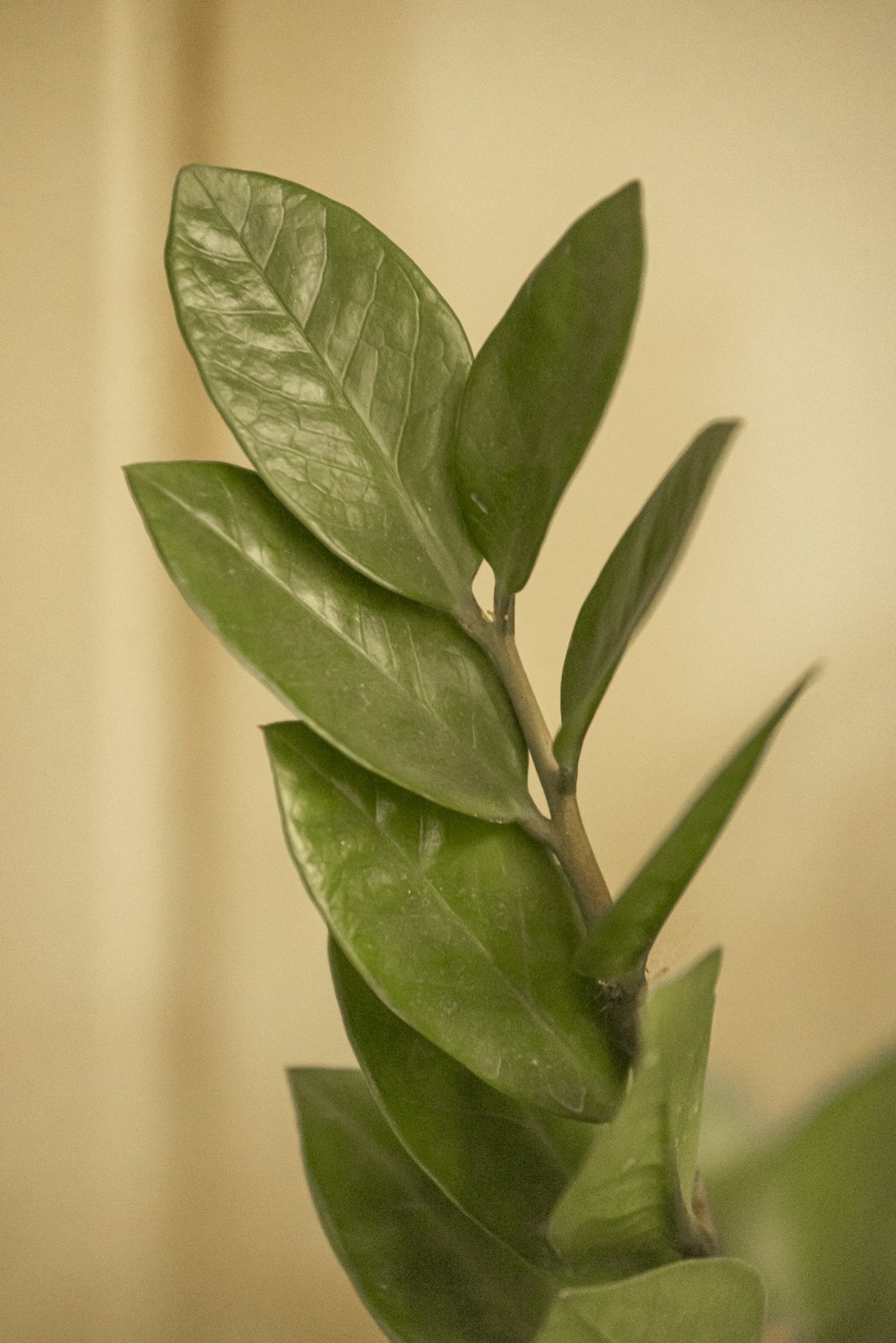
Look. Upright stems pack thick, elliptic, highly glossy leaflets. The habit reads palm-like or architectural. Clemson Cooperative Extension notes mature height around 2 to 4 feet. Dwarf 'Zenzi' and dark 'Raven' cultivars stay smaller or shift to near-black.
Light. Bright, indirect light speeds the naturally slow growth. Low light and even fluorescent-only spots are tolerated. Keep the plant out of full sun, which can scald and brown leaves (Clemson; North Carolina State Extension). Light matters because scalded tips spoil the clean, glossy look.
Watering check. Rhizomes store water. Clemson advises watering only after the potting medium has completely dried, which usually means weeks between drinks, and never letting the pot sit in water. North Carolina State agrees: let the soil dry out completely between waterings, and expect even longer gaps in winter when growth slows. Check the mix before each drink and treat the plant like a succulent. That storage habit is why ZZ forgives long gaps between checks.
Why it looks good. The shine and upright shape suit a simple ceramic or matte pot. Growth is slow, so the silhouette stays stable for months.
Spider plant (Chlorophytum comosum)
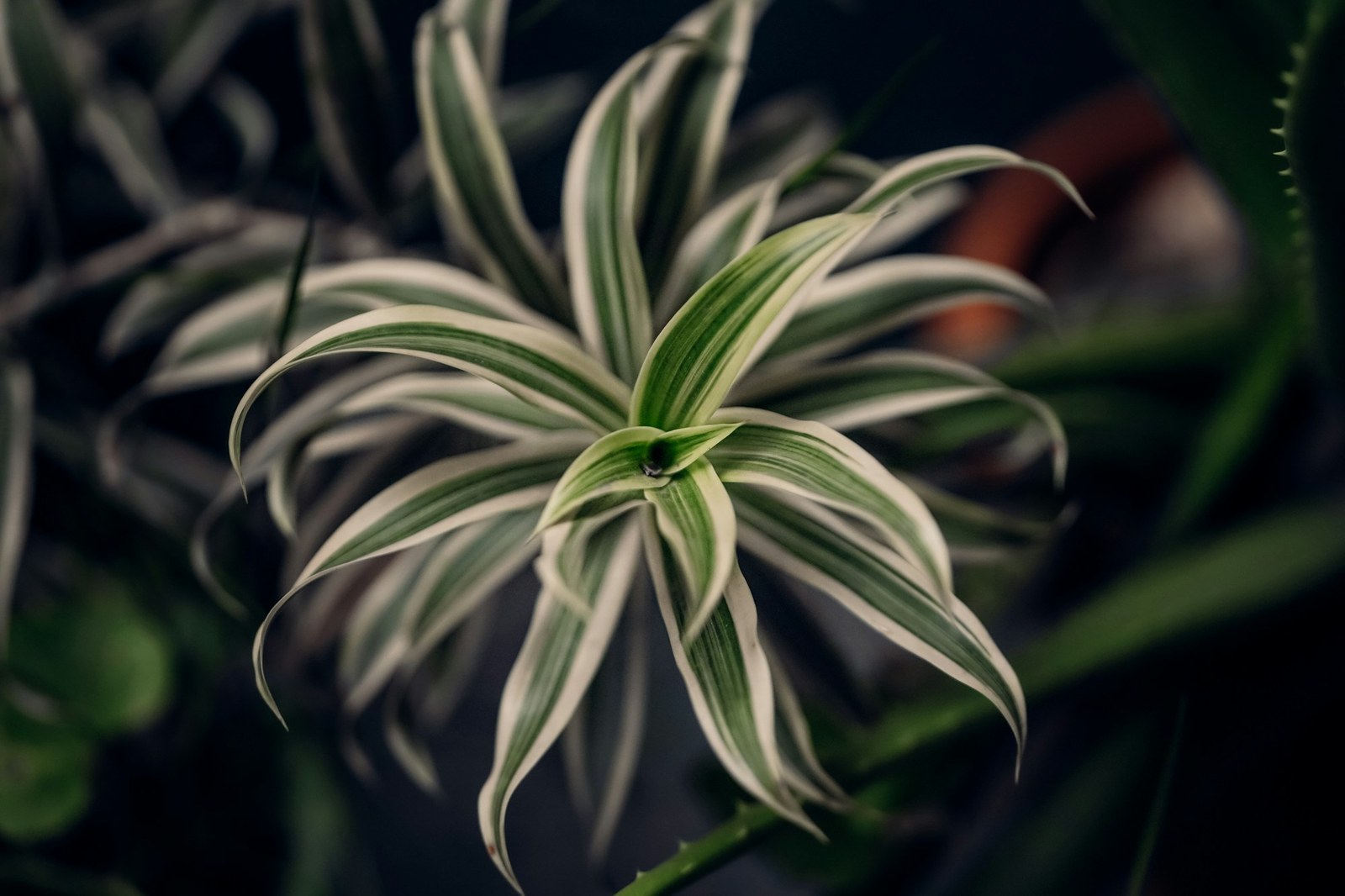
Look. A rosette of long, grassy leaves often shows green with a creamy white or yellow stripe. Healthy plants send long arching stems tipped with small white flowers and ready-made plantlets (often called spiderettes). Illinois Extension recommends them for hanging baskets. Clemson Cooperative Extension lists mature width around 2 to 2.5 feet, with length of 2 to 3 feet in baskets.
Light. Bright, indirect light is ideal. Illinois notes adaptability to medium light. Clemson allows some direct light while warning that midday sun can scorch. Good light keeps the cream stripe bright and the arching shape full.
Watering check. Allow the soil to dry slightly between waterings (Illinois; Clemson). General-purpose potting mix with good drainage is enough. Tip browning often tracks dry air, dry soil, or salts in tap water (Clemson; South Dakota State University Extension). Overwatering still leads to root rot in dense mix. The mild dry-down habit makes spider plants easy to fit around a busy week.
Why it looks good. The arching fountain and hanging plantlets feel lively and finished. Slightly root-bound conditions encourage more plantlets, which you can leave on for fullness or pot up as gifts.
Peperomia (Peperomia species)
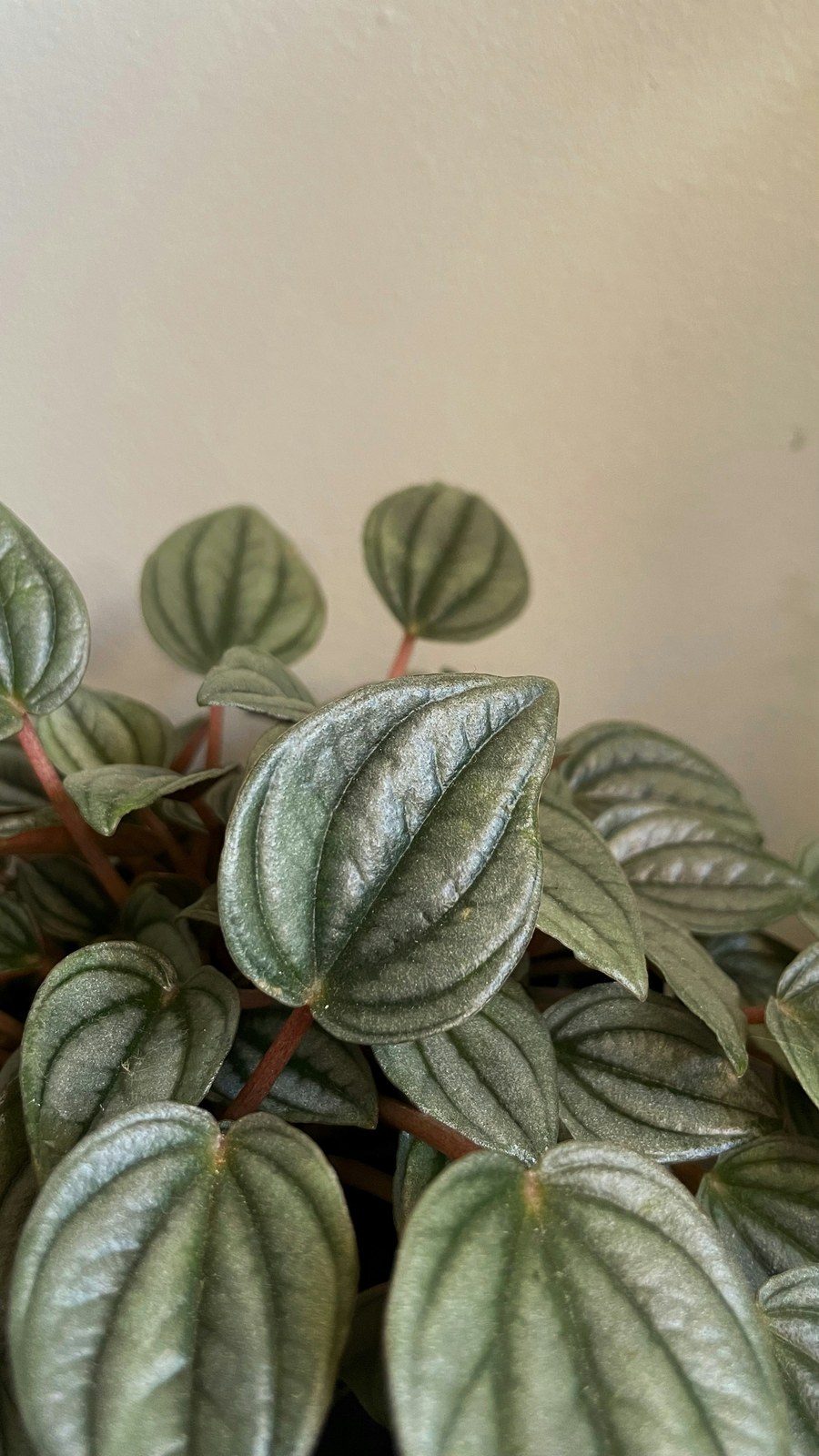
Look. Compact plants often reach 8 to 15 inches tall and wide (Clemson Cooperative Extension). Leaves are fleshy and varied: watermelon stripes (P. argyraea), rippled P. caperata, teardrop P. polybotrya, rounded baby rubber plant (P. obtusifolia). Many look like small sculptures for a desk or front-of-shelf row.
Light. Bright indirect light from east or south windows works well. Some types tolerate a spot near a large north window. Direct sun can scorch (Clemson). Light matters because scorched edges erase the pattern that makes peperomia worth the front row.
Watering check. Let the mix dry between waterings. Overwatering causes leaf drop and root rot, the most common disease Clemson lists. Use a well-drained houseplant or cactus mix. Drain fully before the pot returns to its saucer. Winter humidity help is welcome. That dry-between-drinks habit helps peperomia ride out busy weeks.
Why it looks good. A small footprint still carries a big leaf pattern. One watermelon or ripple peperomia next to a taller snake or ZZ plant creates a layered shelf without crowding.
How do I keep a beginner shelf looking intentional?
- Group by height: tall snake or ZZ at the back, peperomia in front, pothos or spider trailing off the side
- Match pots loosely (same material or color family) so the leaves stay the focus
- Give variegated plants the brighter end of their range so patterns stay crisp
- Rotate pots a quarter turn when stems lean toward the window
- Dust glossy leaves (ZZ, pothos) so the shine shows
- Use Grove watering tasks as soil checks tied to each plant's dry-down
If you share your home with pets, check each plant before it joins the shelf. The American Society for the Prevention of Cruelty to Animals (ASPCA) toxic and non-toxic plants list marks pothos and snake plant as toxic to cats and dogs, and marks spider plant and several peperomias, including baby rubber plant and ripple peperomia, as non-toxic. ZZ plant is absent from the ASPCA list; North Carolina State Extension rates it a medium poison risk for cats and dogs when leaves are eaten. Keep curious pets and kids from chewing the leaves of the toxic ones.
Frequently asked questions (FAQ)
What are the best indoor plants for beginners that still look good?
Start with pothos, snake plant, ZZ plant, spider plant, and peperomia. Extension care sheets rate them as easy when light is reasonable and watering follows soil dryness. They cover trailing, vertical, cascading, and compact shapes, so a small collection already looks planned.
How often should I water easy houseplants that look good?
There is no single schedule. Check the mix. Pothos and spider plant want dry-down between drinks. Snake plant, ZZ, and many peperomias want a fuller dry-out. In Grove, treat a watering task as a soil check. Skip water when no task is due.
Do I need special soil?
A well-draining mix is the main thing to get right. Snake plant and ZZ prefer coarser, cactus-leaning blends. Pothos, spider plant, and peperomia do well in airy houseplant mixes. Peperomia also accepts cactus mix per Clemson.
Which plant for a dim corner?
Snake plant and ZZ tolerate the lowest light on this list. Expect slower growth and quieter variegation. Move them closer to a brighter window if leaves stretch or fade.
Sources
- Clemson Cooperative Extension Home and Garden Information Center: How to Grow Pothos Indoors (Epipremnum spp.)
- Penn State Extension: Pothos as a Houseplant
- North Carolina Extension Gardener Plant Toolbox: Dracaena trifasciata (snake plant)
- Mississippi State University Extension: Sansevieria is a stylish house plant for everyone
- Clemson Cooperative Extension Home and Garden Information Center: ZZ Plant (Zamioculcas zamiifolia)
- North Carolina Extension Gardener Plant Toolbox: Zamioculcas zamiifolia
- Illinois Extension: Spider Plant
- Clemson Cooperative Extension Home and Garden Information Center: Spider Plant (Chlorophytum comosum)
- South Dakota State University Extension: Spider Plants: Houseplant How-To
- Clemson Cooperative Extension Home and Garden Information Center: Peperomia (Peperomia spp.) Indoor Plant Care
- American Society for the Prevention of Cruelty to Animals (ASPCA): Toxic and Non-Toxic Plants