Thinking about your first plant: how to pick one that fits
Pick for the light you already have and how often you will actually check whether the plant needs water. Match a forgiving plant to a real spot you will keep using. Start with window direction and an honest plan for soil checks, then choose from a short beginner list.
What should I decide before I buy anything?
Answer two questions in order.
- Where will this plant live? Stand in the spot. Note which way the window faces, how far the plant will sit from the glass, and whether trees, buildings, or curtains block the light. Royal Horticultural Society advice starts here: match the plant to the location so the plant thrives without constant rescue.
- How often will you check whether the plant needs water? Checking means looking at the soil and lifting the pot before you decide to water. University extensions treat light as the main indoor limit; watering follows from growth rate and how fast the mix dries.
Write those answers down before you walk into a shop. Once you have locked the spot and how often you want to check whether the plant needs water, choosing leaves you like gets much easier.
How do I read the light in my home?
Window direction is a useful first map in the northern hemisphere (University of Maryland Extension; University of Minnesota Extension):
| Window / spot | Typical light character | Beginner plants | Advice |
|---|---|---|---|
| North-facing or deep corner | Low, steady, little or no direct sun | Snake plant, ZZ plant, cast iron plant, pothos | Keep these near the brightest wall you have in that room |
| East-facing | Gentle morning sun, softer afternoon | Pothos, spider plant, philodendron | A sill or stand a few feet from the glass usually works |
| West-facing | Stronger afternoon sun; can heat leaves | Pothos, spider plant, snake plant, ZZ plant | Set the pot back from the glass so leaves avoid hot afternoon sun |
| South-facing | Brightest overall; summer sun can scorch | Pothos, spider plant, snake plant, ZZ plant | Use a sheer curtain or set the pot back a few feet for most beginners |
| Far from any window | Often too dim for growth | Snake plant, ZZ plant, cast iron plant | Prefer a closer spot first; add a grow light only if you want one |
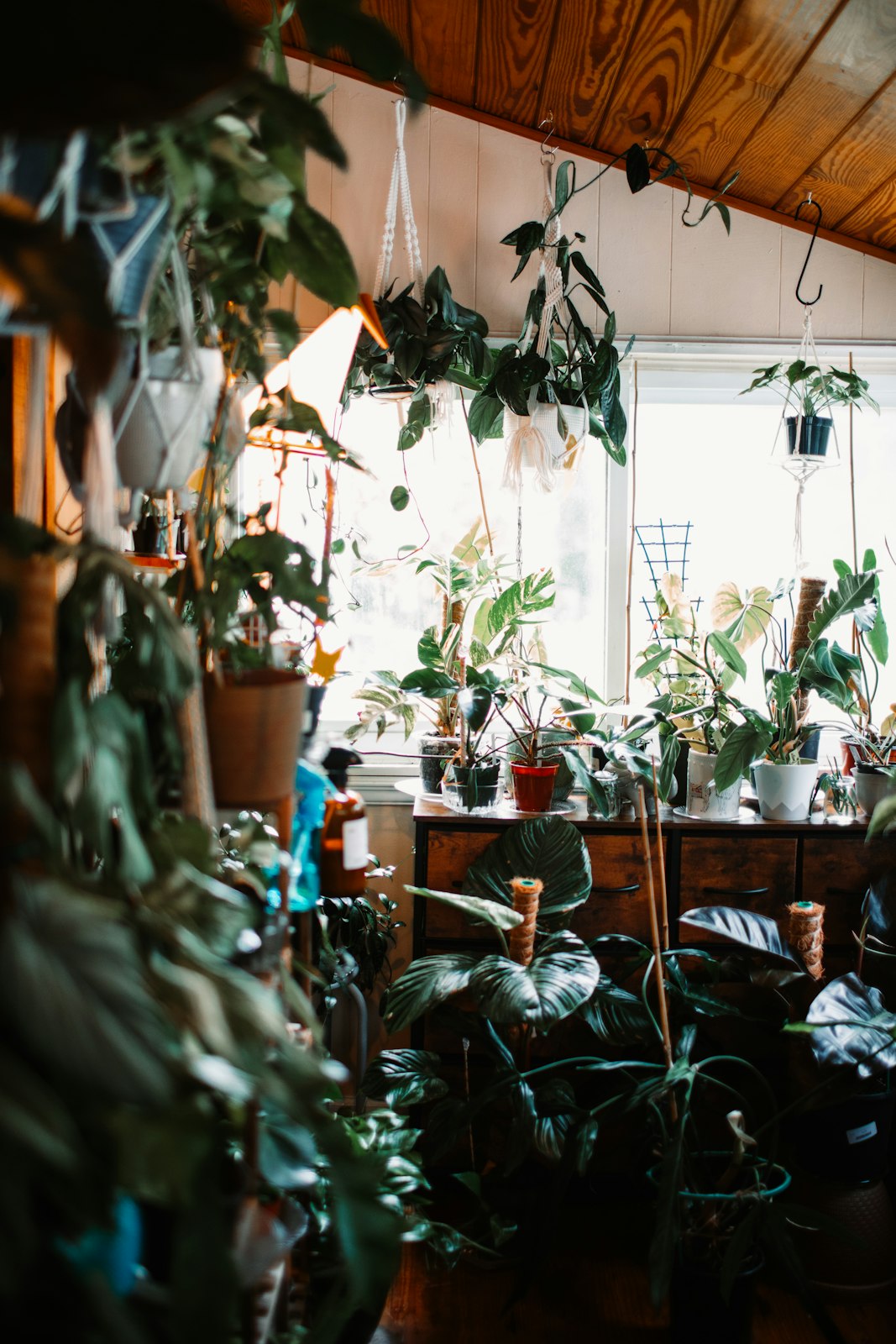
Maryland Extension groups indoor plants by foot-candles and window exposure (low near north windows; medium-bright near east or west; high near south). Minnesota Extension adds a practical order: measure the light you have, then choose a plant that matches that light. Light also changes with season, weather, dirty glass, and outdoor shade, so reassess in winter.
A quick midday shadow check helps when you have no meter: a sharp shadow means stronger light; a soft shadow means bright indirect; almost no shadow means low light. If the room feels dim enough that reading is a stretch without a lamp, treat that room as low light and pick a plant that matches.
How often will I really check, and why does that matter?
Be honest about your week.
| How often you check soil and pot weight | Beginner plants | Why |
|---|---|---|
| Most days | Most beginner foliage plants | You will notice dry mix and soft leaves early |
| About weekly | Pothos, spider plant, snake plant | Fits a normal home rhythm |
| Less often, or you forget for a while | Snake plant, ZZ plant | They store water and tolerate deeper dry-downs |
Plants in lower light use water more slowly. Minnesota Extension notes that low- and medium-light plants dry out less quickly and advises feeling the soil to avoid overwatering. A fixed watering calendar misses that slower dry-down, so a plant in low light can end up sitting in wet soil. Checking soil tells you when the plant needs water, because dry-down speed changes with light and season. In Grove, a watering task is a check: does this plant need water today. Care plans are generated and you can edit them to match how you actually grow.
If you tend to fuss with the watering can, choose a plant that recovers from a bit of wet soil and always use a pot with drainage. Soft yellow leaves plus wet mix often point to too much water; see Overwatering, then Yellow leaves and Root rot if the soil stays wet.
Which beginner plants fit forgetful vs hands-on care?
Use this shortlist. This is a stable starting set backed by extension plant-by-light examples (Maryland lists ZZ and snake plant for low light; Minnesota lists pothos, philodendron, snake plant, and ZZ among plants that handle lower indoor light).
| Plant | Light range | Water personality | Notes |
|---|---|---|---|
| Snake plant (Dracaena trifasciata) | Low to bright indirect | Prefers dry-downs | Upright, slow, hard to drown if you wait |
| ZZ plant (Zamioculcas zamiifolia) | Low to bright indirect | Prefers dry-downs | Glossy leaves; very drought-tolerant |
| Pothos (Epipremnum) | Low to bright indirect | Water when top mix dries | Trailing; clear droop-and-recover feedback |
| Spider plant (Chlorophytum) | Medium / bright indirect | Water when top mix dries | Fast feedback; watch for brown tips from salts |
| Cast iron plant (Aspidistra) | Low | Tolerates irregular watering | Slow; good for dim rooms |
If you forget water: snake plant or ZZ.
If you check often and want visible growth: pothos or spider plant.
If the room is truly dim: snake plant, ZZ, or cast iron plant as close as you can get to the brightest available wall.
Skip high-demand flowering plants, citrus, and most succulents for plant number one unless you already have unobstructed south light and you already check the soil before watering. The Royal Horticultural Society calls an easy-care houseplant the obvious first choice for beginners, and notes that both the amount and the type of light (full sun, bright indirect light, or shade) matter to plants.
What pot and mix should I start with?
Keep hardware simple.
- Pot with a drainage hole
- Saucer you empty after watering
- Ordinary indoor potting mix sized for the plant you bought
- Place within a few feet of the window you assessed
Skip decorative cachepots without drainage unless you lift the nursery pot out to water and drain. Standing water in a sealed outer pot is a common first-month problem. You do not need a cabinet of tools to start.
What does the first month look like?
Give the plant time to settle in its spot.
- Give the plant a few days in its spot before you repot, unless the nursery pot is cracked or so bone-dry that water beads on the surface and will not soak in
- Before you water, feel the soil with a finger and lift the pot
- Water thoroughly when the mix needs water, then dump the saucer
- Watch for stretch toward the window (more light needed) or soft yellow leaves with wet soil (less water needed)
- Leave fertilizer alone until you see steady new growth in an active season
Pale, stretched growth often tracks low light. Soft yellowing with a heavy pot often tracks wet roots. Use the linked guides when a symptom shows up. Most first plants do fine when light and how often you check soil match what you chose on day one.
Can Grove help once I have a plant?
Grove generates a care plan you can edit so the reminders match your home and how you grow. When a watering task appears, treat that task as a soil check, then water or wait. That habit supports the framework above and keeps watering grounded in what the plant needs today.