Plant care card
Baby tears (Pilea)
Pilea depressa · Pilea depressa
Also called depressed clearweed, baby toes or Caribbean creeping Jenny
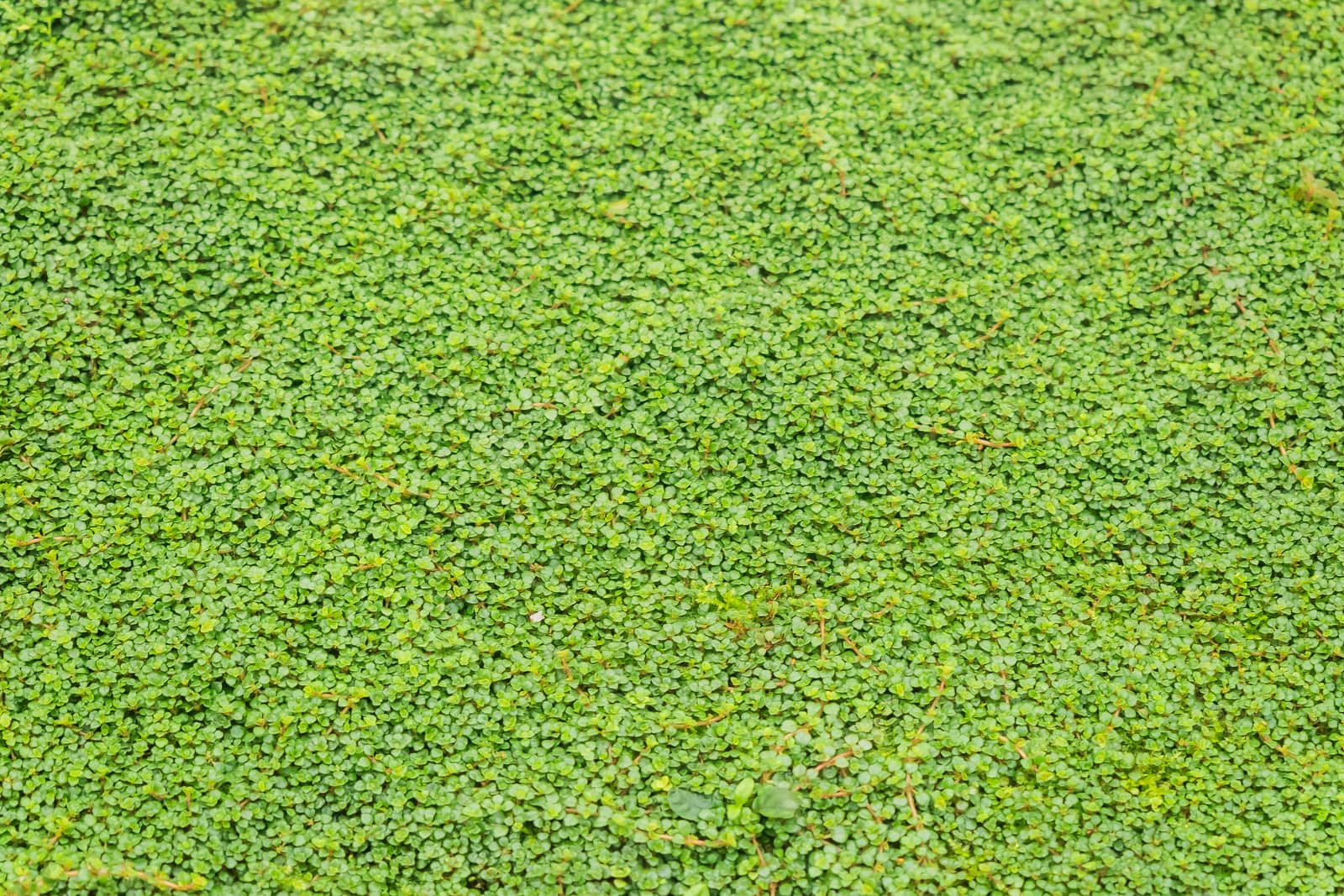
Photo by Tournasol7 on Wikimedia Commons, CC BY 4.0

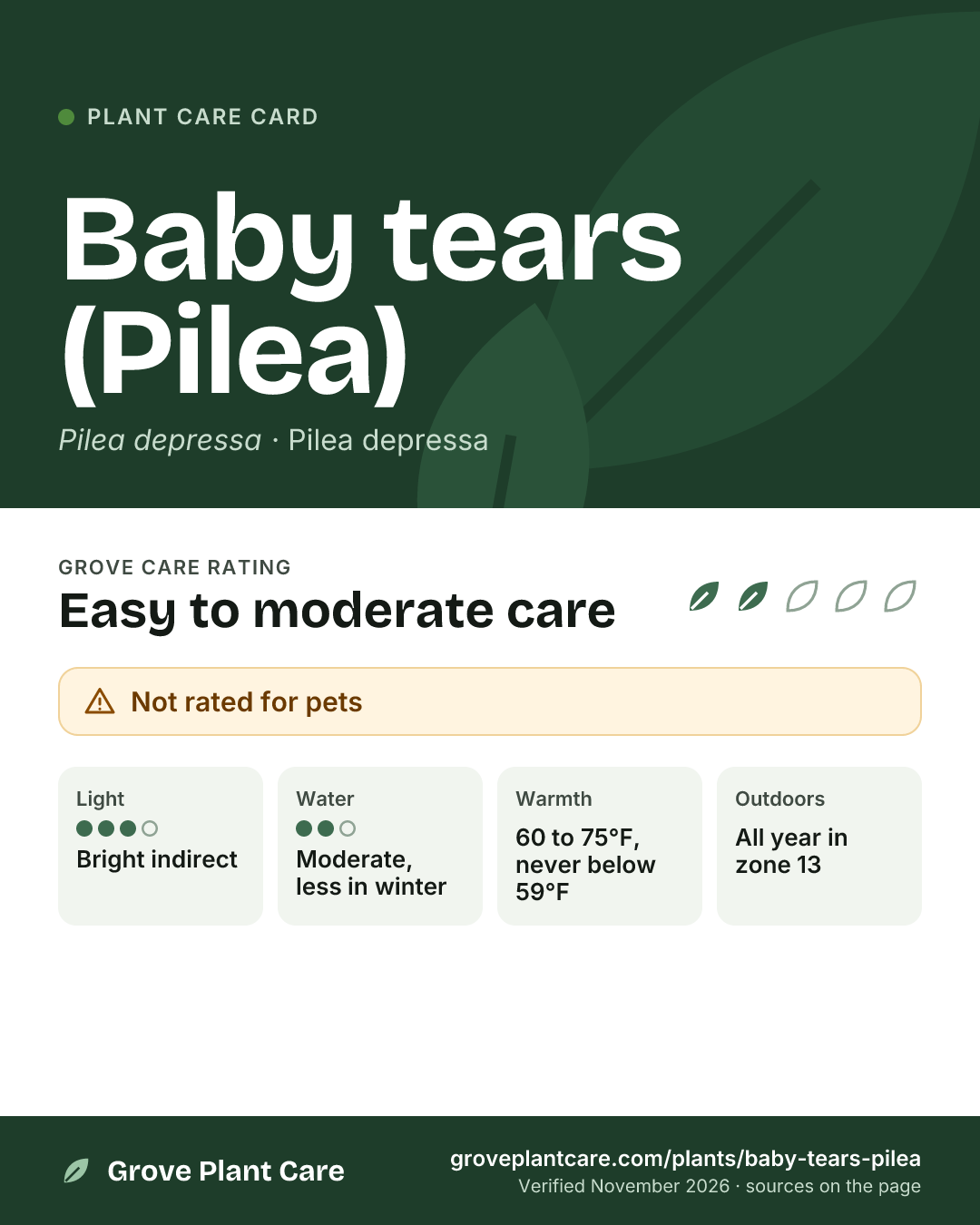
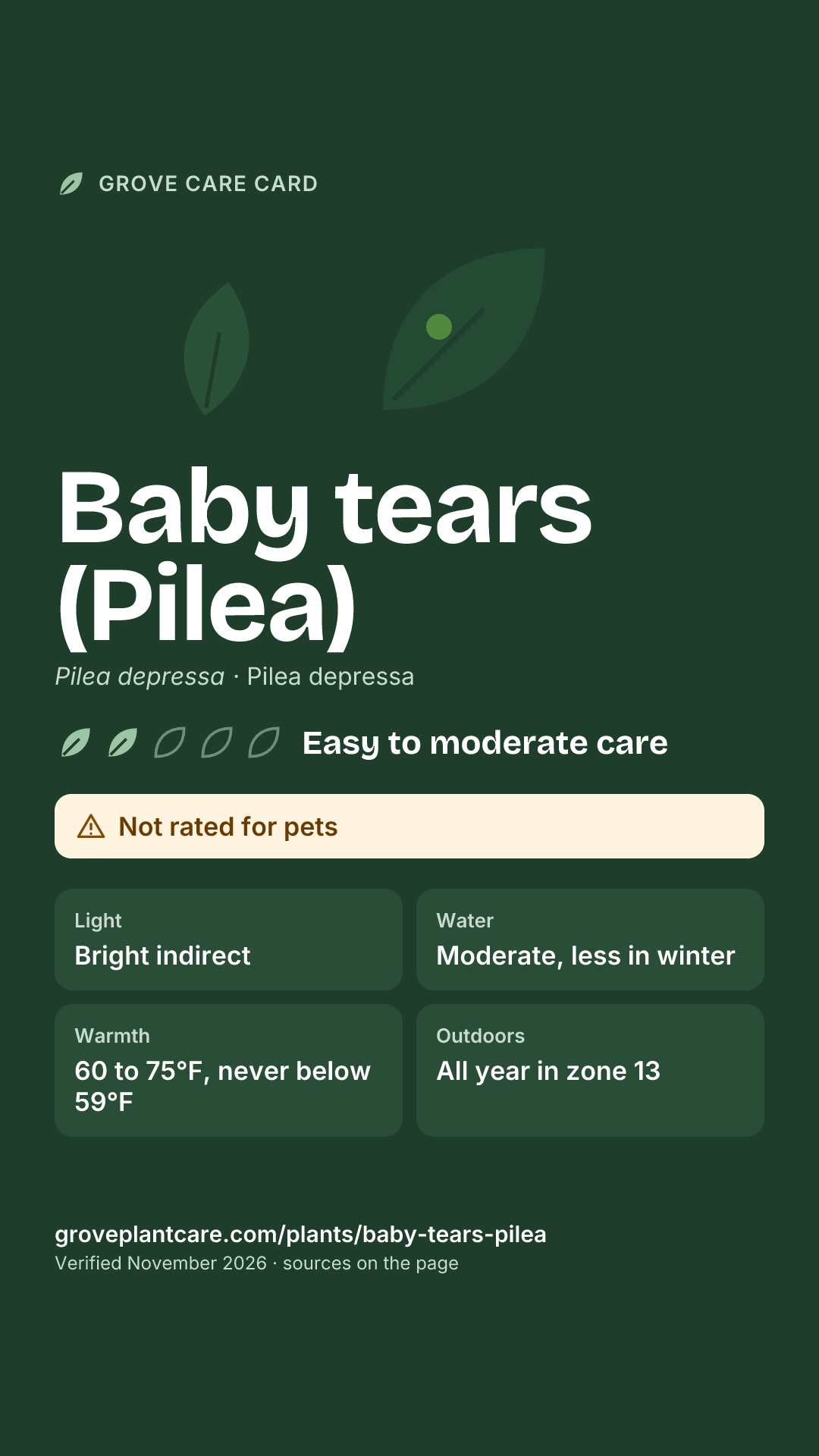
This baby tears is Pilea depressa, a trailing Caribbean pilea with tiny round leaves that spills over pots and carpets terrariums. Give it bright, indirect light or partial shade, water moderately so the mix stays lightly moist, and keep it warm, above 15°C (59°F), in humid air away from drafts. Check the label before you buy: Soleirolia soleirolii is sold as baby tears too, and it is a different plant with different needs.
Not rated for pets
Neither the ASPCA nor NC State rates this pilea. The ASPCA lists two other pileas (artillery plant and creeping pilea) as non-toxic, and also Soleirolia, the other plant called baby tears. Children: No poisoning information found.
Pet poison line: ASPCA (888) 426-4435
Good for: hanging baskets and shelf edges, terrariums and other humid spots, a bright room out of direct sun · Think twice if: your home drops below 15°C (59°F) in winter, your only spot gets direct sun, the air indoors is very dry.
Needs at a glance
- Light3 of 4 · Bright indirectBright, indirect light or partial shade, out of direct sun
- Water2 of 3 · ModerateWater moderately from spring to fall and sparingly in winter; never leave it soggy
- Humidity2 of 3 · Above averagePrefers humid air
- Soil when pottedHouseplant mix that drains wellMoist but well-drained potting mix
Indoors: best at 60 to 75°F (16 to 24°C). Keep it above 59°F (15°C) and away from drafts and heat vents.
How the rating adds up
0 = easiest · 1 = moderate · 2 = hardest
- Missed waterings1 of 2 · ModerateModerate water in the growing season, less in winter; moist but never soggy
- Light flexibility1 of 2 · ModerateBright, indirect light or partial shade; direct sun is too much and dim rooms make pileas leggy
- Humidity1 of 2 · ModerateLikes humid air; a bathroom, a pebble tray or a terrarium suits it
- Pests and disease0 of 2 · EasiestThe RHS calls it generally free of pests and disease; soggy soil can still rot pilea roots
- Sensitivity to change1 of 2 · ModerateKeep it out of drafts and above 15°C (59°F)
Growing outdoors
All year: USDA zone 13, where the coldest winter nights average 59°F (15°C) or warmer.
Elsewhere: summer outside in shade, out of direct sun. Bring it in before nights drop below 59°F (15°C).
- Houseplant
- Hanging basket
- Terrarium groundcover
Sources: RHS, NParks, Penn State Extension, ASPCA plant list, ASPCA, Arkansas Extension, USDA zone map, FISC, Hawaii noxious weed list, GISD, Cal-IPC, Kew WCVP and Bishop Museum. Full list below.
Verified · How we rate plants
Is Pilea baby tears the same plant as Soleirolia baby’s tears?
No. Two different plants share the name. Pilea depressa comes from Cuba and Hispaniola, its small round leaves grow in pairs with scalloped edges, and the RHS keeps it above 15°C (59°F) all year. Soleirolia soleirolii comes from the western Mediterranean, with even tinier leaves, about 6 mm (a quarter inch), set one at a time along the stem. NC State says Soleirolia dies back in USDA zone 9 and grows again, so it is far hardier. The ASPCA adds a third twist: its page called Baby’s Tears is the polka dot plant, Hypoestes phyllostachya. Look for the botanical name on the tag.
How often should I water baby tears (Pilea depressa)?
Water moderately while it grows, from spring to fall, and sparingly in winter, as the RHS suggests. NParks also calls for moderate water. The goal is a mix that stays lightly moist and drains well. Penn State warns that pileas kept too wet or too dry can suffer root rot, so check the mix with a finger before you pour, and empty the saucer afterward.
How much light does baby tears need?
Bright, indirect light or partial shade. The RHS suggests bright, indirect light, and NParks grows it in semi-shade. Keep it out of direct sun. Penn State says pileas do best a few feet from a window or behind a sheer curtain, and too little light makes them leggy.
Does baby tears need high humidity? Can it grow in a terrarium?
It likes humid air, and a terrarium suits it well. The RHS asks for high humidity, and Penn State says pileas like warm, humid conditions, with some needing extra humidity in winter. NParks lists terrariums and hanging baskets among its uses. In an open room, a pebble tray or a spot in a bright bathroom helps. If you see brown to black spots that turn mushy, Penn State says the air is too humid for the leaves: remove them and let air move around the plant.
What temperature does baby tears need?
Warm rooms. The RHS rates it as a plant for a heated space all year, above 15°C (59°F). Penn State suggests 65 to 75°F (18 to 24°C) by day for pileas, and the University of Arkansas Extension puts pileas in its medium group, 60 to 65°F (16 to 18°C) by day. Both keep nights above about 55°F (13°C), a little cooler than the RHS figure, so we show the RHS minimum. Keep it away from drafts and heating vents.
How do I propagate and trim baby tears?
Stem cuttings root easily, says NParks, and the RHS adds division and softwood cuttings. Take them while the plant is growing, which is when Penn State recommends cuttings for pileas. Pinch out the growing tips to keep the plant bushy, a tip from the RHS. Tuck a few cuttings back into the same pot to fill a thin patch.
Why is my baby tears leggy or rotting?
Leggy, stretched stems usually mean too little light, says Penn State. Move it closer to a bright window, out of direct sun, and pinch the tips. A mushy base or collapsing stems point to root rot from soil kept too wet. The RHS calls this pilea generally free of pests and disease, though Penn State lists aphids, mealybugs, spider mites, scale and fungus gnats as pests that can show up on pileas.
Is baby tears (Pilea depressa) safe for cats and dogs?
Nobody has rated it. The ASPCA has no page for Pilea depressa, and NC State has no page for it either, so we can’t call it safe. What we do know: the ASPCA lists two other pileas, the artillery plant and creeping pilea, as non-toxic to cats, dogs and horses, and it lists Soleirolia, the other baby tears, as non-toxic too. Keep it out of reach of pets that chew plants, and call your vet if your pet ate some and seems unwell.
Can baby tears grow outdoors? Is it invasive?
Only where it stays warm all year. No source gives USDA zones, so we used the RHS minimum of 15°C (59°F), which only zone 13 stays above. In cooler places, a pot can sit outside in summer in the shade and come back in before nights drop to 15°C (59°F). Kew records it as introduced on a few Pacific and Caribbean islands, and the Bishop Museum knows it only in cultivation in Hawaii. We found it on no official invasive list (Florida FISC, Hawaii’s noxious weed rules, Cal-IPC or the IUCN database), checked November 2026.
RHS, USDA zone map, Kew WCVP, Bishop Museum, FISC, Hawaii noxious weed list, Cal-IPC, GISD
How Grove helps
Grove schedules a check on the soil instead of a fixed watering day, so the pot gets water when it needs it and less in winter. You can add tip pinching and a winter warmth check as tasks you can assign to whoever takes care of the plants that week.
Sources
- RHS: Pilea depressa (depressed clearweed)
- NParks Flora & Fauna Web (Singapore): Pilea depressa (2023)
- Penn State Extension: Pilea as a houseplant (2025)
- ASPCA Animal Poison Control: Toxic and Non-Toxic Plants
- ASPCA Animal Poison Control: Pilea Mucosa, Artillery Plant (Pilea microphylla)
- ASPCA Animal Poison Control: Creeping Pilea (Pilea nummulariifolia)
- ASPCA Animal Poison Control: Paddys Wig, Baby Tears (Soleirolia soleirolii)
- University of Arkansas Cooperative Extension: Temperature Requirements of Selected House Plants
- USDA ARS Plant Hardiness Zone Map (2023)
- Florida Invasive Species Council: Plant List, Category I and II (April 2026)
- Hawaii Administrative Rules 4-68: plant species designated as noxious weeds (Hawaii Department of Agriculture)
- IUCN Global Invasive Species Database: Pilea depressa (no record)
- California Invasive Plant Council (Cal-IPC): plant search, "pilea" (no listing)
- Kew WCVP data release (2026-06-04 file), plant_name_id 2546713: Pilea depressa
- Plants of Hawaiʻi (Bishop Museum): Pilea depressa, only found in cultivation
- Catalogue of Life, via GBIF: Pilea depressa, common names (Portuguese: lágrimas-de-bebê)
- Kew WCVP data release (2026-06-04 file), plant_name_id 2596260: Soleirolia soleirolii
- NC State Extension Gardener Plant Toolbox: Soleirolia soleirolii
- ASPCA Animal Poison Control: Baby’s Tears (Hypoestes phyllostachya, polka dot plant)
- NC State Extension Gardener Plant Toolbox: Pilea peperomioides