Propagating and keeping plants in water
Rooting a cutting in a jar of water is one of the most satisfying things a new plant parent can try, because you get to watch the roots appear. A few simple steps decide how well that cutting does, and the move into soil is the part worth doing gently. Here is how to pick a plant, take a good cutting, care for it in water and settle it into a pot.
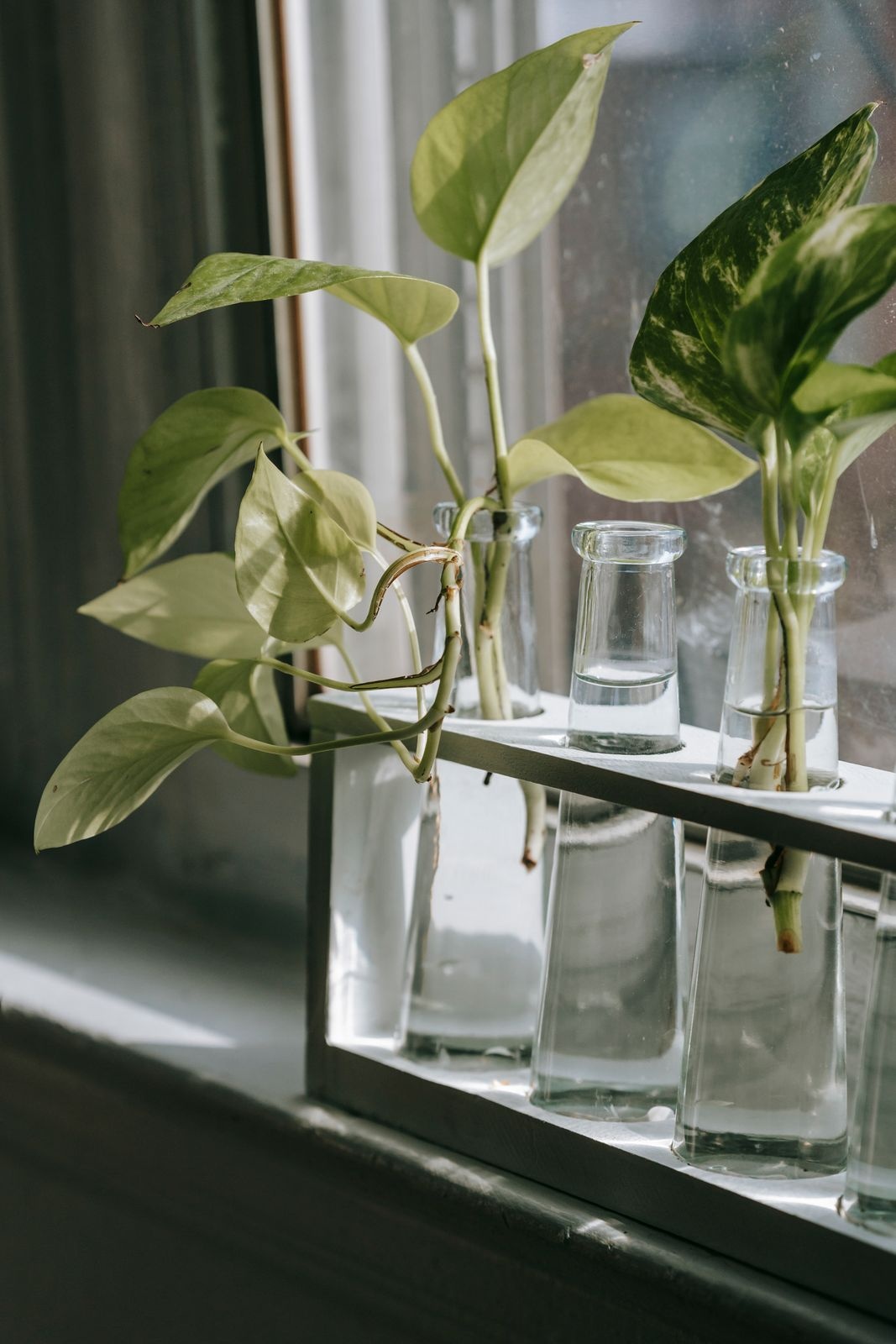
What is water propagation?
A stem cutting is a short piece of stem with leaves and buds that can grow its own roots. The Missouri Botanical Garden notes that many indoor houseplants root easily in water, and that the parent plant is often happier after the trim, growing bushier from the base within a few weeks.
University of Vermont Extension describes two ways to root a cutting: in water or in soil. Water lets you watch the roots develop. Soil skips the later move from jar to pot. Both work, and the choice is personal preference.
Which plants root well in water?
| How it does in water | Plants | Source |
|---|---|---|
| Roots easily | Begonia, coleus, polka dot plant, ivies, philodendron | Missouri Botanical Garden |
| Roots easily | Jasmine, English ivy, pothos, inch plant (tradescantia), holiday cactus | University of Vermont Extension |
| Usually rots before rooting | Hibiscus, citrus and many other woody plants | Missouri Botanical Garden |
Missouri Botanical Garden lists begonias, coleus, polka dot plant, ivies and philodendrons as easy in water, and warns that woody plants such as hibiscus and citrus usually rot before they root. University of Vermont Extension adds jasmine, English ivy, pothos, inch plant and holiday cactus. Many of our beginner plants that still look good are easy to share this way.
How do I root a monstera or other big-leaf plant?
University of Minnesota Extension says a monstera can only be propagated when the cutting includes a node, the point where a leaf grows from the stem. A leaf or leaf stalk without a node has no bud for new growth and will eventually rot. Minnesota Extension suggests cutting 1 to 2 inches below a node and keeping several leaves on the cutting, because the leaves help rooting through photosynthesis.
University of Wisconsin-Madison Extension suggests cutting the tip of the stem just below an aerial root, one of the cord-like roots a monstera uses to climb.
| Plant | What the source says | Source |
|---|---|---|
| Monstera (Monstera deliciosa) | Include a node; roots form in about 2 to 4 weeks; change the water when it turns cloudy | University of Minnesota Extension |
| Monstera (Monstera deliciosa) | Cut the stem tip just below an aerial root | University of Wisconsin-Madison Extension |
| Pothos (Epipremnum aureum) | Vines root easily in water | North Carolina State Extension |
| Philodendron | Roots easily in water | Missouri Botanical Garden |
Minnesota Extension notes that monstera cuttings root in plain water and that roots grown in water are weaker than roots grown in a solid medium such as perlite or potting soil. The first new leaf can take 2 to 3 months, so a cutting with healthy roots and no new growth yet is normal. When you pot one up, a heavier container helps, since monstera cuttings are top heavy.
For pothos, the North Carolina State Extension Gardener Plant Toolbox says the vines root easily in water and climb by brown aerial roots.
How do I take a good cutting?
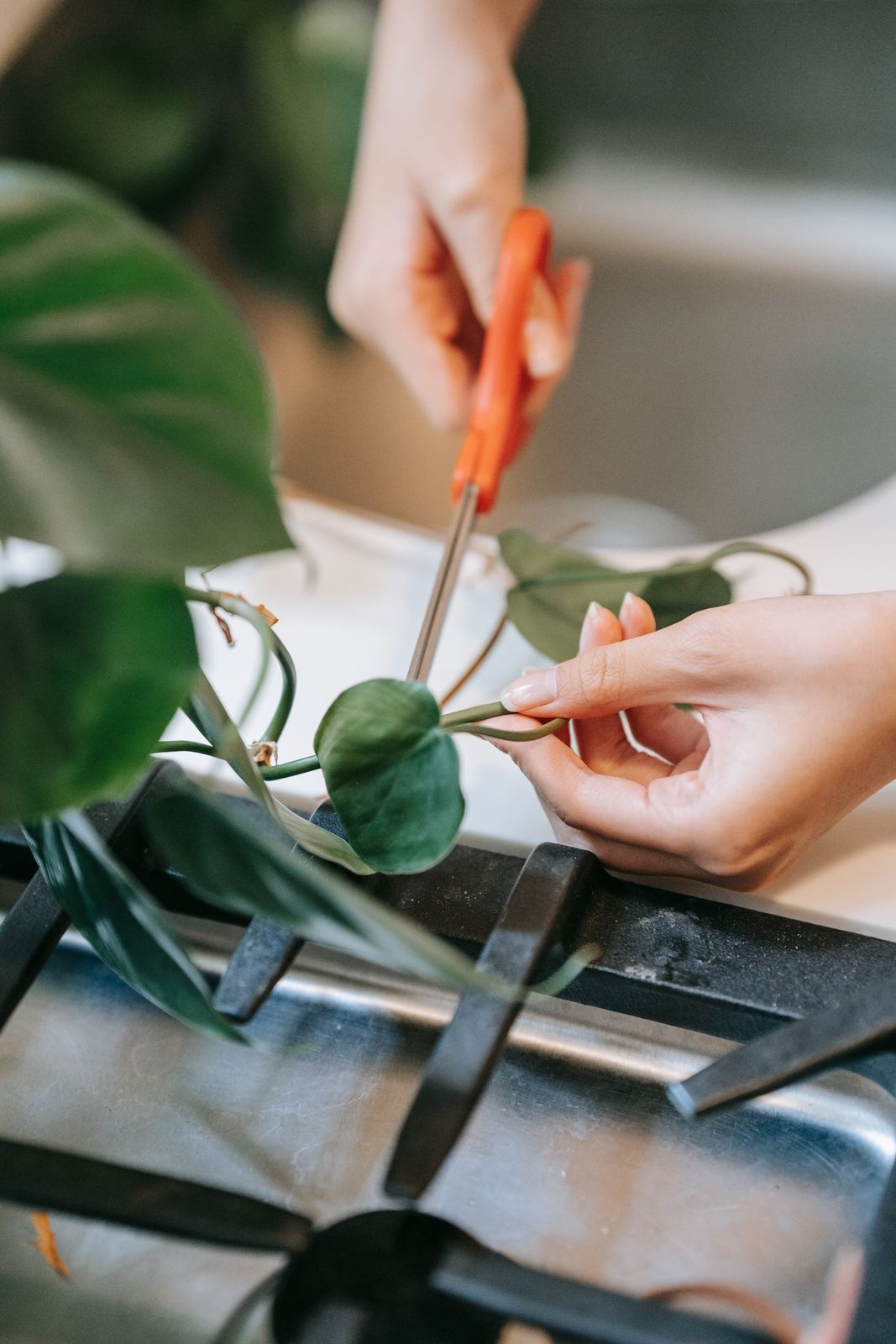
A node is the small bump where a leaf meets the stem. Missouri Botanical Garden explains that roots form most easily there, and that a stub of stem left below the node often rots. Iowa State University Extension and Outreach suggests cuttings 3 to 6 inches long with at least two nodes.
- Use clean, sharp pruners or a knife
- Cut just below a node
- Remove the lower leaves so no leaves sit below the water line, keeping the top two or three
- Remove any flowers or buds
Missouri Botanical Garden explains the last step: flowers use stored food the cutting needs for roots, and fading flowers can mold in the damp. Iowa State adds that it helps to water the parent plant the day before, so the cutting starts fully hydrated.
How do I care for cuttings in water?
Iowa State University Extension advises changing the water often and never letting the level drop far enough to expose developing roots to air. University of Vermont Extension suggests replacing cloudy water with fresh room temperature water.
Iowa State also recommends 4 to 6 hours of bright indirect light and air temperatures of 65 to 75°F (about 18 to 24°C). Too little light slows rooting, and harsh direct sun can scorch tender leaves. Several cuttings can share one container, according to Missouri Botanical Garden, which makes a jar of mixed cuttings a cheerful windowsill project.
How long until roots appear?
Missouri Botanical Garden says rooting generally happens in 3 to 4 weeks, with some plants taking longer. Iowa State University Extension gives 3 to 6 weeks for most houseplant cuttings. University of Vermont Extension is reassuring here: roots can take days, weeks or sometimes months, and as long as the cutting looks healthy, patience usually pays off.
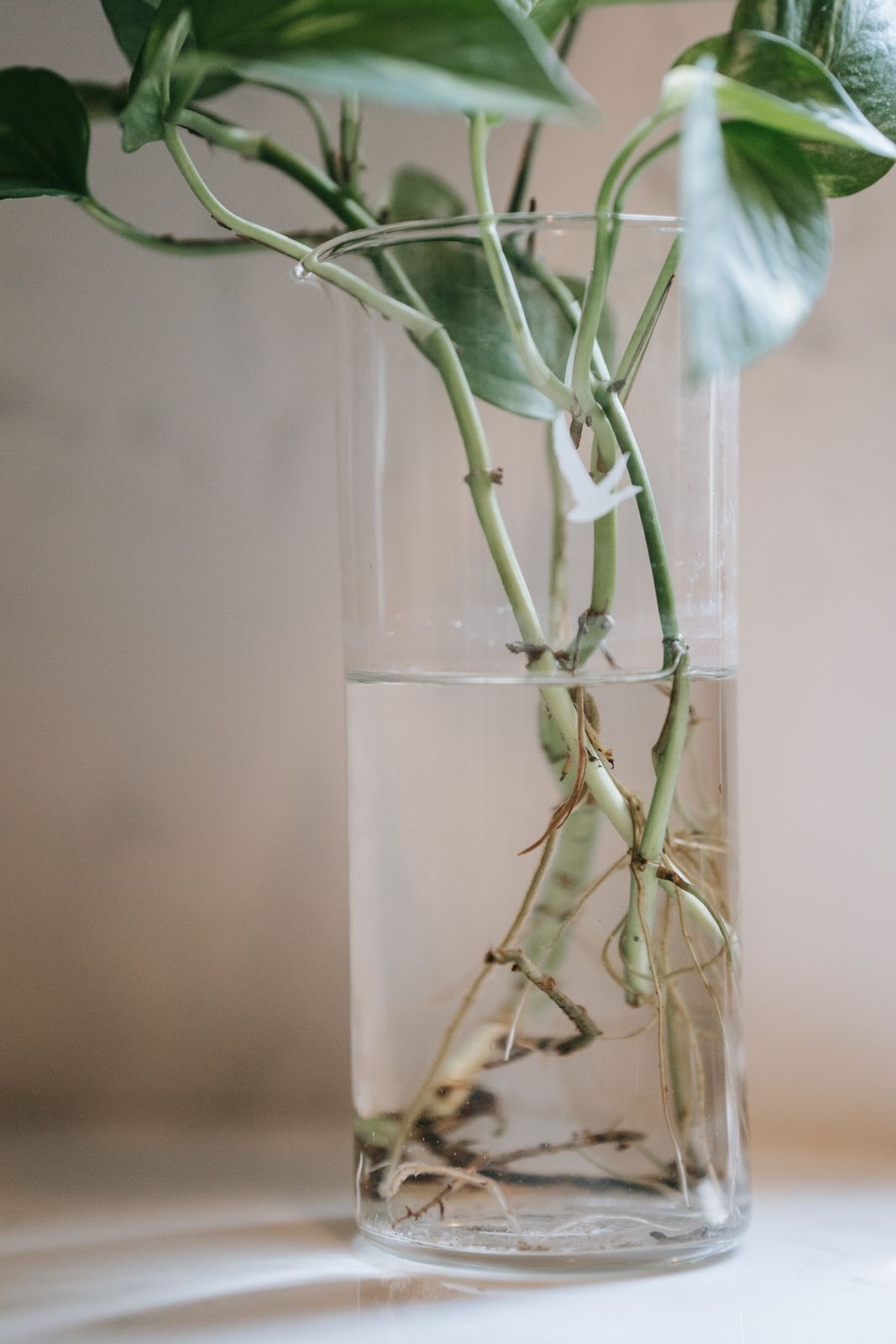
A firm stem and green leaves are good signs. A soft, dark or smelly stem means the cutting is rotting; trim above the damaged part and start again in fresh water.
When should I move a cutting to soil?
Sources vary a little. Iowa State University Extension suggests potting when roots reach about 1 inch, Missouri Botanical Garden suggests 1 to 2 inches or longer, and University of Vermont Extension waits until roots are more than 2 to 3 inches.
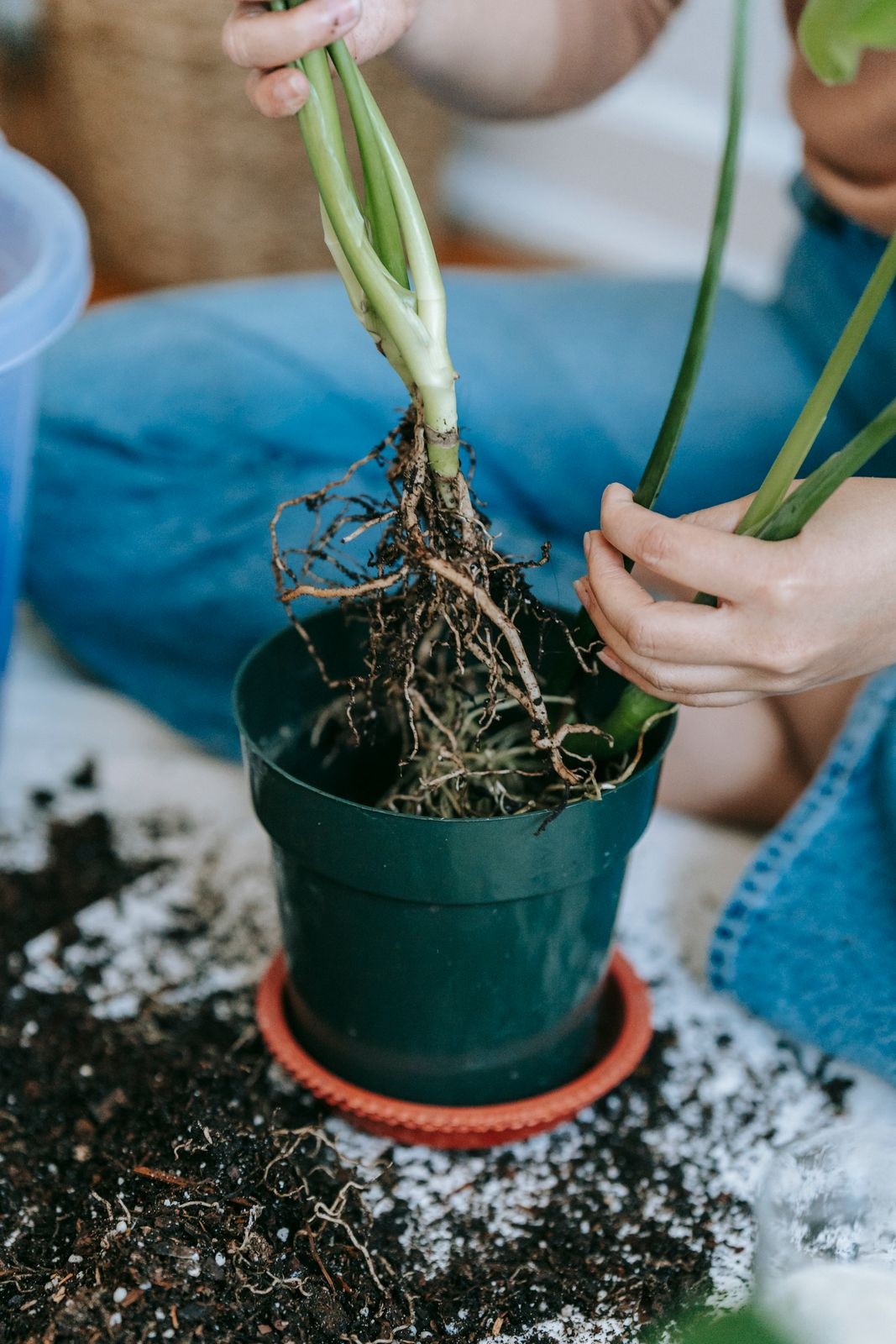
When you pot up, Missouri Botanical Garden suggests:
- Pre-moisten the potting mix so it is damp without being soggy
- Choose a pot with just enough room for the roots
- Fill around the roots and press gently so the mix touches them
- Water until water runs out the bottom to settle the mix
- Let the pot drain, and keep it out of standing water in the saucer
Why do cuttings droop after potting, and how do I help?
Iowa State University Extension explains that roots formed in water are coarser in texture and less suited to potting mix. After the move, the young plant may show wilting, leaf drop, browning or tip dieback. Good, steady care helps it recover.
After that first settling drink, go back to the usual check: does this plant need water today. Feel the mix and lift the pot before you water. Iowa State notes that the new plant should be well established within a few weeks. Our overwatering guide walks through the soil check, and our root rot guide helps if a stem turns soft at the base. For a gentle overview of early care, see what to tell a first-time plant parent.
Can a plant just live in water?
Missouri Botanical Garden notes that many rooted cuttings survive in water for extended periods. Plain water carries no fertilizer, though, so a plant kept in a jar for months has nothing to feed on beyond what it stored.
If you would like to grow plants in water long term, our guides to hydroponics and semi-hydroponics explain how nutrients and roots are managed. University of New Hampshire Extension also notes that algae thrive where light meets nutrient-rich water, so a jar kept out of strong sun stays clearer.
How does Grove handle water propagation?
Grove builds a care plan from the species, how you grow the plant, and whether it lives indoors or outdoors. Water propagation is one of the methods you can pick, and the method changes watering technique and how often you water, feeding, pruning, repotting and the task rhythm. You can change how a plant is grown later, and Grove can rebuild the care plan to match, which suits the day a rooted cutting goes into its first pot. You can still edit the result.
Sources
- Rooting Cuttings in Water : Missouri Botanical Garden
- How to Propagate Houseplants by Stem Tip Cuttings : Iowa State University Extension and Outreach (last reviewed January 2025)
- More, Please: Propagating Houseplants : University of Vermont Extension (December 2022)
- Hydroponics at Home : University of New Hampshire Extension (August 2023)
- Monstera deliciosa : University of Minnesota Extension (reviewed 2026)
- Swiss-Cheese Plant, Monstera deliciosa : University of Wisconsin-Madison Extension (revised October 2026)
- Epipremnum aureum : North Carolina State Extension Gardener Plant Toolbox