Plant care card
Giant bromeliad
Alcantarea imperialis · Bromelia imperial
Also called imperial bromeliad
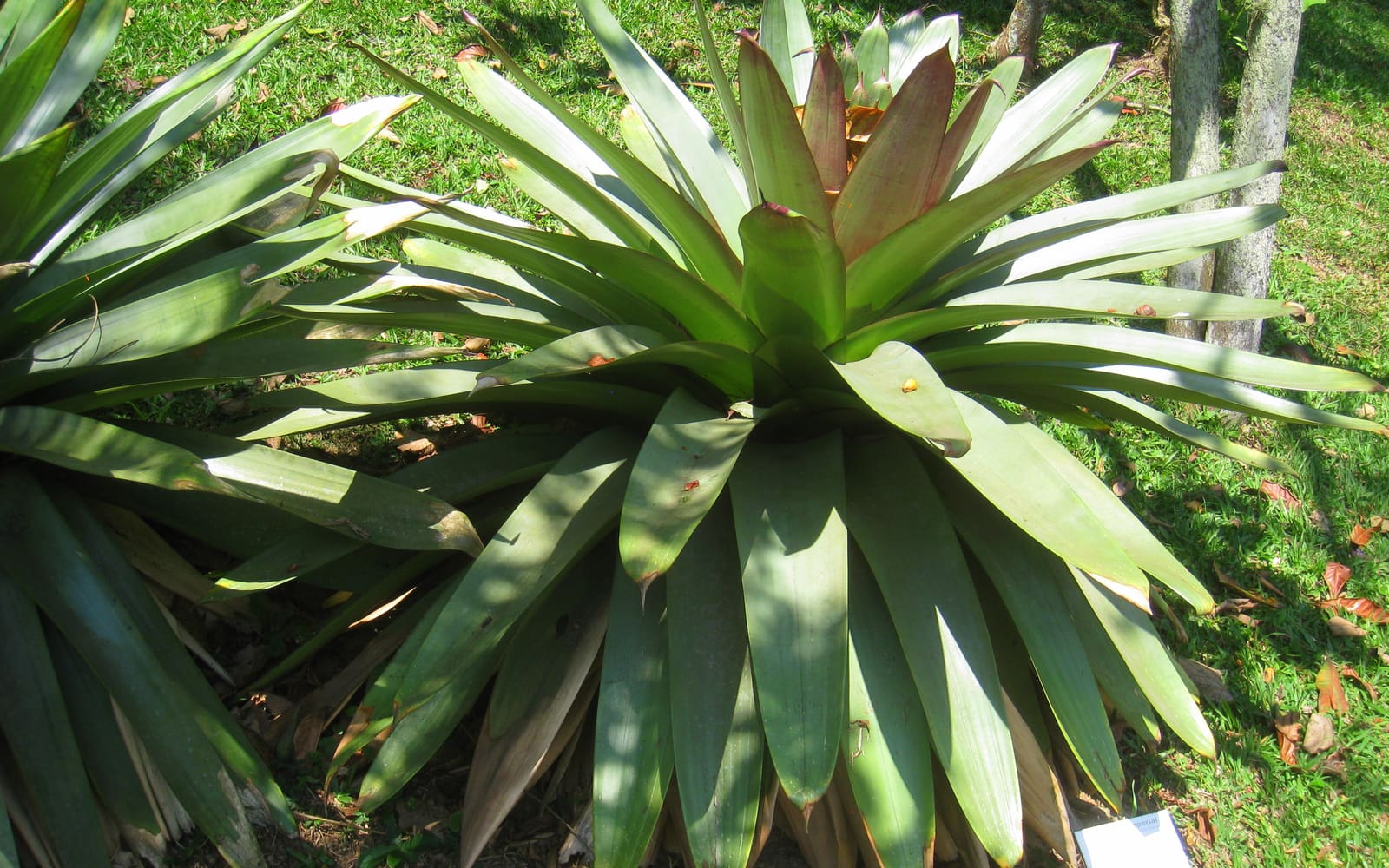
Photo by Daderot on Wikimedia Commons

The giant bromeliad is a sun lover from the granite cliffs near Rio de Janeiro, grown for its huge rosette of leaves. Give it full sun to part shade, very free-draining soil, and keep a little water in its central cup while the soil stays on the dry side. It's frost-tender, takes a decade or more to bloom, and dies after flowering. It's a different plant from the small guzmania sold as a gift.
Not rated for pets
Neither the ASPCA nor NC State rates this bromeliad. The ASPCA lists other bromeliads, such as the scarlet star (Guzmania), as non-toxic. Children: No poisoning information found.
Pet poison line: ASPCA (888) 426-4435
Good for: sunny, frost-free gardens, a large statement container · Think twice if: you want flowers soon: it can take a decade or more, your only spot is a shady room.
Needs at a glance
- Light4 of 4 · Some direct sunFull sun to part shade; more sun, deeper leaf color
- Water1 of 3 · Fill the cup; soil can dryRefill and flush the center cup now and then; soggy soil rots roots
- Humidity1 of 3 · AverageTakes humid or drier air
- Soil when pottedVery free-draining, gritty soilRocky soil outdoors, or a large container
Indoors: best at 60°F (16°C) or warmer. Keep it above 40°F (4°C) and away from drafts and heat vents.
How the rating adds up
0 = easiest · 1 = moderate · 2 = hardest
- Missed waterings0 of 2 · EasiestDrought tolerant; its center cup holds water
- Light flexibility2 of 2 · HardestWants full sun to part shade; sun deepens the color
- Humidity0 of 2 · EasiestNo source asks for humid air; it grows on sunny, windy cliffs
- Pests and disease0 of 2 · EasiestBromeliads are fairly pest-free; scale and mealybugs now and then
- Sensitivity to change1 of 2 · ModerateLow salt tolerance; flush the cup now and then
Growing outdoors
All year: USDA zones 10 to 11, where the coldest winter nights average 30°F (−1°C) or warmer.
Elsewhere: summer outside in full sun to part shade. Bring it in before nights drop below 50°F (10°C).
- A specimen in sunny, free-draining beds
- A big container on a porch or patio
Sources: Royal Botanic Garden Sydney, Port St. Lucie Botanical Gardens, Reiman Gardens, UF/IFAS, ASPCA plant list, ASPCA, Clemson, USDA zone map, FISC, Hawaii noxious weed list, Rojas-Sandoval and Acevedo-Rodríguez, Queensland Government, Cal-IPC, Texas Invasives, South Africa NEMBA list and GISD. Full list below.
Verified · How we rate plants
How is a giant bromeliad different from a regular bromeliad?
Almost everything but the cup. The bromeliad sold as a gift is usually a guzmania (scarlet star), about 1 to 2 ft across, happy in bright indirect light and sold in bloom; a pup can bloom in about a year. The giant bromeliad, Alcantarea imperialis, makes a rosette 3 to 5 ft across, per Port St. Lucie Botanical Gardens, wants full sun to part shade and is grown for its leaves. The Royal Botanic Garden Sydney says it takes 8 to 20 years to bloom. Both hold water in a central cup and both die after flowering. Another plant also goes by giant bromeliad: Puya raimondii, a huge bromeliad from the Andes of Peru and Bolivia, per Kew.
Port St. Lucie Botanical Gardens, Royal Botanic Garden Sydney, Inhotim, NC State, UF/IFAS, Kew
Does a giant bromeliad need full sun?
It does best with plenty. The Royal Botanic Garden Sydney says it does best in full sun, and Port St. Lucie Botanical Gardens says full sun to part shade, with sunnier spots giving more intense leaf color. In the wild it grows on cliffs open to sun and wind, per Sydney.
Royal Botanic Garden Sydney, Port St. Lucie Botanical Gardens
How do I water a giant bromeliad?
Fill the cup and let the soil stay on the dry side. Port St. Lucie Botanical Gardens says the plant takes in water through its central cup more than its roots: fill it now and then, and flush and refill it regularly. Keep the soil dry to slightly moist, since overwatering rots the roots. The Royal Botanic Garden Sydney says it does best with minimal water. UF/IFAS adds two tips for all bromeliads: flush the cup to clear salts left by evaporating water, and empty it if temperatures below 40°F (4°C) are likely, since cold water in the cup leaves a brown line of damage across the leaves.
Port St. Lucie Botanical Gardens, Royal Botanic Garden Sydney, UF/IFAS
When does a giant bromeliad bloom, and does it die after?
Rarely, and yes. The Royal Botanic Garden Sydney says plants take 8 to 20 years to flower; Inhotim in Brazil says about 10, and Port St. Lucie Botanical Gardens says it may take a few decades. When it does, it sends up a branched spike 2 to 4 m (6 to 13 ft) tall carrying thousands of flowers, which Sydney says bats pollinate, and Reiman Gardens says the show lasts about five months. Afterward the rosette dies. Port St. Lucie says it makes offsets before it goes, and Sydney says new plants are best grown from seed.
Royal Botanic Garden Sydney, Inhotim, Port St. Lucie Botanical Gardens, Reiman Gardens
How big does a giant bromeliad get?
Big. Port St. Lucie Botanical Gardens gives 2 to 4 ft tall and 3 to 5 ft wide, growing slowly, and Inhotim says a mature rosette reaches about 1.5 m (5 ft) across. Reiman Gardens describes plants up to 48 in across and 36 in tall. The flower spike adds much more: 2 to 4 m (6 to 13 ft), per the Royal Botanic Garden Sydney. Port St. Lucie says its tank can hold over 30 liters of water.
Port St. Lucie Botanical Gardens, Inhotim, Reiman Gardens, Royal Botanic Garden Sydney
Can a giant bromeliad stay outside in winter?
Only where winters are mild. Port St. Lucie Botanical Gardens lists USDA zones 10 to 11, and Reiman Gardens says it takes about 30°F (−1°C), which happens in its native mountains. For pots, bring it in before nights drop to 50°F (10°C): Clemson Extension says 50°F or lower hurts many tropical plants, and UF/IFAS suggests growing bromeliads in containers in colder areas and moving them in when frost threatens. Outdoors, flush the cup weekly so mosquitoes can't breed in it, per UF/IFAS. No official invasive list we checked names it.
Port St. Lucie Botanical Gardens, Reiman Gardens, Clemson, UF/IFAS, USDA zone map, FISC
Can I grow a giant bromeliad indoors?
It's mostly a garden plant. It needs full sun to part shade and grows 3 to 5 ft across, so Port St. Lucie Botanical Gardens suggests it as a porch plant in a large container. Use a very free-draining, gritty mix, as both Port St. Lucie and the Royal Botanic Garden Sydney advise, and feed little: Sydney says minimal fertilizer.
Port St. Lucie Botanical Gardens, Royal Botanic Garden Sydney
Is a giant bromeliad safe for cats and dogs?
It isn't rated. Neither the ASPCA nor NC State lists Alcantarea, so this card can't call it safe. The ASPCA does list other bromeliads, such as the scarlet star (Guzmania) and the blushing bromeliad (Neoregelia), as non-toxic, and no source we found lists the giant bromeliad as toxic. If a pet chews it and seems unwell, call your vet or the ASPCA Animal Poison Control Center at (888) 426-4435. If a child eats any plant, Poison Help is at 1-800-222-1222.
What's the difference between 'Rubra', 'Silver Plum' and the green form?
Leaf color. The Royal Botanic Garden Sydney says the species varies a lot, and gardeners have picked out forms with a silvery top side and red underside, such as 'Rubra', 'Silver Plum' and 'Purple Skotak'. The RHS lists the red form as giant bromeliad Red Form. None of these sources gives different care for them, and sun brings out the color in all of them, per Port St. Lucie Botanical Gardens.
Royal Botanic Garden Sydney, RHS, Port St. Lucie Botanical Gardens
How Grove helps
Grove can remind you to refill and flush the giant bromeliad's cup on a schedule you set, and to bring the pot in before cold nights. You can assign the cup check to anyone who helps with the garden.
Sources
- Royal Botanic Garden Sydney: Plant of the Month, December 2023, Imperial Bromeliad (Alcantarea imperialis)
- Port St. Lucie Botanical Gardens (Florida): Alcantarea imperialis
- Reiman Gardens, Iowa State University: Imperial Bromeliad
- UF/IFAS Extension EDIS ENH 1071: Bromeliads at a Glance
- UF/IFAS Gardening Solutions: Bromeliads
- ASPCA Animal Poison Control: Toxic and Non-Toxic Plants
- ASPCA Animal Poison Control: Orange Star (Guzmania lingulata)
- Clemson Cooperative Extension HGIC 1454: Moving Houseplants Indoors and Outdoors
- USDA ARS Plant Hardiness Zone Map (2023)
- Florida Invasive Species Council: Plant List, Category I and II and Watch List (April 2026)
- Hawaii Administrative Rules 4-68: plant species designated as noxious weeds (Hawaii Department of Agriculture)
- J. Rojas-Sandoval and P. Acevedo-Rodríguez (2015), Naturalization and invasion of alien plants in Puerto Rico and the Virgin Islands, Biological Invasions 17 (supplementary list)
- Business Queensland: Restricted invasive plants (Biosecurity Act 2014)
- Cal-IPC (California Invasive Plant Council): site search, "alcantarea" (no listing)
- Texas Invasives: plant database (no Alcantarea)
- South Africa, National Environmental Management: Biodiversity Act, Alien and Invasive Species Lists 2020 (no Alcantarea listed)
- IUCN Global Invasive Species Database: Alcantarea imperialis (no profile)
- Instituto Inhotim (Brazil): Bromélia-imperial, Alcantarea imperialis
- Royal Horticultural Society: Vriesea imperialis 'Rubra' (giant bromeliad Red Form)
- Kew WCVP data release (2026-06-04 file), plant_name_id 218485: Alcantarea imperialis
- NC State Extension Gardener Plant Toolbox: Guzmania lingulata
- Kew WCVP data release (2026-06-04 file), plant_name_id 260146: Puya raimondii