Plant care card
Bromeliad
Guzmania lingulata · Guzmania
Also called scarlet star, orange star or guzmania
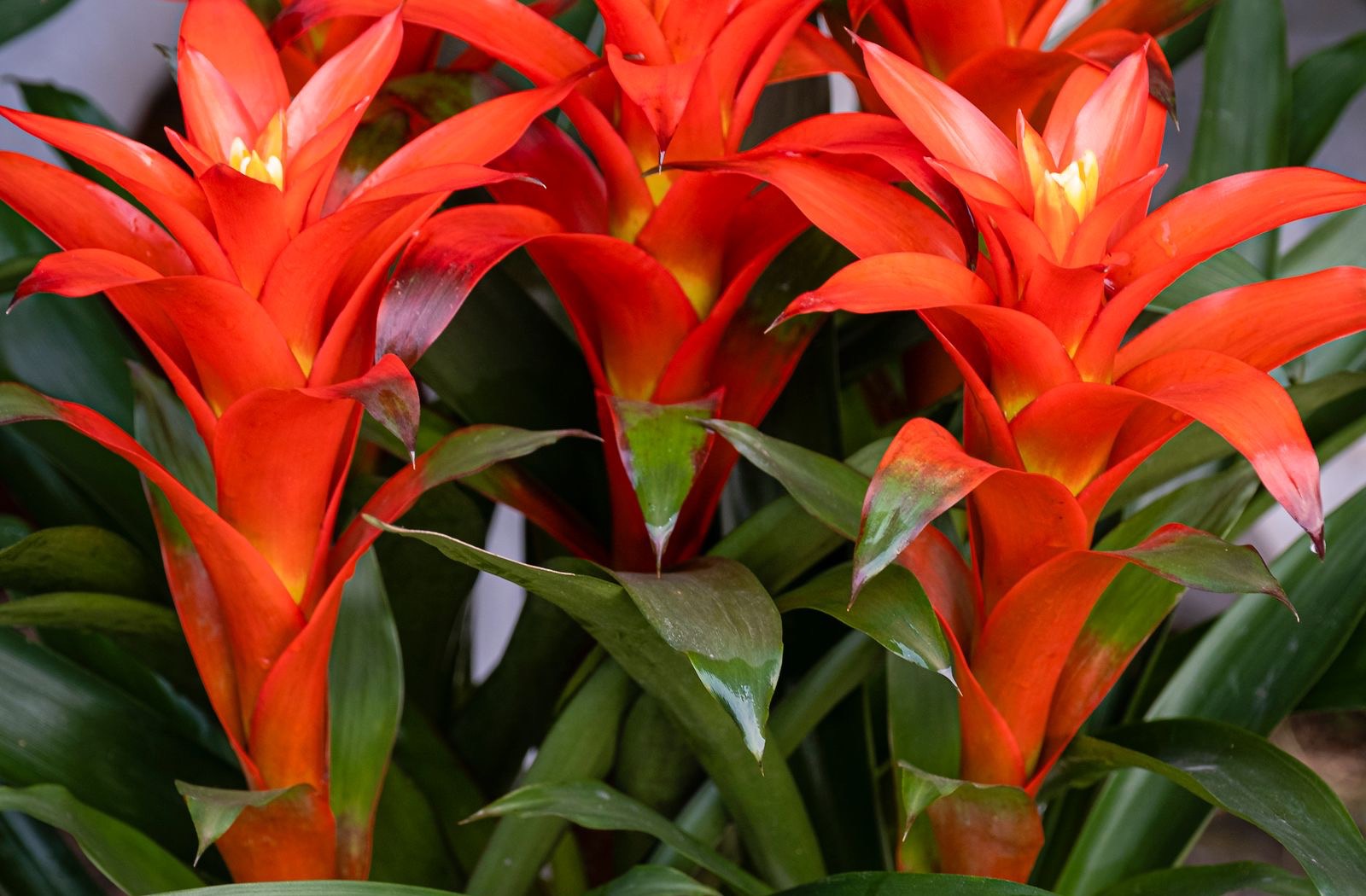
Photo by Tiểu Bảo Trương on Pexels
The bromeliad sold as a gift is usually a guzmania, or scarlet star. Give it bright, indirect light, keep a little water in its central cup, and let the soil dry between waterings. Its colorful star is a bract that stays bright for months. Each plant blooms only once, then slowly fades while it grows baby plants, called pups, that carry on.
Non-toxic to cats, dogs and horses
No signs of poisoning listed. Chewing any plant can still upset a pet’s stomach. Children: No poison warnings from NC State or the RHS.
Pet poison line: ASPCA (888) 426-4435
Good for: holiday and host gifts, homes with cats and dogs, rooms without direct sun · Think twice if: you want the same plant to bloom every year, your tap water is softened.
Needs at a glance
- Light3 of 4 · Bright indirectAn east or west window; copes with less, never hot sun
- Water2 of 3 · Let the top dryKeep water in the cup; let the soil dry between waterings
- Humidity2 of 3 · Above average50% or more; a pebble tray or humidifier helps
- Soil when pottedOrchid or bromeliad mixCoarse and fast-draining, in a small pot
Indoors: best at 60 to 85°F (16 to 29°C). Keep it above 55°F (13°C) and away from drafts and heat vents.
How the rating adds up
0 = easiest · 1 = moderate · 2 = hardest
- Missed waterings1 of 2 · ModerateThe cup helps, but the soil should never stay bone dry
- Light flexibility0 of 2 · EasiestShade to bright indirect light; no hot sun
- Humidity1 of 2 · ModerateLikes 50% or more
- Pests and disease1 of 2 · ModerateScale, mealybugs; rot if the soil stays soggy
- Sensitivity to change1 of 2 · ModerateDislikes drafts and softened or salty water
Growing outdoors
All year: USDA zones 10 to 12, where the coldest winter nights average 30°F (−1°C) or warmer.
Elsewhere: summer outside in shade or part shade. Bring it in before nights drop below 55°F (13°C).
- Containers
- Shady beds in frost-free areas
- Mounted on bark or wood
Sources: NC State, Clemson, NYBG, Illinois Extension, Wisconsin Extension, UF/IFAS, WSU Extension, ASPCA, ASPCA plant list, RHS, NC State Extension, Colorado State, USDA zone map, Arkansas Extension, USDA PLANTS and FISC. Full list below.
Verified · How we rate plants
Is a bromeliad safe for cats and dogs?
Yes. The ASPCA lists the scarlet star bromeliad (Guzmania) as non-toxic to cats, dogs and horses, and NC State tags it non-toxic for all three. The ASPCA also lists the blushing bromeliad (Neoregelia) and the earth star (Cryptanthus) as non-toxic. Non-toxic means low risk, and any plant can still upset a pet's stomach if it eats a lot. If your pet seems unwell after chewing a plant, call your vet.
How do I water a bromeliad?
Think of it as two places to water: the cup in the center of the leaves and the soil. Clemson, NC State and Wisconsin Extension say to keep the cup filled. WSU Extension suggests keeping it about half full and changing the water monthly, and UF/IFAS suggests filling it, letting water run through the soil, then tipping out what's left. The experts differ, so pick one. Flush the cup with fresh water now and then, weekly if your water is hard, so it doesn't go stale or build up salts. Let the soil dry between waterings, about every week or two, and never leave it soggy, since wet roots rot. Skip softened water, and use rain or distilled water in the cup if your tap water is very hard.
Clemson, NC State, Wisconsin Extension, WSU Extension, UF/IFAS, Colorado State
How much light does a bromeliad need?
Bright, indirect light is best, such as near an east or west window, with no hot direct sun. Guzmanias cope with lower light than most bromeliads, but they need good light to grow pups and bloom again. Pale, yellowish leaves mean too much light; dark green, soft, drooping leaves mean too little.
UF/IFAS, NYBG, NC State, Wisconsin Extension, Illinois Extension, Colorado State, WSU Extension
What temperature and humidity does a bromeliad like?
Between 60 and 85°F (16 to 29°C), and never below 55°F (13°C). Keep it away from cold drafts, heat vents and big swings in temperature: Clemson notes that guzmanias are more sensitive than many bromeliads. They like humid air, around 50% or more, and most homes are drier than that, especially with the heat on in winter. A tray of wet pebbles under the pot or a humidifier helps.
Clemson, NYBG, WSU Extension, Wisconsin Extension, NC State, NC State Extension
Why is my bromeliad turning brown?
First, check whether it has already bloomed: after flowering, the mother plant slowly browns over a year or two, and that's normal. Otherwise, soggy soil is the most common cause, because it rots the roots, so let the soil dry. Brown leaf tips can come from salts and minerals in the cup, so flush it with fresh water. A brown line across the leaves at the water level is cold damage, so empty the cup if temperatures near 40°F (4°C) are coming.
How long does a bromeliad flower last?
The colorful star is a set of bracts, special leaves that hold the plant's tiny white or yellow true flowers. NC State says the display can last 2 to 4 months, and Wisconsin Extension and Clemson say it lasts for months. The true flowers are small and short-lived, while the bracts keep their color long after.
Is my bromeliad dying after it blooms?
Slowly, yes, and it's meant to. Each bromeliad rosette blooms once. After that, the mother plant declines over a year or two, and while it does, it grows pups around its base. Keep caring for it as usual so the pups get what they need, and cut off the faded flower stalk once it browns.
Can a bromeliad grow outdoors?
All year only where it never frosts, in USDA zones 10 to 12, where the coldest winter nights average 30°F (−1°C) or warmer. There it grows in shady beds, in containers or tied onto bark. Elsewhere, it can spend summer outside in shade or part shade and come back in before nights drop to 55°F (13°C). Outdoors, flush the cups weekly so mosquitoes can't breed in them.
How do I grow the pups?
Wait until a pup is one-third to one-half the size of its mother: NC State and Wisconsin say one-third, UF/IFAS says half. Cut it off where it joins the mother with a clean, sharp knife, and pot it in a fast-draining bromeliad or orchid mix. Keep it a little shadier and more humid, with the mix on the dry side, until new roots grow. A pup takes about a year or more to bloom. To nudge a grown one, drain its cup and seal it in a clear plastic bag with a ripe apple for 2 to 3 days; the apple gives off a gas that triggers blooming in 6 to 14 weeks.
NC State, Wisconsin Extension, UF/IFAS, NC State Extension, Clemson, Nebraska Extension
How Grove helps
Grove can split care into two repeating tasks: a check of the soil, so nobody waters a pot that's still damp, and a reminder to flush and refill the cup. When pups appear, you can add a task to check their size and assign it to whoever is home.
Sources
- NC State Extension Gardener Plant Toolbox: Guzmania lingulata
- Clemson Cooperative Extension HGIC 1501: Bromeliads
- NYBG Mertz Library: How do I grow Guzmania and other bromeliads?
- University of Illinois Extension, Il-River Hort: Bromeliads
- University of Wisconsin-Madison Extension, Wisconsin Horticulture: Bromeliads
- UF/IFAS Extension EDIS ENH 1071: Bromeliads at a Glance
- WSU Extension, Skagit County: The Gift of Bromeliads
- ASPCA Animal Poison Control: Orange Star (Guzmania lingulata)
- ASPCA Animal Poison Control: Toxic and Non-Toxic Plants
- Royal Horticultural Society: Guzmania lingulata
- N.C. Cooperative Extension, Beaufort County Center: From Pineapples to Air Plants, the Surprising World of Bromeliads
- Colorado State University Extension PlantTalk 1305: Bromeliads
- NC State Extension Gardener Plant Toolbox: Guzmania
- UF/IFAS Gardening Solutions: Bromeliads
- USDA ARS Plant Hardiness Zone Map (2023)
- University of Arkansas Extension, Plant of the Week: Bromeliad
- USDA PLANTS Database: Guzmania lingulata
- Florida Invasive Species Council: Invasive Plant List
- Nebraska Extension in Lancaster County: Bromeliads Need Strong Light, Warm Temperatures to Survive