What bright indirect light means and how to measure light for houseplants
Light is the one thing a watering can cannot fix, so read it before you choose the plant. Four free clues do most of the work: the direction your window faces, the distance from the glass, the season and the shadow your hand casts. A phone light-meter app adds a rough number. Then match plants to the light you already have.
What does bright indirect light mean?
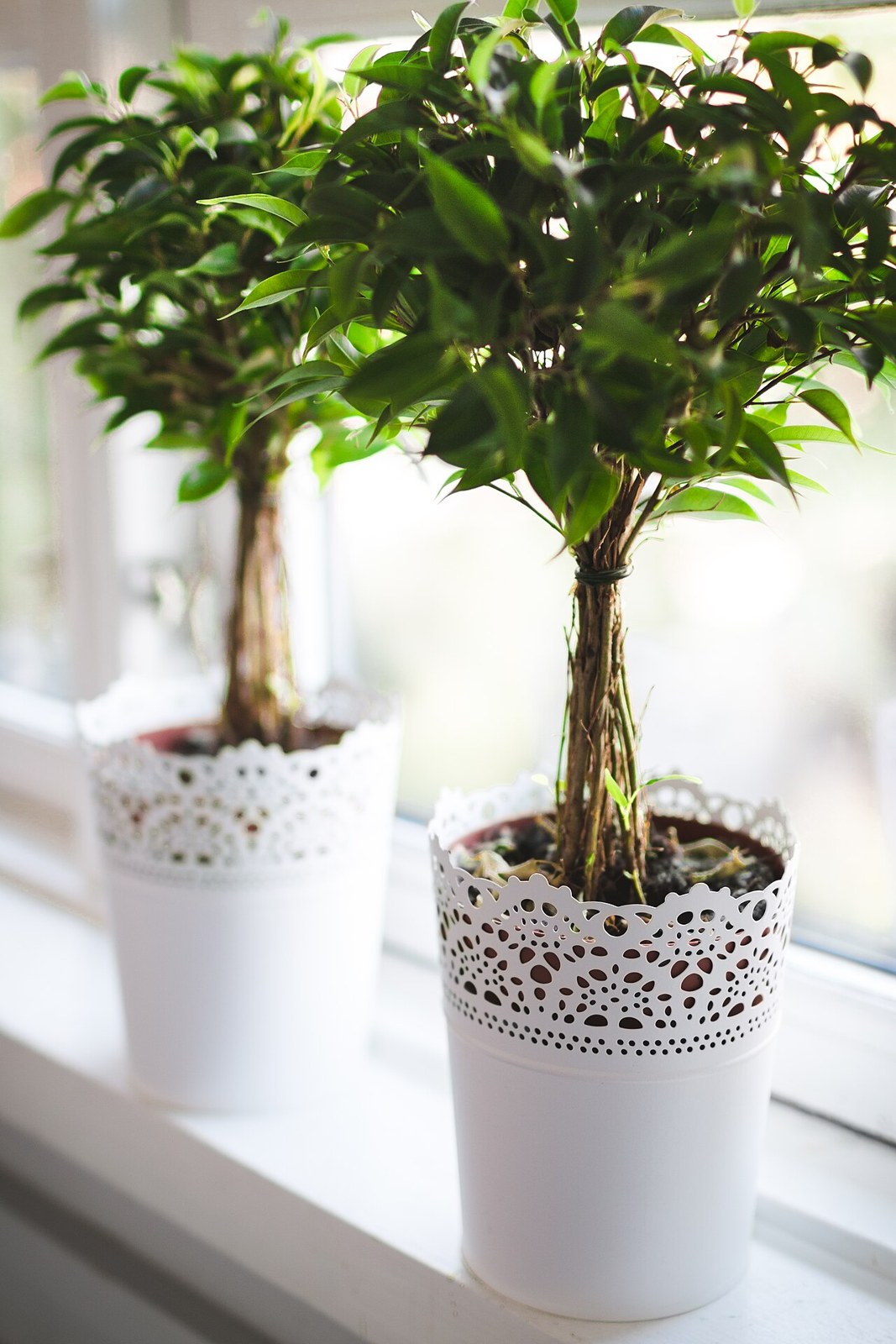
North Carolina State Extension in Richmond County defines the terms: direct light is "the sun directly touching the plant's leaves with only window glass between the sun and the plant." Bright, indirect light is a well-lit spot with a clear view of the sky and no sun on the leaves. Low light is everything dimmer.
The University of Florida Institute of Food and Agricultural Sciences (UF/IFAS) Gardening Solutions team calls these labels generalizations and says measuring the light at your plant's spot "will give you a better understanding of how bright the space really is."
Which way does your window face?
North Carolina State Extension says south-facing windows "generally provide the brightest, most intense light throughout the day." West windows add "strong intense light in the afternoon and evening" and run warmer.
| Window | What it usually gets | Good starting plants |
|---|---|---|
| South | The most light, often hours of direct sun | Sun lovers such as cacti and succulents |
| East | Gentle morning sun, then bright indirect light | Most foliage plants |
| West | Bright light that turns strong and warm after lunch | Plants that handle some direct sun |
| North | Steady, indirect light, the lowest of the four, brightest right at the glass | True low-light plants |
Illinois Extension uses the same scheme and notes that it assumes nothing blocks the window. Iowa State University Extension lists what does: window size, curtains, films, overhangs, trees and neighboring buildings. North Carolina State Extension adds dirty glass, the best excuse you will ever get to wash the windows. A compass app settles the direction in seconds, and south of the equator you swap north and south.
How far from the window is too far?
North Carolina State Extension puts a number on the drop: "A south facing window with strong direct light can become a low light area not suitable for growing if a plant is moved just 8 feet back." Iowa State agrees that "Light levels drop quickly as you get further away from the window" and warns that "Areas just to the side of windows are also much darker than they appear."
Your eyes adjust to a dim room, so a corner can feel bright to you and gloomy to a plant.
How do the seasons change your light?
Illinois Extension notes that light intensity drops in winter and you may need supplemental light. Iowa State explains that overhangs shade windows differently "as the sun is lower on the horizon in winter and higher in the sky during the summer," so a window under a deep overhang can get more sun in winter.
Read your light in summer and winter and move plants to match. Our winter houseplant care guide covers cold glass. Dim light slows growth, so the soil stays damp longer and the check before you water matters more.
How do I do the shadow test?
North Carolina State Extension describes the shadows: with direct sun "your plant will cast a crisp shadow," in bright, indirect light it "might cast a fuzzy, soft shadow," and in low light the "shadow will be faint."
- Pick a clear day and test around midday, then again in the late afternoon.
- Lay white paper where the leaves will sit so the shadow is easier to read.
- Hold your hand flat about a foot above the paper.
- Read the shadow's edge and note the result for each spot.
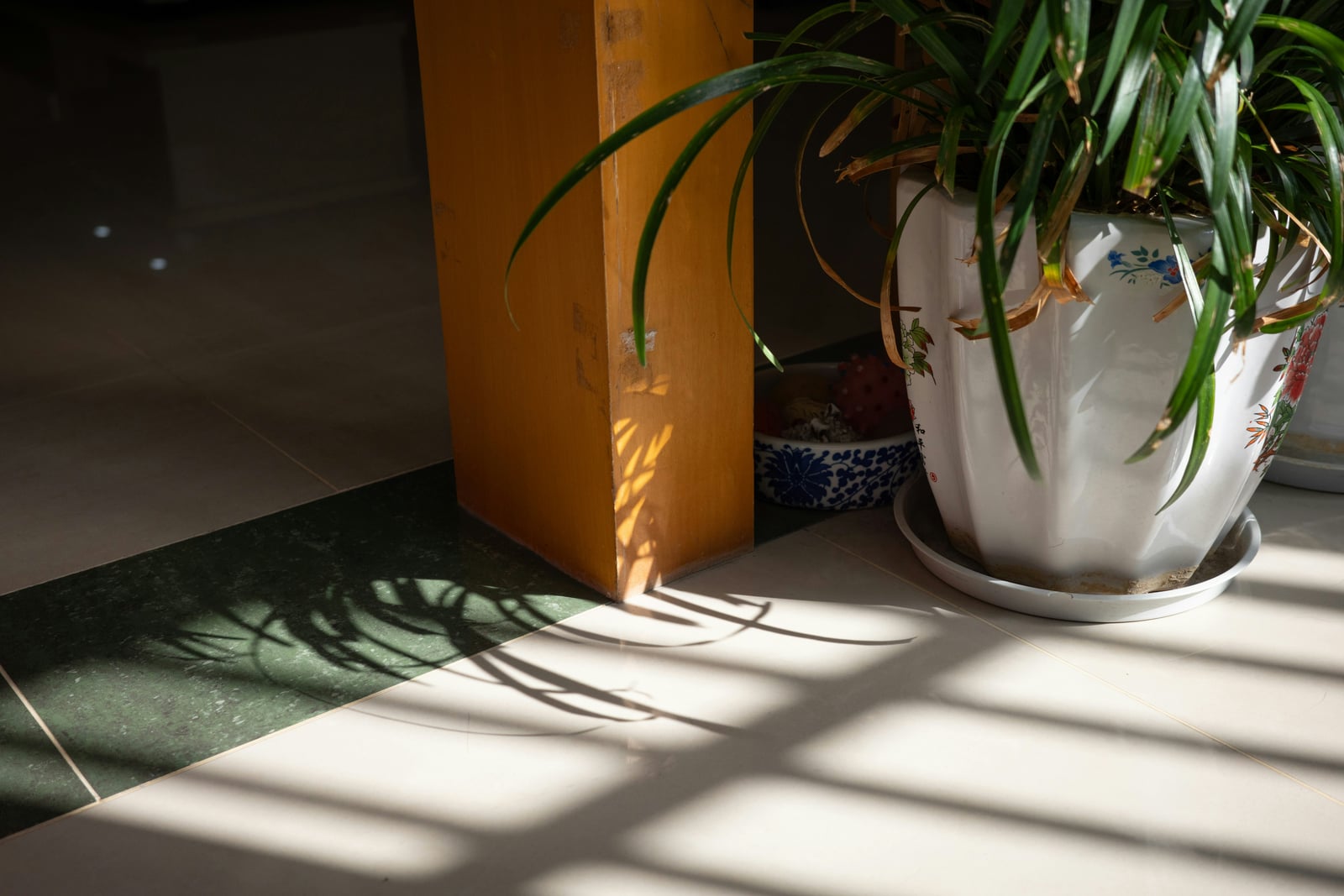
Edges this sharp mean direct sun, which sun lovers enjoy and shade lovers protest with scorched leaves.
Can a free light-meter app measure plant light?
UF/IFAS says an inexpensive handheld meter reading foot-candles or lux is fine for houseplants. Phone apps "are usually accurate enough to determine a change in light levels but should only be used for approximations." Read at leaf height around midday. Most apps read lux, and one foot-candle is about 10.8 lux.
| Light level | Foot-candles at midday | About this many lux | Typical spot |
|---|---|---|---|
| Low | 25 to 100 | 270 to 1,080 | Far from windows, or lit mostly by room lights |
| Medium | 100 to 500 | 1,080 to 5,400 | Near a window with no direct sun, such as an unshaded north window |
| High | 500 to 1,000 | 5,400 to 10,800 | Near an unshaded east or west window, with softened direct sun |
| Direct sun | Over 1,000 | Over 10,800 | Right in an unshaded south or southwest window |
For decimal fans, the University of Hawaii at Manoa College of Tropical Agriculture and Human Resources tested two phone apps that estimate photosynthetic photon flux density (PPFD), the light particles plants use for photosynthesis. After calibration, both averaged an error of about 21 micromoles per square meter per second. That is close enough to set up a grow light.
Which plants match which light?
North Carolina State Extension notes that most houseplants need high or medium light and "fewer are suitable for low light conditions."
| Your light | Where to look | Plants to try |
|---|---|---|
| Low | A north window, or a few feet back from a brighter one | ZZ plant (Zamioculcas zamiifolia), pothos, philodendron, peace lily, snake plant, Chinese evergreen (Aglaonema) |
| Medium | An east or west window, out of strong afternoon sun | Calathea, maranta, peperomia, bird's nest fern (Asplenium nidus), spider plant, begonias |
| Bright, indirect | Close to an east or west window, or set back from a south one | Monstera, fiddle leaf fig, Norfolk Island pine, bird of paradise (Strelitzia), Chinese money plant (Pilea peperomioides) |
| Direct sun | Several hours through an unshaded south or west window | Cacti and succulents, citrus |
North Carolina State Extension lists monstera as medium light and Illinois lists it as bright, which suggests a monstera copes in medium light and does better with more.
If you are new to plants, the best beginner plants list and our first plant guide both start from your light. With a cat or dog at home, read the pet-safe plants guide first, since pothos and snake plant are listed as toxic to both.
Grove builds each plant's care plan from its species and how you grow the plant. The plan covers watering checks, feeding, pruning and repotting and explains the reasoning, and you can change anything, including how often each watering check shows up.
What are the signs of too little or too much light?
North Carolina State Extension describes a plant short on light as "leggy," leaning toward the window and fading in color. Iowa State adds dropped leaves, missing flowers and growth that is "pale, spindly, or slow." Too much light gives leaves that are "bleached or damaged" or that "turn yellow or brown and drop." Watering trouble looks similar, so check the soil first and see our guides to yellow leaves and a drooping plant.
Natural fixes do all the work here:
- Move the plant closer to the glass, or back from a scorching window
- Rotate the pot so every side gets a turn, as Illinois Extension recommends
- Wash the windows and open heavy curtains
- Hang a sheer curtain to soften strong afternoon sun
- Add a grow light for a dark room or a dark winter
Chemical fixes have nothing to offer. No fertilizer, spray or supplement stands in for light.
Which light myths should I ignore?
Myth: low-light plants love dark corners. Iowa State says most houseplants, including those that do well in low light, look their best in bright, indirect light. North Carolina State Extension's ZZ plant profile says the plant will grow in very low light, even in spots with only fluorescent light, and does best in bright, indirect sunlight.
Myth: a south window always beats a north window. Iowa State notes that curtains, overhangs and outdoor obstructions matter too, so a clear north window can outshine a south window behind a big tree.
Myth: ceiling lights count as plant light. UF/IFAS puts spots lit only by room lights in its lowest light group.
When does a grow light make sense?
North Carolina State Extension says LED lights "are the most common grow lights on the market right now" because they are efficient, run cool and come in many sizes. Grow light fades with distance like window light, so start close to the leaves.
Collectors growing rare or variegated plants under lights often track daily light integral (DLI), the total light a plant gets in a day. The University of Hawaii gives the math: PPFD times hours of light times 3,600, divided by one million. A PPFD of 100 for 12 hours gives a DLI of about 4.3. Our sources give DLI targets for crops such as lettuce and none for houseplants, so treat any houseplant number online as a starting point to test against new leaves.
Indoor light FAQ
How much direct sunlight do indoor plants need?
Most do best without direct sun on their leaves. Iowa State says most houseplants look their best in bright, indirect light. For plants that need direct light, UF/IFAS says four or more hours of direct sun is best, usually from an unshaded south or southwest window. If your brightest window falls short, a grow light can fill the gap.
Do sheer curtains and window film block sunlight for plants?
Both cut the light. Iowa State says curtains, sheers, films and tinting all reduce light, and some films filter out wavelengths plants use. Open the curtains during the day for plants that want more light. For a plant behind sheers all day, the shadow test shows how much light gets through.
Does light change how often I need to water?
Yes. Illinois Extension's watering guide lists light among the factors that change how often a plant needs water. Keep checking the soil before you water, and set how often the watering check shows up in your Grove plan. Shorter, dimmer winter days slow most houseplants down, so expect the check to say wait more often.
Sources
- Light Considerations for Indoor Plants : North Carolina State Extension, Richmond County Center
- Light for Houseplants : University of Florida Institute of Food and Agricultural Sciences Gardening Solutions
- How to Care for Houseplants : Iowa State University Extension and Outreach, Yard and Garden
- Houseplants and Indoor Lighting : University of Illinois Extension, Good Growing
- Watering houseplants : University of Illinois Extension
- Low-Cost Light Sensors for Indoor Agriculture : University of Hawaii at Manoa College of Tropical Agriculture and Human Resources
- Zamioculcas zamiifolia : North Carolina Extension Gardener Plant Toolbox