Pet-safe houseplants for cats and dogs
Plenty of easy houseplants are listed as non-toxic to cats and dogs, including spider plant, Boston fern, parlor palm, calathea, peperomia and moth orchids. Many popular plants are listed as toxic, from pothos and snake plant to monstera and peace lily, and true lilies need extra care around cats. If a pet chews a plant, call your veterinarian or a pet poison line and have the plant's name ready.
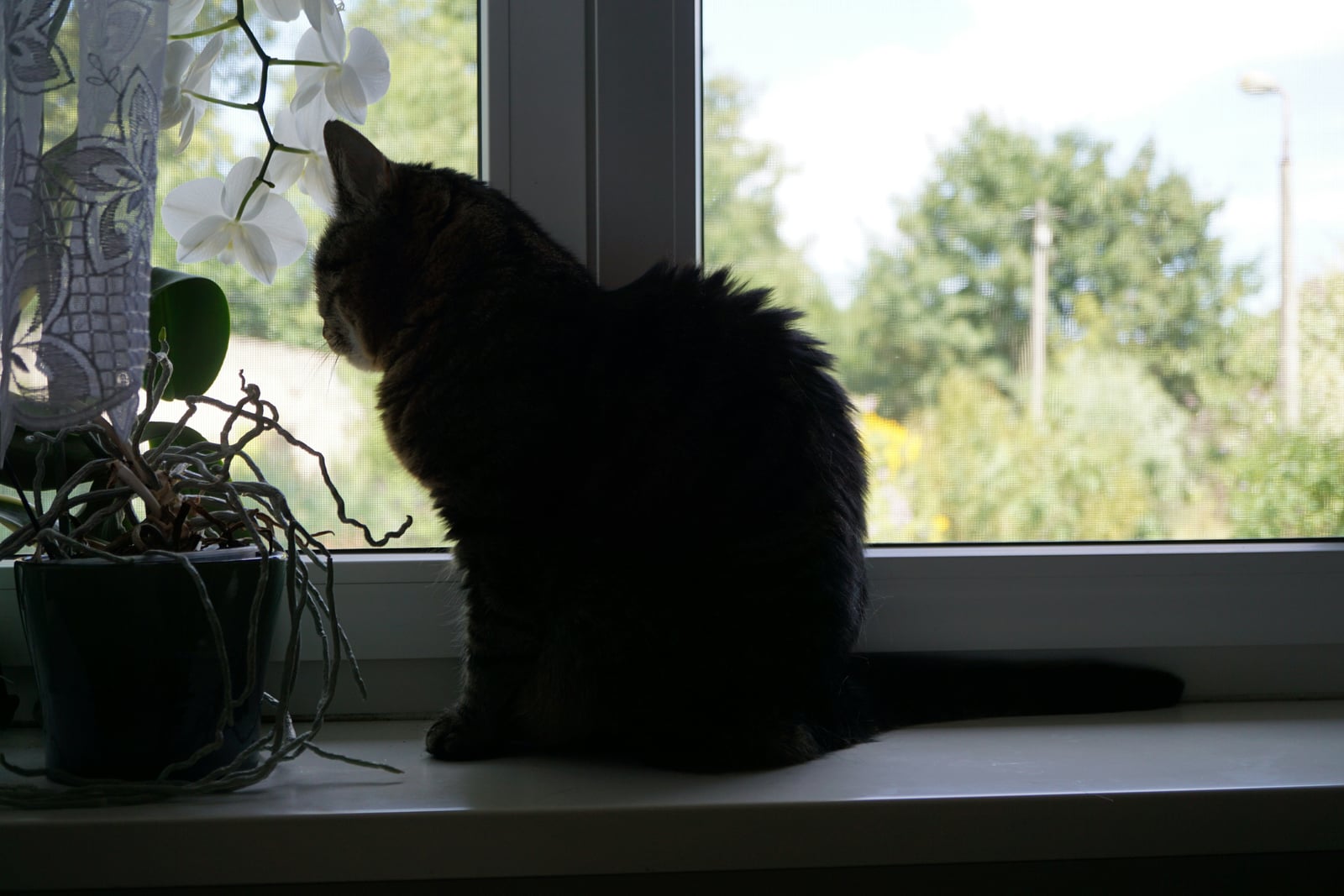
What do toxic and non-toxic mean on the plant lists?
The American Society for the Prevention of Cruelty to Animals (ASPCA) keeps the most widely used toxic and non-toxic plants database, with separate lists for cats and dogs. The ASPCA says the list covers the most frequently encountered plants, that eating any plant material may cause vomiting and stomach upset, and that plants listed as non-toxic are not expected to be life-threatening. Common names overlap, so match the scientific name.
A real example of the gray zone: the ASPCA database lists the spider plant as non-toxic to dogs and cats, and an ASPCA Animal Poison Control Center article calls it mildly toxic, with a risk of mild stomach upset. Read together, a spider plant is unlikely to cause serious harm, and a cat that chews one may still throw up.
Which common houseplants are listed as safe for cats and dogs?
| Plant | Scientific name | ASPCA listing |
|---|---|---|
| Spider plant | Chlorophytum comosum | Non-toxic to cats and dogs |
| Boston fern | Nephrolepis exaltata 'Bostoniensis' | Non-toxic to cats and dogs |
| Parlor palm | Chamaedorea elegans | Non-toxic to cats and dogs |
| Areca palm | Dypsis lutescens | Non-toxic to cats and dogs |
| Calathea | Calathea species | Non-toxic to cats and dogs |
| Baby rubber plant | Peperomia obtusifolia | Non-toxic to cats and dogs |
| Moth orchid | Phalaenopsis species | Non-toxic to cats and dogs |
| African violet | Saintpaulia species | Non-toxic to cats and dogs |
| Cast iron plant | Aspidistra elatior | Non-toxic to cats and dogs |
| Ponytail palm | Beaucarnea recurvata | Non-toxic to cats and dogs |
| Haworthia | Haworthia species | Non-toxic to cats and dogs |
| Christmas cactus | Schlumbergera bridgesii | Non-toxic to cats and dogs |
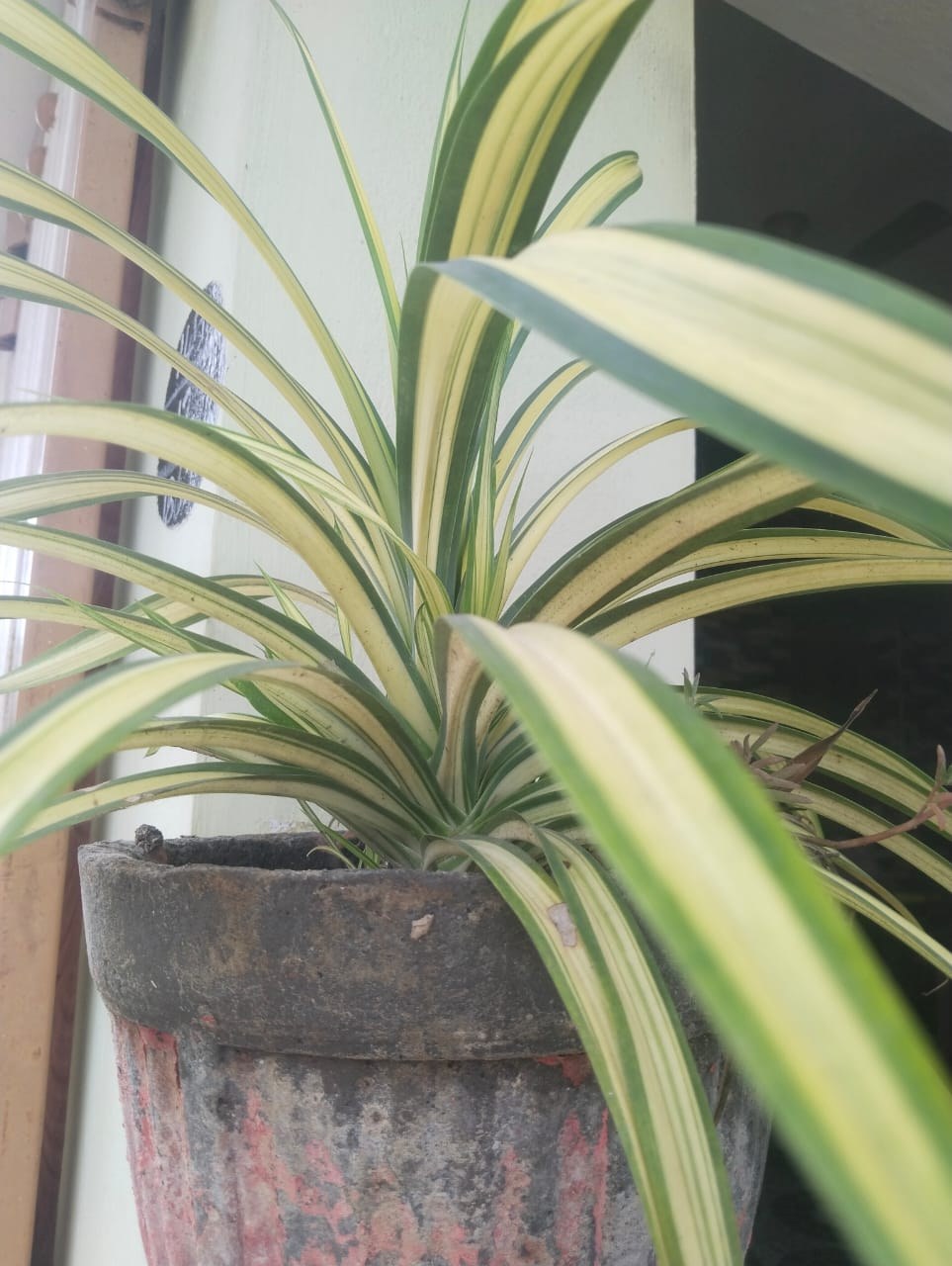
The spider plant is the classic pick for a home with pets, and North Carolina State Extension's spider plant profile also tags it as non-toxic, though the MSD Veterinary Manual lists it as mildly upsetting to cats. If your cat treats the leaves as a toy, expect chewed tips. Our best beginner plants list marks the pet-friendly picks.
Which common houseplants are listed as toxic to cats and dogs?
| Plant | Scientific name | ASPCA listing | Signs the ASPCA lists |
|---|---|---|---|
| Pothos | Epipremnum aureum | Toxic to cats and dogs | Mouth irritation, drooling, vomiting, trouble swallowing |
| Peace lily | Spathiphyllum species | Toxic to cats and dogs | Mouth irritation, drooling, vomiting, trouble swallowing |
| Philodendron and monstera | Philodendron species, Monstera deliciosa | Toxic to cats and dogs | Mouth and stomach irritation |
| Snake plant | Dracaena trifasciata (ASPCA: Sansevieria trifasciata) | Toxic to cats and dogs | Nausea, vomiting, diarrhea |
| Dracaena, including corn plant | Dracaena species, including Dracaena fragrans | Toxic to cats and dogs | Vomiting, drooling, low energy, dilated pupils in cats |
| Jade plant | Crassula ovata (ASPCA: Crassula argentea) | Toxic to cats and dogs | Vomiting, low energy, wobbliness |
| Aloe vera | Aloe vera | Toxic to cats and dogs | Vomiting, lethargy, diarrhea |
| Sago palm | Cycas revoluta | Toxic to cats and dogs | Vomiting, liver damage and liver failure |
The ASPCA Animal Poison Control Center article explains the biggest group: pothos, dumbcane, peace lily, philodendron, calla lily and Chinese evergreen contain calcium oxalate crystals that irritate the mouth and stomach. These exposures are not considered life-threatening. A pet with severe stomach trouble or any difficulty breathing may still need a veterinarian. The ASPCA ranks sago palm among the most serious ornamental plants, with the seeds holding the most toxin.
The ZZ plant is missing from the ASPCA list. North Carolina State Extension's ZZ plant profile says it "has a medium toxicity to cats and dogs," so treat the ZZ plant as toxic. The ASPCA Animal Poison Control Center article lists the fiddle leaf fig as mildly toxic and notes that its sap can irritate skin.
Holiday plants: the ASPCA lists the poinsettia as toxic to cats, dogs and horses, and its effects are mild. Our poinsettia care card has the signs to watch for and the poison line number. The ASPCA lists the Christmas cactus and the moth orchid as non-toxic, and our gift plant guide covers a new plant's first week.
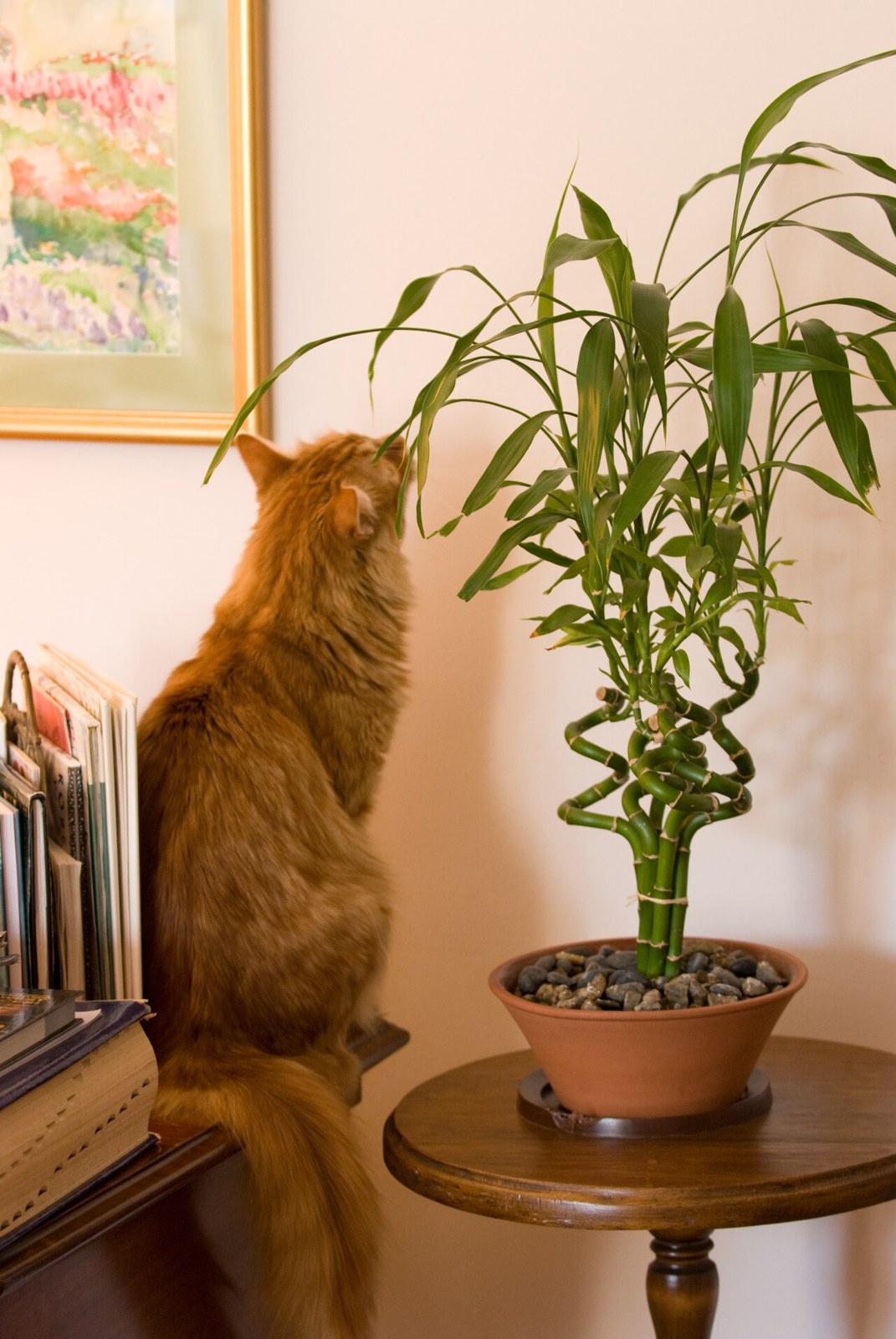
Lucky bamboo is a dracaena, and North Carolina State Extension's lucky bamboo profile flags it as a problem for cats and dogs. The photographer says this cat went for the bamboo after the cat grass ran out.
Are lilies toxic to cats?
The United States Food and Drug Administration (FDA) says lilies in the true lily and daylily families affect cats through "the stem, leaves, flowers, pollen, and even the water in a vase." A small bite or a few pollen grains licked off fur can cause kidney failure in less than 3 days. The ASPCA lists the Easter lily as toxic to cats, and the FDA says dogs may get a minor stomach upset.
The Cornell Feline Health Center at the Cornell University College of Veterinary Medicine says lilies "can cause life-threatening kidney failure if ingested even in tiny amounts." The FDA advises keeping these lilies out of the house, birthday bouquets included, and out of the garden if your cat goes outside. Early veterinary treatment greatly improves a cat's outlook, so call even if your cat seems fine.
Peace lilies and calla lilies sit in a different plant family. The FDA says they irritate the mouth and throat and do not cause kidney failure.
What should I do if my pet chews a plant?
- Move your pet away from the plant and pick up any chewed pieces.
- Check that your pet is breathing and acting normally, as Pet Poison Helpline advises.
- Find the plant's name, or keep a piece of the plant or its label, as Cornell suggests. A photo helps too, and Grove can identify a plant from a photo if the label is long gone.
- Call your veterinarian, the ASPCA Animal Poison Control Center at (888) 426-4435 or Pet Poison Helpline at (855) 764-7661. Both poison lines answer 24 hours a day.
- Follow their advice. Give no home antidotes, as Pet Poison Helpline advises, and induce vomiting only when told to, as Pet Poison Helpline and Cornell both say.
- Go straight to your veterinarian or an emergency clinic if your pet has trouble breathing or seems seriously unwell.
| Who to call | Phone number | What to know |
|---|---|---|
| Your veterinarian | Your veterinarian's number | Knows your pet's history |
| ASPCA Poison Control | (888) 426-4435 | Open 24 hours a day, 365 days a year; a consultation fee may apply |
| Pet Poison Helpline | (855) 764-7661 | Open around the clock; a fee applies per incident, with follow-up consultations included |
We checked both numbers on each organization's own website on October 18, 2026, and the FDA lists the same two. If a person, such as a child, eats part of a plant, call Poison Help at 1-800-222-1222 in the United States. For other countries, see our poison help numbers by country (in Spanish).
About remedies: there is no natural or chemical remedy to give at home.
How do I keep plants and pets in the same home?
- Check the ASPCA list before you buy, using the scientific name on the tag
- Keep toxic plants on high shelves, in hanging planters or in rooms your pet never visits, and remember that cats climb
- Clear fallen leaves and spent flowers off the floor
- Skip true lilies in bouquets in a home with cats, as the FDA advises
- Watch new plants for the first few weeks, since curious pets investigate new things
Moving a plant to a high shelf changes its light, and our indoor light guide shows how to read the new spot. Grove builds each plant's care plan from its species and how you grow the plant, and you can share one care list with everyone in the household.
Which pet and plant myths should I ignore?
Myth: non-toxic means my pet can snack freely. The ASPCA says eating any plant material may cause vomiting and stomach upset.
Myth: only the leaves are a problem. The FDA says every part of a true lily affects cats, including pollen and vase water. The ASPCA says all parts of the sago palm are toxic, with the seeds the most toxic part.
Myth: make a pet vomit right away. Cornell warns against inducing vomiting unless you are told to, because some substances "can cause more damage during vomiting than if left in the stomach."
Can a plant collector keep a pet-friendly shelf?
Aroids on the ASPCA toxic list include monstera, philodendron, anthurium, alocasia and syngonium. Our big-leaf houseplants guide and exotic houseplants guide note the pet status for each plant they cover.
The ASPCA lists the wax plant, Hoya carnosa 'Krinkle Kurl', as non-toxic, along with many peperomias, calatheas, moth orchids, haworthias, echeverias and the nerve plant, Fittonia. Check each species by scientific name, since the list covers some members of a group and leaves others out.
If you move a plant into a hanging planter or a heavier pot, our repotting guide covers pot size and mix.
Pet-safe plants FAQ
Are pothos toxic to cats?
Yes. The ASPCA lists pothos as toxic to cats and dogs. The plant contains insoluble calcium oxalates that cause mouth irritation, drooling, vomiting and trouble swallowing. If your pet chews one, take the plant away, check that your pet is breathing and acting normally, and call your veterinarian or a poison control line.
Is a snake plant safe for dogs?
The ASPCA lists the snake plant as toxic to dogs and cats, with nausea, vomiting and diarrhea as the signs. Keep one on a high shelf or in a room your dog skips. For a similar upright look on the floor, the cast iron plant and the ponytail palm are both on the ASPCA non-toxic list.
Are spider plants safe for cats?
The ASPCA lists spider plant as non-toxic to cats and dogs. The MSD Veterinary Manual is more cautious: it lists spider plants among houseplants that can mildly upset cats, with vomiting, drooling, gagging and a short loss of appetite, and no deaths described. An ASPCA Animal Poison Control Center article also notes a risk of mild stomach upset if a pet eats some. So it's a low-risk plant, and a cat that shreds one may still throw up on the rug. Hang the pot out of reach if your cat treats the leaves as a salad bar.
Does ASPCA Poison Control charge a fee?
The ASPCA says a consultation fee may apply. Pet Poison Helpline also charges one fee per incident that covers follow-up consultations. Your own veterinarian is always a good first call too. Save all three numbers in your phone now so nobody has to search for them during a stressful moment.
Sources
- Toxic and Non-Toxic Plants database : American Society for the Prevention of Cruelty to Animals
- Toxic and Non-Toxic Plant List: Cats : American Society for the Prevention of Cruelty to Animals
- Toxic and Non-Toxic Plant List: Dogs : American Society for the Prevention of Cruelty to Animals
- Is That Houseplant Safe for Your Pets? : ASPCA Animal Poison Control Center
- ASPCA Poison Control : American Society for the Prevention of Cruelty to Animals
- Pet Poison Helpline : Pet Poison Helpline
- Lovely Lilies and Curious Cats : United States Food and Drug Administration
- Common Cat Hazards : Cornell Feline Health Center, Cornell University College of Veterinary Medicine
- Zamioculcas zamiifolia : North Carolina Extension Gardener Plant Toolbox
- Dracaena sanderiana : North Carolina Extension Gardener Plant Toolbox
- Chlorophytum comosum : North Carolina Extension Gardener Plant Toolbox
- Houseplants and Ornamentals Toxic to Animals : MSD Veterinary Manual
- ASPCA plant entries: Spider plant, Boston fern, Parlor palm, Calathea, Wax plant, Devil's ivy, Peace lily, Snake plant, Corn plant, Jade plant, Aloe, Sago palm, Easter lily