How to repot a houseplant without shock
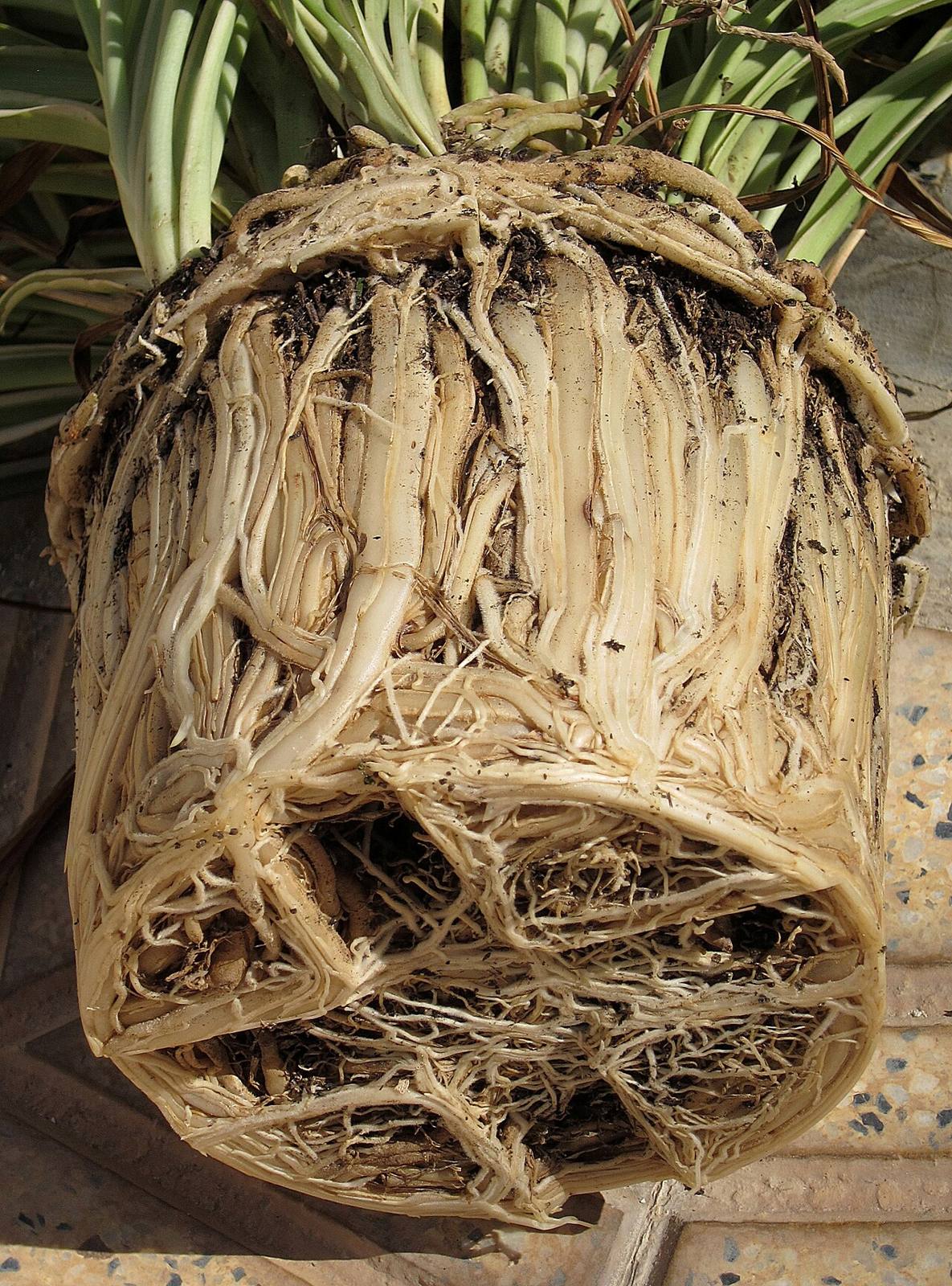
Repot when the roots tell you to: roots out of the drainage hole, a solid mass of roots when you slide the plant out, or soil that dries far faster than it used to. Move up only an inch or two in pot size, use a light potting mix over an open drainage hole, and keep the plant out of strong sun for a few days. After that, every watering starts with a check.
How do I know a plant needs a bigger pot?
Montana State University Extension lists the signs that a plant needs a new home:
- Roots growing out of the bottom of the pot
- Roots dense and tangled with no room left to grow
- A top-heavy plant that keeps tipping over
- Soil that needs water far more often than it used to
- Salt or mineral crust on the soil or the pot
- A sickly plant with slow growth and yellowing lower leaves
The Clemson University Home and Garden Information Center (HGIC) suggests the simplest test: slide the plant out and look. "If roots are in a solid mass around the rootball, the plant needs to be repotted." A pot with no drainage hole also earns a repot, says Illinois Extension, because "good drainage is essential."
Yellow lower leaves have other causes too, and our yellow leaves guide covers them.
When is the best time to repot?
Illinois Extension says repotting "is best accomplished when the plant is actively growing. Typically this is done in spring or early summer." The Royal Horticultural Society (RHS) advises against repotting in autumn or winter, because slow growth "increases the risk of fresh compost sitting too wet."
Montana State University Extension gives the exception: a plant showing the stress signs above can be repotted any time. Our winter care guide covers the slower season.
How much bigger should a pot be when repotting?
Clemson says to select "a pot that is 1 or 2 inches larger in diameter than the current pot." The RHS gives the same range for pots under 10 inches across, with a ceiling: the new pot "should be no more than one third larger than the current one." Montana State University Extension uses the same one-third rule for both width and depth.
Overpotting often comes from kindness. The RHS guide to overpotting explains that the extra compost "is sitting wet for a long period, reducing aeration around the roots," and the roots rot.
If you have already overpotted, the RHS says to water only when the mix shows signs of drying, or move the plant into a pot just larger than the root ball. If the roots smell sour or feel mushy, our root rot guide walks through the rescue.
Which pot and potting mix should I use?
Every source here agrees on drainage holes. For a pot with no hole, the University of Maryland Extension suggests using it as a cover with a plastic nursery pot inside.
| Pot | Upside | Downside |
|---|---|---|
| Terracotta | Breathes and dries fast, good for plants that like to dry out | Dries out quickly, breaks easily, shows salt crust sooner |
| Plastic | Light, cheap and slower to dry, with fewer salts | Can fade in bright sun and turn brittle outdoors in the cold |
| Glazed ceramic | Heavy and handsome, steadies a tall plant | Often has no drainage hole |
For the mix, the University of Maryland Extension recommends a soilless blend of peat moss, vermiculite and perlite and warns that bags labeled "potting soil" are usually too dense. Illinois Extension agrees: use "a soil-free potting mix." Cacti want a sandier mix, and epiphytes want a chunky one. To reuse a pot, Montana State University Extension suggests a 10 percent bleach dip, then a rinse.
How do I repot a plant step by step?
- Check the soil first. Illinois Extension suggests watering about an hour ahead if the plant is dry.
- Cover the drainage hole with a pot shard or coffee filter so the mix stays in.
- Add fresh mix until the root ball will sit about an inch below the rim.
- Tip the old pot over with your hand across the soil, tap the rim and slide the plant out, as Clemson describes.
- Loosen circling roots. If they are too tight, the University of Maryland Extension suggests shallow cuts about half an inch into the root ball. Trim dead, brown roots.
- Set the plant at the depth it grew before, with no soil above the original level.
- Fill around the root ball and press the mix in gently with your fingers.
- Check the new mix. Bagged mix is usually dry, so the first check almost always says water. Water until it drains, then empty the saucer after about 20 minutes, as Illinois Extension recommends.
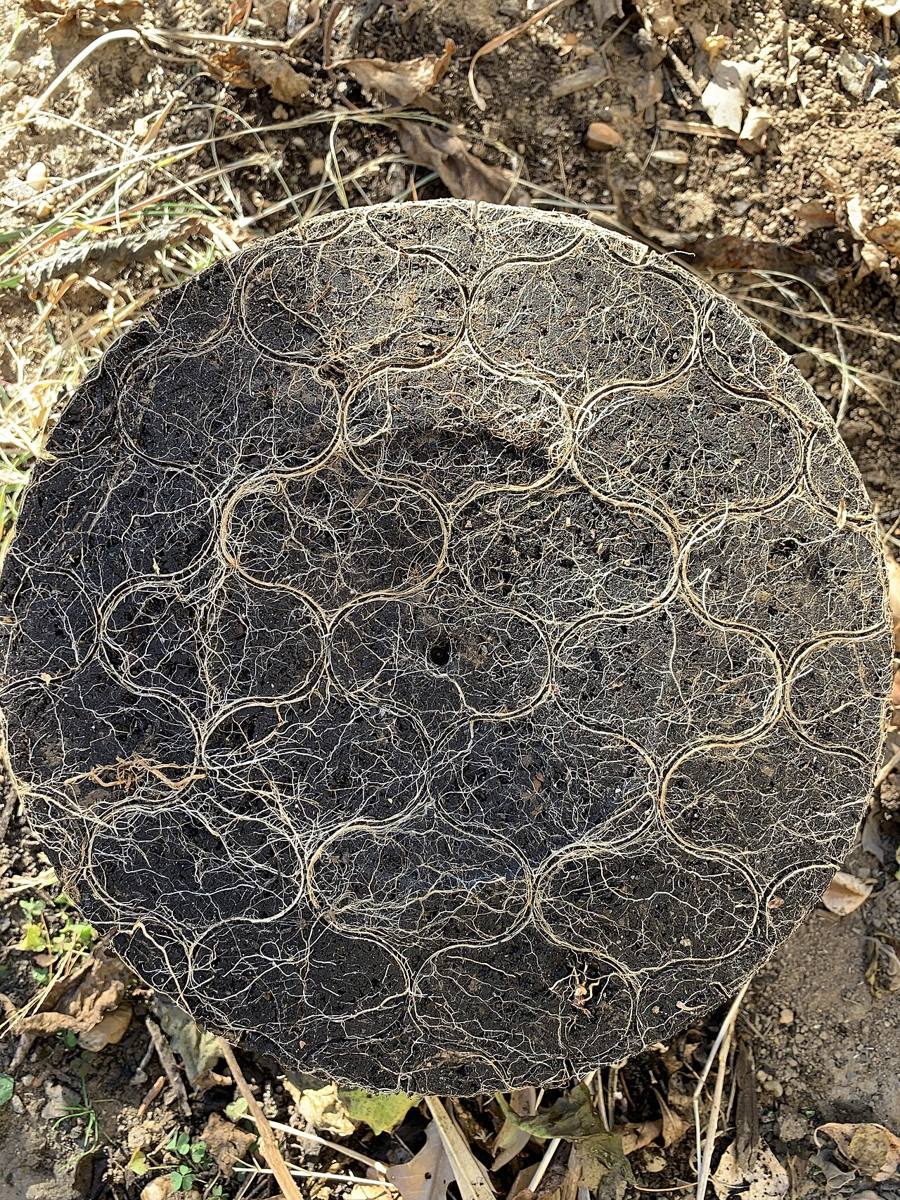
Roots that trace the pot like this have run out of room. Tease them loose in step 5.
How do I care for a plant after repotting?
Montana State University Extension recommends keeping a newly repotted plant "in indirect light for a few days to reduce transplant shock," says that yellowing or leaf drop afterward is normal, and advises waiting at least two weeks before you fertilize so the roots can regenerate. Our indoor light guide helps you find that spot.
Watering is where repotting goes wrong. The University of Maryland Extension says to water thoroughly at repotting and then "avoid further watering until the soil dries at the top." A bigger pot of fresh mix dries at a new pace, so check before every watering with a finger in the mix and a lift of the pot. Our guide to checking whether a plant needs water covers each method.
Grove builds each plant's care plan from its species and how you grow the plant. The watering task in the plan is a check, and you set how often the check shows up.
What helps a plant through repotting shock?
Repotting shock is the sulk a plant goes through after its roots are disturbed. Illinois Extension notes that houseplants "may wilt and die back a bit" and that, given enough time, the right light and adequate water, they establish a good root system again.
Natural remedies cover nearly everything:
- Bright, indirect light for a few days, out of hot direct sun
- A soil check before every watering
- No fertilizer for at least two weeks
Chemical remedies are mostly marketing. Washington State University Extension horticulturist Linda Chalker-Scott calls the idea that vitamin B1 reduces transplant shock a myth that "refuses to die" and says plants make their own thiamine. The University of Arizona Cooperative Extension adds that root stimulators often contain auxins or fertilizer, and that auxins "are excellent for propagating cuttings." Neither source shows a benefit for a houseplant moving up one pot size, so spend the money on good mix.
Which repotting myths should I ignore?
Myth: every pot needs a layer of gravel at the bottom. Clemson says a layer of clay pieces or rocks "actually slows water movement through the pot," and Washington State University's drainage myth review explains that water stays in fine mix "until the finer soil is saturated." A 2025 study in PLOS One tested drainage layers in pots without plants and found that almost every layer reduced water retention in loam-free organic mixes, with most showing no effect in loam-based ones. Its author calls the warnings about drainage layers "inaccurate." Both camps agree on an open drainage hole, so a full pot of good mix over that hole is the simplest setup.
Myth: a big pot saves you from repotting. Oversized pots stay wet and rot roots, as the RHS shows. Our plant myths page has more.
Myth: every plant needs repotting every spring. Clemson says fast growers may need a new pot each year, while slow growers can go two to three years between repots. Illinois Extension adds that some plants do well pot-bound.
Myth: a root-bound plant is always unhappy. Clemson says amaryllis "thrive when potbound," and Iowa State University Extension says hoyas "commonly flower better when slightly potbound." These plants can stay in a snug pot.
How do collectors repot rare and epiphytic plants?
The University of Maryland Extension explains that epiphytes such as orchids, bromeliads and anthuriums attach to tree branches in nature and that "If they are grown in regular potting mix, their roots may rot." It suggests a porous mix such as one part peat moss, six parts fir bark and one part charcoal. Iowa State suggests potting soil, orchid bark and perlite or pumice for hoyas, because "What matters most is that roots get oxygen."
Some collectors grow in clay pebbles instead, and our semi-hydroponics guide covers that switch.
For a plant that is already big enough, the RHS says root pruning of up to 15 percent of the roots every few years keeps it in the same pot. For a floor plant too heavy to lift, Clemson recommends replacing the top 2 or 3 inches of soil with fresh mix.
Repotting FAQ
Should I water right after repotting?
Check the new mix first. Fresh bagged mix is usually dry, so the check almost always says yes. Illinois Extension says to water immediately after repotting, and the University of Maryland Extension says to wait for the top of the soil to dry before the next watering.
Why are my plant leaves turning yellow after repotting?
Montana State University Extension says some yellowing or leaf drop after repotting is normal. If the yellowing spreads and the mix stays wet, check for overpotting and root rot. The same guide says to give indirect light for a few days and skip fertilizer for at least two weeks.
Can I reuse old potting soil?
Montana State University Extension says you can if the old soil is free of salt buildup, pests and disease, mixed with at least 50 percent new soil. If the old mix had pests, disease or a white crust of salts, start with fresh mix.
How deep should I plant the repotted plant?
At the same depth as before. Illinois Extension and Clemson both say to keep the plant at its original soil level. Clemson adds that the root ball should sit within about an inch of the rim, with the mix pressed in gently by hand. Illinois Extension says to leave a little room at the top for watering.
Sources
- Ask Steward: How do I repot a houseplant : Montana State University Extension
- Indoor Plants: Transplanting and Repotting : Clemson University Home and Garden Information Center
- Repotting : University of Illinois Extension
- Tips for Repotting Houseplants : University of Illinois Extension, Good Growing
- How to repot a plant : Royal Horticultural Society
- Overpotting : Royal Horticultural Society
- Potting and Repotting Indoor Plants : University of Maryland Extension
- The Myth of Drainage Material in Container Plantings : Linda Chalker-Scott, Washington State University
- Effect of drainage layers on water retention of potting media in containers : Rowe, PLOS One, 2025, digital object identifier 10.1371/journal.pone.0318716
- The Myth of Vitamin Stimulants : Linda Chalker-Scott, Washington State University
- Root Stimulators : University of Arizona Cooperative Extension
- All About Hoyas : Iowa State University Extension and Outreach, Yard and Garden