Exotic houseplants worth trying: unusual plants that grow well indoors
A pitcher plant dangling its traps, an air plant living without soil, a cactus that grows in trees: these plants look like they belong in a rainforest, and many grow well on a bright shelf at home. Here are ten of them, with what each one needs.
What makes a houseplant feel exotic?
Every plant here has a page in the North Carolina State Extension Gardener Plant Toolbox, which we used for light, size and maintenance ratings. Several are epiphytes, plants that perch on branches, which explains their love of airy mixes and humid rooms.
If you like dramatic foliage, our guide to big-leaf houseplants pairs well with this one. Availability notes in each entry are general guidance from what you tend to see in shops.
Which exotic plants are easiest to start with?
String of hearts (Ceropegia woodii)
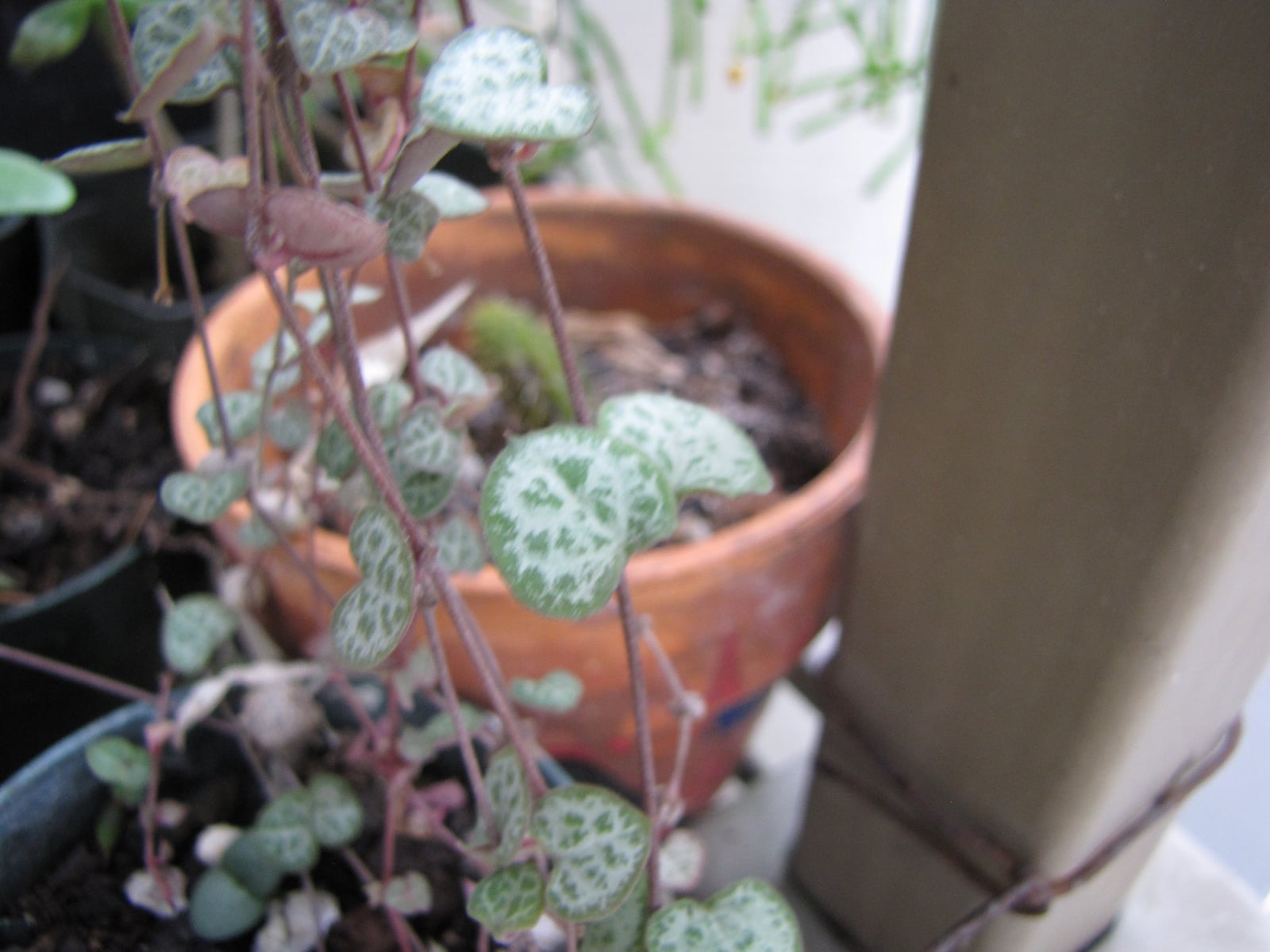
NC State describes wiry stems that drape over a pot and hang down about 3 feet, with heart-shaped leaves etched in silver.
- Look: strings of small silver-marbled hearts
- Indoor size: trails about 3 feet
- Light: bright, filtered light
- Water check: let the mix "dry out completely between waterings," as NC State puts the rule
- Difficulty: low maintenance
- Pets: not covered by NC State or the American Society for the Prevention of Cruelty to Animals (ASPCA) lists we checked
- Availability (general guidance): easy to find in hanging pots
Lipstick plant (Aeschynanthus radicans)
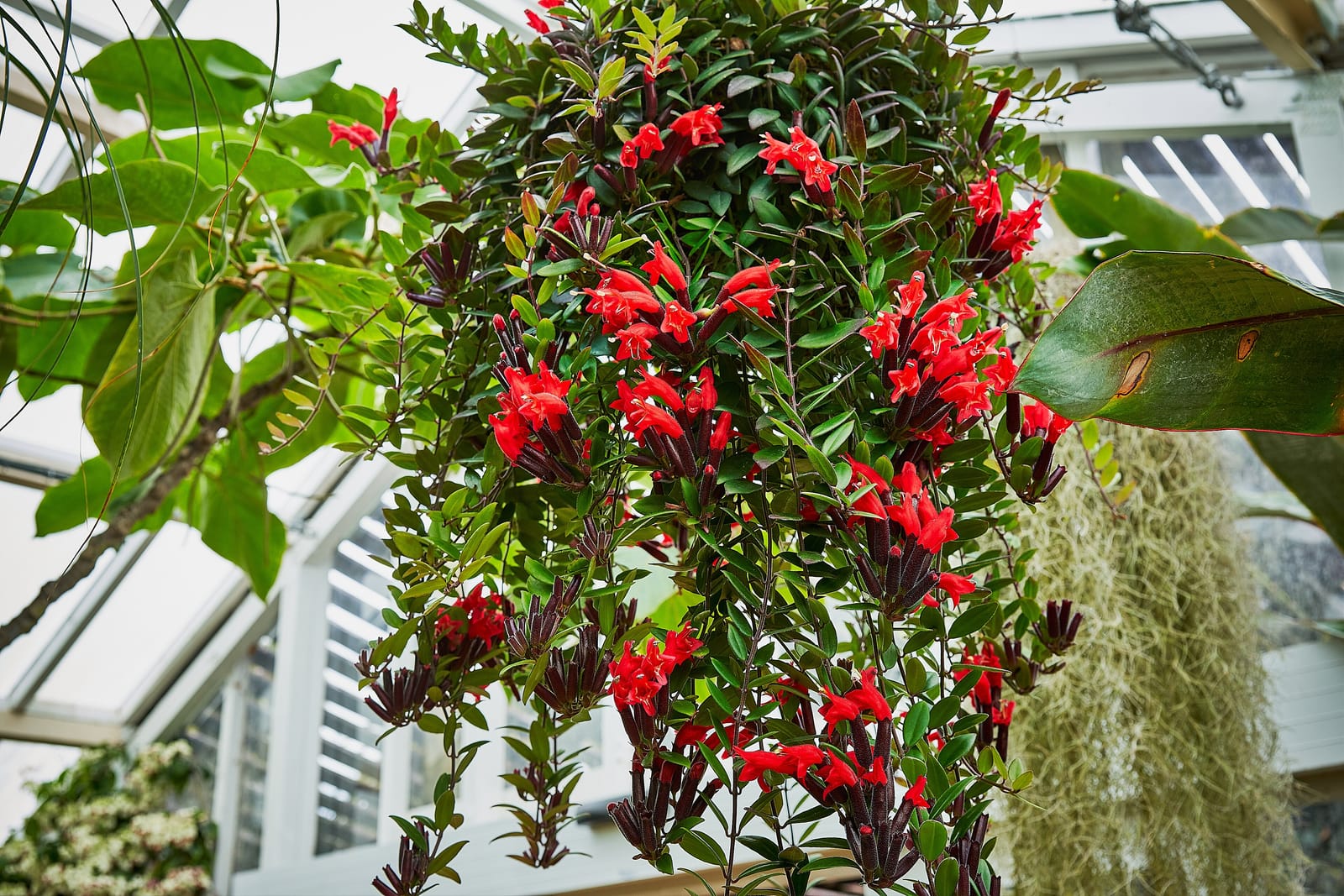
The red flowers push out of dark cups like lipstick from a tube. NC State says the plant "needs bright indirect light (but not full sun)."
- Look: glossy trailing stems with red tubular flowers
- Indoor size: fits a space of 12 inches to 3 feet
- Light: bright indirect light, out of full sun
- Water check: NC State advises "Water them often but be sure the potting soil has good drainage," so check the mix often and use a pot with drainage holes
- Difficulty: low maintenance
- Pets: the ASPCA lipstick plant page lists lipstick plant, Aeschynanthus humilis, as non-toxic to dogs and cats
- Availability (general guidance): common in hanging baskets
Stromanthe 'Triostar' (Stromanthe thalia)
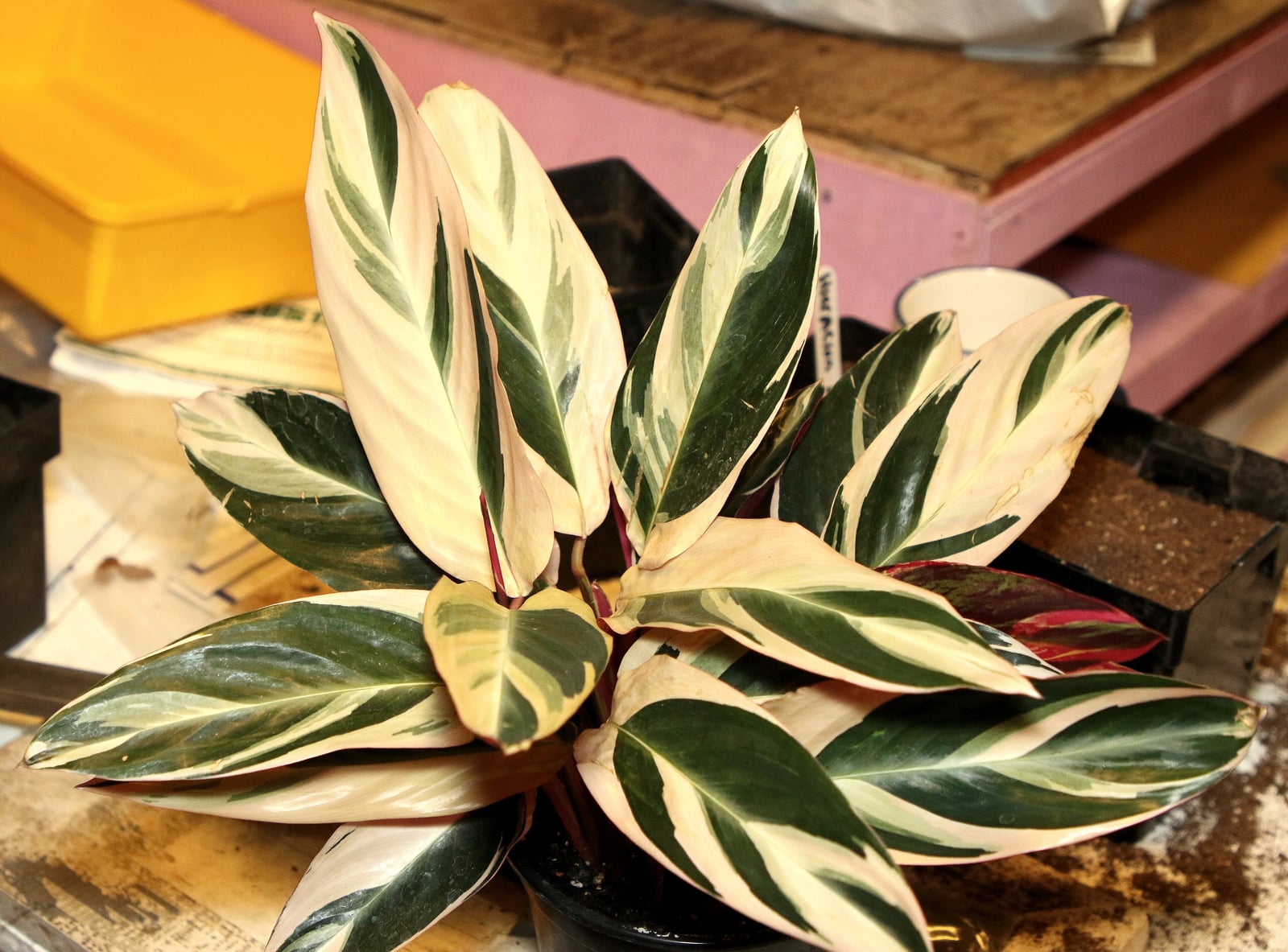
Each leaf is painted cream, green and pink with burgundy undersides, and NC State notes that the leaves fold up at night "to resemble praying hands."
- Look: cream, green and pink stripes with burgundy undersides
- Indoor size: as a houseplant "it is usually only 2 to 3 feet tall"
- Light: filtered light; NC State warns "Direct sun can scorch the leaves, and it is intolerant of dry soils"
- Water check: feel the top of the mix and water before the pot dries out
- Difficulty: low maintenance, with high humidity
- Pets: not covered by NC State or the ASPCA pages we checked
- Availability (general guidance): sold widely as a statement plant
Mistletoe cactus (Rhipsalis)
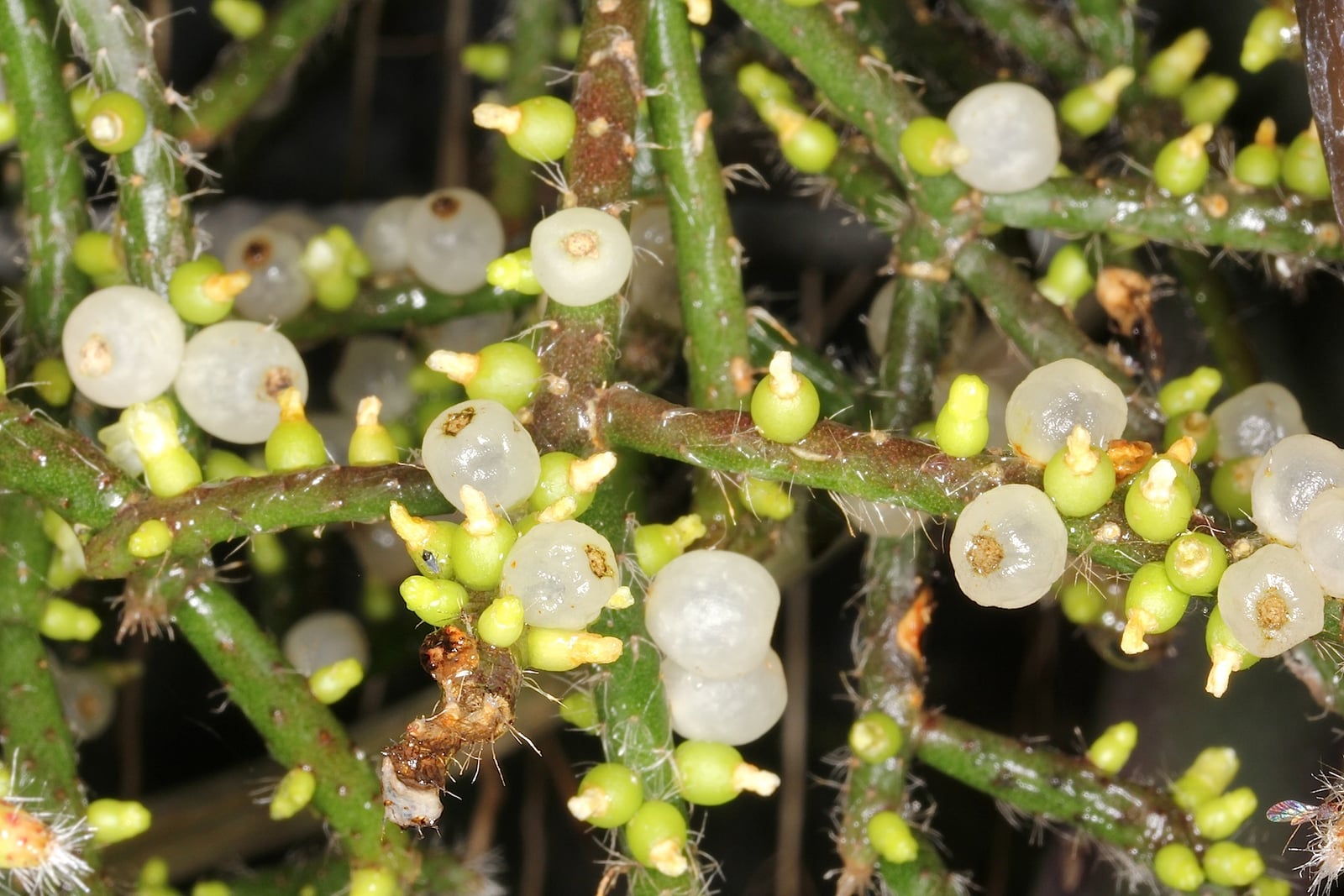
This cactus has no spines and lives in trees. NC State calls Rhipsalis baccifera a low maintenance hanging houseplant that can grow up to 6 feet long indoors.
- Look: cascades of thin green stems, sometimes dotted with white berries
- Indoor size: up to 6 feet long
- Light: bright indirect light or part shade
- Water check: NC State says "Water the plant when the soil feels dry but avoid overwatering"
- Difficulty: low maintenance
- Pets: NC State tags Rhipsalis baccifera as non-toxic for cats and dogs
- Availability (general guidance): found at specialty plant shops
Which exotic plants need a little more care?
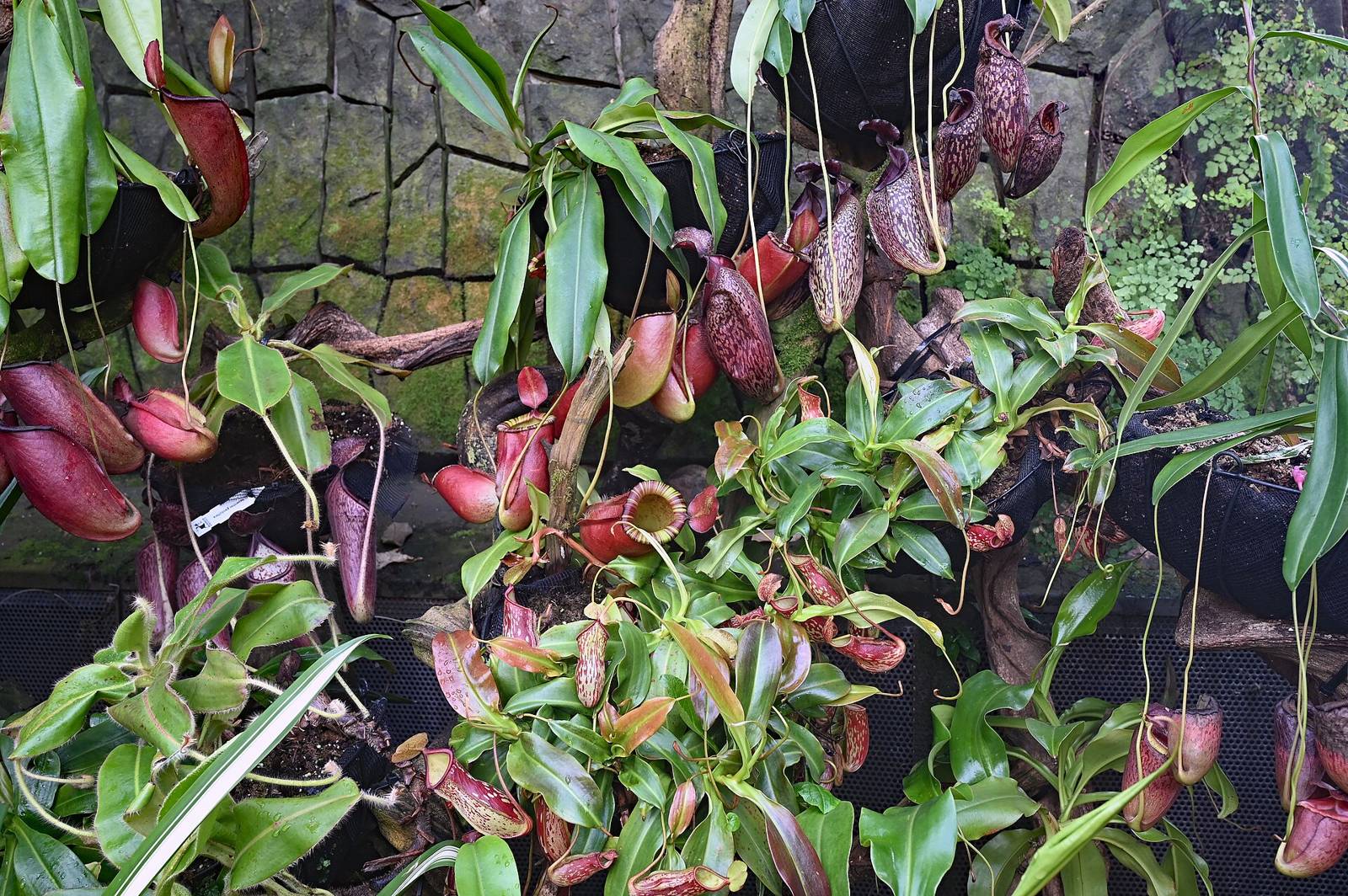
Tropical pitcher plant (Nepenthes)
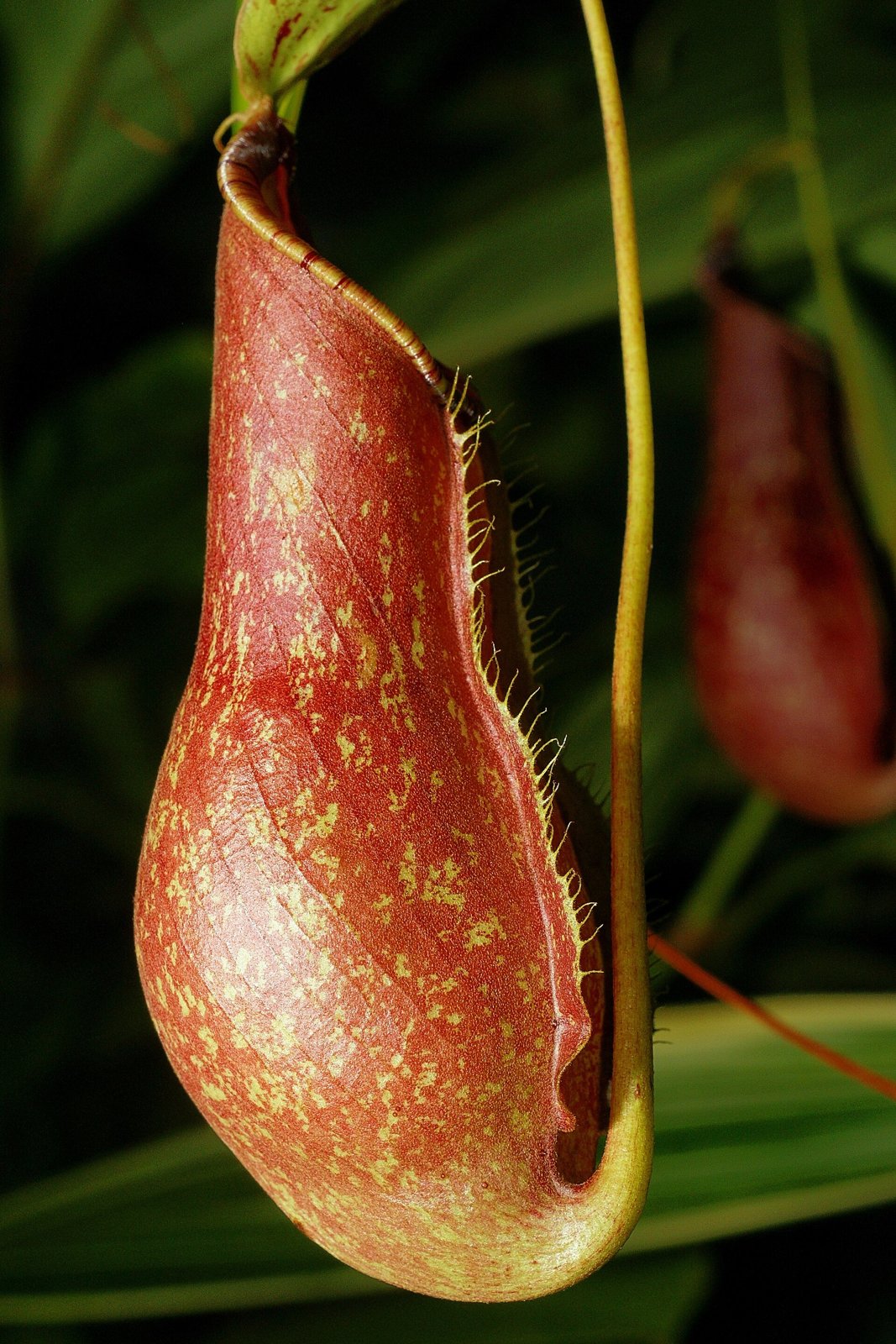
NC State warns that "If the humidity is too low, the traps or pitchers will not develop properly or will die back."
- Look: hanging pitchers in green, red and speckled patterns
- Indoor size: varies by plant; leaf blades reach 6 to 8 inches
- Light: part sun, part shade
- Water check: NC State says "The soil should be moist but well-drained," and "Distilled water or rainwater should be used"
- Difficulty: medium maintenance
- Pets: NC State tags Nepenthes as non-toxic for cats and dogs
- Availability (general guidance): common in hanging baskets at garden centers
Air plant (Tillandsia)
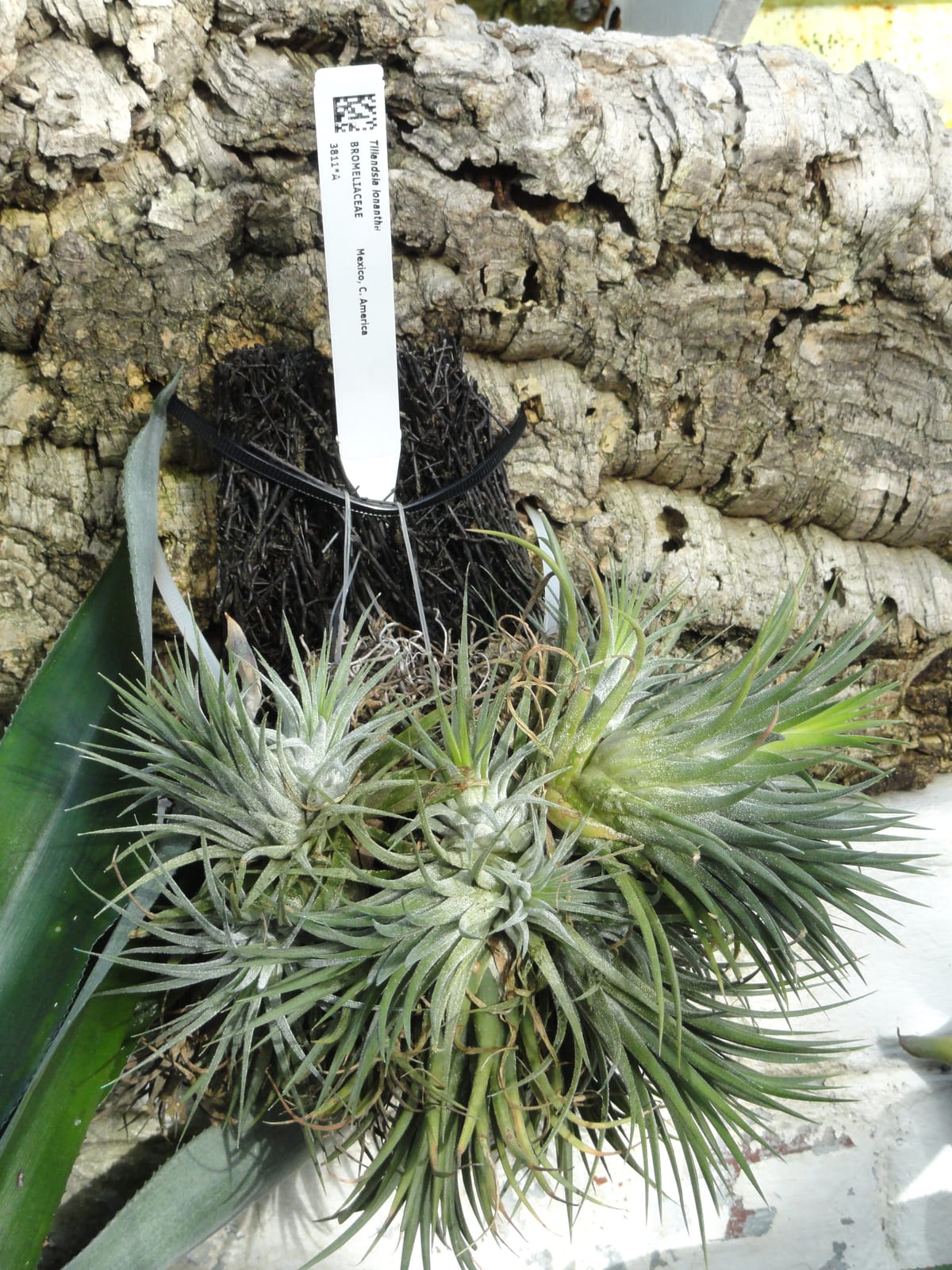
NC State notes that "Most species are easy to grow as houseplants but they demand high light levels if they are to flower." Our guide to mounted plants shows ways to display them.
- Look: silvery rosettes, often blushing red at bloom time
- Indoor size: varies by species
- Light: bright, filtered light
- Water check: NC State notes that many growers "plunge the entire plant into a bucket of water or pop the plants under the running shower"
- Difficulty: medium maintenance
- Pets: not covered by NC State or the ASPCA pages we checked
- Availability (general guidance): everywhere, from garden centers to gift shops
Silver vase plant (Aechmea fasciata)
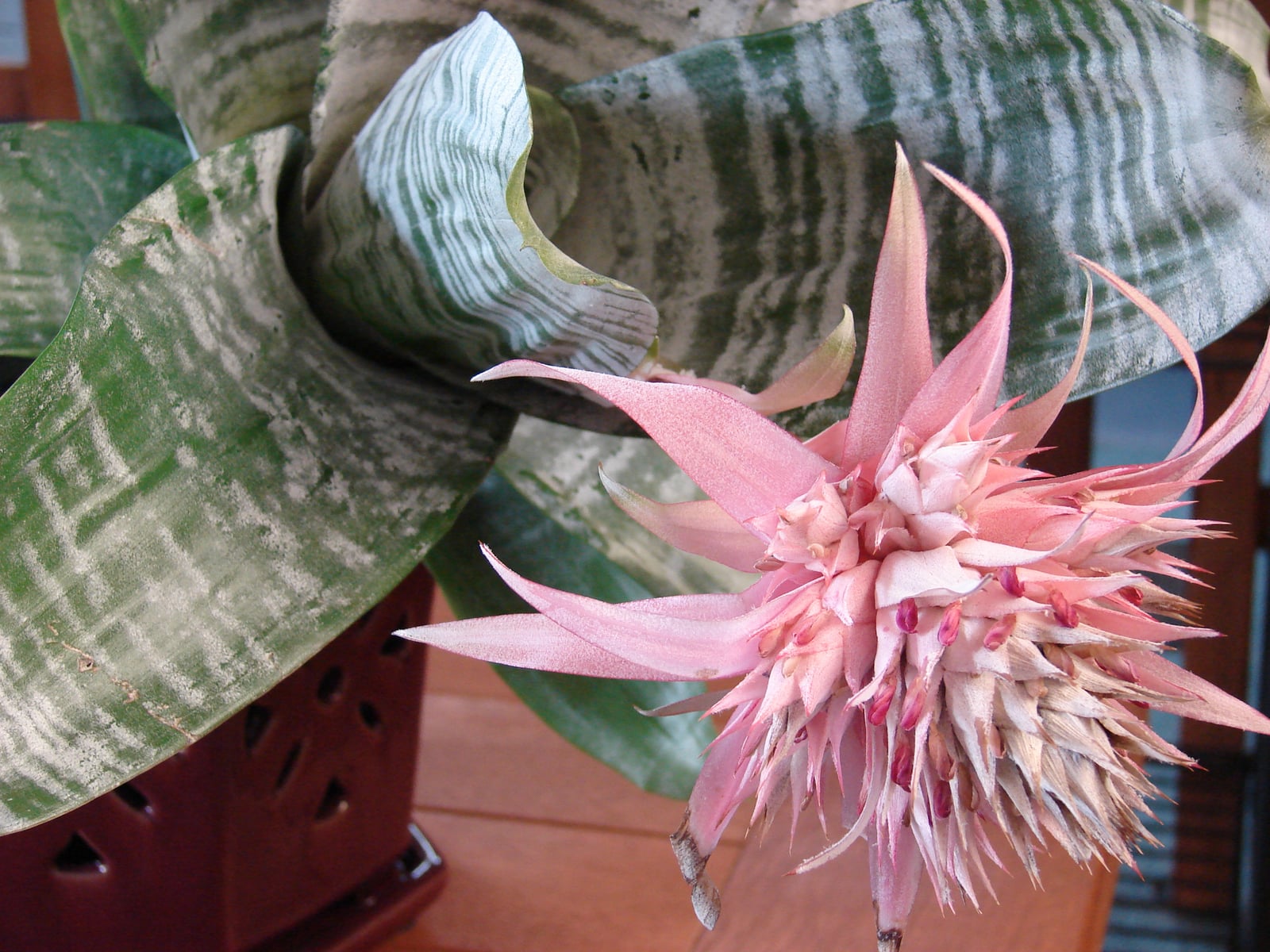
This bromeliad pairs silver-banded leaves with a pink bloom that NC State calls "showy and long-lasting." NC State says "It is best to have a small amount (about 1 inch) of water in the central cup continuously."
- Look: arching gray-green leaves around a pink flower head
- Indoor size: 1 to 3 feet
- Light: part sun, part shade
- Water check: keep the cup topped up, refresh stale cup water, and keep the mix "consistently moist, well-drained"
- Difficulty: medium maintenance
- Pets: NC State tags Aechmea fasciata as non-toxic for cats and dogs
- Availability (general guidance): common in flower season at grocery stores and garden centers
Scarlet star (Guzmania)
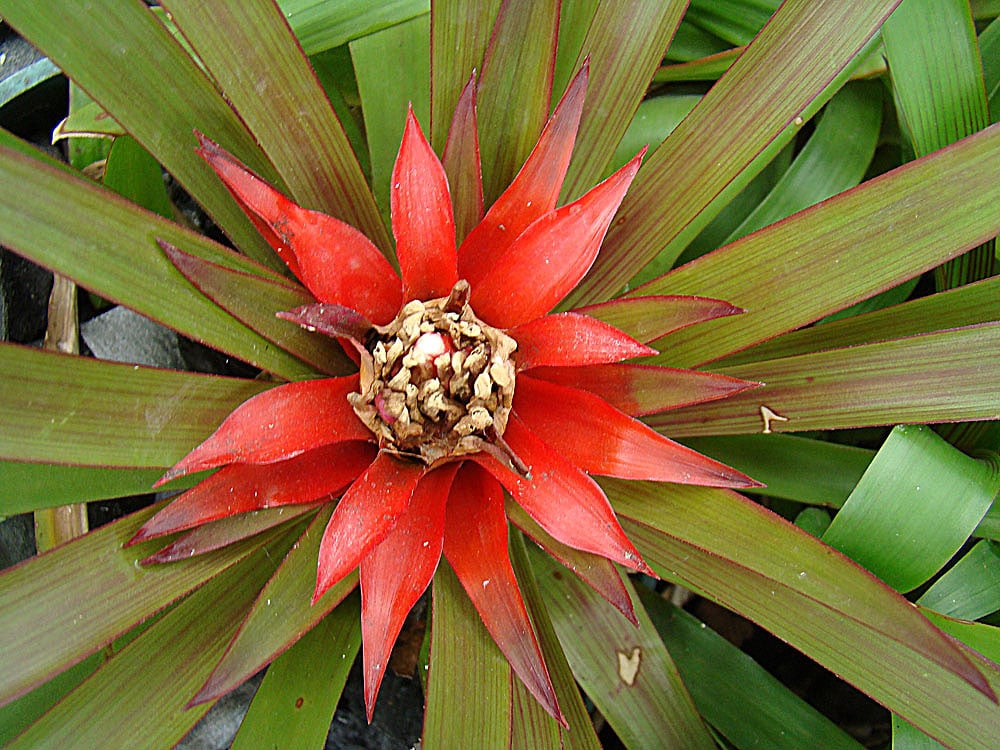
The bright star is a flower head that NC State says "can last 2 to 4 months." NC State explains that "After flowering, the main plant will decline and die," and offsets that form between the base leaves carry on.
- Look: glossy strap leaves with a red, orange or yellow star
- Indoor size: 1 to 2 feet
- Light: bright, filtered light
- Water check: NC State says "Keep water in the center cup of the rosette," and to "water sparingly at the roots"
- Difficulty: medium maintenance
- Pets: NC State tags Guzmania lingulata as non-toxic for cats and dogs
- Availability (general guidance): common in bloom at grocery stores and garden centers
Wax plant (Hoya carnosa)
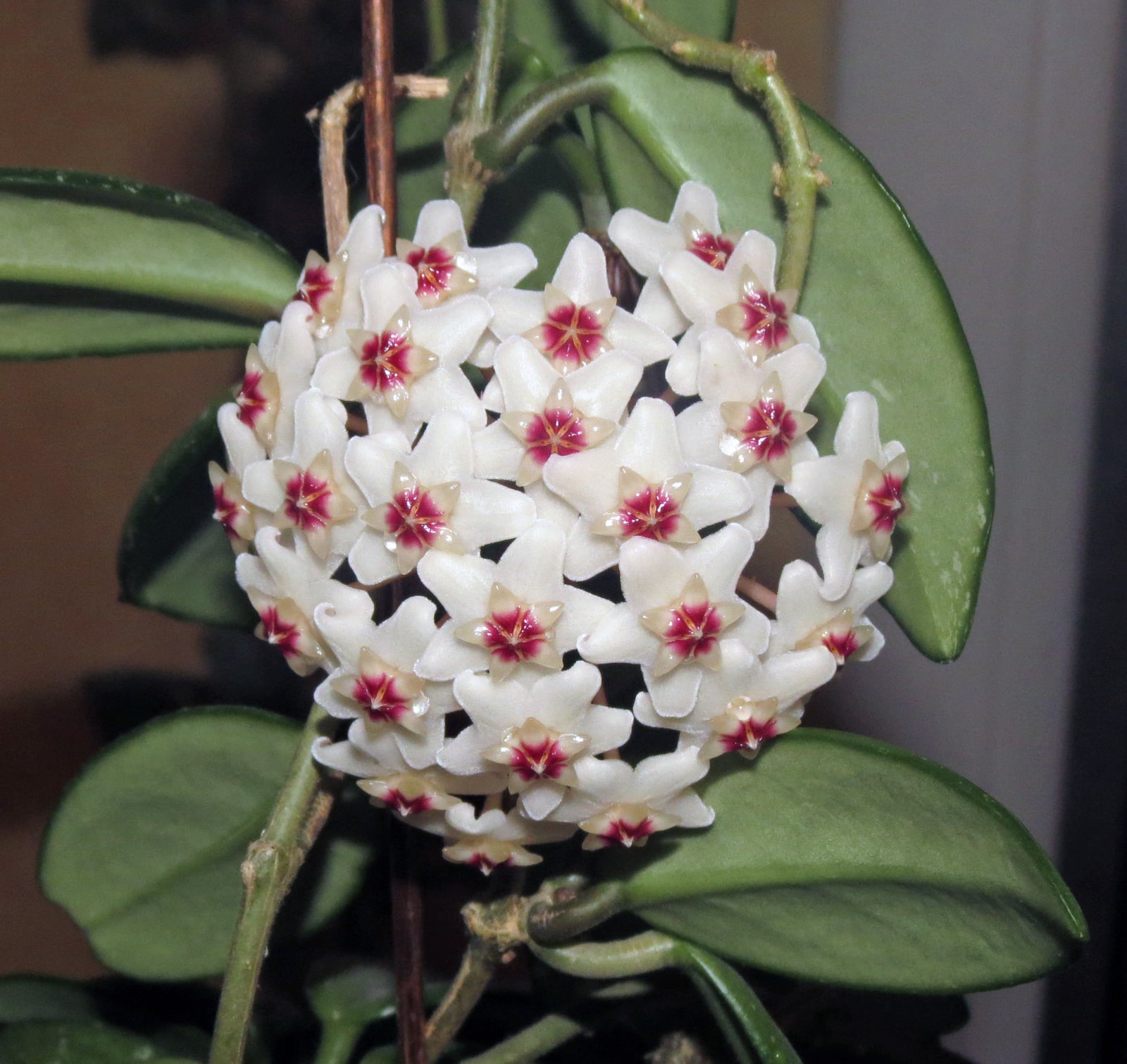
Hoya carnosa has thick oval leaves and round clusters of waxy, star-shaped flowers. NC State says the plant "loves high humidity" and adds that "Too wet or too dry soil can cause the leaves to drop."
- Look: waxy oval leaves on a climbing or trailing vine
- Indoor size: a vine you can trail or train on a hoop; leaves 3 to 6 inches long
- Light: part sun, part shade
- Water check: NC State says "Allow the soil to dry out between watering"
- Difficulty: medium maintenance
- Pets: the ASPCA plant list shows wax plant, Hoya carnosa, as non-toxic to cats, and the dog list does the same for dogs
- Availability (general guidance): common, with many named forms
Jewel orchid (Ludisia discolor)
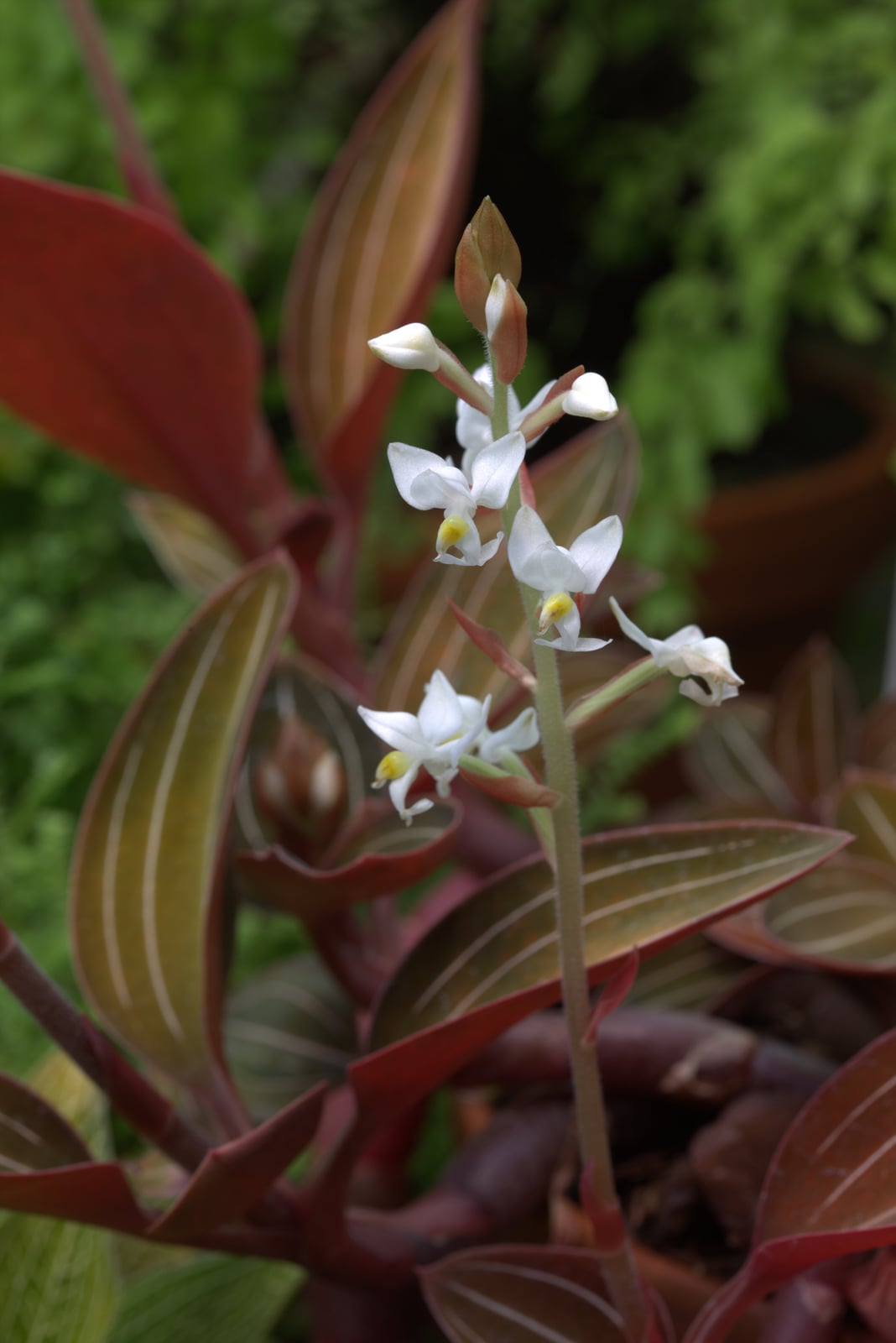
Jewel orchid is an orchid you grow for its leaves. NC State describes dark green to purplish-brown leaves "with gold to red veins and red undersides," and white flower spikes are a bonus. NC State says the plant "requires the warm, humid conditions of its native environment."
- Look: dark leaves with gold to red veins
- Indoor size: 3 inches to 1.5 feet tall
- Light: part sun, part shade
- Water check: keep the mix moist with good drainage; NC State calls for "consistent watering with tepid water"
- Difficulty: medium maintenance
- Pets: NC State tags Ludisia discolor as non-toxic for cats and dogs
- Availability (general guidance): found at orchid growers and specialty shops
How do they compare at a glance?
In the table, NC State means North Carolina State Extension, and "Not covered" means neither NC State nor the ASPCA pages we checked list the plant.
| Plant | Indoor size | Light | Water check cue | Difficulty | Pets (source) |
|---|---|---|---|---|---|
| String of hearts | Trails about 3 feet | Bright, filtered | Mix fully dry | Low | Not covered |
| Lipstick plant | 12 inches to 3 feet | Bright indirect | Check often, good drainage | Low | Non-toxic (ASPCA) |
| Stromanthe 'Triostar' | 2 to 3 feet | Filtered, no direct sun | Water before the mix dries | Low | Not covered |
| Mistletoe cactus | Up to 6 feet long | Bright indirect or part shade | Soil feels dry | Low | Non-toxic (NC State) |
| Pitcher plant | Varies by plant | Part sun, part shade | Moist mix, pure water | Medium | Non-toxic (NC State) |
| Air plant | Varies by species | Bright, filtered | Dunk or rinse in the shower | Medium | Not covered |
| Silver vase plant | 1 to 3 feet | Part sun, part shade | Water in the cup | Medium | Non-toxic (NC State) |
| Scarlet star | 1 to 2 feet | Bright, filtered | Water in the cup | Medium | Non-toxic (NC State) |
| Wax plant | Trailing vine | Part sun, part shade | Mix dry between waterings | Medium | Non-toxic (ASPCA) |
| Jewel orchid | 3 inches to 1.5 feet | Part sun, part shade | Mix lightly moist | Medium | Non-toxic (NC State) |
How do I know when an exotic plant needs water?
These plants fall into three groups. Succulent types such as string of hearts and wax plant want the mix to dry before the next drink. Bromeliads keep water in their central cup, and NC State warns that stagnant cup water "can breed insect pests," so tip out and refresh old water. Moisture lovers such as the pitcher plant, jewel orchid and Stromanthe stay lightly moist.
Our watering check guide walks through the finger test and pot weight. Leaves that yellow while the mix stays wet can point to overwatering, and our root rot guide explains what to look for. Our brown leaves guide covers crispy tips, and our winter care guide helps when the heating comes on.
Are these plants safe around cats and dogs?
NC State tags the pitcher plant, silver vase plant, scarlet star, mistletoe cactus and jewel orchid as non-toxic for cats and dogs. The ASPCA lists wax plant as non-toxic, and its lipstick plant page covers Aeschynanthus humilis, a close relative of the species sold most often. Call your vet if a pet seems unwell after a nibble. For more pet-friendly choices, browse our beginner plants that still look good.
How does Grove help with an unusual plant?
Grove builds a care plan from the species, how you grow the plant, and whether it lives indoors or outdoors. The method you choose shapes watering technique, feeding, pruning, repotting and the task rhythm, and the watering task is a check that asks whether the plant needs water today. You can change how a plant is grown later and rebuild the plan, which helps when an air plant moves from a shelf to a mount on the wall.
Exotic houseplant FAQ
Which exotic houseplant is easiest for a beginner?
String of hearts and mistletoe cactus are both rated low maintenance by NC State, and both like the mix to dry between drinks.
Do pitcher plants need to be fed insects indoors?
NC State says "If insects are not available these plants can be fed by using an organic fertilizer during the growing season."
Do air plants need soil?
No. NC State says they are "commonly grown as epiphytes attached to driftwood, shells, rocks or planks of wood, bark or cork."
Sources
- North Carolina State Extension Gardener Plant Toolbox: Nepenthes, Tillandsia, Aechmea fasciata, Guzmania lingulata, Ceropegia woodii, Hoya carnosa, Aeschynanthus radicans, Stromanthe sanguinea, Rhipsalis baccifera, Ludisia discolor
- ASPCA toxic and non-toxic plants: Lipstick plant, Plants list for cats, Plants list for dogs, American Society for the Prevention of Cruelty to Animals