The best mounted plants: orchids and more
Many orchids, air plants and staghorn ferns grow on tree branches in nature, and mounting lets them grow the same way on your wall. Roots in open air dry fast, which makes the water check easy to read and means it comes up often. This guide covers which plants enjoy a mount, what to mount them on, and how to water, place and feed them.
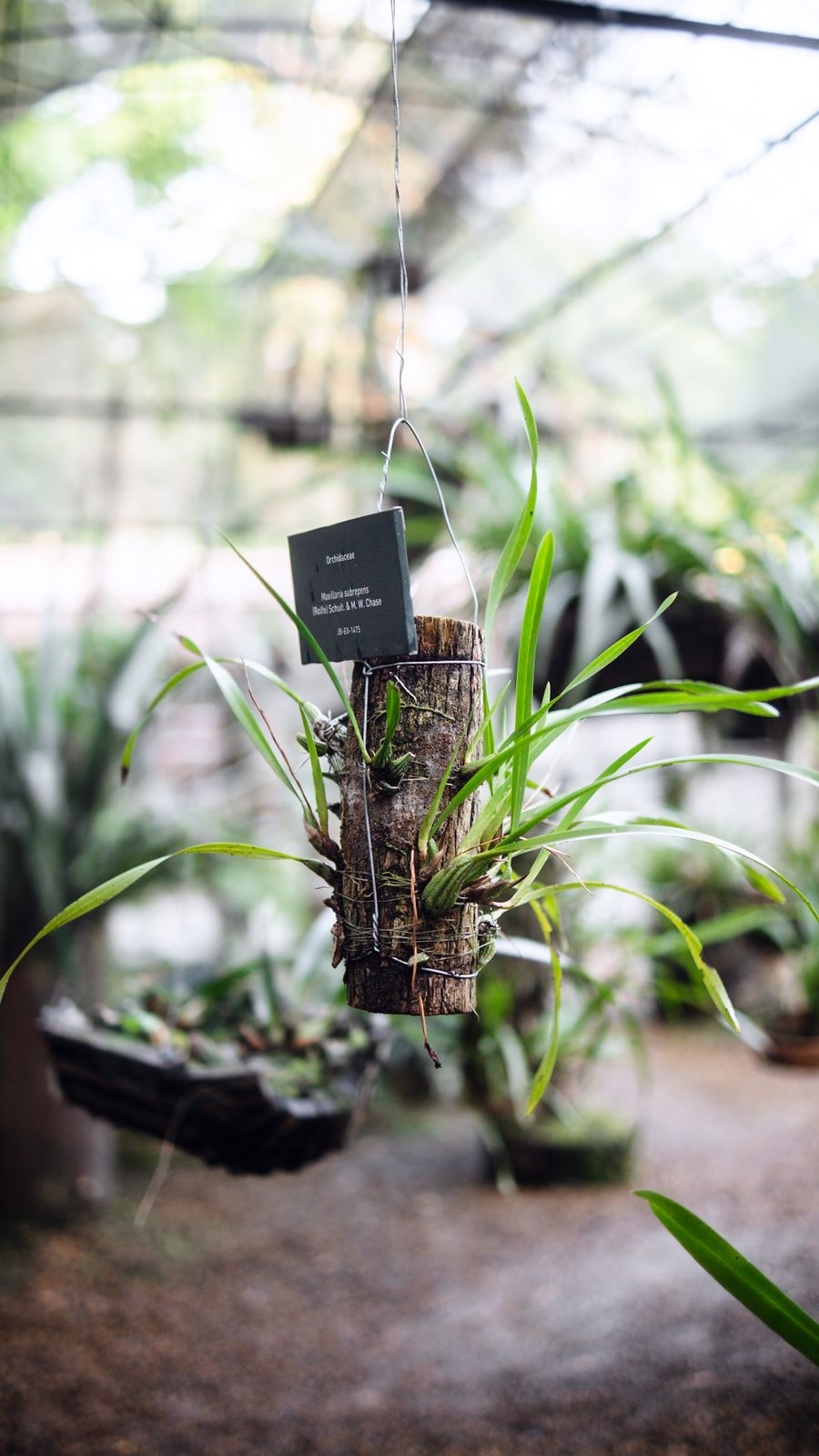
What is a mounted plant?
Epiphytes anchor themselves to trees, rocks and branches and take moisture and nutrients from rain, air and debris. University of Florida Institute of Food and Agricultural Sciences (UF/IFAS) Extension explains that epiphytes attach to other plants and do them no harm.
An American Orchid Society (AOS) article on mounting points out that many of the most attractive orchids thrive on tree branches, mossy rocks and tree crotches in the wild. A mount copies that life at home, and with the roots in view you can see how the plant is doing at a glance.
Which plants are best for mounting?
| Plant group | Examples |
|---|---|
| Orchids | Many epiphytic orchids, including small species sold for mounts |
| Air plants | Tillandsia species |
| Ferns | Staghorn fern (Platycerium bifurcatum, Platycerium veitchii) |
UF/IFAS notes that care is about the same across Tillandsia species, so you can choose an air plant purely for its look. For staghorn ferns, UF/IFAS names Platycerium bifurcatum and Platycerium veitchii as low-maintenance species.
For orchids, plant tags and catalog descriptions help. An AOS article by Katherine Weitz notes that species described as doing best mounted need to drain quickly. Those are your best candidates.
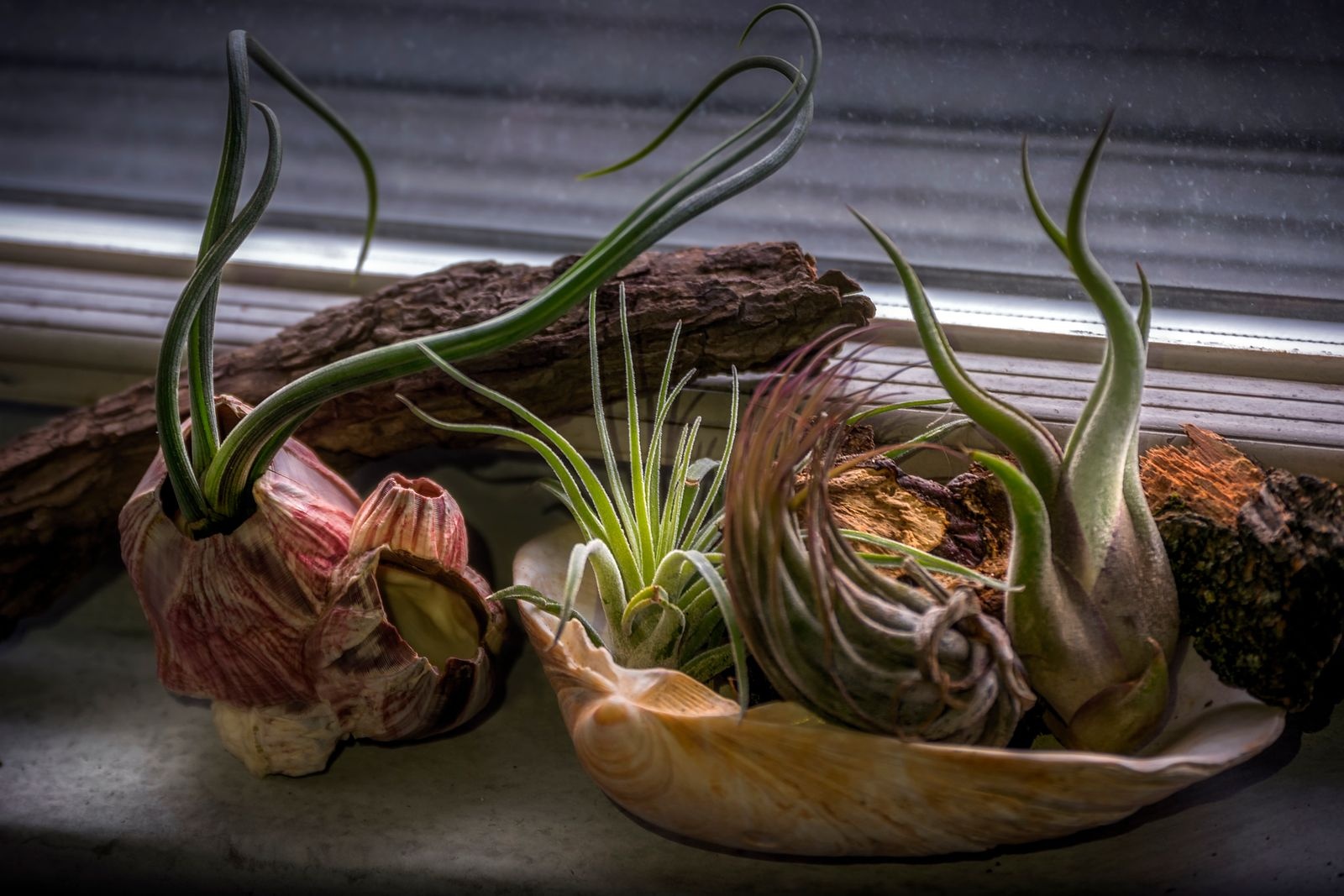
What can I mount a plant on?
The AOS mounting article covers a wide range of supports:
- Cork bark: a rough surface roots grip tightly, quick drainage and a long life, often 10 years or more
- Tree fern: dense, holds moisture for several days, suits many epiphytes
- Seasoned hardwood such as oak, apple or grapevine, dried for a few months before use
- Freshwater driftwood, or sea driftwood soaked in several changes of fresh water to wash out salt
- Porous lava stone
The same article advises avoiding pressure-treated wood and wood from stone fruit trees such as cherry and peach. Unpainted, natural wood is best. For air plants, UF/IFAS adds that the mount should be a surface that does not hold water.
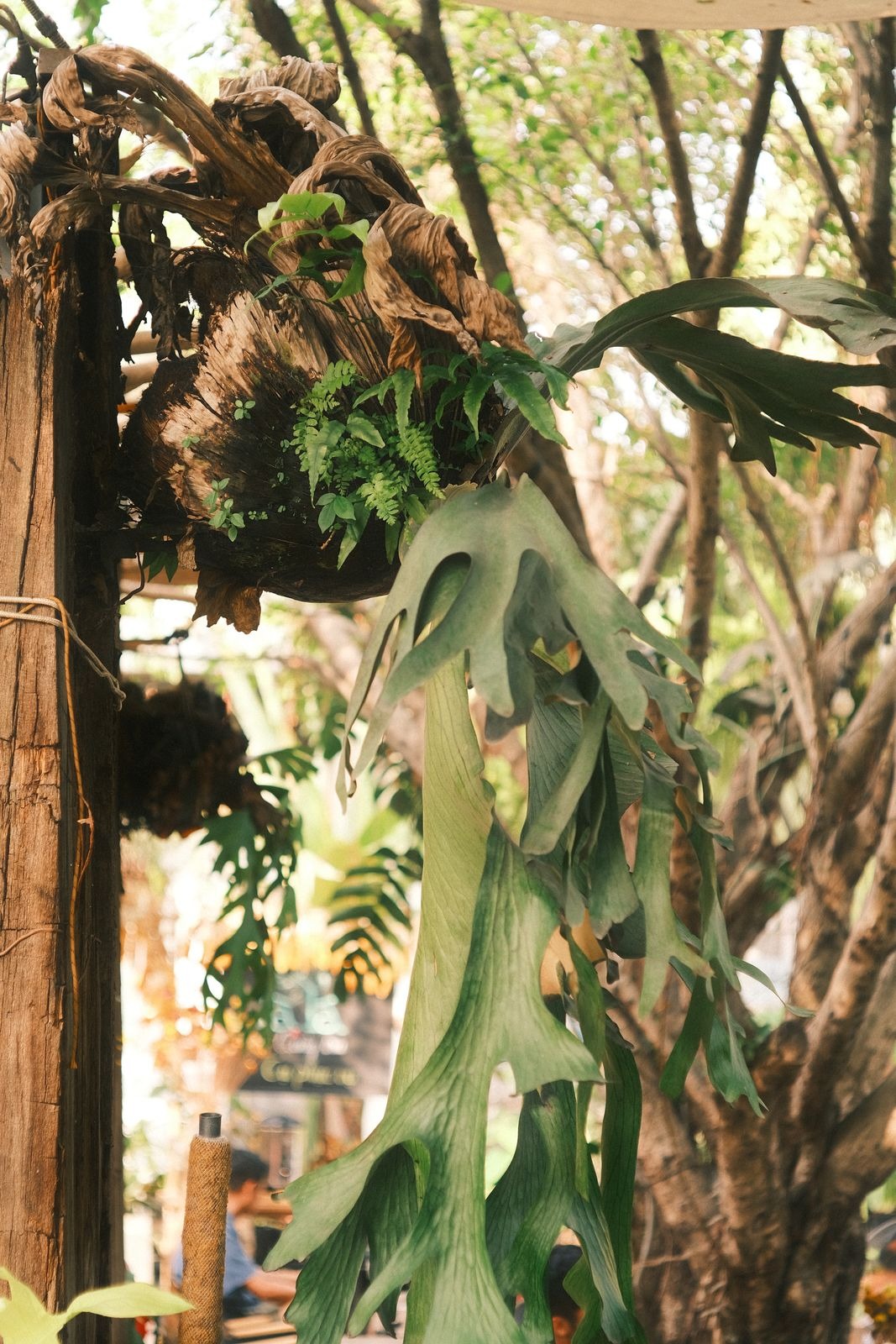
How do I attach a plant to a mount?
The AOS lists plastic-coated garden wire, thin bell wire, clear monofilament fishing line, strips of pantyhose and pads of plastic produce mesh as attachment options. Clear fishing line is nearly invisible and lasts for years, though it is fiddly to work with.
For staghorn ferns, UF/IFAS suggests shaping a mound of sphagnum moss on the mount, setting the fern so its flat basal fronds touch the moss, and securing it with plastic strips, nylon hose or wire that is not copper. Air plants can be tied with wire or glued with an adhesive; if you use hot glue, UF/IFAS advises letting it cool slightly first.
How do I know when a mounted plant needs water?
Each group gives its own signal:
- Orchids: the AOS guide to watering techniques explains that fully saturated roots turn a solid color, while roots that are not saturated look mottled
- Air plants: UF/IFAS says curled or rolled leaves mean the plant is dehydrated
- Staghorn ferns: UF/IFAS suggests waiting until the fern wilts slightly before watering, because a slightly wilted fern recovers quickly and an overwatered one rots
These visual cues are the mounted version of the soil check in our overwatering guide. Mounts give soggy roots very little chance, which is part of their appeal for plants prone to root rot.
How should I water a mounted plant?
The AOS explains that once water runs off a mounted plant, the roots have absorbed about all they can for the moment. Two short waterings a few minutes apart work better than one long one: water each plant, then go back and water them again, starting with the first.
The AOS also advises against dunking several mounted plants in the same bucket, since one diseased plant can expose all the others. For air plants, UF/IFAS suggests misting until water runs off the plant and then letting it dry out before the next watering.
Where should a mounted plant hang?
UF/IFAS suggests keeping indoor air plants near a south, east or west window in bright light out of direct sun, and notes that they need light, air circulation and occasional water. For staghorn ferns, UF/IFAS warns that very low light encourages disease and pests, and that most species need protection from temperatures below 55°F (about 13°C).
Our guide to choosing your first plant explains how to read the light in your windows. If you have wondered whether misting raises humidity, our page on plant myths looks at the research. Mounts drip after watering, so a tray or towel underneath protects walls and floors.
How do I feed a mounted plant?
UF/IFAS recommends a fertilizer with a 1:1:1 ratio for staghorn ferns, applied more often to young plants in warm months and only once or twice a year for mature plants. Those three numbers on a fertilizer label stand for nitrogen, phosphorus and potassium, so 1:1:1 means equal parts of each.
For orchids, the AOS notes that thorough watering flushes away salts left by tap water and fertilizer. Follow the label on any product and err on the light side.
Is a mounted plant right for me?
A mount suits you if you enjoy seeing roots, like a living piece of wall art, and do not mind a frequent water check. If you are away a lot, a pot or a semi-hydroponic setup holds water longer.
UF/IFAS adds two reminders. Never collect air plants from the wild, since wild bromeliads in Florida are under pressure from collection and an invasive weevil. And if you live in Florida, plant staghorn fern outdoors with caution, because UF/IFAS flags its potential to escape into natural areas.
How does Grove handle mounted plants?
Grove builds a care plan from the species, how you grow the plant, and whether it lives indoors or outdoors. Mounted is one of the methods you can pick, and a staghorn fern on a covered porch can be both mounted and outdoor. The method changes watering technique and how often you water, feeding, pruning, repotting and the task rhythm. When a watering task appears, it is a check: does this plant need water today. You can edit all of the plan.
Sources
- Lending Support: Mounting Orchids (PDF) : Charles Marden Fitch, American Orchid Society, Orchids (March 2005)
- Watering: Techniques for Success : American Orchid Society
- A New Way to Grow Orchids : Katherine Weitz, American Orchid Society (September 2025)
- Air Plant: Tillandsia : UF/IFAS Gardening Solutions
- Staghorn Ferns : UF/IFAS Gardening Solutions