Big leaves, big personality: houseplants beyond the monstera
A single big leaf can change the feel of a whole room. The monstera and the fiddle leaf fig get most of the attention, and there is a whole cast of other big-leaf plants waiting by the shop door. This guide introduces nine of them and what each one needs to look its best at home.
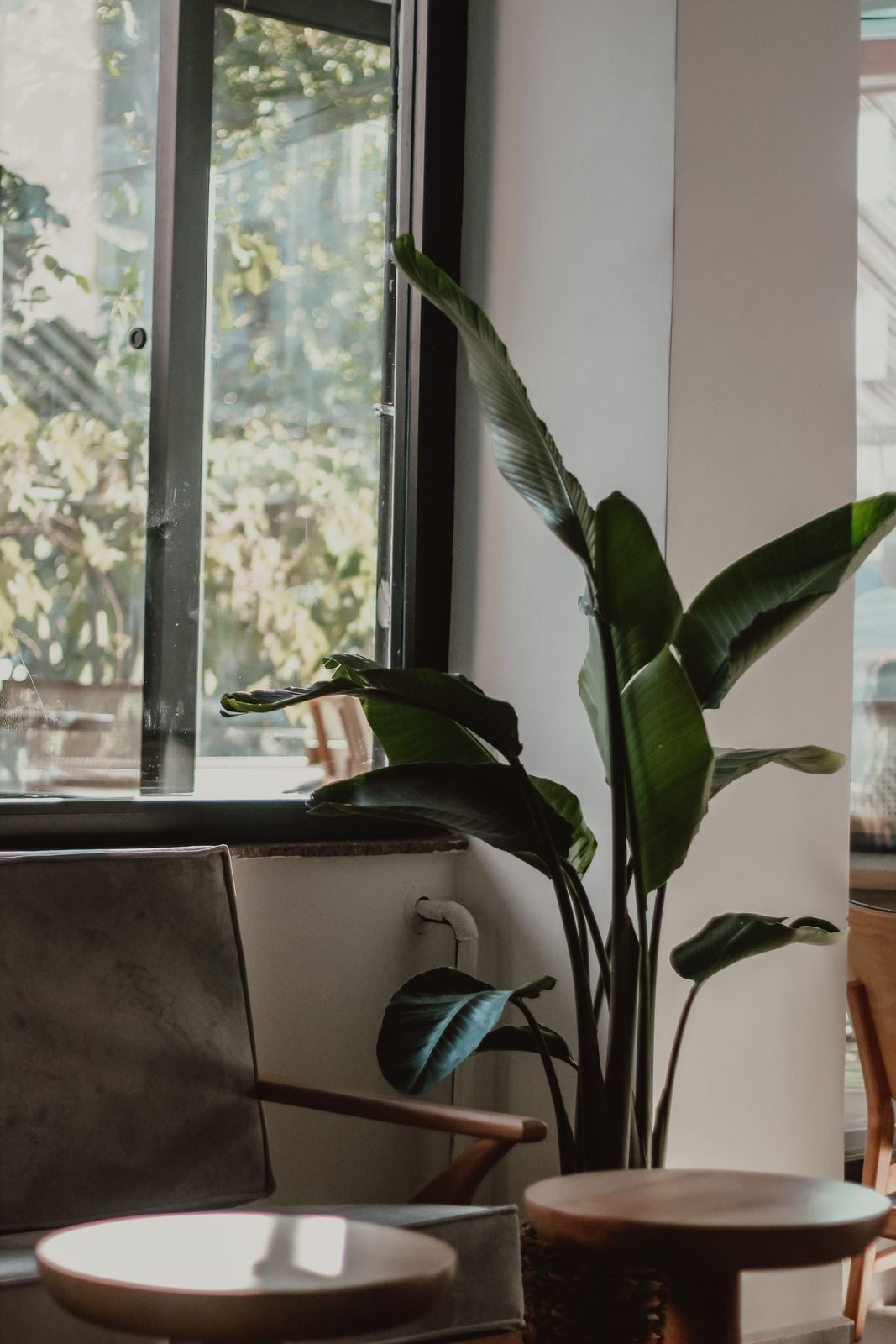
Why do some houseplants grow such big leaves?
The Royal Horticultural Society (RHS) explains that alocasias evolved extra-large foliage to catch as much sunlight as possible through the canopy overhead. A bright room with gentle light suits them well, and strong direct sun can scorch those big, thin surfaces.
Availability notes in each entry are general guidance from what you tend to see in shops.
Which big-leaf plants are easiest to start with?
Each plant's toolbox entry has the full growing notes.
Rubber plant (Ficus elastica)
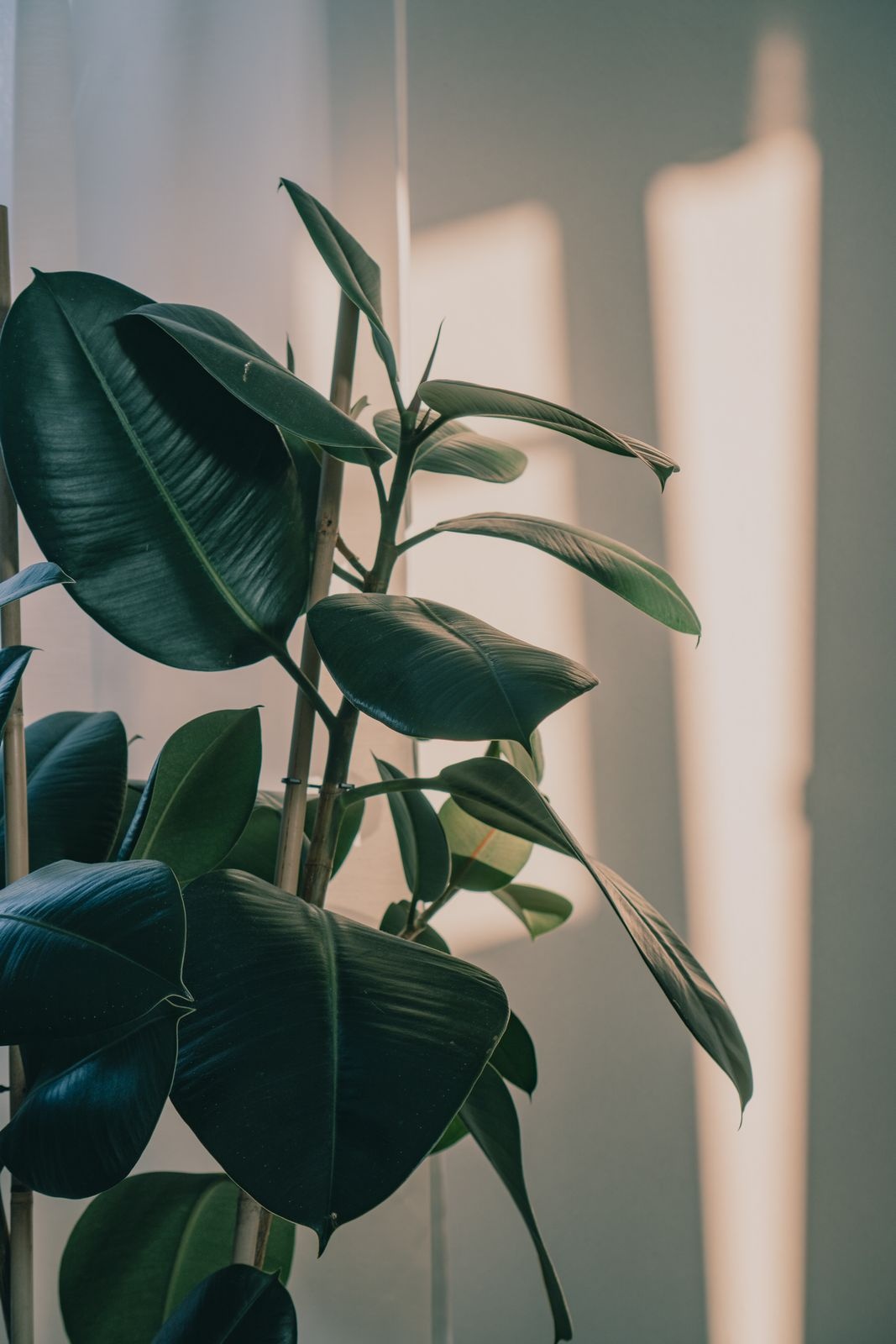
North Carolina State Extension describes foot-long, shiny, dark green leaves with pink or purple sheaths around the new growth, and variegated forms are easy to find.
- Look: stiff, glossy leaves up to 17 inches long
- Indoor size: usually 2 to 10 feet with training or support
- Light: bright indirect light or partial shade, out of afternoon sun
- Water check: the RHS suggests watering ornamental figs once the top inch of compost is dry, and North Carolina State Extension suggests watering less while the plant rests from fall to late winter
- Difficulty: low maintenance
- Pets: North Carolina State Extension flags it as a problem for cats and dogs
- Availability (general guidance): common at garden centers
A few bottom leaves turning yellow and dropping is normal for this plant, according to North Carolina State Extension. Our yellow leaves guide helps you tell normal aging from a problem.
Umbrella tree (Heptapleurum actinophyllum, often sold as Schefflera)
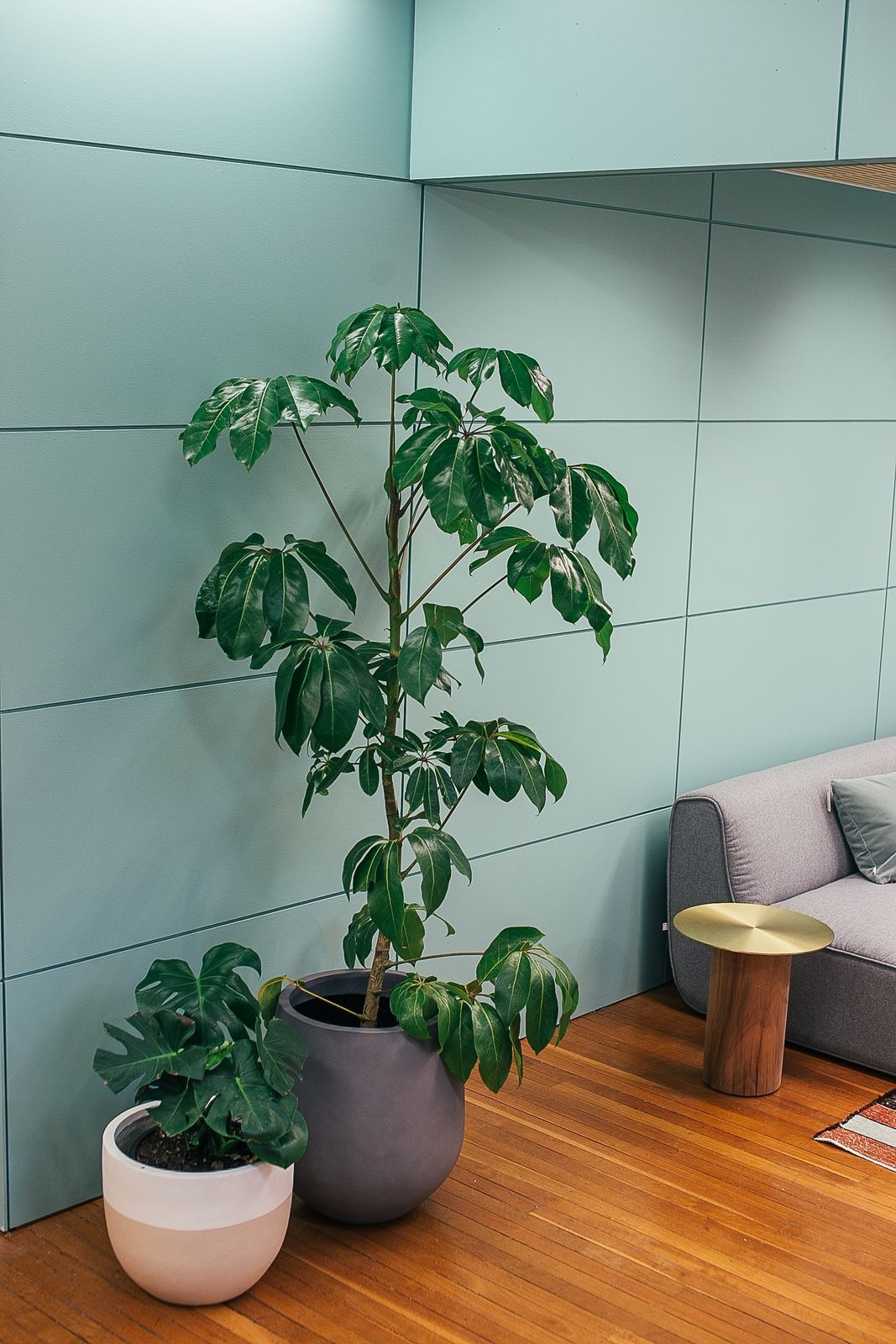
Each leaf is a ring of glossy leaflets spreading like the spokes of an umbrella, which is where the common name comes from. North Carolina State Extension notes that the plant can be pruned to keep its size in check.
- Look: 5 to 18 leathery leaflets arranged in a whorl
- Indoor size: 4 to 6 feet tall and 3 to 6 feet wide
- Light: a bright, sunny spot protected from hot afternoon sun
- Water check: the umbrella tree toolbox entry gives no dryness depth, so use the finger check in the watering section below
- Difficulty: low maintenance
- Pets: the American Society for the Prevention of Cruelty to Animals (ASPCA) lists schefflera as toxic to cats and dogs
- Availability (general guidance): common at garden centers
Tree philodendron 'Selloum' (Thaumatophyllum bipinnatifidum)
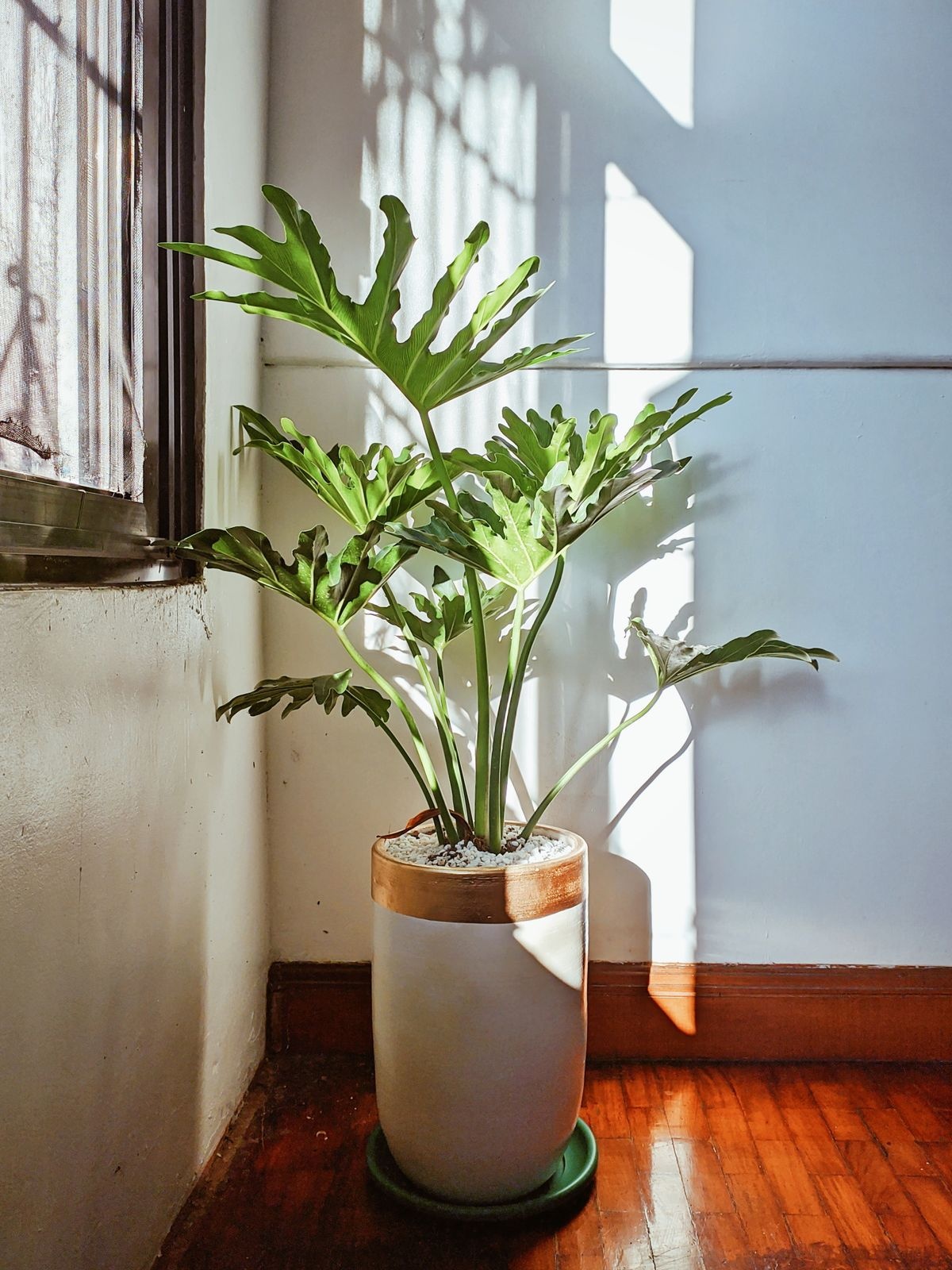
This is the plant for anyone who wants a jungle in one pot. The RHS says its deeply lobed leaves can reach up to 3½ feet long, and North Carolina State Extension warns that it may become too large for smaller homes.
- Look: huge, glossy, deeply lobed leaves on long stalks
- Indoor size: 4 to 10 feet tall and 6 to 10 feet wide
- Light: prefers high light and tolerates low light, although low light gives smaller leaves with fewer lobes
- Water check: the RHS suggests waiting until the top of the compost has dried out before watering philodendrons; this one dislikes both drought and soggy soil
- Difficulty: low maintenance
- Pets: North Carolina State Extension flags it as a problem for cats and dogs
- Availability (general guidance): common at garden centers
White bird of paradise (Strelitzia nicolai)
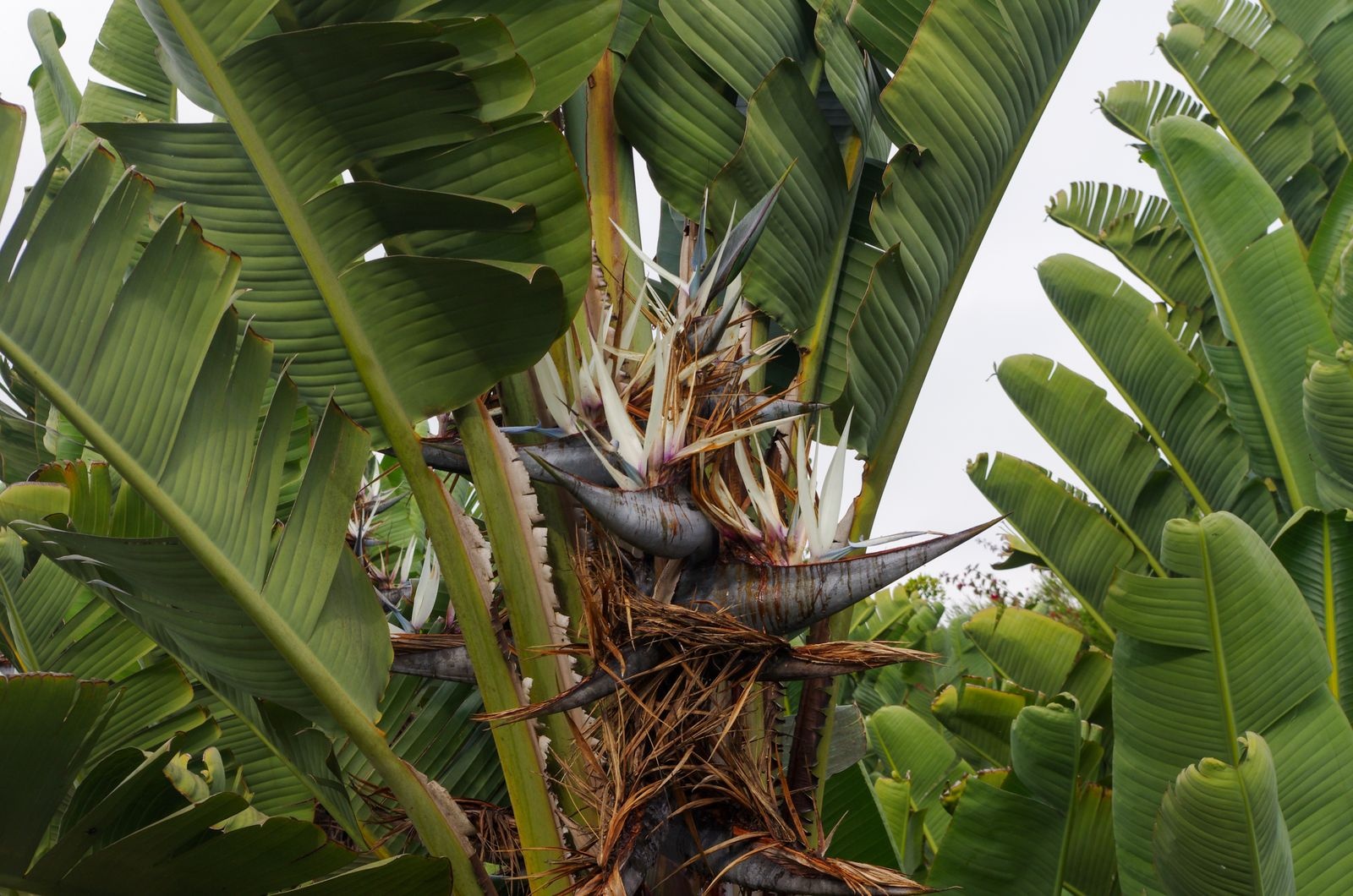
Grey-green, banana-like leaves give this plant a lush, tropical look, and its blue and white flowers are shaped like a bird's head. North Carolina State Extension notes that the leaves tear easily along the veins, so a calm corner away from drafts keeps them looking smart.
- Look: tall, paddle-shaped, grey-green leaves
- Indoor size: no indoor height is given, and it reaches 20 to 30 feet in the wild, so give this one a high ceiling
- Light: bright, indirect light
- Water check: water when the top layer of soil feels dry; it becomes more drought tolerant once established
- Difficulty: low maintenance
- Pets: North Carolina State Extension says nausea, vomiting and drowsiness can occur if pets eat any part of the plant
- Availability (general guidance): common at larger garden centers
Ficus 'Audrey' (Ficus benghalensis 'Audrey')
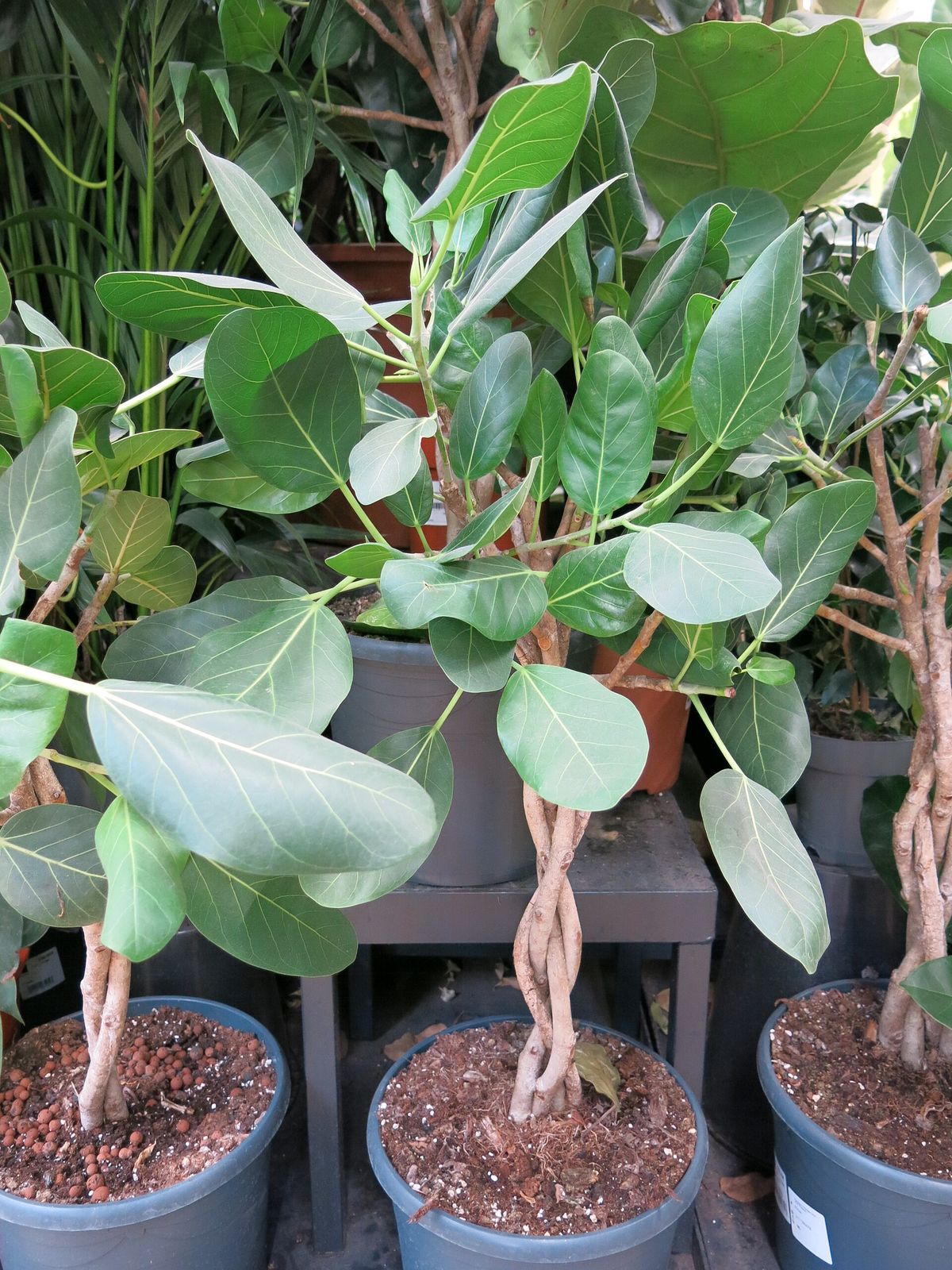
'Audrey' is a houseplant form of the Bengal fig, one of the largest trees on Earth by canopy size. North Carolina State Extension lists 'Audrey' as a popular, easy houseplant with a white trunk and glossy green leaves with deep veins.
- Look: glossy green leaves with deep veins on a white trunk
- Indoor size: North Carolina State Extension lists 'Audrey' at 1 to 2 feet tall
- Light: bright, indirect light; the cultivar note mentions partial sun
- Water check: water when the top 2 to 3 inches of soil feel dry, then empty any water left in the tray
- Difficulty: low maintenance
- Pets: North Carolina State Extension says eating the leaves can cause drooling, nausea, vomiting and diarrhea in pets
- Availability (general guidance): found in many plant shops
Which big-leaf plants are worth a try once you have some practice?
Zebra alocasia (Alocasia zebrina)
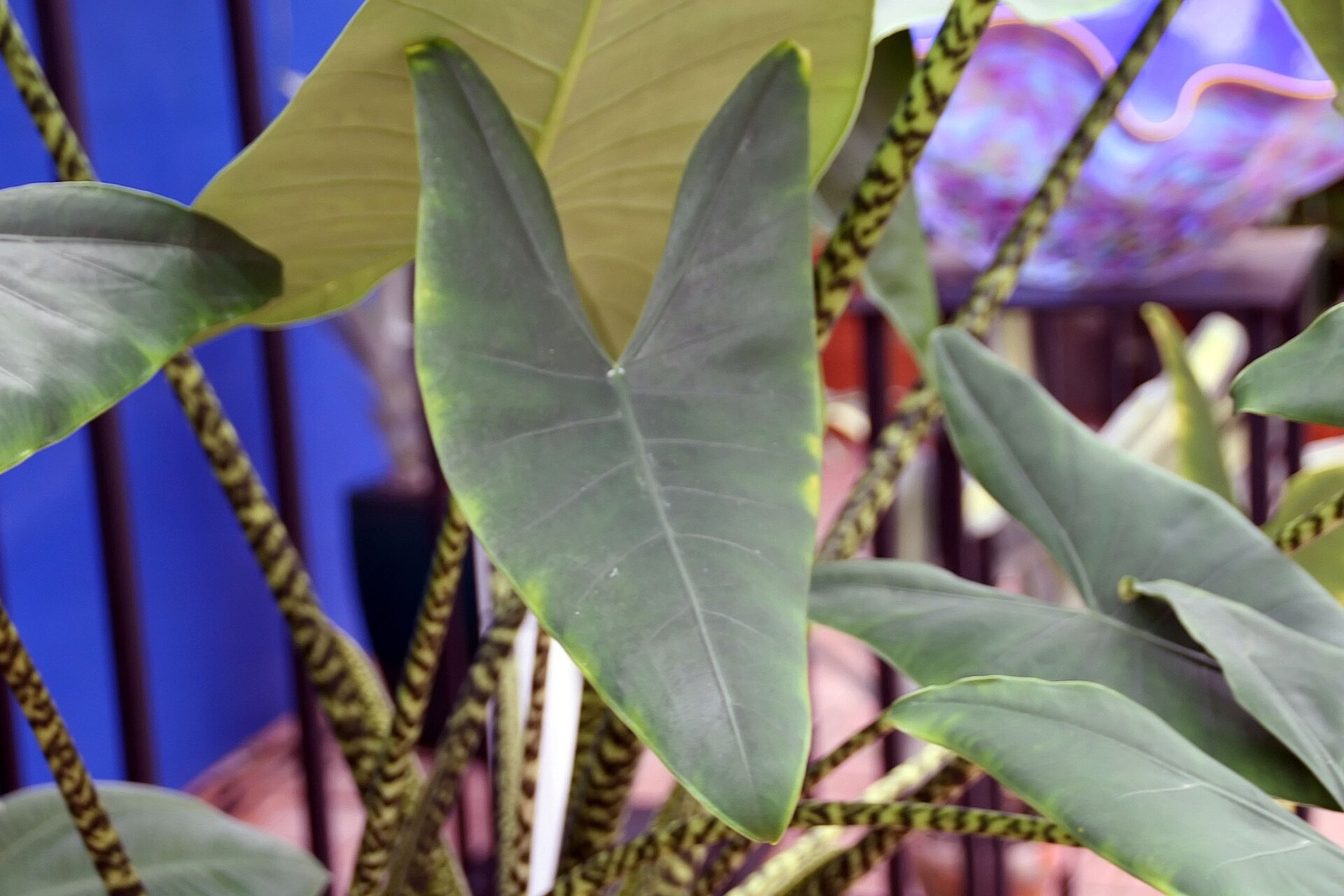
The striped stems are the main feature here, marked in black and white like a zebra. The RHS calls it a tough houseplant and notes that dropping an old leaf to make way for a new one is perfectly normal.
- Look: glossy, arrow-shaped leaves on striped stems
- Indoor size: about 1.5 to 3 feet tall
- Light: bright, indirect light
- Water check: the RHS suggests watering alocasias once the top 2 inches of compost feel dry, and keeping watering to a minimum in winter
- Difficulty: the RHS calls it tough; keep it above about 60°F
- Pets: the ASPCA lists alocasias as toxic to cats and dogs
- Availability (general guidance): sold in many plant shops, less common than the rubber plant
Alocasia 'Polly' (Alocasia x mortfontanensis 'Polly')
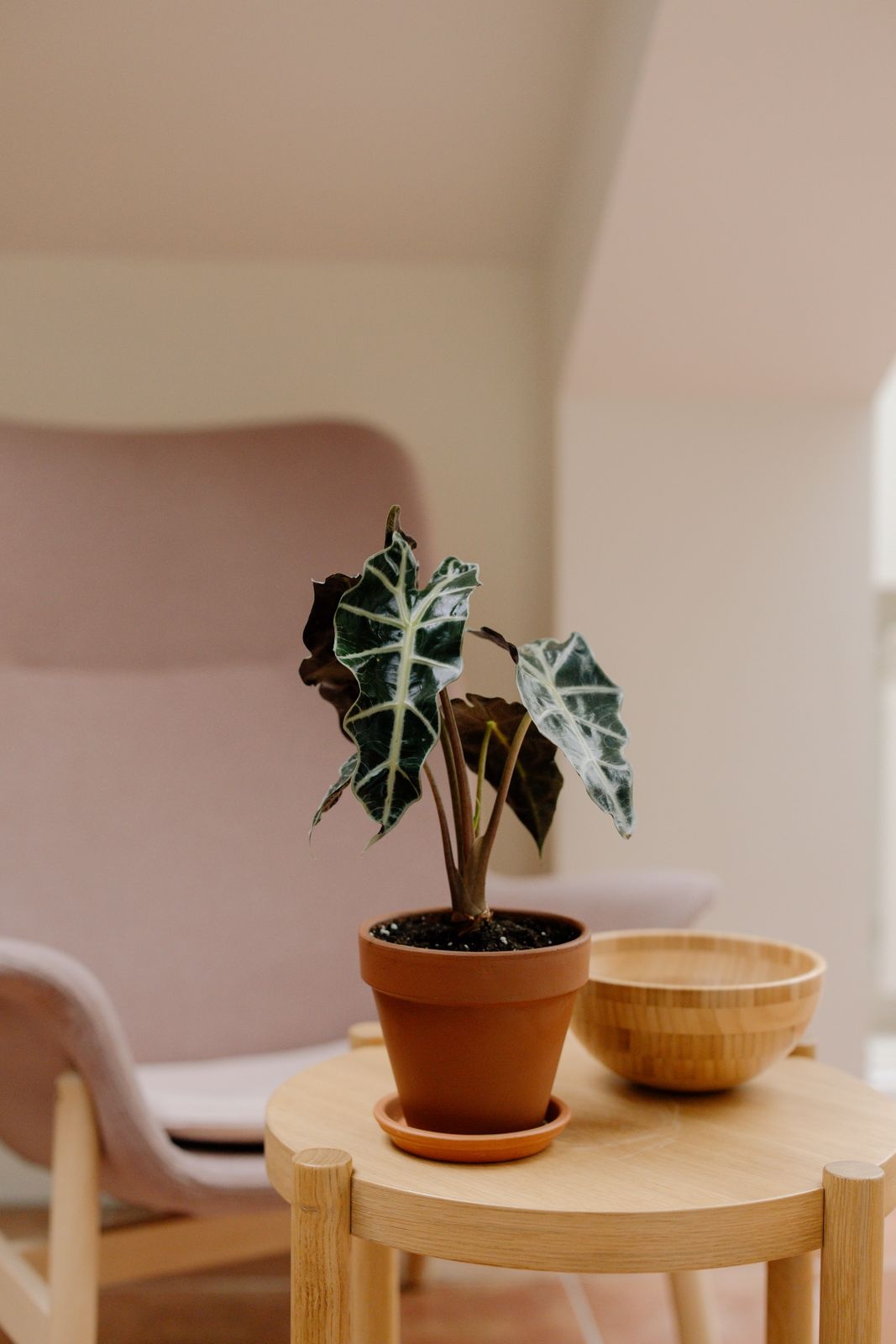
Often sold as Alocasia amazonica, this hybrid has dark, shield-like leaves traced with bright veins. North Carolina State Extension describes 'Polly' as a compact form with large, dark green leaves and silvery-green veins.
- Look: arrowhead leaves with bold pale veins
- Indoor size: up to about 2 feet tall
- Light: bright, indirect light; direct sun can scorch the leaves
- Water check: it likes moist, well-drained soil, so check that the mix is still lightly moist and never let the pot sit wet; water less in winter
- Difficulty: rated low maintenance on the Alocasia genus page; keep air above 60°F
- Pets: the ASPCA lists alocasias as toxic to cats and dogs
- Availability (general guidance): common in plant shops
North Carolina State Extension warns that overwatering can cause root rot and bacterial stem rot, which our root rot guide covers in detail.
King anthurium (Anthurium veitchii)
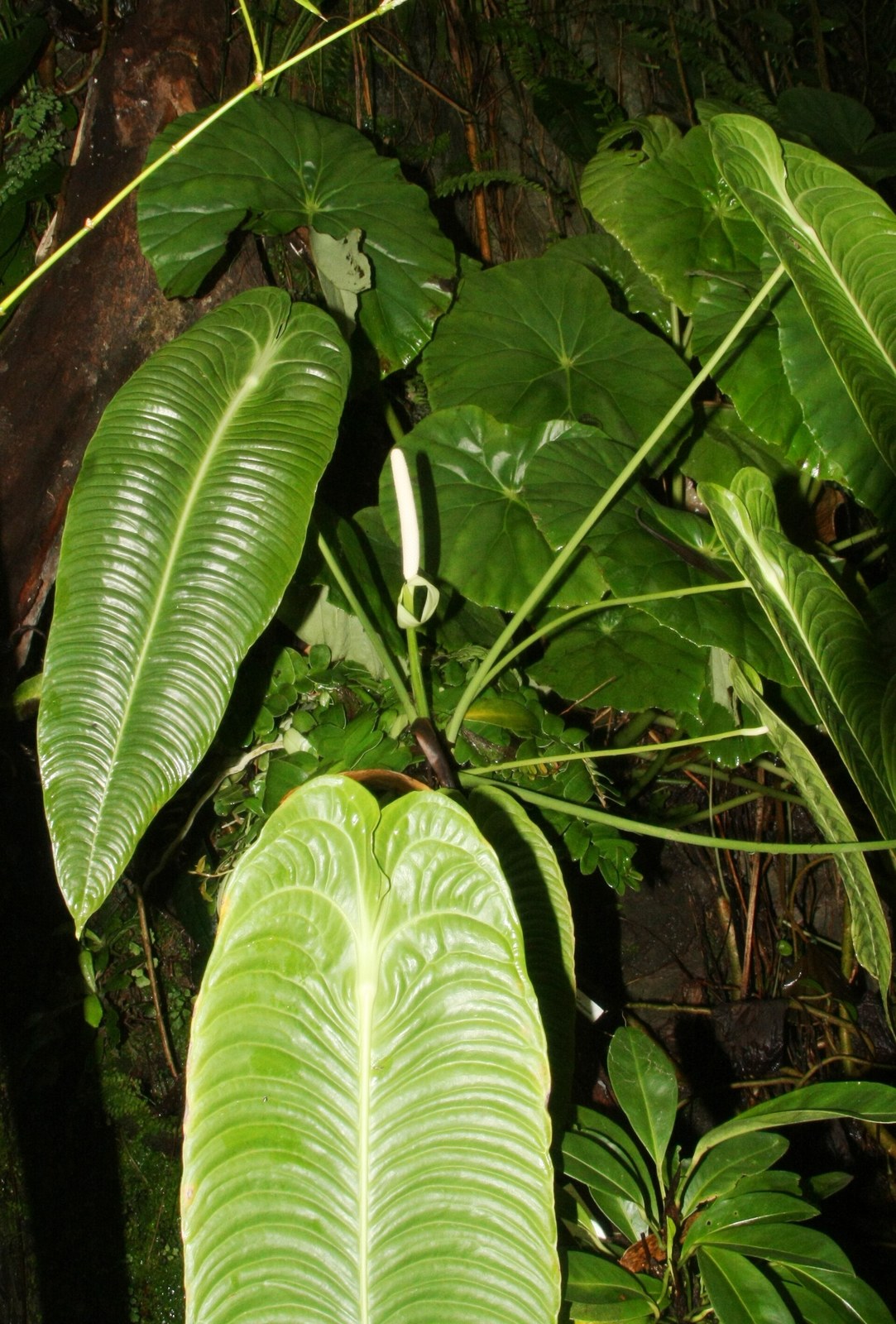
The king anthurium grows long, hanging leaves with deep ridges that look almost quilted. The RHS describes it as an epiphyte, a plant that grows on other plants in the wild.
- Look: thick, deeply veined, glossy, leathery leaves
- Indoor size: up to about 6 feet tall
- Light: bright, indirect light with high humidity
- Water check: water freely from spring to fall and sparingly in winter; keep it above about 64°F
- Difficulty: the RHS gives no rating, and its warmth and humidity needs make it a plant for later
- Pets: neither the ASPCA list nor North Carolina State Extension covers this species, so ask your vet before bringing one home to a curious pet
- Availability (general guidance): a collector plant, found mostly through specialist growers
Elephant ear (Colocasia)
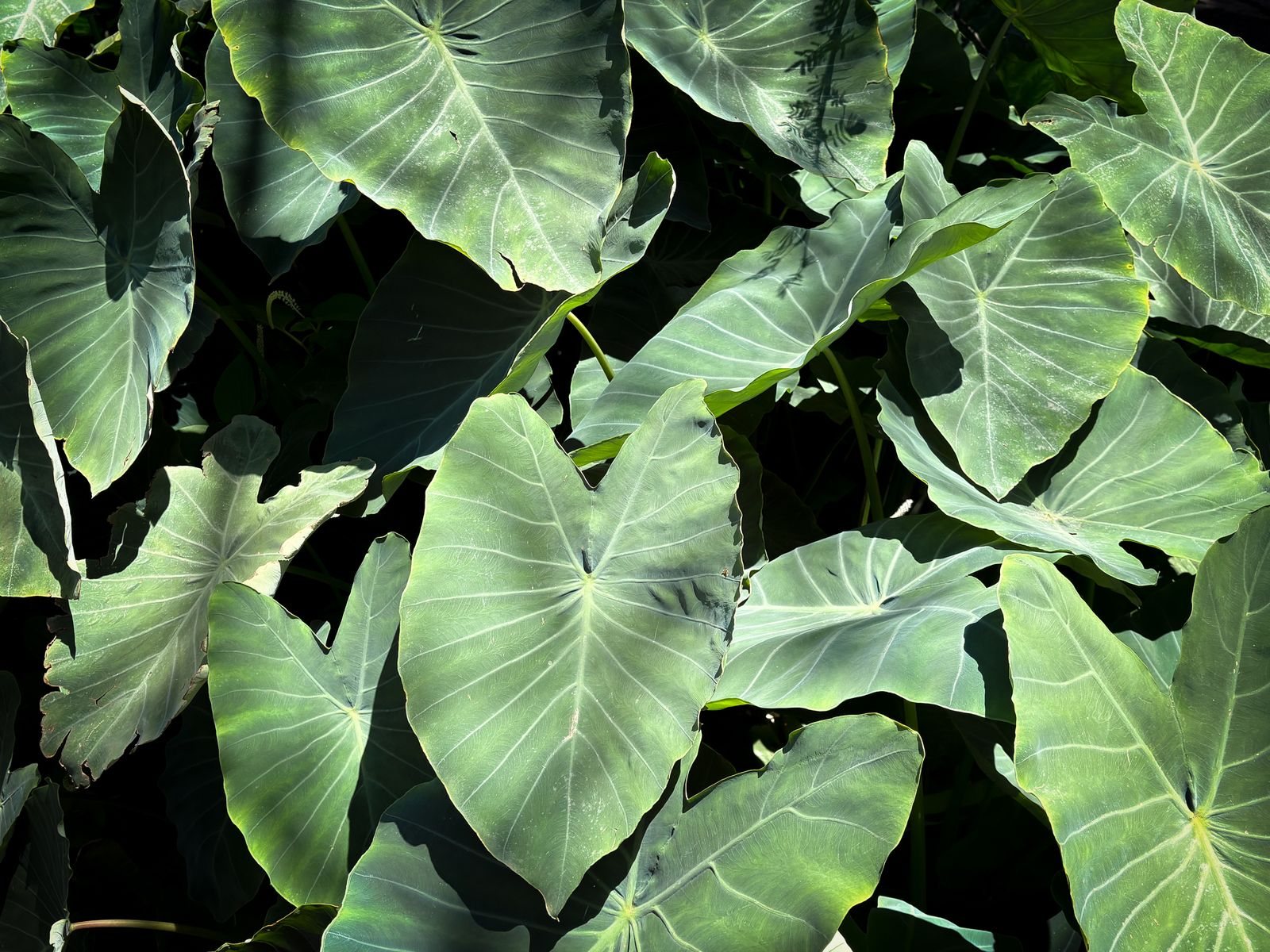
Elephant ear, or taro (Colocasia esculenta), grows from a corm and is a staple food crop in many parts of the world. North Carolina State Extension notes that it can be grown as a houseplant or kept in a patio pot and brought indoors for the cooler months.
- Look: heart- to arrow-shaped leaves up to 3 feet long, some in near-black or speckled cultivars
- Indoor size: 3 to 6 feet tall and wide
- Light: part shade or filtered sun
- Water check: North Carolina State Extension says it should not be allowed to dry out, so check the soil often
- Difficulty: medium maintenance
- Pets: North Carolina State Extension flags it as a problem for cats and dogs
- Availability (general guidance): often sold for patios and summer containers
How do they compare at a glance?
In the table, NC State means North Carolina State Extension.
| Plant | Indoor size | Light | Water check cue | Difficulty | Pets (source) |
|---|---|---|---|---|---|
| Rubber plant | 2 to 10 feet | Bright indirect, no afternoon sun | Top inch dry | Low | Harmful (NC State) |
| Umbrella tree | 4 to 6 feet | Bright, out of hot afternoon sun | Finger check | Low | Toxic (ASPCA) |
| Tree philodendron | 4 to 10 feet | High light, tolerates low | Top of the mix dry | Low | Harmful (NC State) |
| White bird of paradise | Needs a high ceiling | Bright indirect | Top layer dry | Low | Harmful (NC State) |
| Ficus 'Audrey' | 1 to 2 feet | Bright indirect | Top 2 to 3 inches dry | Low | Harmful (NC State) |
| Zebra alocasia | 1.5 to 3 feet | Bright indirect | Top 2 inches dry, very little in winter | Tough (RHS) | Toxic (ASPCA) |
| Alocasia 'Polly' | Up to 2 feet | Bright indirect | Lightly moist, never wet | Low | Toxic (ASPCA) |
| King anthurium | Up to 6 feet | Bright indirect, humid | Freely in growth, sparingly in winter | Not rated | Not covered |
| Elephant ear | 3 to 6 feet | Part shade or filtered sun | Keep from drying out | Medium | Harmful (NC State) |
How do I know when a big-leaf plant needs water?
When the mix is ready, water until it runs from the drainage holes, then empty the saucer.
Leaves that yellow and droop while the soil is still wet point to overwatering, and our root rot guide explains what to do next. Alocasias also rest in winter, when the RHS says they need very little water and no feeding.
Are big-leaf houseplants safe around cats and dogs?
Many of these plants contain calcium oxalate crystals that irritate the mouth. If you share your home with a chewer, place big-leaf plants well out of reach and keep the ASPCA Animal Poison Control number handy. For gentler starter plants, browse our beginner plants that still look good.
How does Grove help with a big-leaf plant?
Grove builds a care plan from the species, how you grow the plant, and whether it lives indoors or outdoors. The method you choose shapes watering technique and how often you water, feeding, pruning, repotting and the task rhythm, and the watering task is a check that asks whether the plant needs water today. You can change how a plant is grown later and rebuild the plan, which helps when an elephant ear moves from the patio to a sunny room for winter. If this is your very first plant, our first plant guide is a gentle place to begin, and our guide to monstera varieties introduces the big-leaf plant that started it all.
Sources
- How to grow alocasias : Royal Horticultural Society
- Alocasia zebrina : Royal Horticultural Society
- Anthurium veitchii : Royal Horticultural Society
- How to grow philodendrons : Royal Horticultural Society
- Ornamental figs (Ficus) : Royal Horticultural Society
- North Carolina State Extension Gardener Plant Toolbox: Ficus elastica, Heptapleurum actinophyllum, Thaumatophyllum bipinnatifidum, Strelitzia nicolai, Ficus benghalensis, Alocasia x mortfontanensis, Alocasia, Colocasia esculenta
- ASPCA toxic and non-toxic plants: Schefflera, Alocasia : American Society for the Prevention of Cruelty to Animals