Meet the monsteras: varieties, quirks and how to care for each
University of Minnesota Extension says the Swiss cheese plant became a favorite in American homes back in the 1950s, and it has never really left. Its relatives are just as charming, from small-leaved climbers covered in holes to silvery vines and rare collector plants. This guide introduces the monsteras you are most likely to meet, how to tell them apart, and how to keep each one growing happily.
What do all monsteras need?
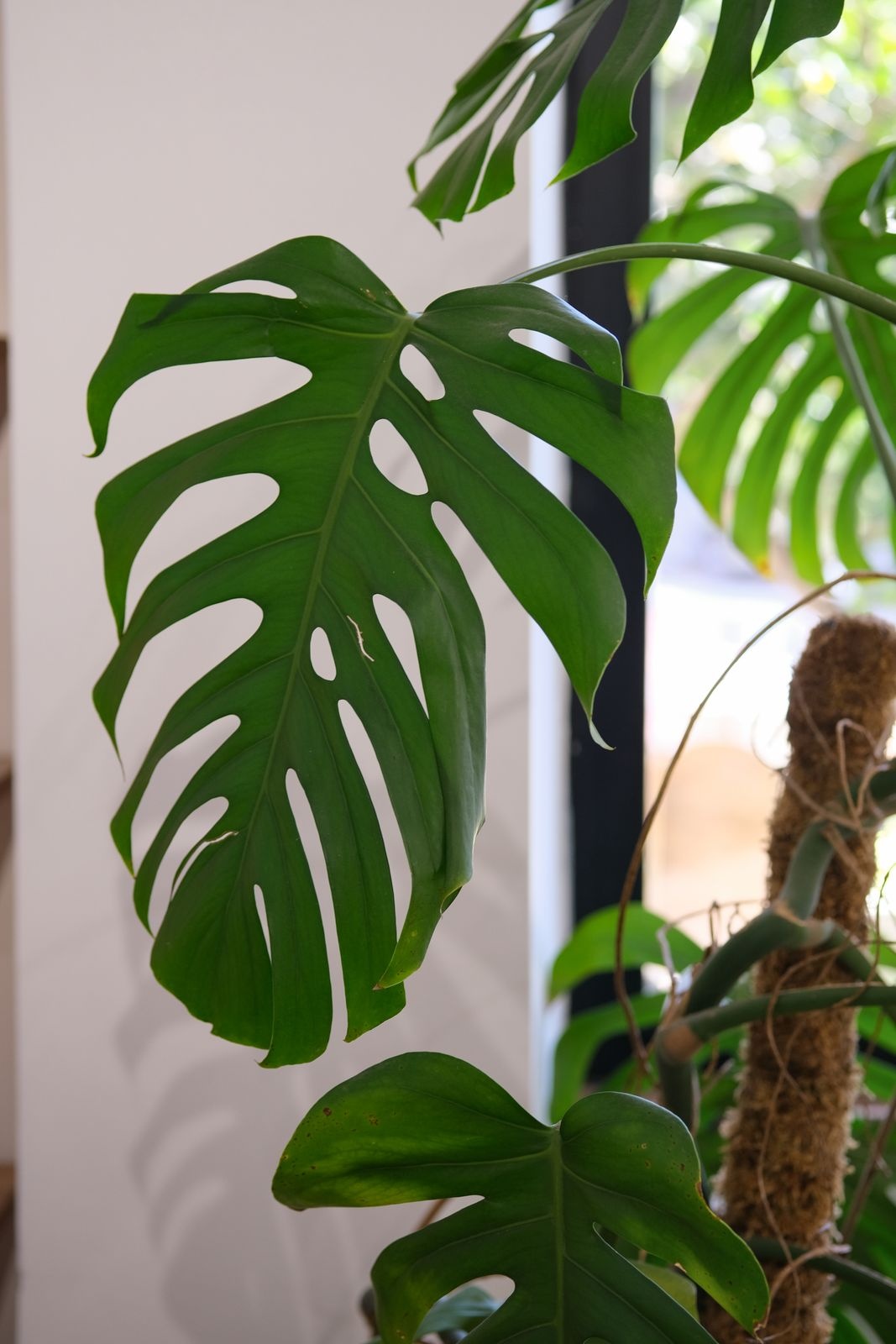
Monsteras are climbing vines from tropical forests in Mexico, Central America and South America. In nature they grip tree trunks with aerial roots and climb toward the light. The North Carolina State Extension Gardener Plant Toolbox recommends warm temperatures of 60 to 85°F, moderate brightness out of direct sun, high humidity and sturdy support to keep the stems from breaking.
Light shapes the leaves. University of Wisconsin-Madison Extension notes that a monstera grown in too little light will not develop its famous holes, which botanists call fenestrations. A moss-covered pole or slab of bark gives the aerial roots something to hold, and Wisconsin Extension suggests keeping that support damp so the roots can take up water too.
Which monstera varieties will I meet?
Each entry below covers the look, size, light, the cue to check before watering, difficulty, pet notes from trusted lists and a rarity note. Rarity notes are general guidance unless a source is named.
Swiss cheese plant (Monstera deliciosa)
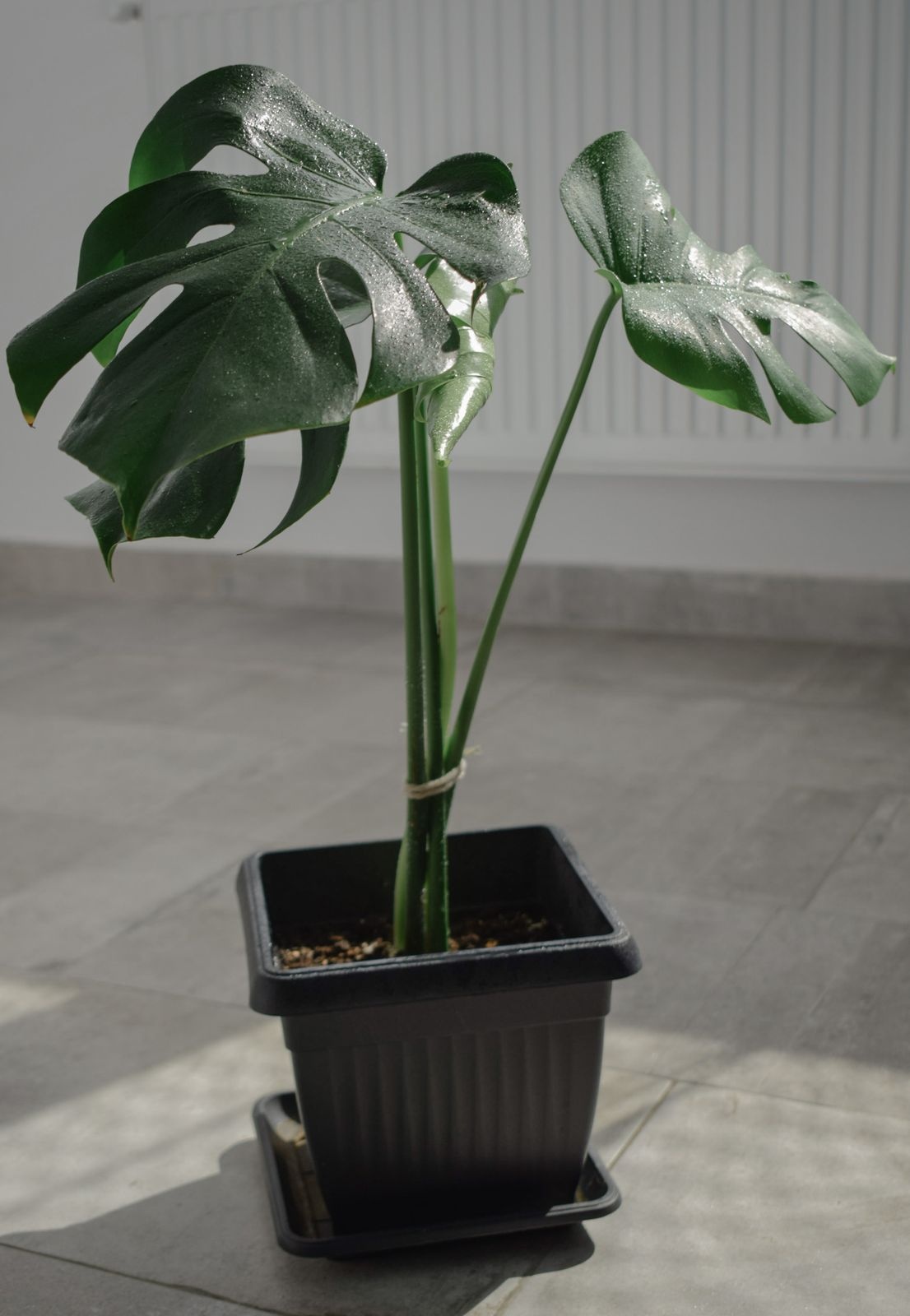
Young plants have solid heart-shaped leaves, and the splits and holes appear as the plant matures. North Carolina State Extension says it can reach 70 feet in the wild and usually stays at 6 to 8 feet in a home.
- Look: huge, glossy leaves with deep splits and holes on mature plants
- Indoor size: 6 to 8 feet in most homes
- Light: moderate to bright light out of direct sun
- Water check: water thoroughly, then let the top quarter to one third of the mix dry before the next drink
- Difficulty: medium maintenance; give it room and a sturdy support
- Pets: the American Society for the Prevention of Cruelty to Animals (ASPCA) lists it as toxic to cats and dogs
- Rarity: University of Minnesota Extension says it is typically available wherever tropical houseplants are sold
Swiss cheese vine (Monstera adansonii)
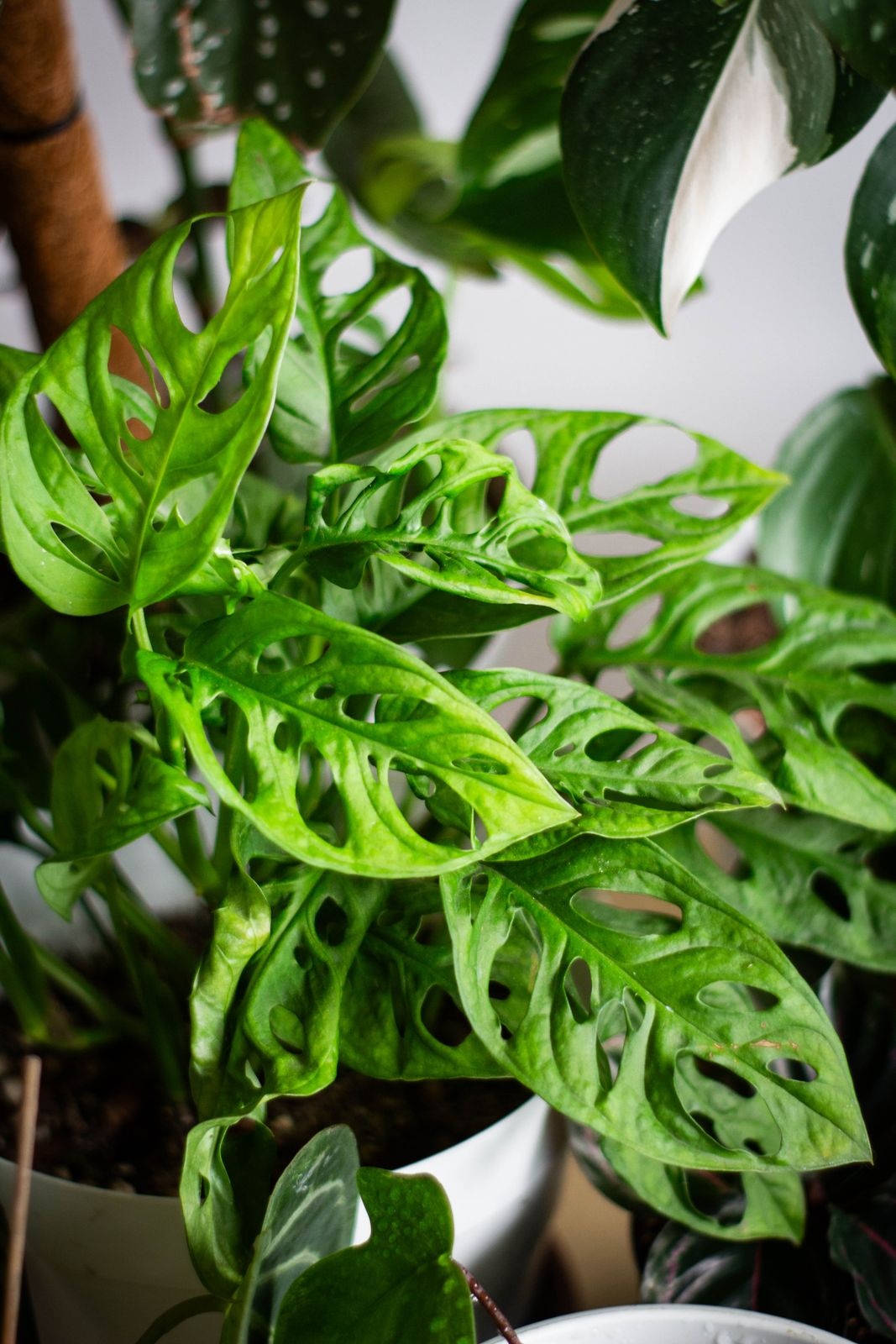
Smaller and faster growing, adansonii fills a moss pole or a hanging basket with heart-shaped leaves full of oval holes. North Carolina State Extension describes it as a popular houseplant with a fast growth rate.
- Look: medium to dark green leaves with many enclosed oval holes
- Indoor size: 3 to 8 feet tall and 1 to 3 feet wide on a trellis or moss pole
- Light: bright, indirect light; direct sun can scorch the leaves
- Water check: it likes moist, well-drained soil; North Carolina State Extension gives no dryness depth, so use the finger check below
- Difficulty: not rated by North Carolina State Extension; keep it above 50°F and away from cold drafts
- Pets: North Carolina State Extension says it is toxic to people and pets if eaten
- Rarity (general guidance): common in plant shops
Window-leaf monstera (Monstera obliqua)
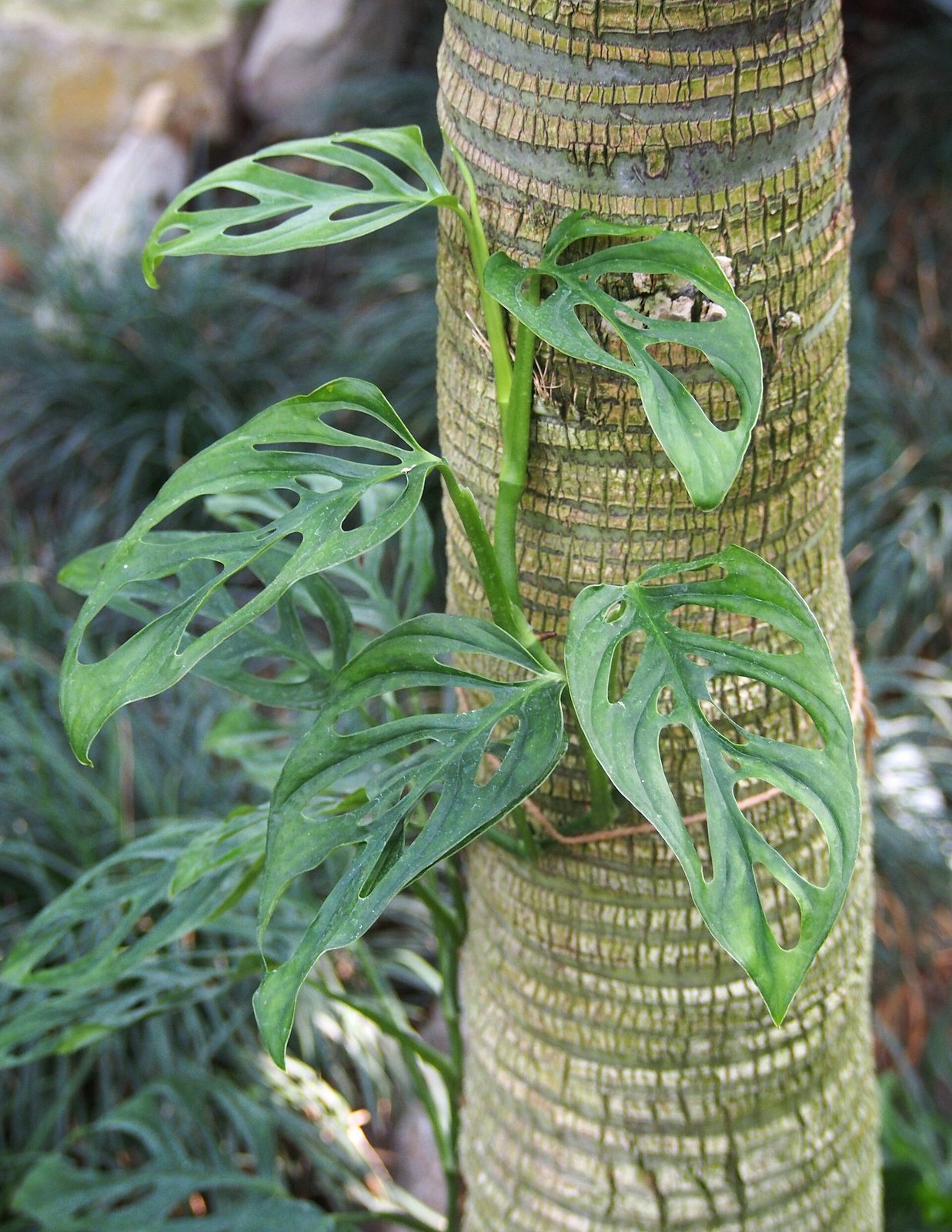
True obliqua is a rare monstera, with leaves so full of holes they can look like lace. The Royal Horticultural Society (RHS) describes it as rare, compact and slow growing. The National Parks Board Singapore notes that it looks similar to adansonii, which has thicker leaves, so buy only from a seller you trust.
- Look: thin, glossy leaves with a large share of holes
- Indoor size: 1 to 1.5 meters (about 3 to 5 feet), reached slowly
- Light: bright, indirect light with moderate to high humidity
- Water check: the RHS says to water while it grows and keep the mix just moist in winter
- Difficulty: slow growing, taking 10 to 20 years to reach full size, according to the RHS
- Pets: neither the ASPCA list nor North Carolina State Extension covers this species, so treat it like its toxic relatives
- Rarity: the RHS calls it rare; expect a collector plant
Variegated Swiss cheese plant (Monstera deliciosa 'Albo Variegata')
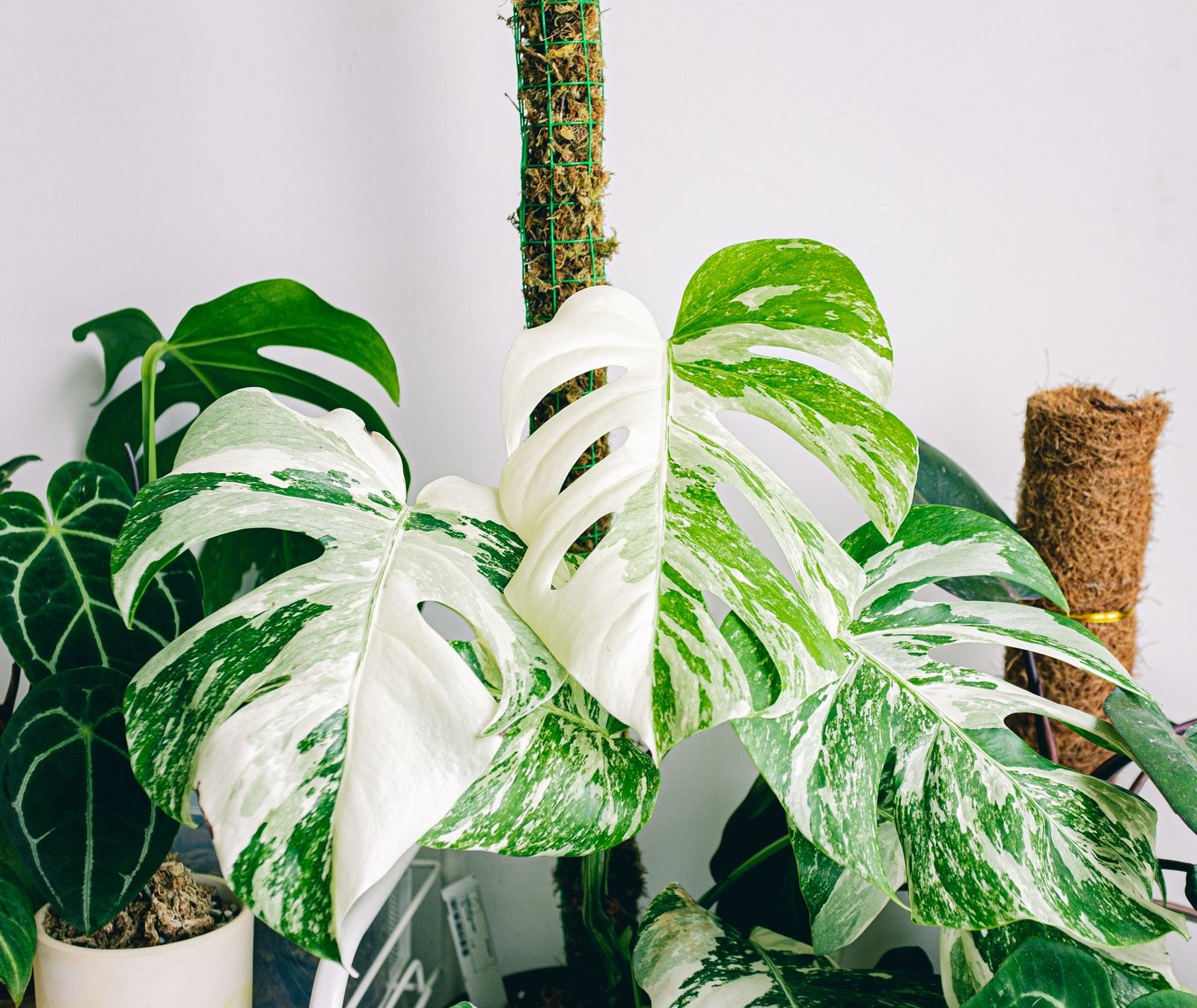
'Albo Variegata' splashes the classic leaf with bold patches of white. North Carolina State Extension calls it a striking plant that is rare and expensive, and notes that variegated cultivars need more sunlight than darker green ones.
- Look: deliciosa leaves with large white sections and streaks
- Indoor size: similar to green deliciosa, growing more slowly
- Light: brighter than a green deliciosa, still out of harsh direct sun
- Water check: the same as deliciosa, letting the top quarter to one third of the mix dry
- Difficulty: medium, with slower growth than a green plant
- Pets: as a deliciosa, listed by the ASPCA as toxic to cats and dogs
- Rarity: North Carolina State Extension calls it rare and expensive
Silver monstera (Monstera siltepecana)
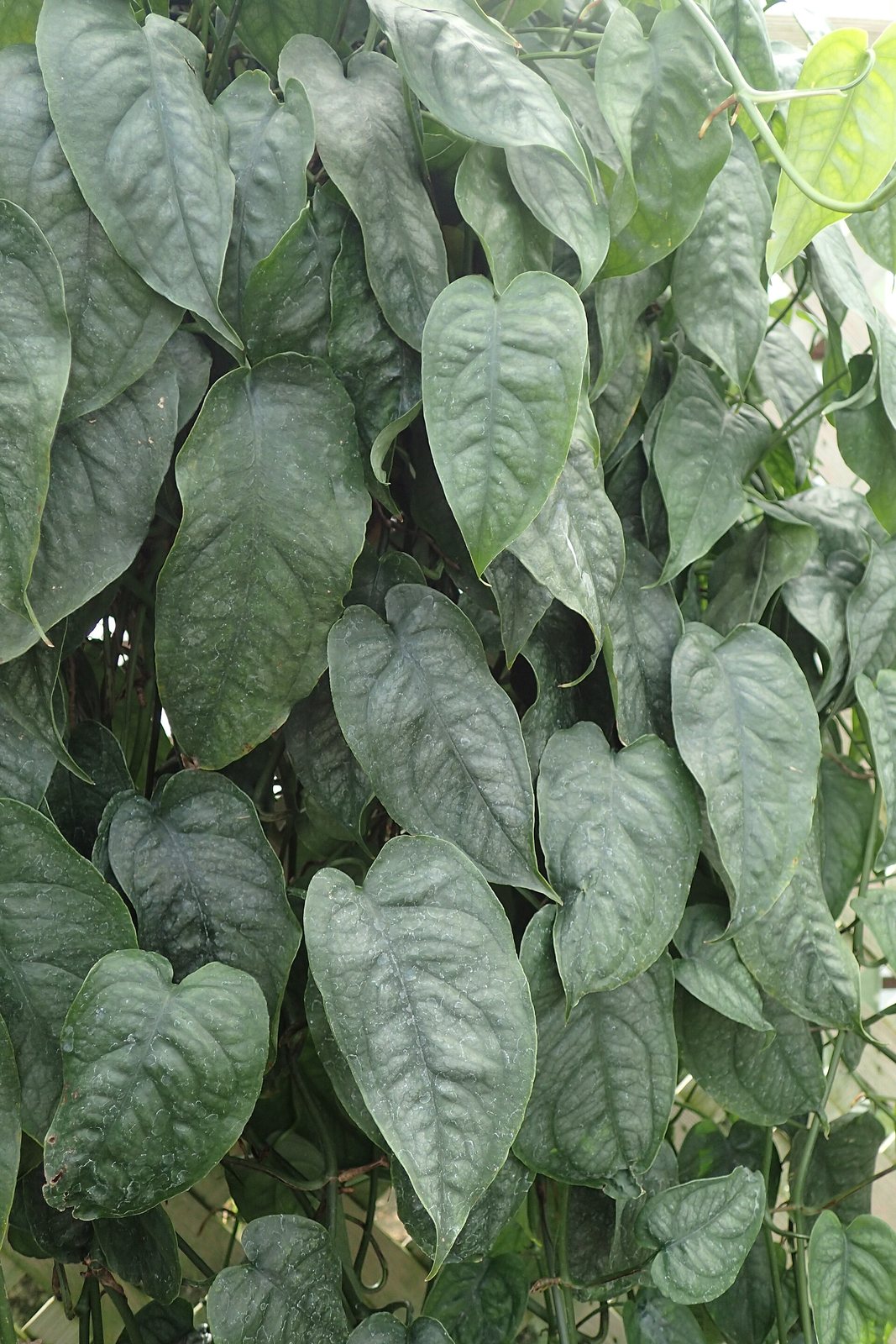
Siltepecana changes as it grows. North Carolina State Extension explains that young leaves are small, pointed and silvery green with dark veins, and once the plant climbs, new leaves grow larger, greener and develop holes. Let it trail from a basket and the leaves stay small and silvery.
- Look: silvery, lance-shaped juvenile leaves; larger green adult leaves with holes
- Indoor size: 5 to 8 feet tall and 3 to 5 feet wide
- Light: bright, indirect light; direct sun scorches the leaves
- Water check: water thoroughly when the top 1 to 2 inches of soil are dry
- Difficulty: low maintenance
- Pets: North Carolina State Extension says it is toxic to cats, dogs and people if eaten
- Rarity (general guidance): found in many plant shops, less common than adansonii
Is Monstera borsigiana a different plant?
Kew lists a 2020 study by Cedeño-Fonseca and colleagues among the authorities it follows here. The borsigiana name lives on in plant shops, and the plant itself is a Monstera deliciosa.
Why are some monsteras so rare?
University of Minnesota Extension explains that the white and yellow patterns in variegated monsteras come from mutations that reduce chlorophyll, the green pigment plants use to capture light. Less chlorophyll means slower growth, and some patterns can fade as green growth takes over. Minnesota Extension adds that seeds cannot carry variegation, so skip any offer of variegated monstera seeds.
Two more names you may spot on collectors' lists:
- Monstera standleyana: the RHS describes a compact, slow-growing climber with cream-speckled leaves that develop small holes as the plant gets larger
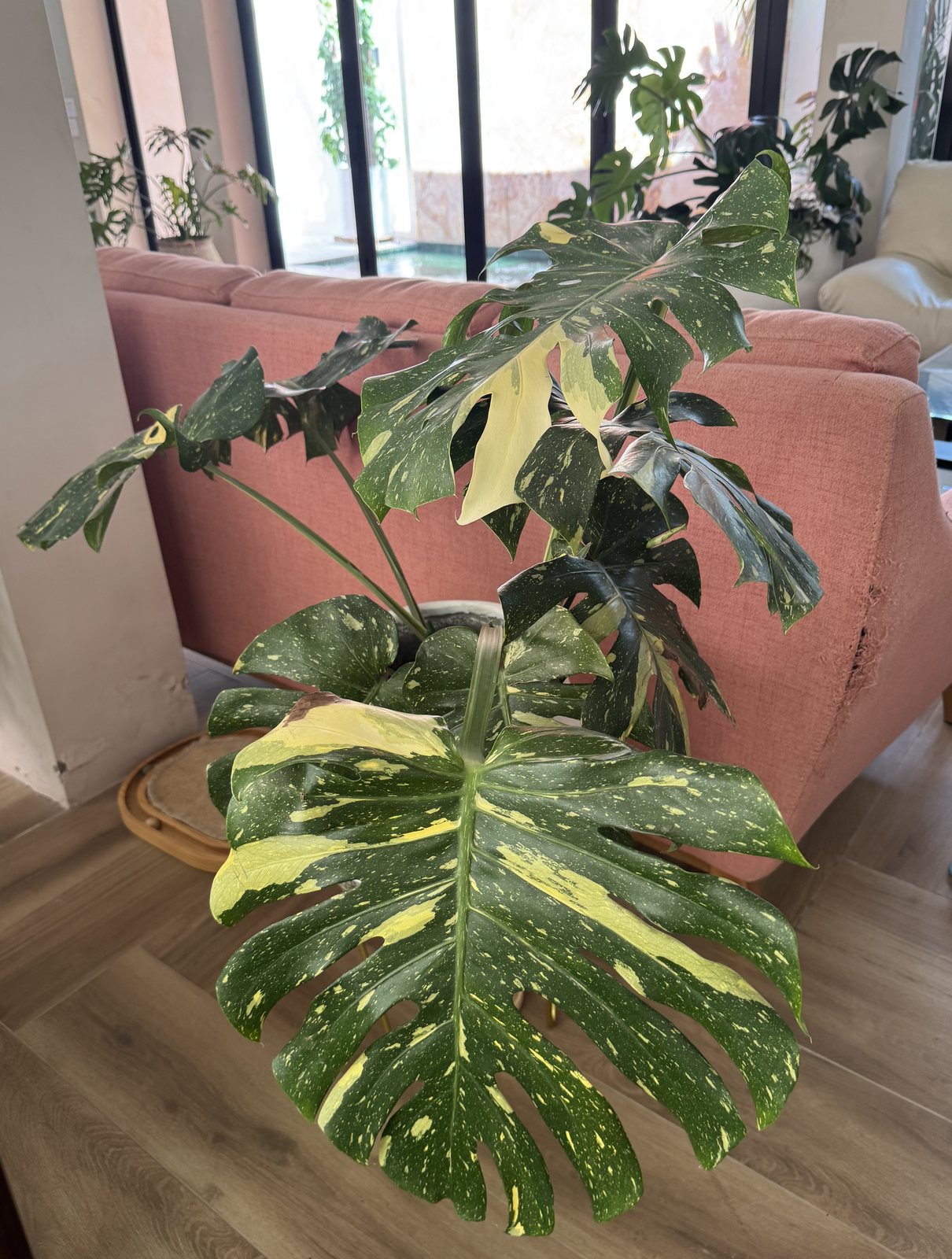
- 'Thai Constellation': North Carolina State Extension describes marbled and speckled cream and green variegation that resembles a constellation, and calls it rare
How do the varieties compare?
In the table, NC State means North Carolina State Extension. Rarity entries without a named source are general guidance.
| Variety | Leaf size | Holes | Habit | Light | Water check | Rarity |
|---|---|---|---|---|---|---|
| Deliciosa | Very large | Splits and holes when mature | Climber, 6 to 8 feet indoors | Moderate to bright, no direct sun | Top quarter to third dry | Widely available |
| Adansonii | Medium | Many oval holes | Climber or trailer, 3 to 8 feet | Bright indirect | Finger check | Common |
| Obliqua | Small and thin | Very many | Slow trailer, 3 to 5 feet | Bright indirect, humid | Just moist in winter | Rare (RHS) |
| 'Albo Variegata' | Very large | As deliciosa | Climber, slower | Brighter than deliciosa | Top quarter to third dry | Rare and expensive (NC State) |
| 'Thai Constellation' | Very large | As deliciosa | Climber, slower | Brighter than deliciosa | Top quarter to third dry | Rare (NC State) |
| Siltepecana | Small, bigger when climbing | On adult leaves | Climber or trailer, 5 to 8 feet | Bright indirect | Top 1 to 2 inches dry | Many plant shops |
| Standleyana | Medium | Small holes with age | Compact climber, 3 to 5 feet | Bright indirect | Just moist in winter | Collector plant |
How do I know when a monstera needs water?
A quick check before each watering keeps you in step with your plant. Push a finger into the mix and feel for dryness at the depth listed for your plant. When it is ready, water thoroughly until water runs from the drainage holes, then empty the saucer. Wisconsin Extension notes that leaves may "sweat" when the mix stays too moist, a sign to water less and protect the roots from rot.
Yellowing leaves on soggy soil usually point to overwatering, and our guides to yellow leaves and root rot walk you through the fix.
How do I grow more monsteras from cuttings?
University of Minnesota Extension says a monstera can only be propagated when the cutting includes a node with its bud, and roots form in about 2 to 4 weeks. Wisconsin Extension suggests cutting a stem tip just below an aerial root. Our water propagation guide walks through taking the cutting, caring for it in water and moving it into soil.
Are monsteras safe around cats and dogs?
The ASPCA lists Monstera deliciosa as toxic to cats and dogs, and North Carolina State Extension says the same for adansonii and siltepecana. The insoluble calcium oxalates in the leaves cause mouth pain and drooling. A high shelf, a hanging basket or a room your pets don't visit keeps everyone comfortable. For more pet-friendly ideas, see our beginner plants that still look good.
How does Grove help with a monstera?
Grove builds a care plan from the species, how you grow the plant, and whether it lives indoors or outdoors. The method you choose shapes watering technique and how often you water, feeding, pruning, repotting and the task rhythm, and the watering task is a check that asks whether the plant needs water today. When a rooted cutting moves from a jar into a pot, change the method and rebuild the plan. New to plants? Our first plant guide is a friendly start, and our tour of big-leaf houseplants introduces more dramatic foliage.
Sources
- Monstera deliciosa, Monstera adansonii and Monstera siltepecana : North Carolina State Extension Gardener Plant Toolbox
- Monstera deliciosa : University of Minnesota Extension (reviewed 2026)
- Swiss-Cheese Plant, Monstera deliciosa : University of Wisconsin-Madison Extension (revised October 2026)
- Monstera borsigiana K.Koch and Monstera deliciosa var. borsigiana : Plants of the World Online, Royal Botanic Gardens, Kew
- Monstera obliqua and Monstera standleyana : Royal Horticultural Society
- Monstera obliqua : National Parks Board Singapore, Flora and Fauna Web
- Swiss Cheese Plant : American Society for the Prevention of Cruelty to Animals