Plant care card
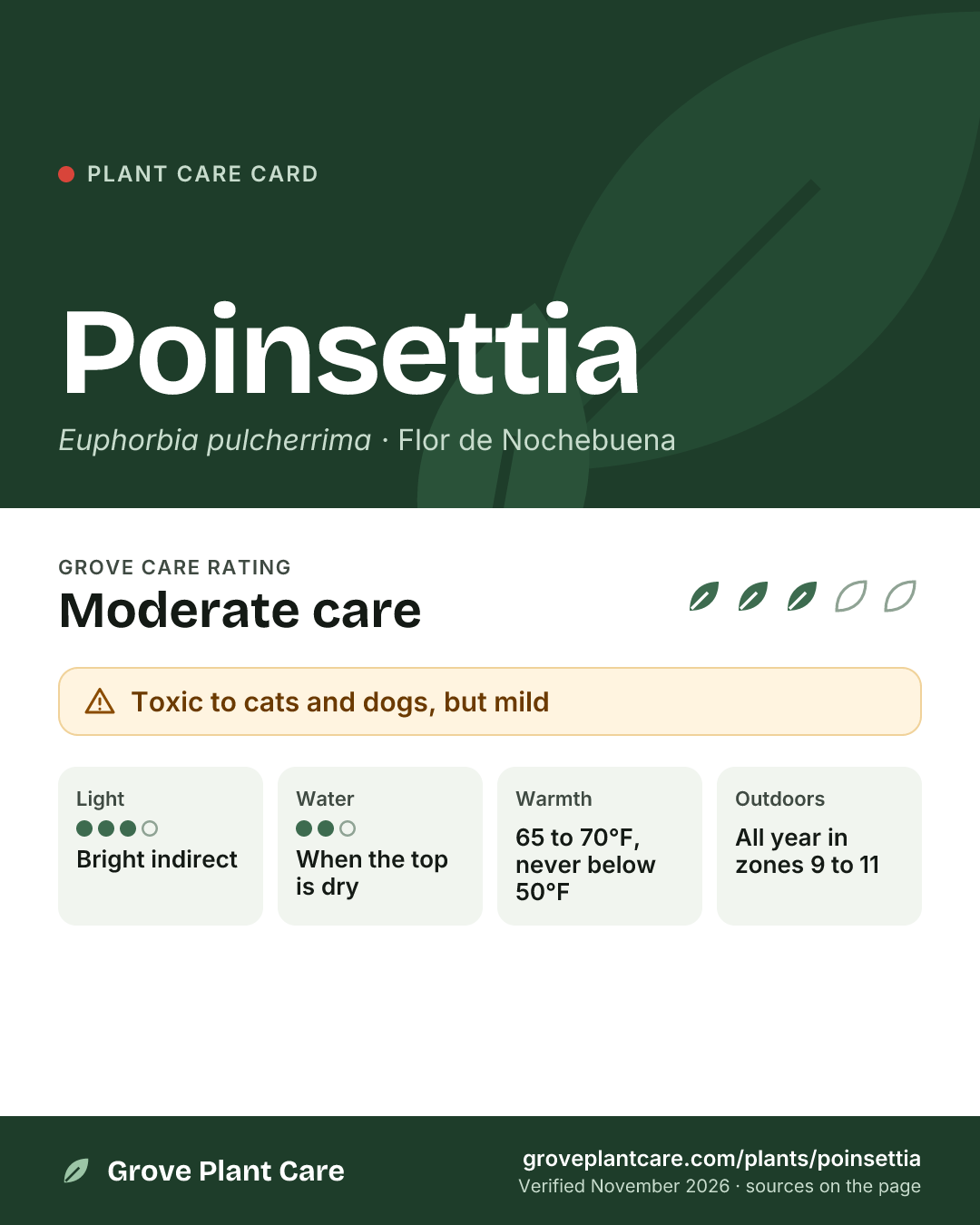
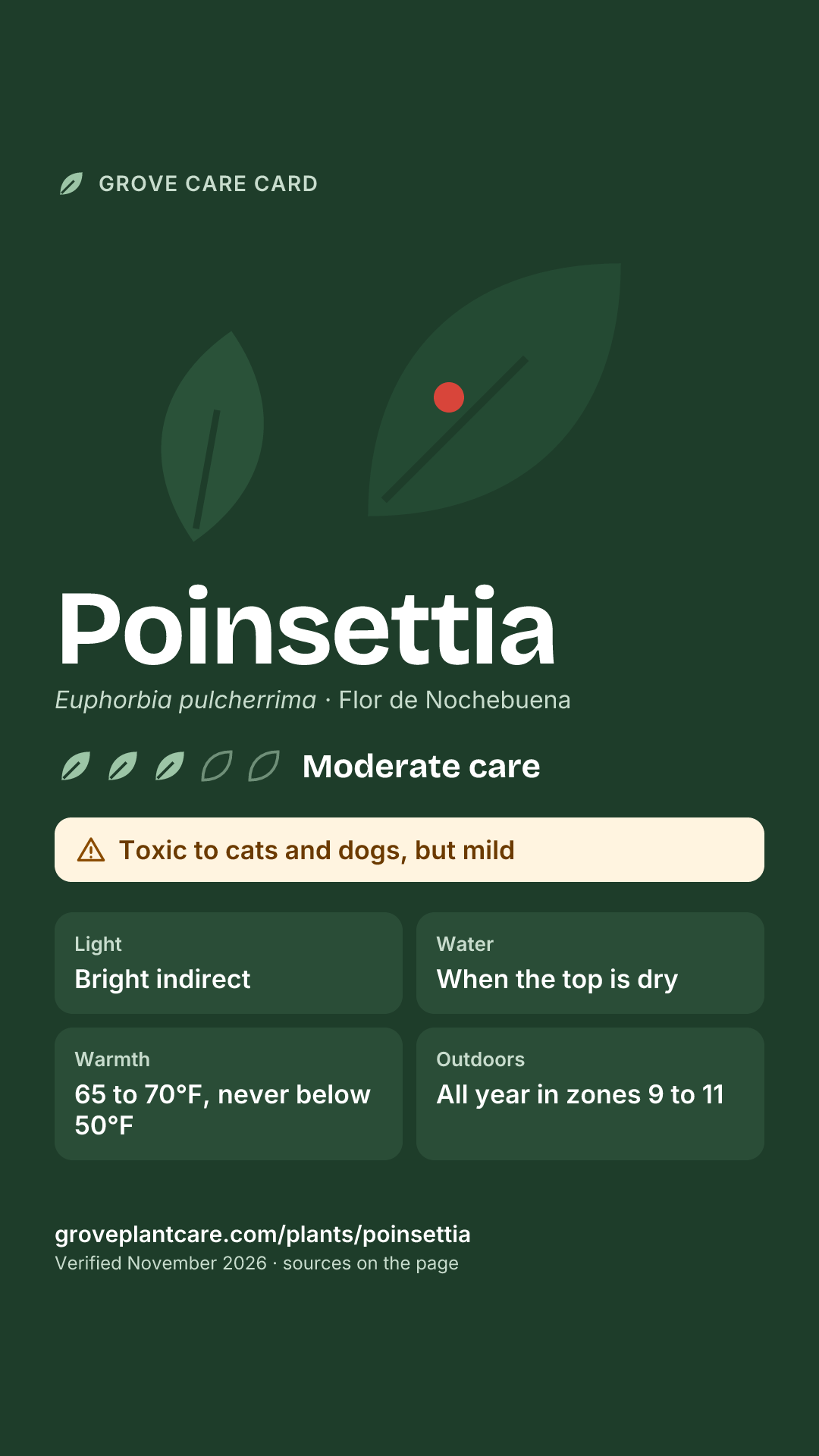
Poinsettia
Euphorbia pulcherrima · Flor de Nochebuena
Also called Christmas star or painted leaf
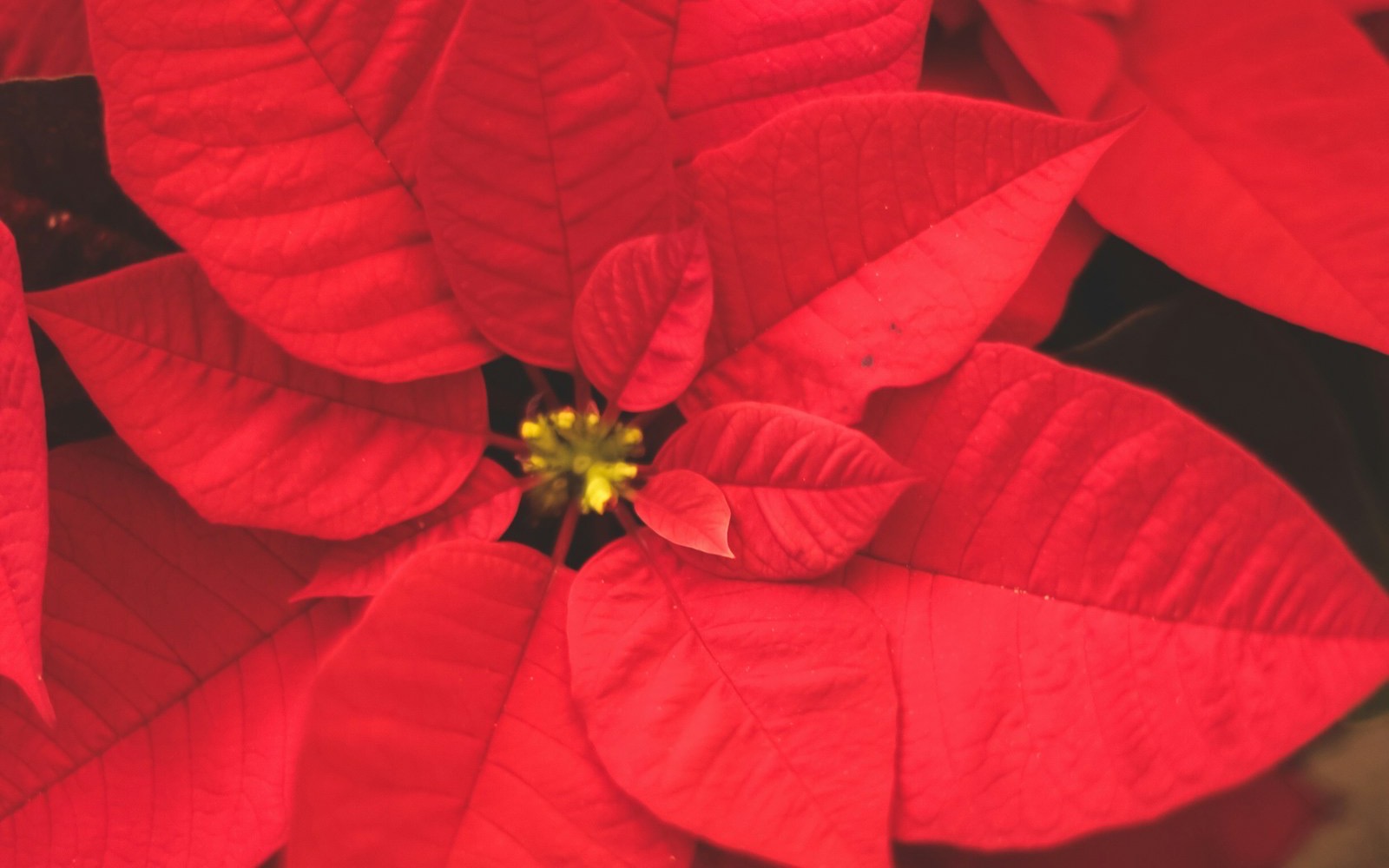
Photo by Jessica Fadel on Unsplash
Poinsettias are easy to keep through the holidays if you give them bright, indirect light, keep them warm and away from drafts, and water when the top of the soil feels dry. Most die from overwatering or cold. Getting one to turn red again next year takes a strict nightly darkness routine, and that's the hard part.
Toxic to cats, dogs and horses · Mild
Irritates the mouth and stomach, sometimes causing vomiting. The ASPCA calls it generally over-rated in toxicity. Children: low severity. The sap can irritate skin and eyes; latex allergy caution.
Pet poison line: ASPCA (888) 426-4435
Good for: holiday gifts, outdoor color in warm climates · Think twice if: pets chew plants, someone has a latex allergy.
Needs at a glance
- Light3 of 4 · Bright indirect6+ hours, near a south, east or west window
- Water2 of 3 · Let the top dryWater when the surface feels dry, never bone dry
- Humidity1 of 3 · AverageA normal home is fine
- Soil when pottedAll-purpose mixOne that drains well
Indoors: best at 65 to 70°F (18 to 21°C). Keep it above 50°F (10°C) and away from drafts and heat vents.
How the rating adds up
0 = easiest · 1 = moderate · 2 = hardest
- Missed waterings1 of 2 · ModerateWilts if it dries out completely
- Light flexibility1 of 2 · ModerateNeeds bright, indirect light
- Humidity0 of 2 · EasiestNo extra humidity needed
- Pests and disease1 of 2 · ModerateMealybugs, whiteflies; rot if overwatered
- Sensitivity to change2 of 2 · HardestDrops leaves with drafts, heat or cold
Growing outdoors
All year: USDA zones 9 to 11, where the coldest winter nights average 20°F (−7°C) or warmer.
Elsewhere: summer outside in part sun, 4 to 6 hours. Bring it in when nights reach 55 to 60°F (13 to 16°C).
- In the ground
- Containers
- Hedge in warm climates
- Deer resistant
Sources: NC State, University of Arizona, Clemson, University of Minnesota, Mississippi State, ASPCA and UF/IFAS. Full list below.
Verified · How we rate plants
Is a poinsettia poisonous to cats, dogs and children?
Mildly. The ASPCA lists poinsettias as toxic to cats, dogs and horses, but the effects are mild: the milky sap irritates the mouth and stomach and sometimes causes vomiting, and the ASPCA calls the plant generally over-rated in toxicity. In a review of 22,793 poinsettia exposures reported to US poison control centers, 92% caused no symptoms. The sap can irritate skin and eyes, so people with latex allergies should wear gloves. If a pet eats some and seems unwell, call your vet or the ASPCA Animal Poison Control Center at (888) 426-4435.
How often should I water a poinsettia?
Check the soil instead of watering on a schedule. Water when the surface feels dry, until water drains from the bottom, then empty the saucer so the roots never sit in water. Small pots dry out faster, so check them more often. Dropping leaves are a common sign of overwatering.
How much light does a poinsettia need?
At least 6 hours of bright, indirect light a day, such as near a south, east or west window. Strong direct sun can fade the colored bracts.
What temperature does a poinsettia like?
Between 65 and 70°F (18 to 21°C). Keep it above 50°F (10°C), away from cold drafts, outside doors, heat vents and fireplaces. Days warmer than 70°F make the colored bracts fade sooner.
Why is my poinsettia dropping leaves?
The usual causes are overwatering, cold drafts, or heat from a vent or fireplace. Check the soil first: if it's wet, let it dry before you water again. Then move the plant somewhere bright with steady warmth.
How do I keep a poinsettia alive after Christmas?
Keep giving it bright light, and water when the top of the soil is dry. Once nights stay around 55°F (13°C) or warmer, cut it back to 6 to 8 inches and move it outside to part sun, 4 to 6 hours a day, for the summer. Bring it back in before nights drop to 55 to 60°F (13 to 16°C).
How do I get my poinsettia to turn red again?
Poinsettias color up when nights get long. From about October 1, give the plant 14 hours of complete darkness every night, in a closet or under a box, and 6 to 8 hours of bright light by day, for 8 to 10 weeks. Even a little light during the dark hours can delay the color. University of Minnesota Extension suggests 16 hours of darkness starting in late September, so either schedule works. Once the bracts show color, you can stop.
Clemson, Mississippi State, Colorado State, University of Arizona, University of Minnesota
Can a poinsettia grow outdoors?
Yes, all year in USDA zones 9 to 11, where the coldest winter nights average 20°F (−7°C) or warmer. There it can reach 10 feet tall and 8 feet wide, in the ground or in containers, and it makes a colorful hedge. Deer and rabbits tend to leave it alone. In colder places, keep it outside for the summer only.
How do I propagate a poinsettia?
Take stem cuttings in early summer, dip the ends in rooting hormone, and root them in a mix of peat moss, perlite and vermiculite.
How Grove helps
Grove sets a watering check based on how dry the soil is, so nobody waters a wet pot. In October, you can add the nightly darkness routine as a repeating task and assign it, so whoever is home that evening covers the plant.
Sources
- NC State Extension Gardener Plant Toolbox
- University of Arizona Cooperative Extension
- Clemson Cooperative Extension HGIC
- University of Minnesota Extension
- Mississippi State University Extension
- ASPCA Animal Poison Control
- UF/IFAS Assessment of Non-Native Plants
- ASPCA toxicology brief, Veterinary Medicine (2002)
- Colorado State University Extension