What houseplants actually do for your home
Houseplants make a home nicer to live in. Research on indoor plants links them with brighter moods, calmer feelings, and rooms that people describe as fresher and more pleasant. Plants also bring color and visible life to a shelf or corner, and caring for them adds a small daily ritual that many people come to enjoy. This page walks through each of those benefits with the research behind it, then covers fragrant herbs and mosquitoes and closes with a short, honest note on clean air.
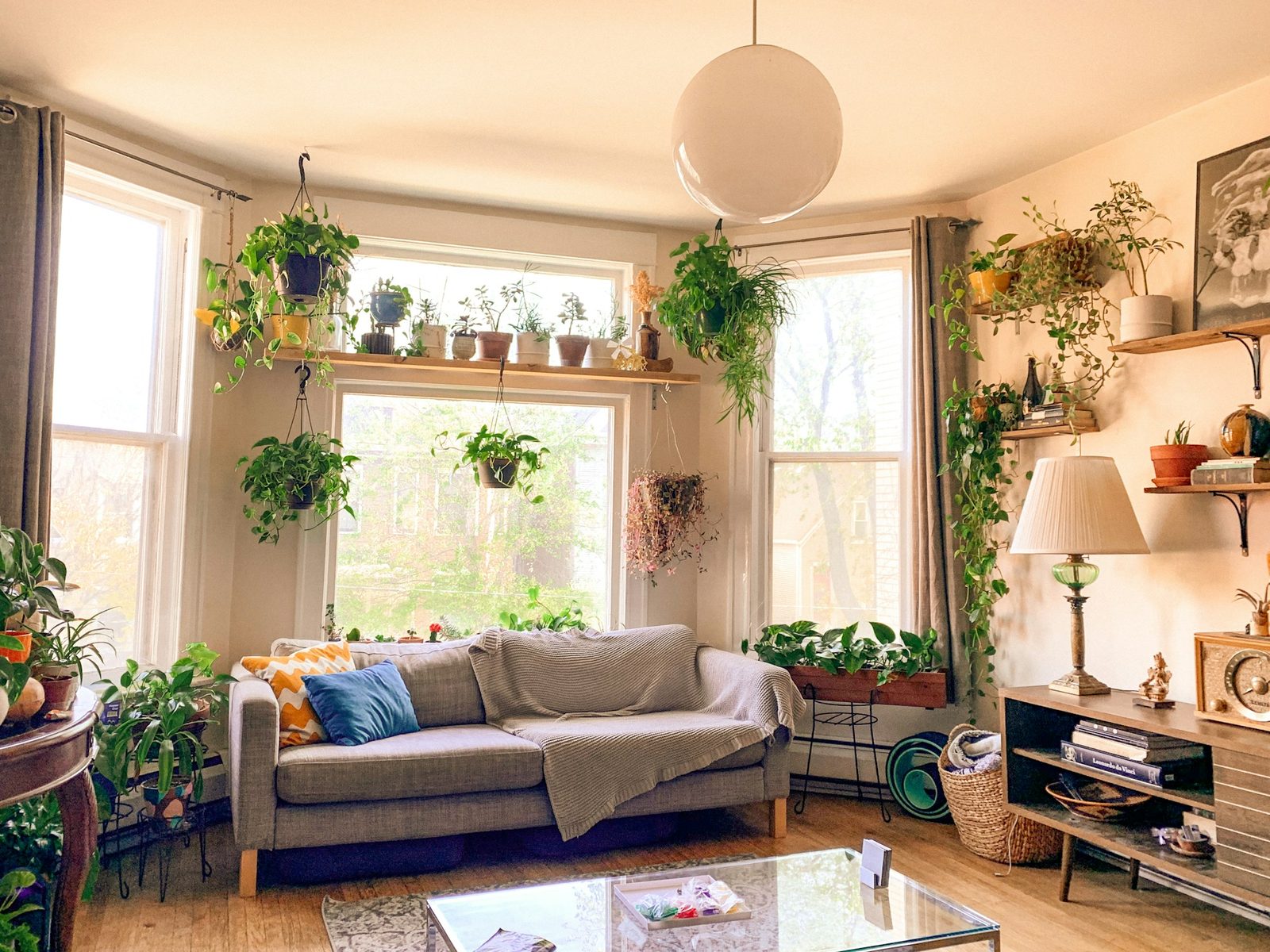
How do houseplants lift your mood?
Han and Ruan (2019) systematically reviewed 50 studies on how people describe rooms with and without indoor plants. Rooms with plants were more often rated as comfortable, with stronger positive feelings such as calm, pleasantness, and friendliness, and weaker negative ones such as pressure, anxiety, and fatigue.
The same pattern showed up at home during the 2020 pandemic lockdowns. A survey of 4,205 people in 46 countries (Pérez-Urrestarazu et al., 2021) found that having indoor plants went along with more positive emotions. These studies describe how people feel in a room, and they make no medical promise. For most of us, a little green in view tends to make a room feel better to be in.
Why does a room with plants feel calmer?
In a randomized crossover study, Lee et al. (2015) asked 24 young men to spend 15 minutes repotting a houseplant and 15 minutes on a computer task. After repotting, they described feeling more comfortable, soothed, and natural. Their diastolic blood pressure was lower, and heart-rate measures of the body's stress response dropped toward the end of the plant task.
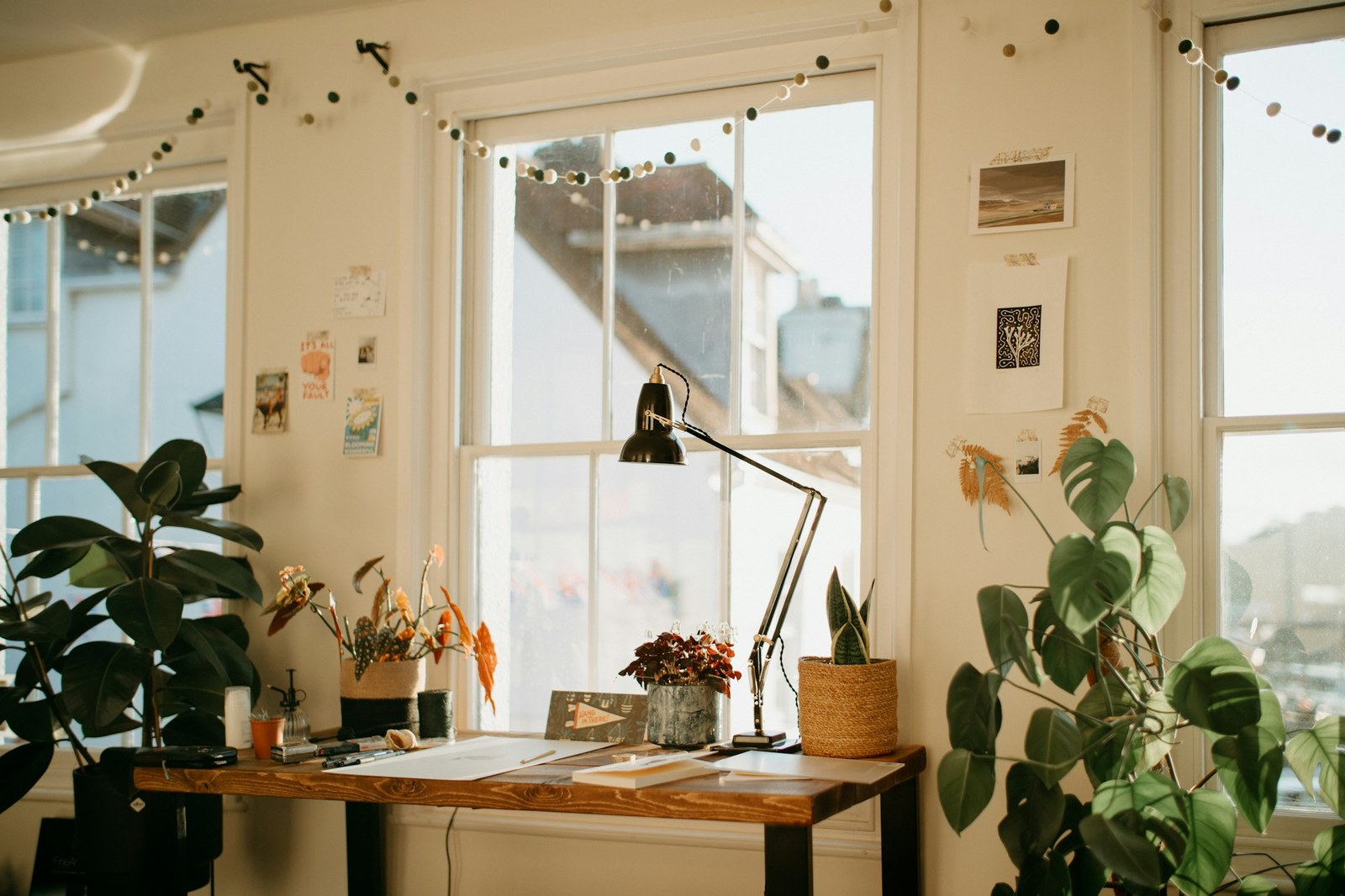
A later review with meta-analyses (Han et al., 2022) pooled results across studies and found lower diastolic blood pressure with indoor plants in some comparisons, while noting that study quality is mixed. A few plants where you rest, read, or work can help the space feel more settled.
Why do plants make a room feel fresher?
In three field experiments in offices in the Netherlands and the United Kingdom, Nieuwenhuis et al. (2014) added leafy plants to some work areas. Staff in the greener spaces rated the air quality as better after the plants arrived, and they also reported better concentration and workplace satisfaction. That result describes how fresh the room felt to the people working there.
Plants also release water vapor through their leaves, a process called transpiration. In offices, Jiang et al. (2024) recorded median relative humidity of about 29% with no plants, about 39% with five Boston ferns, and about 49% with eighteen ferns. A couple of pots at home will add less, and that small lift can still feel welcome in a dry winter room. In daylight, plants release a little oxygen as well; Gubb et al. (2018) found the amount at typical indoor light is small, so treat the oxygen as a pleasant extra. Empty saucers after watering so the mix never stays soggy, since constantly wet soil can grow mold.
How do plants change the look of a room?
Leaf shape, trailing stems, and upright blades change how a shelf, desk, or corner reads. When respondents in the Pérez-Urrestarazu et al. survey compared pictures of different indoor layouts, they favored a handful of potted plants (about five to seven). Biophilic design guidance from Kellert and Calabrese (2015) adds that plants have the most effect when they are abundant and grouped together.
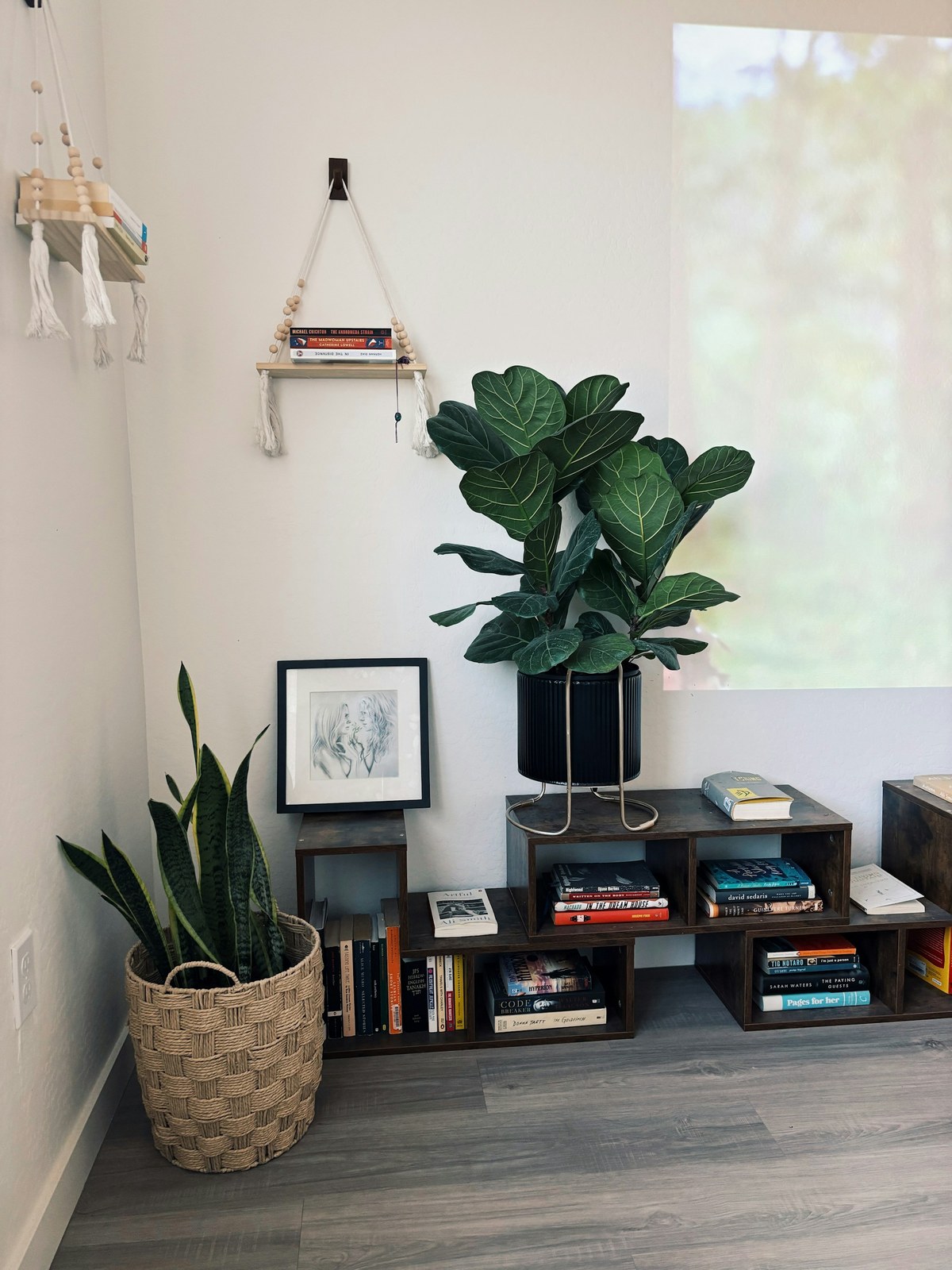
- Mix heights: a tall plant at the back, a compact one in front, and a trailing plant at the edge
- Repeat one pot material or color family so the leaves stay the focus
- Place plants where you already look often, such as beside a reading chair or on a desk
- Give each plant the light it needs so the foliage stays full and even
For species that look good and forgive beginners, see Beginner plants that still look good.
What do living leaves and color add?
A plant changes from week to week. New leaves unfurl, stems lean toward the window, and flowering plants bloom in their season. Kellert and Calabrese recommend leaning on the muted earth tones of soil, rock, and plants for interiors, and saving bright color for natural forms such as flowers. The review section of the Pérez-Urrestarazu et al. paper also points to earlier research suggesting that flowering plants may promote positive emotions and that fresh, yellowish-green foliage may support comfort and calm.
Variegated leaves, a flowering African violet or orchid, or foliage with red or silver markings can carry color through the whole year.
How does a plant care routine help?
In the Lee et al. study, the calmer readings came after hands-on work with a plant. During the 2020 lockdowns, 52% of people in the Pérez-Urrestarazu et al. survey said they spent more time caring for their plants, and 62.5% said they wanted to keep giving plant care more time afterward.
A plant that waits for a soil check also teaches a few useful habits:
- Light first: many “hard” plants are underlit plants
- Water after a soil check: lift the pot, feel the mix, then decide
- Seasons matter: winter growth slows, so the mix takes longer to dry
- Drainage matters: soggy mix invites fungus gnats and root trouble
When a Grove watering task appears, treat the task as a soil check: does this plant need water today.
Why do people feel drawn to plants?
The biophilia hypothesis proposes an inherited emotional bond between people and the natural world. Kellert and Calabrese point out that for more than 99% of human history our species developed in natural settings, and they describe vegetation, especially flowering plants, as one of the most successful ways to bring the direct experience of nature into buildings.
A meta-analysis of 49 experiments with 3,201 participants (Gaekwad et al., 2022) found that exposure to natural environments raised positive feelings and lowered negative ones, compared with urban environments. Those studies mostly looked at outdoor settings and nature scenes. A few houseplants bring a small, everyday piece of that natural world indoors.
Can plants help keep mosquitoes away?
The plant sold as a citronella or mosquito plant is a scented geranium (Pelargonium 'Van Leenii', often called citrosa). In two field tests (Matsuda et al., 1996; Cilek and Schreiber, 1994), people standing near potted plants got about as many mosquito bites or landings as people with no plants nearby. A pot on the patio does little on its own.
Oils and compounds extracted from some herbs show more promise. Melo et al. (2021) found that catnip and its main scent compound, nepetalactone, repel mosquitoes by activating an irritant sensor in the insects, and the human version of that sensor stayed quiet in their tests. In laboratory tests by Amer and Mehlhorn (2006), summarized in a review by Asadollahi et al. (2019), 20% solutions of catnip, rosemary, lavender, and basil oils repelled the malaria mosquito Anopheles stephensi, with protection lasting about 3.5 to 8 hours depending on the oil. Catnip and rosemary oils reached 100% repellency, lavender about 81%, and basil about 67%. University of Minnesota Extension suggests aromatic patio plants such as lemon balm, catmint, lavender, and basil to confuse mosquitoes' ability to find you, and advises brushing or crushing the leaves to release their scent. A review of plant-based repellents by Maia and Moore (2011) adds that these plant oils evaporate quickly, so the effect wears off fast.
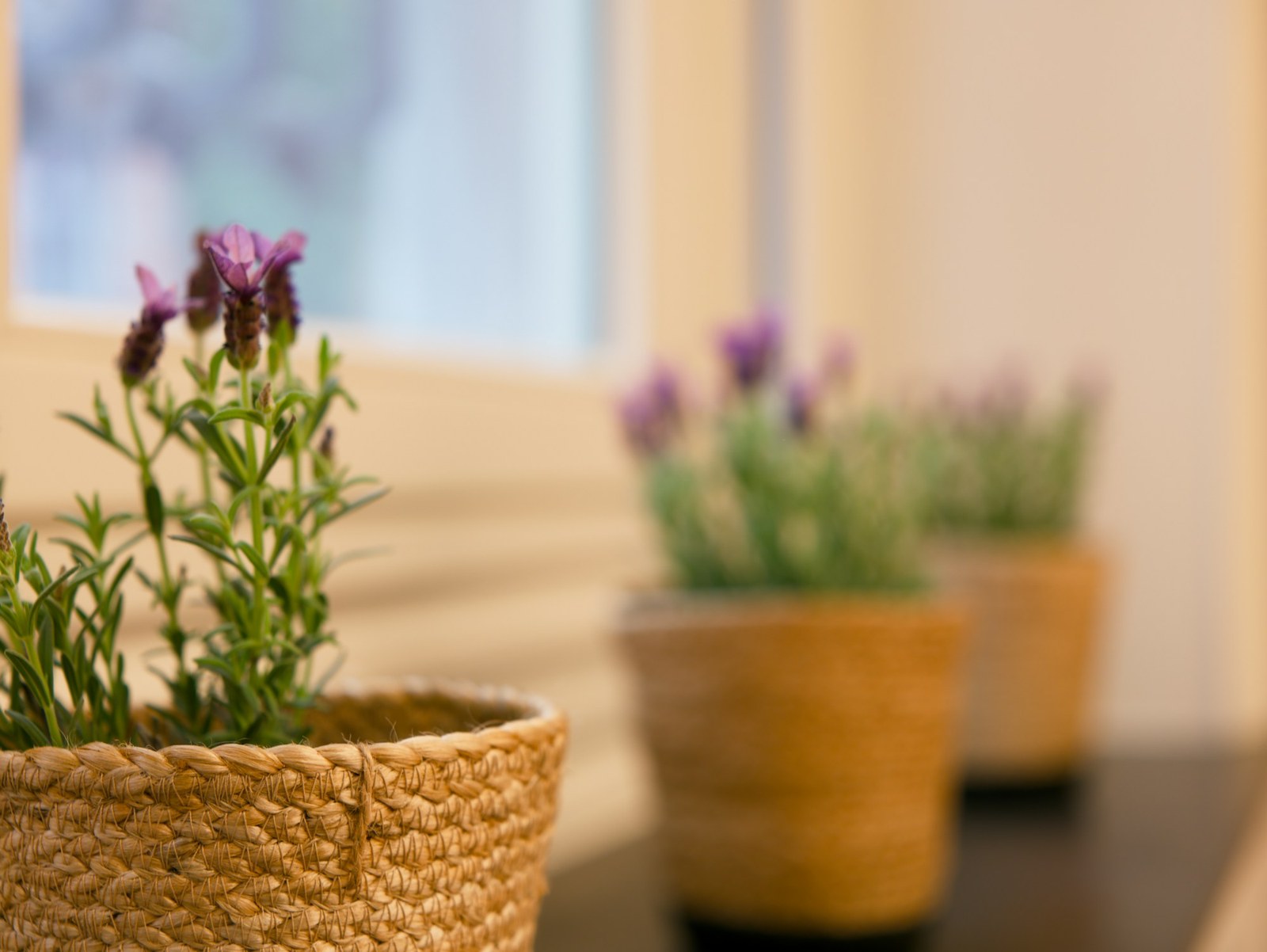
The U.S. Centers for Disease Control and Prevention (CDC) recommends window and door screens, insect repellents registered with the U.S. Environmental Protection Agency (EPA), and emptying water-holding items such as flowerpot saucers so mosquitoes have nowhere to lay eggs.
- Grow basil, rosemary, lavender, lemon balm, or catnip because you enjoy the scent and flavor, and count any mosquito effect as a bonus
- Brush or crush a few leaves when you sit outside to release more scent
- Keep window and door screens in good repair
- Use an EPA-registered repellent when mosquitoes are biting
- Empty plant saucers after watering so standing water never gives mosquitoes a place to breed
Do houseplants clean the air?
The famous NASA Clean Air Study found that plants removed some volatile organic compounds (VOCs) in small sealed chambers. Real homes leak and ventilate, and a review by Cummings and Waring (2020) estimated it would take roughly 10 to 1,000 plants per square meter of floor to match normal air exchange. The American Lung Association recommends source control, ventilation, and filtration when clean air is the goal. For the full story, see Plant myths.
Sources
- Han, K.-T., & Ruan, L.-W. (2019). Effects of indoor plants on self-reported perceptions: a systemic review. Sustainability, 11(16), 4506. https://doi.org/10.3390/su11164506
- Pérez-Urrestarazu, L., Kaltsidi, M. P., Nektarios, P. A., Markakis, G., Loges, V., Perini, K., & Fernández-Cañero, R. (2021). Particularities of having plants at home during the confinement due to the COVID-19 pandemic. Urban Forestry & Urban Greening, 59, 126919. https://doi.org/10.1016/j.ufug.2020.126919
- Lee, M.-S., Lee, J., Park, B.-J., & Miyazaki, Y. (2015). Interaction with indoor plants may reduce psychological and physiological stress by suppressing autonomic nervous system activity in young adults: a randomized crossover study. Journal of Physiological Anthropology, 34, 21. PMC4419447 / https://doi.org/10.1186/s40101-015-0060-8
- Han, K.-T., Ruan, L.-W., & Liao, L.-S. (2022). Effects of indoor plants on human functions: a systematic review with meta-analyses. International Journal of Environmental Research and Public Health, 19(12), 7454. https://doi.org/10.3390/ijerph19127454 / PMC9224521
- Nieuwenhuis, M., Knight, C., Postmes, T., & Haslam, S. A. (2014). The relative benefits of green versus lean office space: three field experiments. Journal of Experimental Psychology: Applied, 20(3), 199-214. https://doi.org/10.1037/xap0000024 / University of Groningen full text
- Jiang, J., Irga, P., Coe, R., & Gibbons, P. (2024). Effects of indoor plants on CO₂ concentration, indoor air temperature and relative humidity in office buildings. PLOS ONE, 19(7), e0305956. https://doi.org/10.1371/journal.pone.0305956
- Gubb, C., Blanusa, T., Griffiths, A., & Pfrang, C. (2018). Can houseplants improve indoor air quality by removing CO₂ and increasing relative humidity? Air Quality, Atmosphere & Health, 11, 1191-1201. https://doi.org/10.1007/s11869-018-0618-9
- Kellert, S. R., & Calabrese, E. F. (2015). The Practice of Biophilic Design. Hosted by the University of Minnesota biophilic design program. PDF
- Gaekwad, J. S., Sal Moslehian, A., Roös, P. B., & Walker, A. (2022). A meta-analysis of emotional evidence for the biophilia hypothesis and implications for biophilic design. Frontiers in Psychology, 13, 750245. https://doi.org/10.3389/fpsyg.2022.750245
- Matsuda, B. M., Surgeoner, G. A., Heal, J. D., Tucker, A. O., & Maciarello, M. J. (1996). Essential oil analysis and field evaluation of the citrosa plant "Pelargonium citrosum" as a repellent against populations of Aedes mosquitoes. Journal of the American Mosquito Control Association, 12(1), 69-74. Europe PMC 8723261
- Cilek, J. E., & Schreiber, E. T. (1994). Failure of the "mosquito plant", Pelargonium x citrosum 'van Leenii', to repel adult Aedes albopictus and Culex quinquefasciatus in Florida. Journal of the American Mosquito Control Association, 10(4), 473-476. Europe PMC 7707049
- Melo, N., Capek, M., Arenas, O. M., et al. (2021). The irritant receptor TRPA1 mediates the mosquito repellent effect of catnip. Current Biology, 31(9), 1988-1994. https://doi.org/10.1016/j.cub.2021.02.010
- Amer, A., & Mehlhorn, H. (2006). Repellency effect of forty-one essential oils against Aedes, Anopheles, and Culex mosquitoes. Parasitology Research, 99(4), 478-490. https://doi.org/10.1007/s00436-006-0184-1
- Asadollahi, A., Khoobdel, M., Zahraei-Ramazani, A., Azarmi, S., & Mosawi, S. H. (2019). Effectiveness of plant-based repellents against different Anopheles species: a systematic review. Malaria Journal, 18, 436. PMC6925501
- University of Minnesota Extension, Mosquito-smart gardening for Minnesota (June 25, 2026)
- Maia, M. F., & Moore, S. J. (2011). Plant-based insect repellents: a review of their efficacy, development and testing. Malaria Journal, 10(Suppl 1), S11. PMC3059459
- U.S. Centers for Disease Control and Prevention, Preventing Mosquito Bites
- U.S. Environmental Protection Agency, Find the Repellent that is Right for You
- Wolverton, B. C., Johnson, A., & Bounds, K. (1989). Interior Landscape Plants for Indoor Air Pollution Abatement (NASA-TM-101766). NASA NTRS
- Cummings, B. E., & Waring, M. S. (2020). Potted plants do not improve indoor air quality: a review and analysis of reported VOC removal efficiencies. Journal of Exposure Science & Environmental Epidemiology, 30, 253-261. https://doi.org/10.1038/s41370-019-0175-9
- American Lung Association, Actually, Houseplants Don’t Clean the Air (Feb 14, 2024)