Plant care card
Desert rose
Adenium obesum · Rosa del desierto
Also called impala lily, desert azalea, mock azalea or Sabi star
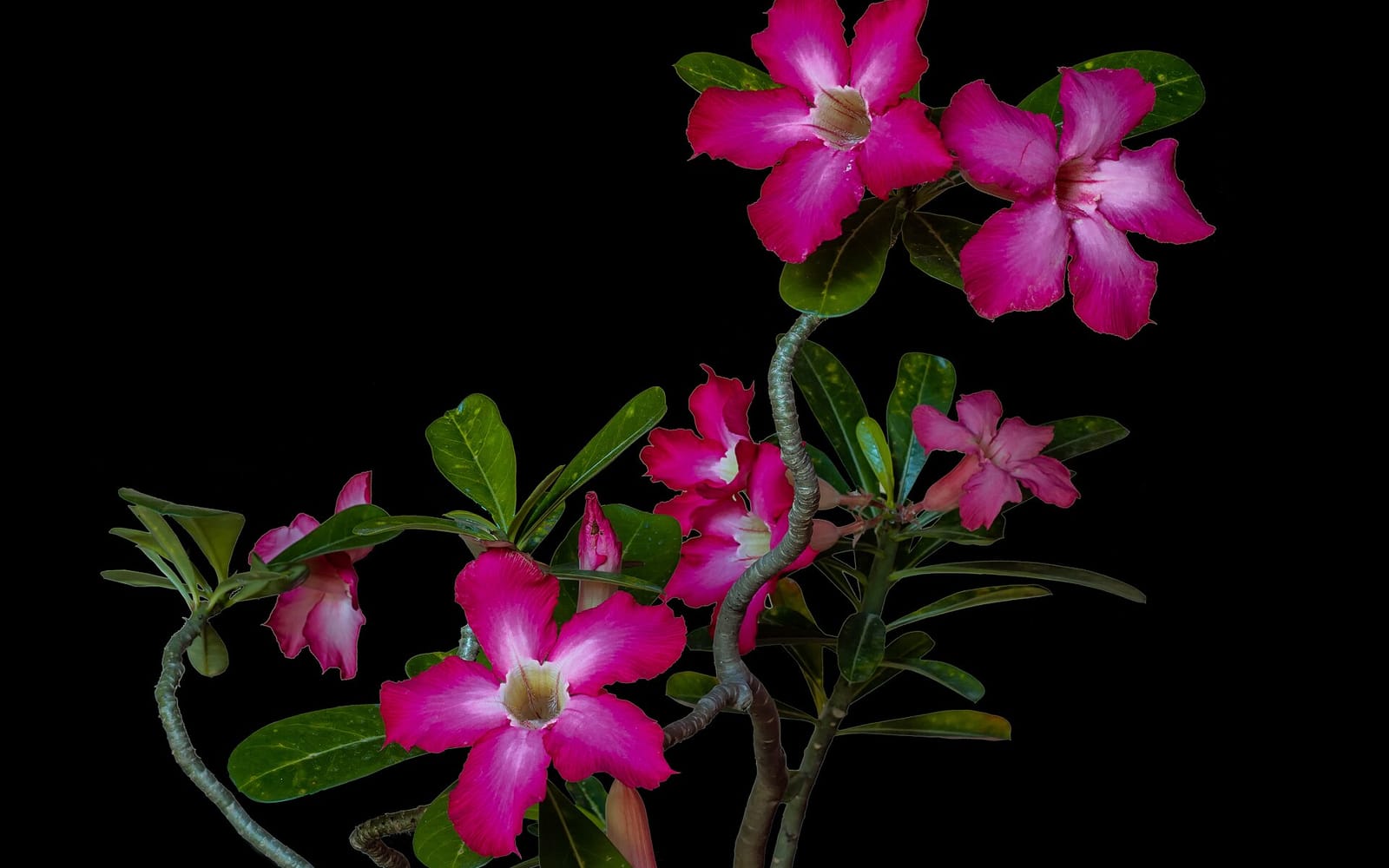
Photo by Ray in Manila on Wikimedia Commons, CC BY 2.0

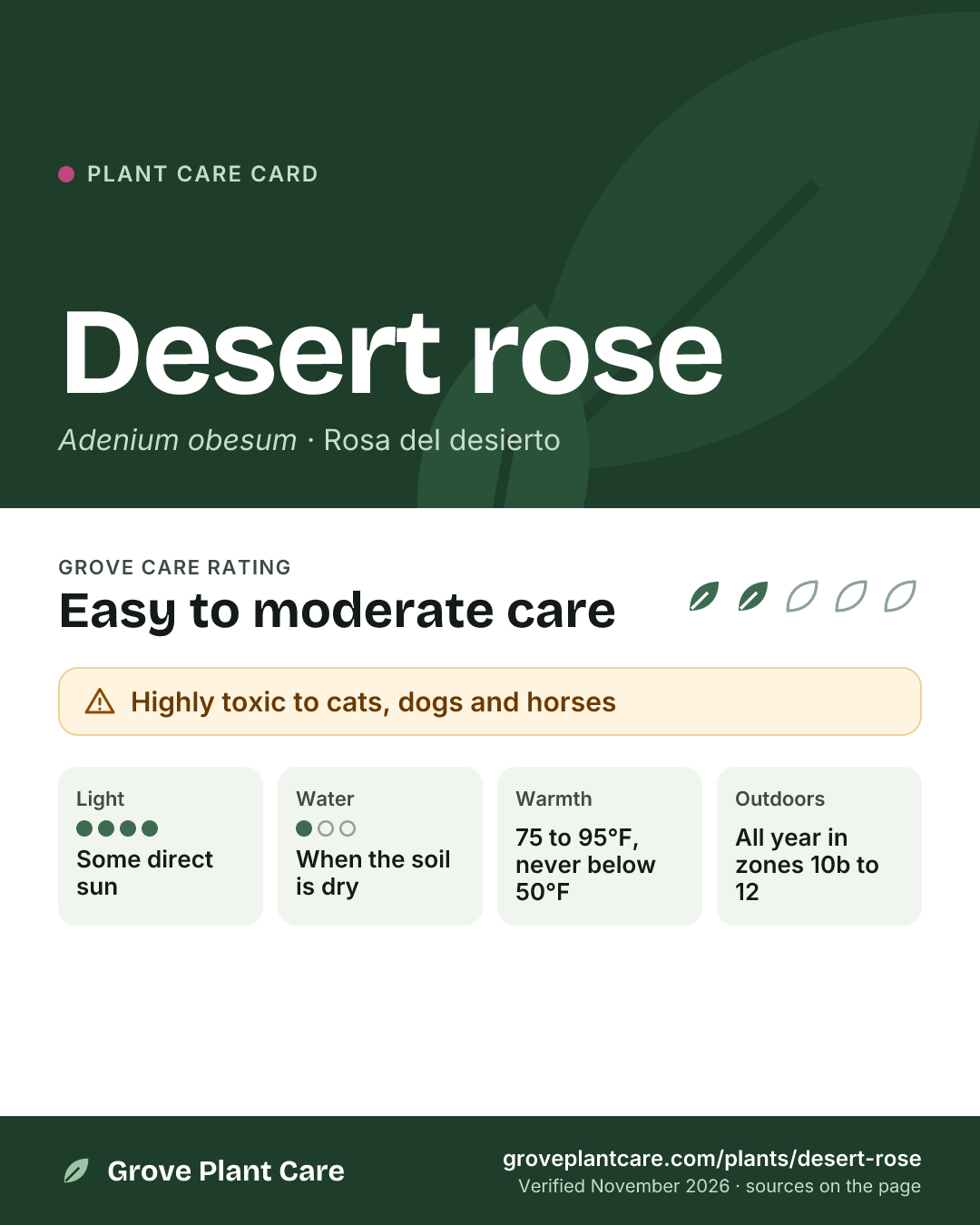
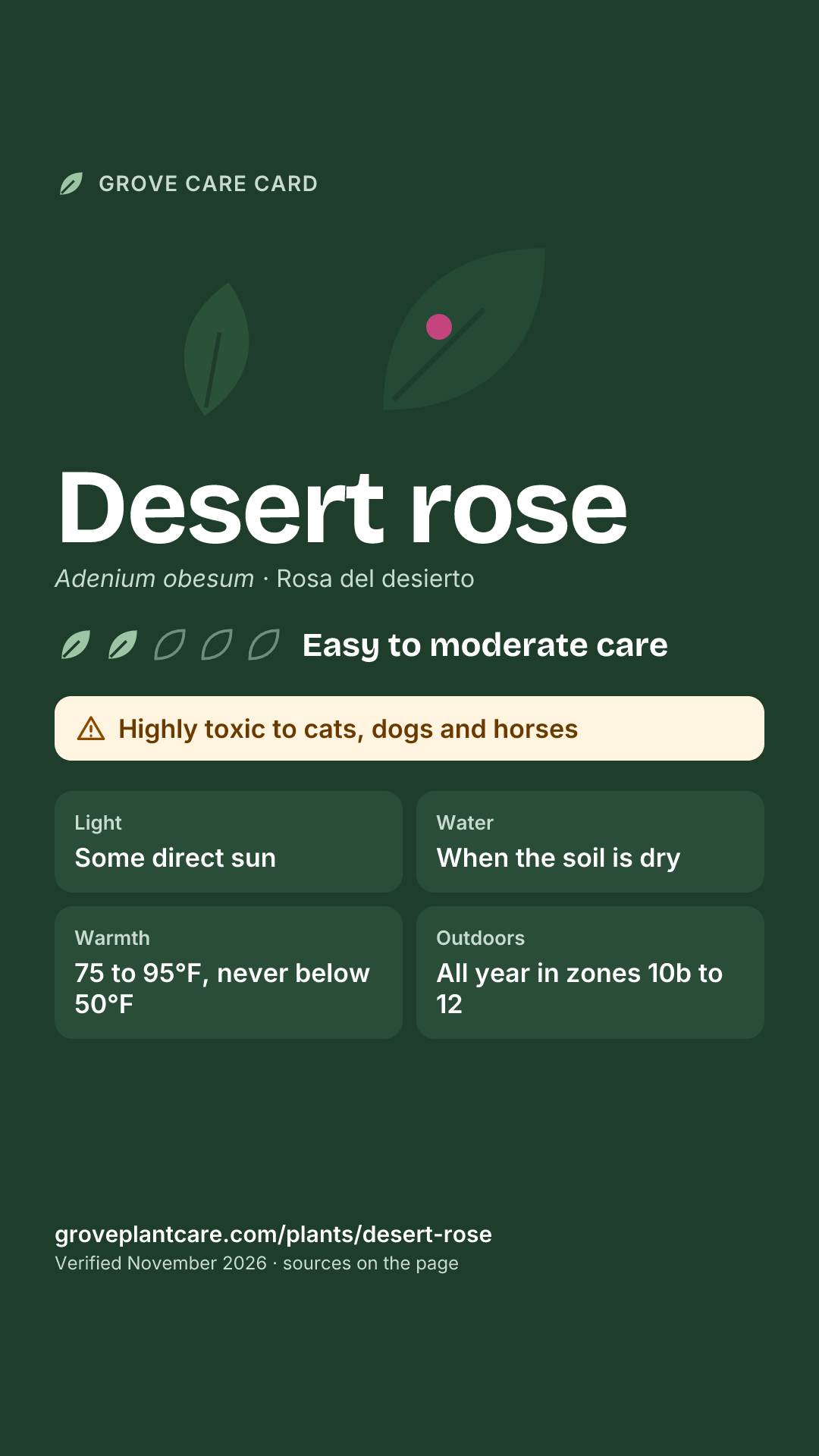
Desert rose (Adenium obesum) is a sun-loving succulent shrub with a swollen trunk and big pink, red or white flowers. Give it 6 or more hours of strong sun, a gritty mix that drains fast, and deep waterings in warm weather with time to dry between. When nights fall to about 55°F (13°C), bring it in and keep it nearly dry: dropping its leaves for a winter rest is normal. Every part holds heart-affecting toxins, and the ASPCA lists it as toxic to cats, dogs and horses, so keep it well out of reach.
Highly toxic to cats, dogs and horses: it affects the heart (ASPCA)
Pet chewed any part? Call your vet right away.
Vomiting, diarrhea, low appetite and depression; an irregular heartbeat, and death is possible. Every part holds cardiac glycosides. NC State rates it low severity, and it tastes so bitter that few animals eat much, but the ASPCA and the MSD Veterinary Manual warn it can affect the heart. Children: low severity. NC State rates it low severity, but every part is poisonous if eaten and the milky sap causes skin rashes.
Pet poison line: ASPCA (888) 426-4435
Good for: hot, sunny patios, people who forget to water, a sculptural pot plant · Think twice if: pets, horses or small children chew plants or play close by, you can't give it strong sun in summer and a dry rest in winter.
Needs at a glance
- Light4 of 4 · Some direct sun6 or more hours of bright sun; it won't flower in low light
- Water1 of 3 · Let the soil dryWater deeply in warm weather; keep it dry while it rests
- Humidity1 of 3 · AverageDry air is fine
- Soil when pottedVery fast-draining mixMostly pumice or perlite with some potting mix, in a pot with drain holes
Indoors: best at 75 to 95°F (24 to 35°C). Keep it above 50°F (10°C) and away from drafts and heat vents.
How the rating adds up
0 = easiest · 1 = moderate · 2 = hardest
- Missed waterings0 of 2 · EasiestDrought tolerant: its swollen trunk stores water
- Light flexibility2 of 2 · HardestNeeds 6 or more hours of strong light to flower
- Humidity0 of 2 · EasiestA plant of dry places; no source asks for humidity
- Pests and disease1 of 2 · ModerateMealybugs (even on the roots), scale, aphids and mites; rot when watered wrong
- Sensitivity to change1 of 2 · ModerateCold, wet soil and sudden strong sun hurt it; it rests in winter
Growing outdoors
All year: USDA zones 10b to 12, where the coldest winter nights average 35°F (2°C) or warmer.
Elsewhere: summer outside in full sun; a little afternoon shade in desert heat, and ease it into the sun. Bring it in when nights reach 55 to 60°F (13 to 16°C).
- Patio and deck pots
- Bonsai and sculpted trunks
- Small shrub in frost-free gardens
Sources: NC State, UF/IFAS, Arizona Extension, Kew, Arizona-Sonora Desert Museum, ASPCA, MSD Veterinary Manual, RHS, USDA zone map, FISC, Hawaii noxious weed list, Rojas-Sandoval and Acevedo-Rodríguez, Queensland Government, Cal-IPC, GISD and Hawaii weed risk assessment. Full list below.
Verified · How we rate plants
Is desert rose toxic to cats and dogs?
Yes, it's dangerous. The ASPCA lists desert rose as toxic to dogs, cats and horses. Every part holds cardiac glycosides, the same kind of toxin as in oleander and foxglove, and the ASPCA's list of signs runs from vomiting, diarrhea, low appetite and depression to an irregular heartbeat and death. The MSD Veterinary Manual says plants with these toxins are among the most toxic there are, with a narrow margin of safety. NC State rates it low severity, and Arizona Extension notes it tastes so bitter that few animals eat much, but don't count on that. If your pet chewed any part, call your vet or the ASPCA Animal Poison Control Center at (888) 426-4435 right away.
Is desert rose sap dangerous to people?
Handle it with care. NC State says every part is poisonous if eaten and that the milky sap can cause a skin rash. The RHS calls it harmful if eaten and suggests gloves. Arizona Extension says to wash off any sap and keep it away from your eyes, and notes that its bitterness keeps most people from eating enough to be seriously poisoned. NC State rates it low severity for people. Keep it where small children can't reach, and wear gloves when you prune or repot. If a child eats some, call Poison Help at 1-800-222-1222.
How often should I water a desert rose?
It depends on the season. While it's growing in warm weather, water thoroughly and let the extra drain away; Arizona Extension says small pots in desert heat may need water several times a week, and the Arizona-Sonora Desert Museum says it grows fast with generous water in the 90s °F. Never let the soil stay soggy: UF/IFAS warns that overwatering causes root rot. As nights cool below about 50°F (10°C), stop watering. Keep it dry for its winter rest, even if it drops every leaf or flowers. In spring, wait until nights stay above 50°F, then start again with small amounts.
Arizona Extension, Arizona-Sonora Desert Museum, UF/IFAS, NC State
Why is my desert rose dropping its leaves?
In fall and winter, it's probably resting. UF/IFAS says to withhold water in the cold months and let it rest for 3 to 4 months, and that dropping its leaves and flowers is part of its natural cycle. The Arizona-Sonora Desert Museum says the leaves suddenly turn yellow and fall, usually between late autumn and early spring, and the rest can last a few weeks to 6 months. UF/IFAS adds that cool spells between 55 and 35°F (13 and 2°C) yellow the leaves. If it drops leaves in summer, look for soggy soil, too little light or a sudden move.
How much sun does a desert rose need?
Lots. NC State and UF/IFAS both ask for 6 or more hours of bright sun, and UF/IFAS says it won't flower in low light. Arizona Extension says it can take a great deal of sun, though a bit of shade in the hottest weeks helps, and the Arizona-Sonora Desert Museum suggests light afternoon shade in the desert. Indoors, the RHS gives it bright light with some shade from strong midday sun through glass. After a winter indoors, ease it back into full sun over a week or two, since Arizona Extension warns a sudden move can sunburn it.
NC State, UF/IFAS, Arizona Extension, Arizona-Sonora Desert Museum, RHS
How cold can a desert rose get, and when do I bring it in?
It hates cold. UF/IFAS lists it for year-round outdoor planting only in USDA zones 10b to 12 (NC State says 11 to 12), and says never to let it freeze. Cool nights between 55 and 35°F (13 and 2°C) make the leaves yellow and drop. NC State says to bring it inside when temperatures reach 55°F (13°C), and Arizona Extension says this species can show cold damage below 50°F (10°C) and that cold, wet soil rots it. So bring it in at about 55 to 60°F (13 to 16°C), stop watering, and keep it in a bright spot. The RHS, in the UK, keeps it above 15°C (59°F) all year. Move it back out when nights stay above 60°F.
What soil and pot does a desert rose need?
Fast drainage above all. The Arizona-Sonora Desert Museum mixes 1 to 2 parts pumice or perlite with 1 part potting mix, and Arizona Extension says the mix should be mostly gritty, since even bagged cactus mix holds too much organic matter to be the main ingredient. NC State suggests a cactus and succulent mix in a pot with several drain holes. UF/IFAS's houseplant sheet allows a richer peat or bark-based mix indoors; if you use one, water less. Arizona Extension likes terra cotta, which dries faster, and says to skip the saucer of water, repot only in warm weather and move up just one pot size at a time.
Arizona-Sonora Desert Museum, Arizona Extension, NC State, UF/IFAS
Why is my desert rose trunk soft or rotting?
Rot almost always comes from water at the wrong time. Arizona Extension says root rot sets in when plants are watered during their winter rest or too early in spring, and that cold-stressed plants may rot. NC State and UF/IFAS warn about rot in waterlogged soil. Cut away soft, rotted tissue as soon as you see it, keep what's left dry, and the plant may recover even after losing a large part of its roots and trunk, says Arizona Extension. Also check the roots for the white, powdery signs of root mealybugs.
How do I propagate and prune a desert rose?
Cuttings keep a variety true to its name, says Arizona Extension. Take them early in the growing season, dip the fresh cut in rooting hormone instead of letting it dry, and keep it warm and lightly moist in a gritty mix. Seed usually needs pollen from a second plant, and the seedlings won't match their parents. Many plants are grafted onto a fat-trunked rootstock, NC State and Arizona note. Prune in spring or early summer: Arizona Extension says late-season cuts give weak, short branches, and the Arizona-Sonora Desert Museum says cutting a stem makes it branch. Wear gloves for the sap.
How Grove helps
Grove schedules a watering check based on how dry the soil is, so the desert rose gets water only once it has dried out. Add the bring-in before nights hit 55°F as one of the tasks you can assign, so whoever moves it knows it goes somewhere pets can't reach.
Sources
- NC State Extension Gardener Plant Toolbox: Adenium obesum
- UF/IFAS EDIS ENH1213 (EP474): Florida Foliage House Plant Care: Adenium obesum (R. J. Henny and J. Chen)
- UF/IFAS Gardening Solutions: Desert rose
- University of Arizona Cooperative Extension AZ1953: Growing Adeniums in Southern Arizona (M. Chamberland, 2021)
- Kew WCVP data release (2026-06-04 file), plant_name_id 3030: Adenium obesum
- Arizona-Sonora Desert Museum: Care of Adenium in a Desert Climate
- ASPCA Animal Poison Control: Desert Rose (Adenium obesum)
- MSD Veterinary Manual: Houseplants and Ornamentals Toxic to Animals
- Royal Horticultural Society: Adenium obesum (desert rose)
- USDA ARS Plant Hardiness Zone Map (2023)
- Florida Invasive Species Council: Plant List, Category I and II and Watch List (April 2026)
- Hawaii Administrative Rules 4-68: plant species designated as noxious weeds (Hawaii Department of Agriculture)
- J. Rojas-Sandoval and P. Acevedo-Rodríguez (2015), Naturalization and invasion of alien plants in Puerto Rico and the Virgin Islands, Biological Invasions 17 (supplementary list)
- Business Queensland: Restricted invasive plants (Biosecurity Act 2014)
- California Invasive Plant Council (Cal-IPC): plant search, "adenium" (no listing)
- IUCN Global Invasive Species Database: Adenium obesum (no entry)
- Hawaii-Pacific Weed Risk Assessment (Plant Pono): Adenium obesum, low risk, score -8