Mealybugs and scale: sticky leaves and white fluff
White cottony tufts in the leaf joints are usually mealybugs. Small brown or tan bumps that don't move, lined up along stems and leaf veins, are usually scale. Both suck sap, both leave sticky honeydew, and both are easiest to beat early. Isolate the plant, wipe or scrape off what you can see, then follow with insecticidal soap or horticultural oil labeled for your plant, and repeat for several weeks. Their waxy coats shed sprays, so steady repeats beat one strong dose.
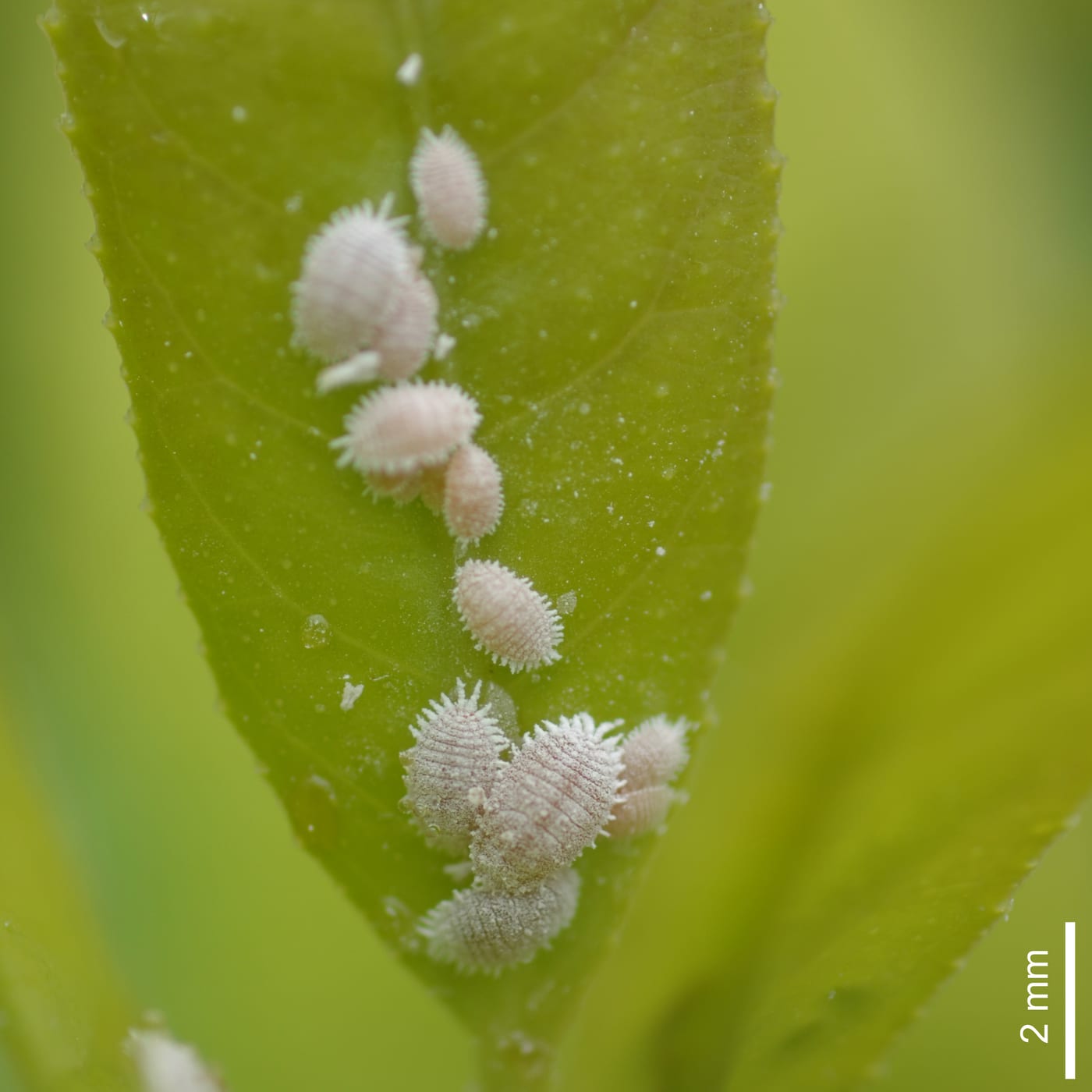
How do I know if it's mealybugs or scale?
Mealybugs are small, oval, soft insects covered in white, waxy, cottony fluff, according to UC IPM and Clemson Extension. They pack into tight spots: leaf joints, the undersides of leaves, along stems and at the base of leaf stalks, as Iowa State Extension and the RHS both describe. Under the fluff you may find the insects themselves or their orange-pink eggs (RHS). Wisconsin Extension puts the common citrus mealybug at about 1/16 inch long.
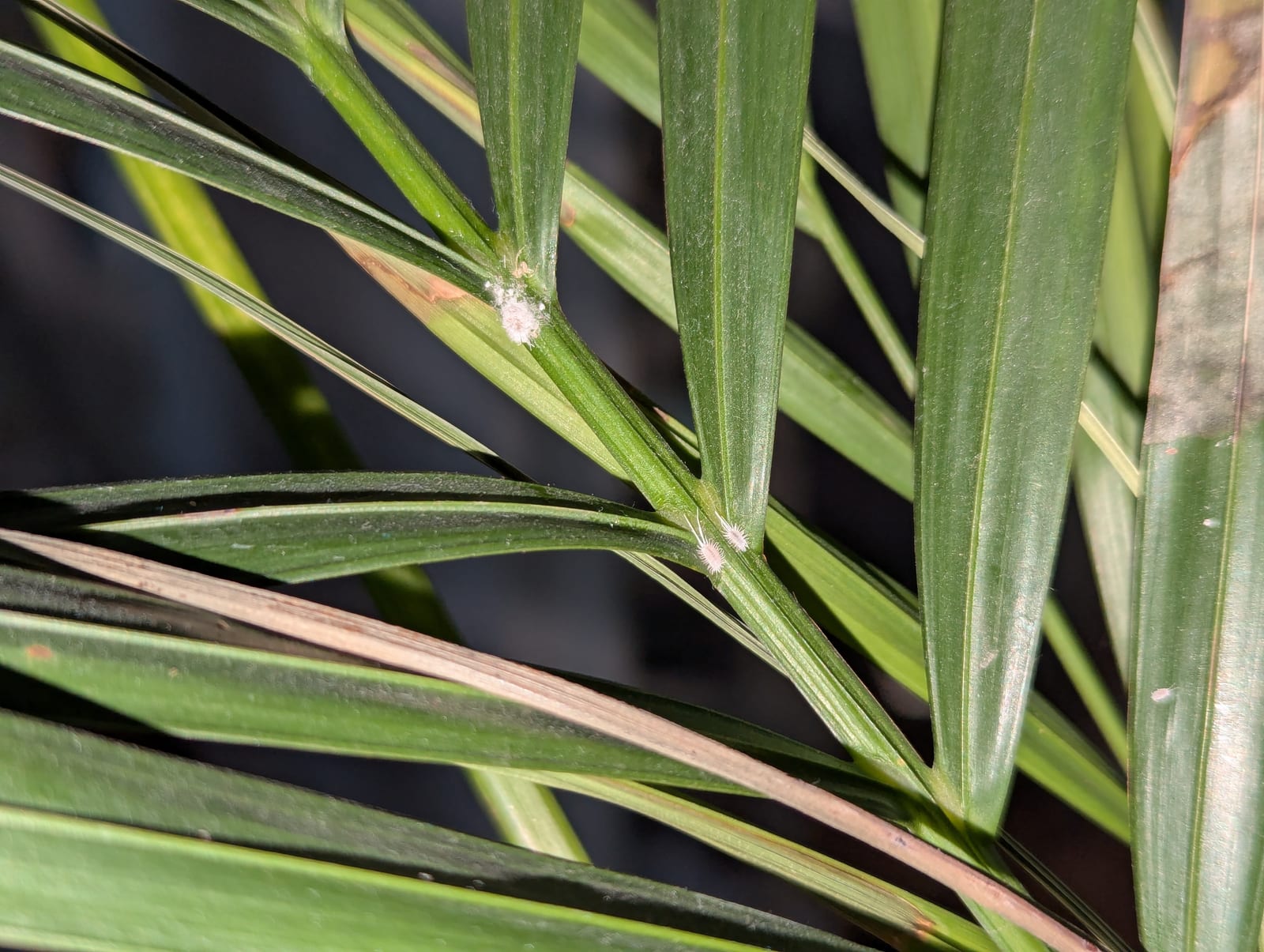
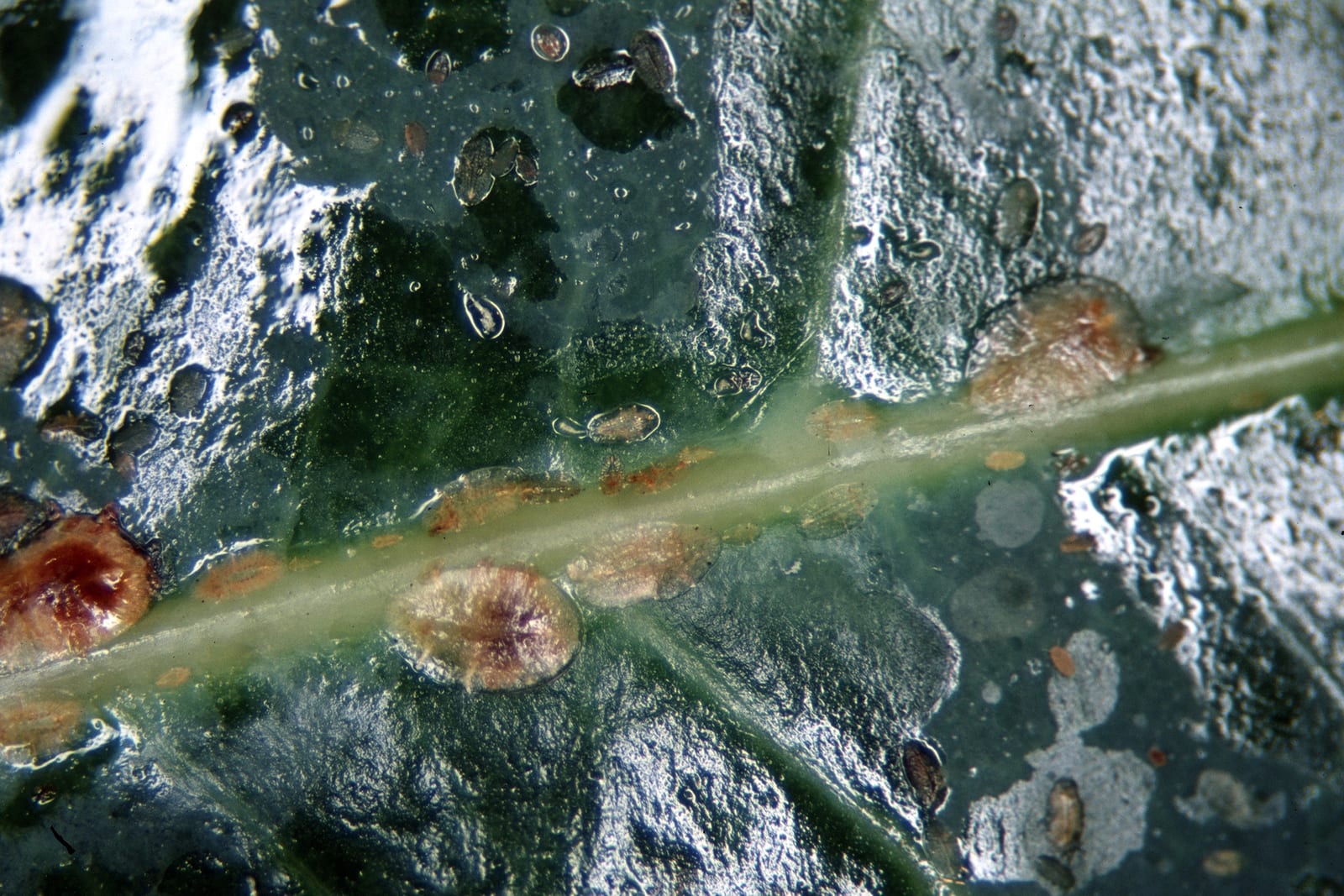
Scale insects look like small bumps or shells, often brown or grayish, clustered or lined up along stems and leaf veins, usually on the underside, say Iowa State and UC IPM. The adults stay put and have no visible legs (Clemson). The RHS puts most at 1 to 6 mm (under 1/4 inch) long. Brown soft scale is a common one on houseplants, UC IPM notes, and on ferns scale can pass for the brown spore dots under the fronds.
| Mealybugs | Scale | |
|---|---|---|
| What you see | White, cottony or waxy fluff | Brown, gray or tan bumps or shells |
| Do they move? | Slowly, yes | Adults no; only the tiny crawlers move |
| Where they hide | Leaf joints, leaf undersides, stems, roots | Stems, leaf veins and midribs, leaf undersides |
| Sticky honeydew? | Yes | Soft scale yes; armored scale no |
| Sources | UC IPM, Clemson, Iowa State, RHS | UC IPM, Clemson, Iowa State, RHS |
Two look-alikes to know. Some scale insects lay their eggs under a mass of white waxy fibers that can be mistaken for mealybugs, the RHS says, and UC IPM's mealybug Pest Notes add cottony cushion scale and woolly aphids to the list of things that look alike. Lift the fluff and look at the insect underneath. For tiny moving specks and fine webbing instead, see our spider mites and thrips guide. For small flies around the soil, see the fungus gnat guide.
Going deeper
Scale comes in two kinds. UC IPM's scale Pest Notes explain that an armored scale's cover usually lifts off and leaves the insect's body on the plant, while flipping a soft scale's cover removes the whole insect, because the cover is its body wall. Clemson describes the same split. Soft scales make honeydew; armored scales don't, say UC IPM, Clemson and Colorado State University Extension. Young scale insects, called crawlers, are tiny, yellow to orange and mobile. They settle within a day or two and lose their legs (UC IPM). Young mealybugs are yellow to pink and have no wax at first, UC IPM says, which is why they're the easiest stage to kill.
Why are my plant's leaves sticky?
Read moreShow less
Mealybugs, soft scale, aphids and whiteflies all excrete a sugary liquid called honeydew. It makes leaves look shiny and sticky, and it can drip onto lower leaves, tables and floors, as Iowa State and UC IPM describe. That's often the first thing people notice.
Sooty mold is the black or brown powdery coating that grows on honeydew. The UC IPM sooty mold Pest Notes and the RHS both say it doesn't infect the plant. It can still hurt by coating the leaves and blocking light. UC IPM says it washes off with a strong stream of water or with soap and water, and that it fades once the insects making the honeydew are under control.
Ants are a clue. Ants feed on honeydew and protect mealybugs and scale from their natural enemies, UC IPM says in both its mealybug and scale Pest Notes. A trail of ants on a houseplant is a good reason to look closer.
Mealybugs and scale also weaken plants. Heavy feeding stunts growth and turns leaves yellow, and leaves can wilt or drop, say UC IPM, Iowa State and Colorado State University Extension. Our yellow leaves guide helps you rule out other causes.
Which houseplants get mealybugs and scale most?
The RHS says mealybugs and scale turn up most often on citrus, orchids and succulents, cacti included, and Iowa State calls succulents a common meal for mealybugs. Mealybugs that feed on roots are reported most often on African violets, say UC IPM and Wisconsin Extension, with UC IPM adding gardenias.
Our plant cards list these pests from their own extension sources:
| Plant | Pests its card lists |
|---|---|
| Pothos | Mealybugs, scale, spider mites |
| Monstera | Scale, mealybugs, mites |
| Peace lily | Mealybugs, scale |
| Money tree | Scale, mealybugs, aphids |
| Fiddle-leaf fig | Scale, mites, mealybugs |
| Kalanchoe | Mealybugs, aphids, scale |
| Snake plant | Mealybugs, spider mites |
| Christmas cactus | Mealybugs, spider mites |
| African violet | Mealybugs, mites |
| Poinsettia | Mealybugs, whiteflies |
| Moth orchid and other orchids | Scale and mealybugs, covered in our orchid pests guide |
How do I get rid of mealybugs and scale?
- Isolate the plant right away. UC IPM, Iowa State and the RHS all say to move it away from your other plants so the pests can't spread.
- Check everywhere. Look in leaf joints, under leaves, along stems and leaf veins, and around the rim and drainage holes of the pot (UC IPM, Wisconsin).
- Remove what you can see. Wipe mealybugs off, or wash them off with a firm spray of lukewarm water, as UC IPM and Wisconsin suggest. Scrape scale off with a fingernail, as Clemson and Iowa State advise. A cotton swab helps in tight spots; see the rubbing alcohol section below before you dip it in anything.
- Cut off the worst parts. Prune stems and leaves that are heavily infested and bag them, say UC IPM, Iowa State and Colorado State.
- Test a spray first. Choose an insecticidal soap or horticultural oil whose label lists indoor use, your plant and your pest (UC IPM). Spray one leaf and wait: Clemson says injury can take at least 48 hours to show, and UC IPM and Wisconsin say a day or two.
- Spray every part. Soaps and oils only work on the insects they touch (Clemson), so cover leaf undersides, joints and stems. Spray outdoors in the shade if you can, as UC IPM suggests, and follow the label.
- Repeat. Sprays work best on young insects, which keep hatching, say UC IPM, Colorado State and Iowa State. Iowa State suggests weekly treatments for at least four to six weeks for scale and frequent repeats for mealybugs. Follow the label's interval.
- Judge by the new growth. Dead scale shells can stay stuck to the plant, the RHS notes, so success means new leaves and stems stay clean. Keep the plant isolated until several checks in a row find nothing.
Indoor scale breeds all year, so there's no best season to treat, the RHS says. Start as soon as you see it.
Going deeper
Not every scale you see is alive. UC IPM says dead or parasitized scales don't ooze fluid when you squish them, so press a few with a fingernail before you decide how hard to treat. Both the waxy coat of mealybugs and the shell of adult scale shed contact sprays, say UC IPM, Clemson and Iowa State, which is why sprays aimed at the young stages, repeated, do more than one heavy spray. Wisconsin Extension and the RHS mention the mealybug destroyer, a ladybird beetle (Cryptolaemus montrouzieri) sold for biological control. The RHS says it needs fairly high temperatures and suits greenhouses and conservatories best, and Iowa State calls biological control impractical in most homes.
Does rubbing alcohol kill mealybugs?
Read moreShow less
Here the sources split, and we'd rather show you both sides.
For it. UC IPM suggests dabbing mealybugs with a cotton swab dipped in 70% (or weaker) isopropyl alcohol for a small infestation, after testing it on a small part of the plant one to two days ahead. Clemson, Wisconsin and Iowa State also suggest an alcohol swab for light infestations, and Iowa State and Clemson list it for scale too. Colorado State's PlantTalk goes further and suggests spraying a mix of 1 part rubbing alcohol to 9 parts water on heavy infestations.
Against it, or with caution. The American Orchid Society's mealybug page says alcohol isn't very effective on mealybugs and can strip the protective wax from the plant's own leaves. Colorado State University Extension's houseplant pest guide warns that alcohol can burn leaves, leaves no lasting protection and misses mealybugs feeding on roots. UC IPM adds that rubbing alcohol is flammable and isn't a registered pesticide.
A fair middle path. Use alcohol only to dab a few visible insects, after a test leaf, and rely on wiping, washing and a labeled soap or oil for the rest. Our orchid pests guide gives the same advice for orchids.
Which sprays work, and are they safe around pets?
Read moreShow less
- Insecticidal soap is made of potassium salts of fatty acids and kills on contact, says Colorado State University Extension. It works best on crawlers and very young scale (Colorado State) and gives some control of young mealybugs (UC IPM). It can injure some plants, so test first (Clemson).
- Horticultural oil smothers insects. Colorado State rates oils the most effective treatment for soft and armored scale, and UC IPM says oils and soaps work best when scale are small nymphs. Don't spray oil in heat or on a thirsty plant: UC IPM lists hot weather among the times to avoid it.
- Systemic insecticides, taken up through the roots, are a later step. UC IPM says they're less reliable against mealybugs and best avoided when possible, and that imidacloprid doesn't control armored scale. Colorado State notes imidacloprid can harm bees and other insects.
- Skip dish soap and household cleaners. Colorado State University Extension says household soaps and detergents shouldn't be used as pesticides, as our spider mites and thrips guide explains.
Pets and sprays. UC IPM's scale Pest Notes list insecticidal soap among the sprays with low toxicity to people and pets, and the label still comes first. The National Pesticide Information Center reports harmful reactions in cats treated with neem oil, so keep cats away from plants sprayed with neem. Iowa State warns that granular soil insecticides may not suit homes where pets or children dig in the soil. Keep cats, dogs and children away from treated plants until the leaves are dry, and store products out of reach. If your pet chews a treated plant and seems unwell, call your veterinarian. Our pet-safe plants guide lists the pet poison lines.
What if mealybugs are in the soil?
Read moreShow less
Some mealybugs live on the roots. UC IPM says they're usually not seen until the plant comes out of its pot. Wisconsin Extension says small white cottony masses around the drainage holes are a sign, and that yellowing or wilting leaves can point to root mealybugs. Leaf sprays don't reach them: Colorado State says alcohol misses the root feeders.
What the sources suggest:
- Start over from a cutting. Clemson suggests taking a cutting from a clean part of the plant and starting a new one in a clean pot with sterile potting mix.
- Or let the plant go. Wisconsin says root mealybugs are especially hard to control and discarding the plant is often the most practical choice. Bag the plant and its soil.
When you repot anything, look at the roots. Our repotting guide shows how to check them, and our root rot guide covers the other common reason a watered plant wilts.
When should I throw the plant out?
Read moreShow less
Every source we checked says the same thing. UC IPM, Clemson, Wisconsin, Iowa State, Colorado State and the RHS all say that a heavily infested plant is often best discarded, before the pests spread to the others. UC IPM suggests discarding houseplants instead of treating them with insecticides again and again, and Colorado State says getting rid of a bad infestation takes a long, extraordinary effort.
If the plant matters to you, take a cutting from clean growth, rinse it well and keep it isolated while it roots. Bag the old plant and its soil before you carry it through the house, and wipe down the shelf and nearby pots.
How do I keep mealybugs and scale away?
Read moreShow less
- Check before you buy. Colorado State says scale and mealybug problems almost always start with a plant recently bought or received as a gift, and the RHS explains why: adult females don't fly or crawl far, so they ride in on plants. Inspect new plants closely, as UC IPM and Wisconsin advise.
- Quarantine newcomers. Colorado State suggests at least three weeks in a separate area, and Wisconsin about a week. Longer is safer. Our gift plant guide compares the advice.
- Give plants room. Mealybugs crawl from plant to plant, especially where leaves overlap (Wisconsin).
- Go easy on nitrogen. UC IPM says extra nitrogen fertilizer pushes the tender growth mealybugs favor.
- Clear out dead leaves. The RHS says fallen leaves and plant debris give these insects places to hide.
- Look regularly. The RHS and Iowa State both say regular checks let you act before numbers build. A quick look under the leaves at watering time is enough.
Frequently asked questions (FAQ)
What are the white fuzzy bugs on my plant?
Most likely mealybugs, which look like bits of cotton in leaf joints and under leaves. Some scale insects also cover their eggs in white wax, so look under the fluff: scale adults are flat or domed shells that don't move.
Are mealybugs and scale related?
Yes. Clemson Extension calls mealybugs relatives of scale insects. Both are sap feeders with a waxy or hard protective coat, which is why they're treated in similar ways.
Can mealybugs and scale spread to my other plants?
Yes. Young insects crawl from plant to plant, and mealybugs move easily where leaves touch, Wisconsin Extension says. Isolate an infested plant right away and check its neighbors.
Will mealybugs or scale hurt people or pets?
They feed on plants. The bigger safety question is the product you use, so follow the label and keep pets and children away from treated plants until the leaves are dry.
How long does it take to get rid of them?
Weeks. Iowa State suggests treating weekly for at least four to six weeks for scale, and every source warns that eggs and hidden insects survive a single round.
Sources
- Houseplant Problems, Pest Notes: Mealybugs (March 2016), Pest Notes: Scales (September 2014) and Pest Notes: Sooty Mold (September 2020) : University of California Statewide Integrated Pest Management Program
- Common Houseplant Insects and Related Pests (HGIC 2252) : Clemson Cooperative Extension, Home and Garden Information Center (J. McLeod Scott and J. Williamson, September 2021)
- Diagnosing Houseplant Problems Caused by Insect Pests : Iowa State University Extension and Outreach (A. Steil, reviewed January 2024)
- Mealybugs : University of Wisconsin-Madison Extension (S. Mahr)
- Managing Houseplant Pests : Colorado State University Extension (W. S. Cranshaw, May 2025)
- Mealy Bugs on Houseplants : Colorado State University Extension, PlantTalk
- Insect Control: Soaps and Detergents : Colorado State University Extension
- Indoor plants: sap feeders and Scale insects : Royal Horticultural Society
- Mealybugs on Orchids : American Orchid Society
- Neem Oil General Fact Sheet : National Pesticide Information Center