Plant care card
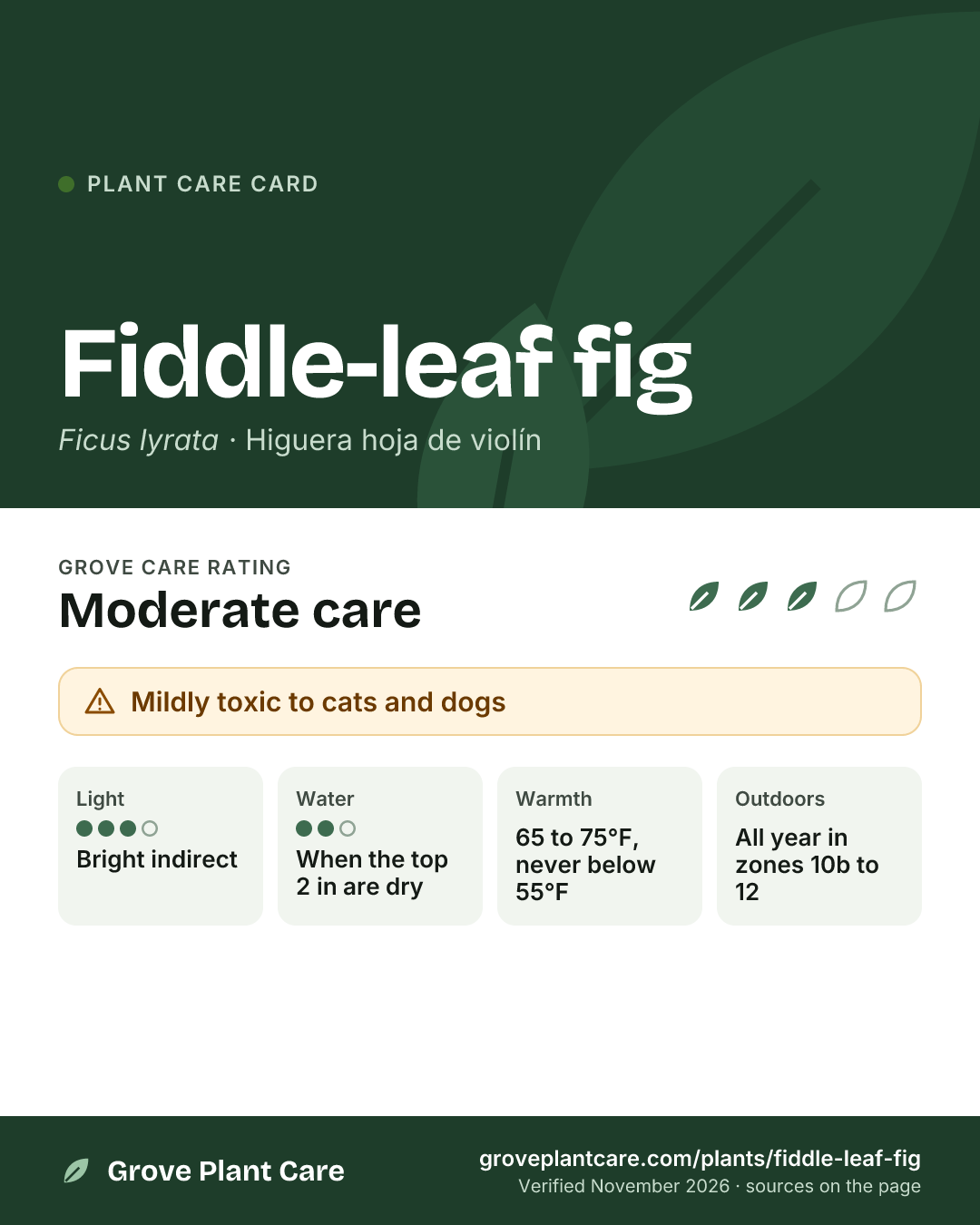
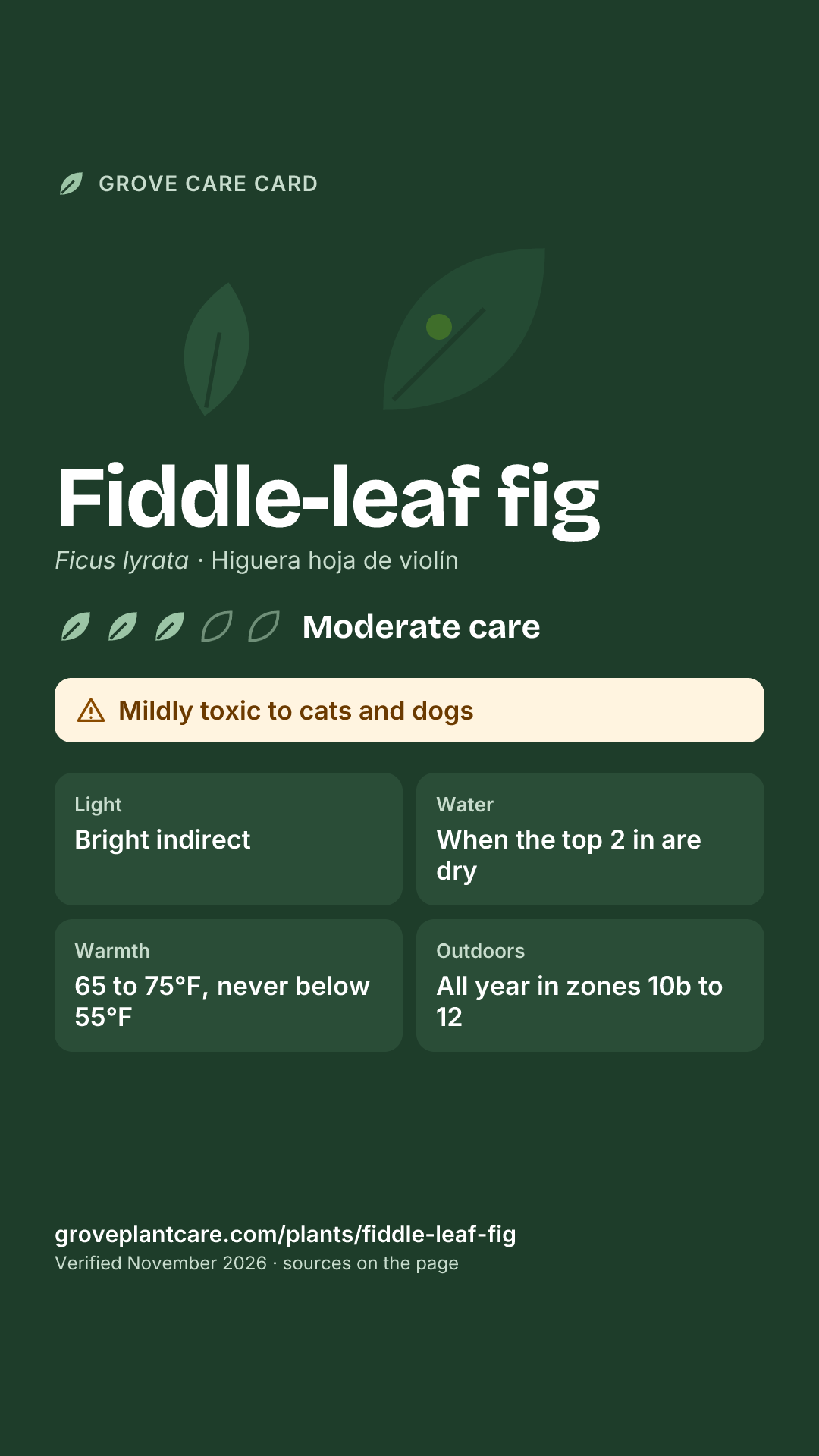
Fiddle-leaf fig
Ficus lyrata · Higuera hoja de violín
Also called banjo fig or fiddleleaf fig
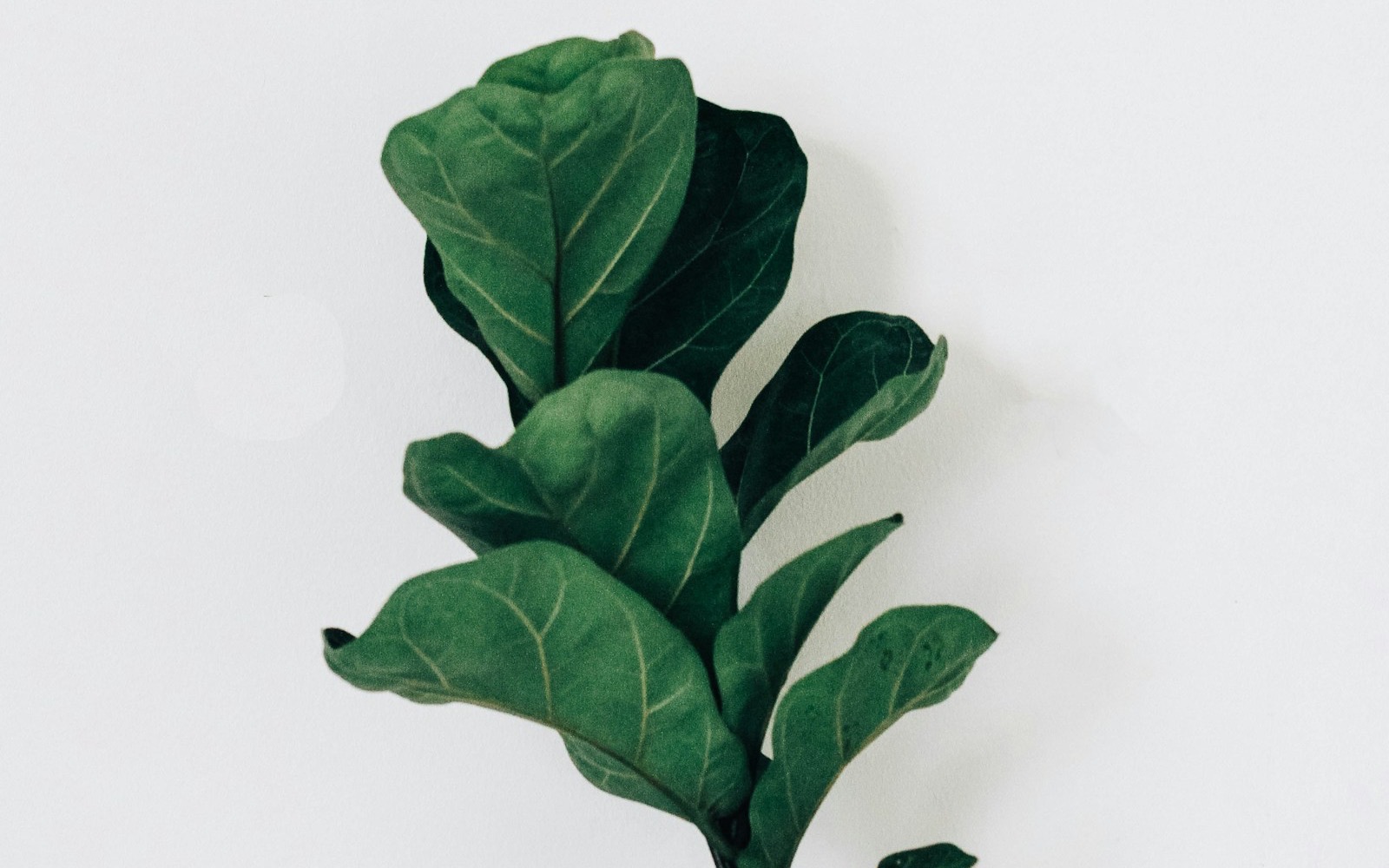
Photo by Kara Eads on Unsplash
A fiddle-leaf fig wants bright light, water when the top 2 inches of soil are dry, and one spot it can keep. It's a rainforest tree from West Africa, and it answers most changes, like a move, a draft or a missed watering, by dropping leaves. Get the light and watering steady and it grows tall and bold; overwatering is one of the most common ways to lose one.
Toxic to cats, dogs and horses · Mild
Eating it can irritate the mouth and stomach, causing drooling, vomiting or diarrhea. The milky sap can also irritate skin. Children: low severity. The milky sap can irritate skin; wear gloves when pruning.
Pet poison line: ASPCA (888) 426-4435
Good for: a bright room with space for a tall plant, a bold focal point, someone who can leave it in one spot · Think twice if: pets or kids chew plants, your brightest spot is next to a heating or AC vent, you move plants around often.
Needs at a glance
- Light3 of 4 · Bright indirectNear a bright window; some morning sun is fine, but shade it from afternoon sun
- Water2 of 3 · Let the top dryWater when the top 2 inches are dry; less from fall to late winter
- Humidity2 of 3 · Above averageKeep it above about 40%; a pebble tray helps in winter
- Soil when pottedWell-drained potting mixSoil-based mix with perlite or bark, in a pot with drain holes
Indoors: best at 65 to 75°F (18 to 24°C). Keep it above 55°F (13°C) and away from drafts and heat vents.
How the rating adds up
0 = easiest · 1 = moderate · 2 = hardest
- Missed waterings1 of 2 · ModerateWater when the top 2 in are dry; dry spells drop leaves
- Light flexibility1 of 2 · ModerateNeeds bright light; low light makes it leggy and drop leaves
- Humidity1 of 2 · ModeratePrefers medium to high humidity; dry air browns edges
- Pests and disease1 of 2 · ModerateScale, mites, mealybugs; leaf spot and root rot when wet
- Sensitivity to change2 of 2 · HardestDrops leaves after moves, drafts and temperature swings
Growing outdoors
All year: USDA zones 10b to 12, where the coldest winter nights average 35°F (2°C) or warmer.
Elsewhere: summer outside in bright shade or filtered light. Bring it in before nights drop below 55°F (13°C).
- Containers
- Patio specimen
- Shade tree in the tropics
Sources: NC State, NYBG, RHS, UC ANR, UF/IFAS, University of Missouri, ASPCA, Penn State, USDA zone map, UF/IFAS Assessment and USDA PLANTS. Full list below.
Verified · How we rate plants
How often should I water a fiddle-leaf fig?
Water when the top 2 inches (5 cm) of soil in the middle of the pot feel dry, or when a moisture meter near the roots reads almost dry. Then water until it drains from the bottom and empty the saucer after about 15 minutes. From about October to February it drinks more slowly, so check before you water instead of keeping a schedule. Too much water is one of the most common reasons these plants fail, because the roots rot easily in soil that stays wet.
How much light does a fiddle-leaf fig need?
A lot of bright, indirect light: the brightest room you have, close to the window but out of harsh direct sun. A few hours of morning or evening sun is fine, and NC State says to protect it from afternoon sun. Too little light gives long, drooping, leggy stems with widely spaced leaves, and the lower leaves may fall. Give it a quarter turn each time you water so all sides get light.
Why is my fiddle-leaf fig dropping leaves?
Something changed and the plant is stressed. The usual causes are a move (even the trip home from the store), a draft or a sudden temperature swing from a heater, AC vent, window or door, too little light, and watering that's too much, too little or irregular. A change of season without adjusting your watering, and too much or too little fertilizer, can also do it. Losing an old leaf at the bottom now and then is normal; many lower leaves falling at once is a warning. If you suspect overwatering, check the roots: rotted roots may not recover.
What are the brown spots on my fiddle-leaf fig?
It depends on what they look like. Tiny red or brown dots on new leaves mean the soil is staying too wet: the New York Botanical Garden says they are burst leaf cells, a problem known as edema. New ones stop once you water less, though old spots stay. Soft, pale spots along the veins that turn brown also point to too much water or poor drainage, and can come with root rot. Crisp brown spots and dry, brown edges come from dry soil, irregular watering or dry air. Pale or brown scorched patches on the side facing the window are sunburn. Water-soaked, angular spots that turn yellow and then brown can be bacterial leaf spot, and dark brown spots, sometimes with rings, can be a fungal leaf spot such as anthracnose; both spread in wet, humid conditions and usually strike a plant that's already stressed. Keep water off the leaves and give the plant good air flow. Brown spots near a heating or cooling vent come from temperature swings. One harmless look-alike: raised white dots that don't wipe off are a normal part of the leaf.
NYBG, RHS, University of Maryland, UF/IFAS, NC State, Penn State
How do I make a fiddle-leaf fig branch?
Prune it in spring. Cut the stem back to just above a node, the spot where a leaf joins the stem, choosing one that faces the way you want the plant to fill out. A new branch usually grows from a dormant bud just below the cut, and sometimes several do. Leave at least two-thirds of the leaves on the plant. Pinching off the soft tip of a branch also makes the plant bushier. The cuts bleed a milky sap that can irritate skin, so wear gloves and blot the drips. We found no extension or botanical garden guidance on notching, so we can't vouch for it.
When should I repot a fiddle-leaf fig?
In spring, when roots poke out of the drain hole or fill the pot. That may be every year or two, and it can stay in the same pot for several years. It's happy slightly root-bound, so move up only one pot size, with drain holes and a soil-based mix lightened with perlite or bark. If the plant is too big to repot, scrape off the top inch of soil and replace it with fresh mix.
How do I propagate a fiddle-leaf fig?
Take a stem cutting or air layer a branch. UC Master Gardeners suggest a 6-inch tip cutting with a leaf attached, rooted in water. The RHS suggests semi-ripe cuttings in spring or summer, which root faster with bottom heat. Air layering, where roots form on a stem before you cut it off, is how growers propagate large fiddle-leaf figs. Wear gloves, since the sap irritates skin.
Is a fiddle-leaf fig toxic to cats and dogs?
Yes, mildly. The ASPCA Animal Poison Control Center says it is mildly toxic to dogs and cats: eating a small amount can irritate the stomach and cause vomiting or diarrhea, and the sap can irritate skin. NC State rates it a low-severity poison for cats, dogs, horses and children, with signs such as mouth irritation, drooling and trouble swallowing. Keep it where pets don't chew it, and if one eats some and seems unwell, call your vet or the ASPCA at (888) 426-4435.
Can a fiddle-leaf fig grow outdoors?
Yes, all year in about USDA zones 10b to 12, where the coldest winter nights average 35°F (2°C) or warmer. NC State lists zones 10a to 12b and UF/IFAS lists 10b to 11. There it becomes a tree of 15 to 25 feet or more, and it needs shelter from strong wind. Elsewhere it can spend summer on a sheltered patio. Move it outside gradually, from shade to filtered light, so the leaves don't sunburn, check it for pests, and bring it in before nights drop below 55°F (13°C).
How Grove helps
Grove turns watering into a check of the soil, so the fig gets water when the top is dry instead of on a fixed day. You can add a quarter turn of the pot and a leaf wipe as repeating tasks and assign them, so whoever is home that week keeps it growing straight and clean.
Sources
- NC State Extension Gardener Plant Toolbox: Ficus lyrata
- New York Botanical Garden: Fiddle-leaf fig (Ficus lyrata) research guide
- New York Botanical Garden: My large fiddle leaf fig is losing leaves
- Royal Horticultural Society: How to grow ornamental figs
- UC Agriculture and Natural Resources, The Coastal Gardener: Fiddle Leaf Fig Houseplant Proper Care (2021)
- Royal Horticultural Society: Ficus lyrata
- UF/IFAS Extension PP308: Ornamental Ficus Diseases
- New York Botanical Garden: How do I water my fiddle-leaf fig?
- University of Missouri IPM: Ficus, 2026 Houseplant of the Year
- ASPCA Animal Poison Control Center: Is That Houseplant Safe for Your Pets? (2019)
- Penn State Extension Master Gardeners (Adams County): Fiddle Leaf Fig
- UF/IFAS Extension ENH413: Ficus lyrata, Fiddleleaf Fig
- USDA ARS Plant Hardiness Zone Map (2023)
- UF/IFAS Assessment of Non-Native Plants: Ficus lyrata
- USDA PLANTS Database: Ficus lyrata
- Royal Horticultural Society: Oedema
- University of Maryland Extension: Edema of Indoor Plants
- Texas A&M AgriLife Extension: Fiddle Leaf Fig
- ASPCA Animal Poison Control: Fig (Ficus benjamina)