Leaf spot on houseplants: fungal or bacterial, and what to do
Spots on a favorite plant make it easy to assume the worst. Indoors, true leaf spot diseases are less common than you might think, and many spots come from sun, cold or spray injury instead. This guide helps you work out what you are looking at, how to tell fungal spots from bacterial ones, and which natural and chemical treatments the research supports.
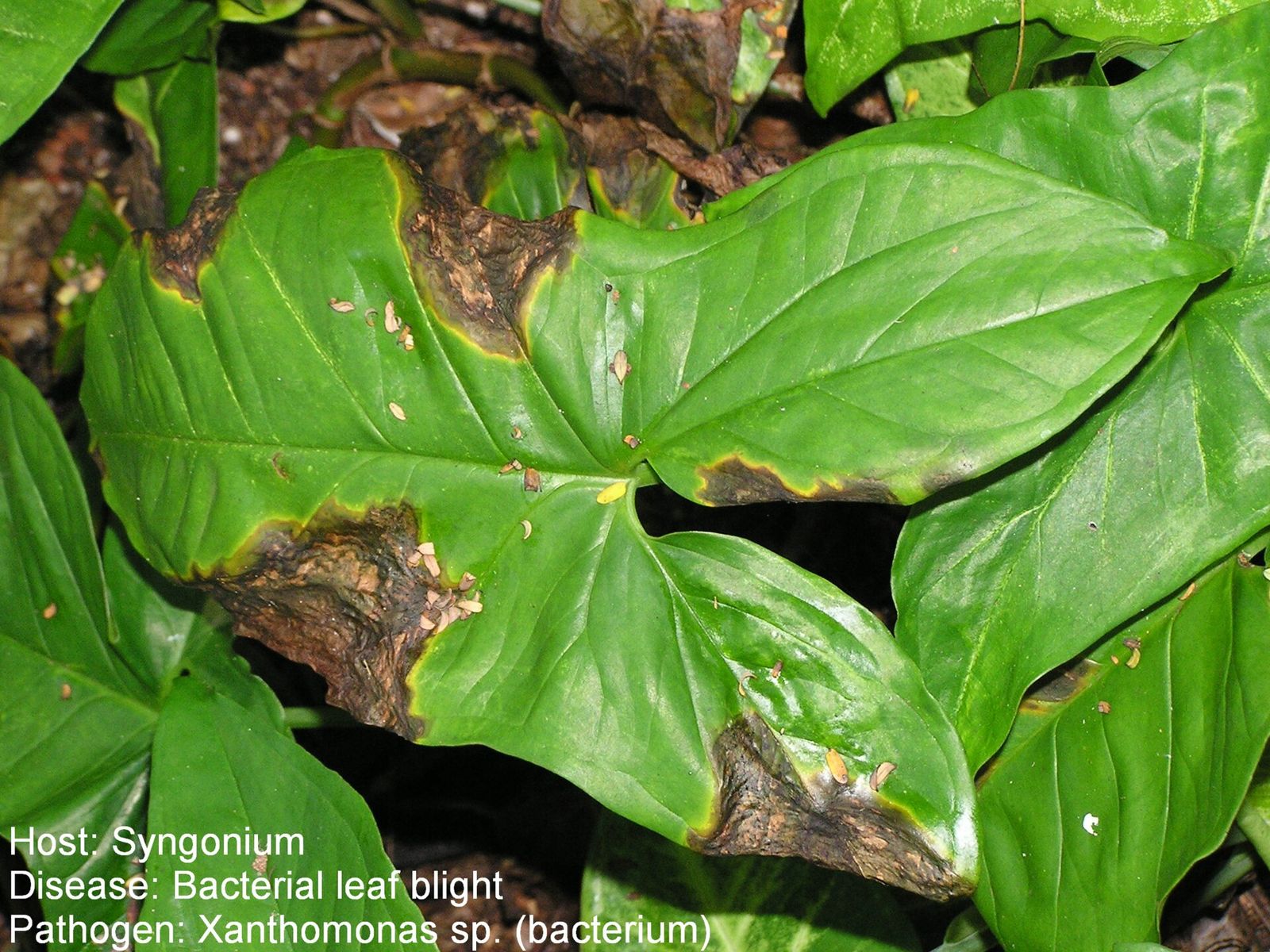
What causes spots on houseplant leaves?
The University of California Integrated Pest Management (UC IPM) houseplant guide lists the usual causes of leaf spots, blotches and blemishes: "Excess light (sunburn) associated with a recent move of the plant," "Chilling injury (below 50°F)," "Chemical spray injury," overwatering, and "Fungal or bacterial infections (rare unless plants have recently come from outdoors or greenhouses)."
UC IPM also explains why disease is less common inside: leaf spots and blights that occur outdoors "will not usually be problems in the home or office because of lower humidity and lack of splashing water."
If the brown is at the tips and edges, our brown leaf tips guide is the better starting point. If you see fine pale speckling with no distinct spots, check for spider mites and thrips.
How do I tell fungal from bacterial leaf spot?
| Feature | Fungal leaf spot | Bacterial leaf spot |
|---|---|---|
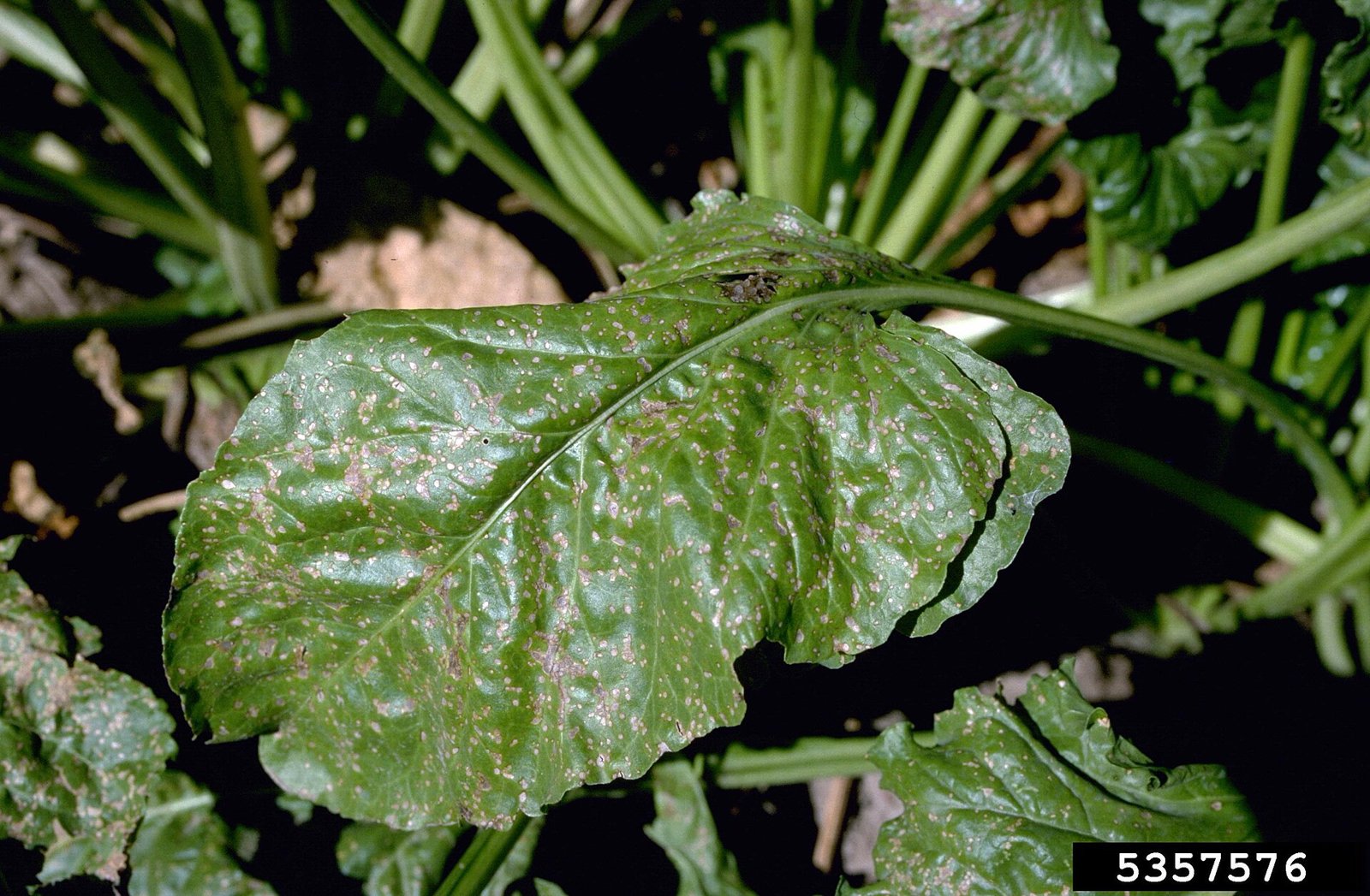
| Spot shape | Roughly circular | Often angular between veins, or V-shaped from the leaf edge |
| Color and halo | Tan to reddish brown to black, often a yellowish margin | Dark green and water-soaked, turning tan, brown or black with a yellow border |
| Texture | Dry, dead tissue | Oily, greasy or water-soaked, often seen first from the underside |
| Tiny dots | Small black fruiting bodies may show in dead tissue | None |
| Ooze or smell | None | Sometimes a sticky ooze; collapsed tissue soft and mushy with a rotten smell |
| How it spreads | Splashing water carries spores | Splashing water, hands and pruning tools |
Sources for the table: UC IPM, University of Maryland (UMD) Extension on fungal leaf spots, UMD Extension on bacterial leaf spots and the Clemson University Home and Garden Information Center (HGIC) houseplant fact sheet.
Clemson describes fungal spots as "small, brown spots with yellowish margins," which "may have a concentric ring or target pattern." It adds that "Small black dots (fruiting bodies of the fungi) may be visible in dead tissue." For bacterial spots, Clemson notes "water-soaked spots, sometimes with a yellow halo, usually uniform in size, and sometimes with a sticky ooze."
The photo below shows Cercospora leaf spot on a sugar beet, a field crop, because its round fungal spots are easy to see. Fungal spots on houseplants look similar.
UC IPM names common hosts. Xanthomonas bacteria are found on dieffenbachia, heartleaf philodendron, English ivy, and pilea and pellionia. Pseudomonas bacteria are found on aglaonema, dracaena, monstera and pothos.
How do I keep leaf spot from starting?
UC IPM explains that "Many of these fungi require hours of continuous leaf wetness for infection to occur," so fungal spots "can usually be prevented by avoiding splashing water onto foliage and by watering early in the day so that plant surfaces dry as quickly as possible."
UMD's management advice for both kinds of spots:
- "Watering should be done early in the day to allow leaf surfaces time to dry quickly"
- "Space plants so that air can circulate between them to help reduce moisture"
- Any method that lowers humidity, decreases leaf wetness or increases air circulation "will help to lessen the chances of infection"
For bacterial spots, UC IPM adds: "Clean hands with soap and water and disinfect pruning tools in 70% alcohol after such removal actions."
Inspect new plants before they join the rest of your collection, since UC IPM ties infections to plants that "have recently come from outdoors or greenhouses."
How do I treat leaf spot naturally?
- Remove spotted leaves. UMD: "Individual leaves with spots can be picked off and destroyed." Clemson: "Remove and destroy infected plant material."
- Dry things out. Pour water onto the soil and keep it off the leaves. Clemson says to avoid splashing water on the foliage "since this spreads the fungi."
- Improve airflow. Move plants apart and away from damp corners.
- Clean up. Disinfect shears in 70% alcohol and wash your hands, as UC IPM advises.
Organic and biological products. The Washington State University (WSU) Extension fact sheet FS128E, Organic Fungicides for the Home Gardener lists neem oil and potassium bicarbonate among active ingredients in organic fungicides registered for home use in Washington State, and describes neem oil as "Preventative." Clemson lists Bacillus amyloliquefaciens, a biocontrol bacterium, under "Natural, Less Toxic Fungicides" for "Fungal & bacterial leaf spots." Treat all of these as prevention for healthy leaves; none of them repairs a spot that is already there.
Which fungicides and bactericides can I use indoors?
UMD says: "Registered fungicides labeled for houseplants can be used, but in most home conditions, removal of infected plant parts and adjustment of environmental conditions to drier conditions should help."
Copper soap and other copper products (fungal and bacterial). Clemson lists "copper soap" for both fungal and bacterial leaf spots, used "after removing infected plant parts in order to reduce the incidence of future disease." That makes copper preventive only. North Carolina State (NC State) Extension rates copper products "Fair" against bacterial leaf spot, says they "can be used preventatively, but, as noted above, efficacy can be variable," and warns that "some strains of some of the bacterial pathogens listed above may be resistant to copper products." Label and pet note: use only a product whose label lists houseplants or ornamentals, and keep pets away from treated plants until the spray has dried.
Chlorothalonil (fungal spots only). Clemson lists it for fungal leaf spots only; its bacterial leaf spot section names copper soap and Bacillus amyloliquefaciens. The Pacific Northwest (PNW) Plant Disease Management Handbook says copper-based products and chlorothalonil "must be present before fungi begin the infection process." Label and pet note: follow the label for indoor use and plant safety, and keep pets out of the area until leaves are dry.
Myclobutanil (fungal spots only). Clemson lists it for fungal leaf spots. The Clemson example product also contains permethrin, an insecticide. The PNW handbook notes that myclobutanil and tebuconazole "are locally systemic," yet "they must be applied soon after (or before) infection for maximum benefit." Label and pet note: read the full ingredient list, since combination products carry extra pesticides, and keep pets away until the spray dries.
Tebuconazole (fungal spots only). Clemson lists it for fungal leaf spots. Its example product also contains the insecticide imidacloprid and the miticide tau-fluvalinate, and Clemson's table marks it "(spray houseplants outdoors)." Label and pet note: spray outdoors only, as directed, and bring plants back inside after they dry, out of reach of pets.
The PNW handbook is clear about limits: "None of these fungicides can cure heavily diseased plants."
Spray outdoors when you can. Clemson's Table 1 note says: "Spraying of houseplants is most safely done outdoors in the shade & during mild temperatures. Once plants are dry, they may be brought back indoors." Clemson closes each treatment section with "Follow label directions for safe use."
Which home remedies are myths?
Myth: hydrogen peroxide spray cures leaf spot. Writing in The Conversation, Nick Goltz of the University of Connecticut Plant Diagnostic Laboratory explains that hydrogen peroxide reacts "almost immediately after coming in contact with other compounds. This does not permit hydrogen peroxide to move throughout a plant." Pathogens inside the leaf tissue "will not be affected."
Cinnamon on a fresh cut. For orchids, the American Orchid Society suggests cinnamon as a milder option on cut tissue, and the New York Botanical Garden dusts it on cut fungal spots. Other sources find little evidence that it works: WSU FS128E lists cinnamon oil as an active ingredient in some registered organic fungicides, used to prevent infection, and none of our other sources recommend ground cinnamon for leaf spot.
Myth: bacterial infections can be sprayed away. For systemic bacterial disease, UC IPM says "Pesticide sprays are not effective because the pathogens are distributed throughout the plant, deep within all its tissues." For leaf spots, NC State describes copper as preventive.
When should I throw the plant out?
UMD states: "There are no cures for systemically infected plants and these plants should be discarded." UC IPM agrees that for systemic bacterial diseases "discarding infected plants is often the best approach." Signs of a systemic problem include wilting, general yellowing and soft, smelly stem rot. For rot that starts below the soil, see our root rot guide.
How does Grove help?
Grove builds a care plan from your plant's species and how you grow the plant. The watering task asks whether the plant needs water today, which helps you water at the soil when it is needed. If you spot new marks on a leaf, run a health check and compare what you see with the table above. For seasonal changes, see our winter care guide, and for color changes without spots, see yellow leaves.
Leaf spot FAQ
Will spotted leaves heal?
No. UMD recommends picking off spotted leaves and destroying them. Prevention protects new growth.
Can leaf spot spread to my other plants?
Yes. UC IPM says fungal spores spread by "splashing water," and bacterial infections spread through splashing water, contaminated hands and pruning tools. Keep the plant apart from others during treatment.
Should I stop misting?
Clemson's advice for anthracnose, a fungal leaf disease, is "Do not mist leaves." UC IPM ties fungal infection to hours of leaf wetness.
Is leaf spot dangerous to my pets?
Our sources do not describe leaf spot as a risk to pets. The bigger concern is the product you spray, so follow the label and keep pets away until treated leaves dry.
Sources
- What's wrong with my orchid? : American Orchid Society
- Troubleshooting Orchids : New York Botanical Garden (updated October 2026)
- Houseplant Problems : University of California Statewide Integrated Pest Management Program
- Fungal Leaf Spots on Indoor Plants and Bacterial Leaf Spots on Indoor Plants : University of Maryland Extension
- Houseplant Diseases and Disorders : Clemson University Home and Garden Information Center
- Leaf Spotting Bacteria on Ornamentals : North Carolina State Extension
- Fungicides for Disease Management in the Home Landscape : Pacific Northwest Plant Disease Management Handbook
- FS128E, Organic Fungicides for the Home Gardener : Washington State University Extension
- 4 misguided plant health trends on social media : The Conversation