Plant care card
Monstera
Monstera deliciosa · Costilla de Adán
Also called Swiss cheese plant, split-leaf philodendron or Mexican breadfruit
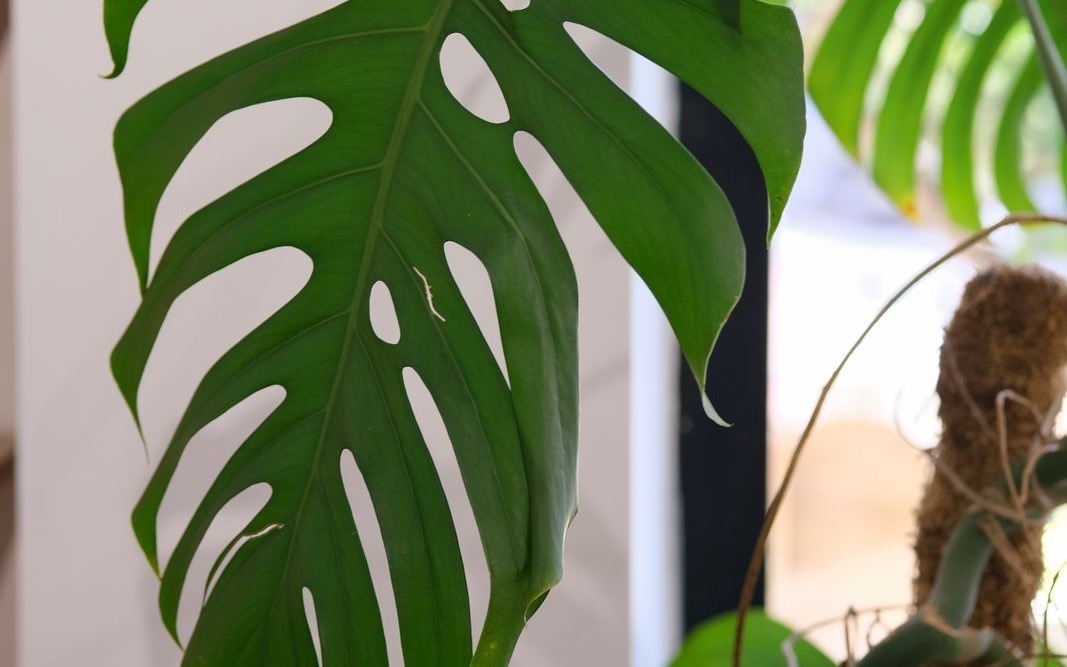
Photo by Esra Afşar on Pexels
A monstera is a climbing vine that grows big and fast with bright, indirect light, warmth, steady humidity and something to climb. Water deeply, then let the top inch or two of soil dry. Young leaves are solid, and the famous splits come as the plant matures in good light. It is toxic to cats and dogs if chewed.
Toxic to cats, dogs and horses · Mild
Burning mouth, drooling, vomiting and trouble swallowing. NC State rates the severity as low. Children: low severity. Chewing burns the mouth and throat, and the sap can irritate skin.
Pet poison line: ASPCA (888) 426-4435
Good for: a big statement plant, bright rooms with space to climb · Think twice if: pets chew plants, space is tight, you want to plant it outdoors where it never freezes.
Needs at a glance
- Light3 of 4 · Bright indirectNear a bright window; some winter sun is welcome
- Water2 of 3 · Let the top dryWater deeply when the top 1 to 2 inches are dry; less in winter
- Humidity2 of 3 · Above averageA humidifier or pebble tray helps in dry rooms
- Soil when pottedRich, well-drained mixSoilless potting mix with bark or perlite
Indoors: best at 60 to 85°F (16 to 29°C). Keep it above 50°F (10°C) and away from drafts and heat vents.
How the rating adds up
0 = easiest · 1 = moderate · 2 = hardest
- Missed waterings1 of 2 · ModerateLet the top dry, then water deeply; root rot if kept wet
- Light flexibility1 of 2 · ModerateNeeds bright light for split leaves; leggy in low light
- Humidity1 of 2 · ModeratePrefers above 50%; dry air browns the edges
- Pests and disease1 of 2 · ModerateScale, mealybugs, mites; root rot and leaf spots
- Sensitivity to change0 of 2 · EasiestFine pot-bound and slow to mind moves; avoid cold drafts
Growing outdoors
All year: USDA zones 10 to 12, where the coldest winter nights average 30°F (−1°C) or warmer.
Elsewhere: summer outside in part shade, out of midday sun. Bring it in before nights drop below 50°F (10°C).
Invasive: UF/IFAS rates it high invasion risk in Florida and does not recommend planting it.
- Containers
- Climbing a tree or trellis
Sources: NC State, Penn State, UConn, Wisconsin Extension, NYBG, ASPCA, ASPCA plant list, USDA, Clemson and UF/IFAS. Full list below.
Verified · How we rate plants
Start with your question
How often should I water a monstera?
Water thoroughly whenever the top of the soil has dried, then empty the saucer. Sources give different depths: Penn State says the top 1 to 2 inches, NC State the top quarter to third of the pot, and UConn the top 2 to 3 inches. In winter it grows slowly, so water less. Soggy soil rots the roots, and Wisconsin Extension notes that leaves that "sweat" droplets are a sign the mix is too wet.
How much light does a monstera need?
Bright, indirect light, such as a spot near a sunny window out of the direct rays. Wisconsin Extension and NYBG say some direct sun is welcome in winter, and UConn says to move it into brighter light slowly, because the big leaves scorch easily. In low light the stems stretch, the plant gets leggy, and new leaves come in small and without splits.
Why don't my monstera leaves have splits?
Most often the plant is still young or isn't getting enough light. Young monstera leaves are solid and heart-shaped, and the holes and splits (fenestrations) appear as the plant matures. Wisconsin Extension, Clemson and NYBG all say that too little light stops them from forming. Give it brighter, indirect light and something to climb: UConn says leaves usually grow much larger once the vines attach to a support. NYBG notes that scientists still don't fully understand why the holes form.
NC State, Wisconsin Extension, Clemson, NYBG, UConn, Penn State
Does a monstera need a moss pole?
Yes, once it starts to get big: it climbs trees in the wild, and sturdy support keeps the heavy stems from breaking. Keep the moss damp so the aerial roots can grip it, and UConn says leaves usually grow larger once they do.
How do I prune a monstera?
Prune in spring or whenever it is growing, with clean, sharp pruners and gloves, since the sap can irritate skin. Cut just above a node to shorten a stem and remove leaves that are fully yellow or brown. Leave healthy aerial roots in place.
Why are my monstera leaves turning yellow or brown?
Losing an old leaf now and then is normal. Many yellow or dropping leaves usually mean overwatering or too little fertilizer, according to NYBG, so check the soil before you water. Brown, crispy edges point to dry air. Brown or scorched patches after a move can be sunburn. Dark spots with yellow rims, or yellowing edges that turn tan and brown, can be leaf diseases, and UConn adds that mealybugs, scale and spider mites can yellow or speckle the leaves.
When should I repot a monstera?
Repot in spring when roots fill the pot or grow out of the drainage hole, and go up only one pot size. A monstera copes with being pot-bound better than with a pot that is too big, according to UConn and NYBG. Use a rich, well-drained potting mix. Once the plant is as big as you can handle, NYBG suggests replacing the top layer of soil every other year instead of repotting.
How do I propagate a monstera?
Take a stem cutting that includes a node, the point where a leaf joins the stem, and ideally an aerial root too. A leaf without a node will not grow into a new plant. Pot it in a moist mix or root it in water, or try air layering.
Is a monstera toxic to cats and dogs?
Yes. The ASPCA lists Monstera deliciosa as toxic to cats and dogs, and NC State adds horses. Its calcium oxalate crystals cause a burning mouth, drooling, vomiting and trouble swallowing if chewed, and the sap can irritate skin. NC State rates the severity as low and says symptoms usually take a large amount. Keep it out of reach of pets that chew, and if you think a pet ate some, call your vet or the ASPCA Animal Poison Control Center at (888) 426-4435.
Can a monstera grow outdoors?
Yes, all year in USDA zones 10 to 12, where the coldest winter nights average 30°F (−1°C) or warmer. In Florida, though, the UF/IFAS Assessment rates it a high invasion risk and doesn't recommend planting it, because it can climb and smother trees. Elsewhere it can spend summer outside in part shade. Move it out once nights stay above 60°F (16°C), ease it into brighter light gradually to avoid sunburn, and bring it in before nights drop below 50°F (10°C).
NC State, UConn, USDA, UF/IFAS, Wisconsin Extension, Clemson
Can you eat monstera fruit?
Only when it is fully ripe, according to NC State, Wisconsin Extension and Penn State, and a houseplant rarely flowers or fruits at all. The fruit takes more than a year to ripen, and it is ready when the green scales fall away on their own. Unripe fruit contains the same irritating crystals as the rest of the plant, and NC State notes that some people are allergic to it.
How Grove helps
Grove turns watering into a check of the soil, so a monstera only gets water once the top has dried. You can add misting the moss pole or wiping the leaves as a repeating task and assign it to anyone who helps with the plants. If you're unsure which monstera you have, a photo gives you a best guess that you can correct.
Sources
- NC State Extension Gardener Plant Toolbox: Monstera deliciosa
- Penn State Extension: Monstera as a Houseplant
- UConn Home & Garden Education Center: Monstera deliciosa
- University of Wisconsin-Madison Extension: Swiss-Cheese Plant, Monstera deliciosa
- New York Botanical Garden LibGuides: Monstera
- ASPCA Animal Poison Control: Swiss Cheese Plant
- ASPCA Animal Poison Control: Toxic and Non-Toxic Plants
- USDA ARS Plant Hardiness Zone Map (2023)
- Clemson Cooperative Extension HGIC: Moving Plants Indoors and Outdoors
- UF/IFAS Assessment of Non-Native Plants: Monstera deliciosa
- UF/IFAS Extension Orange County: Florida's hidden invaders, invasive houseplants (2025)
- Clemson Cooperative Extension HGIC 1509: Philodendron
- Plants of the World Online, Royal Botanic Gardens, Kew: Monstera borsigiana