How to prune a monstera without the guesswork
Prune a monstera when it is growing, usually in spring, by cutting a stem just above a node, the spot where a leaf joins the stem. Remove leaves that are fully yellow or brown, leave healthy aerial roots in place, and wear gloves, because the sap can irritate your skin.
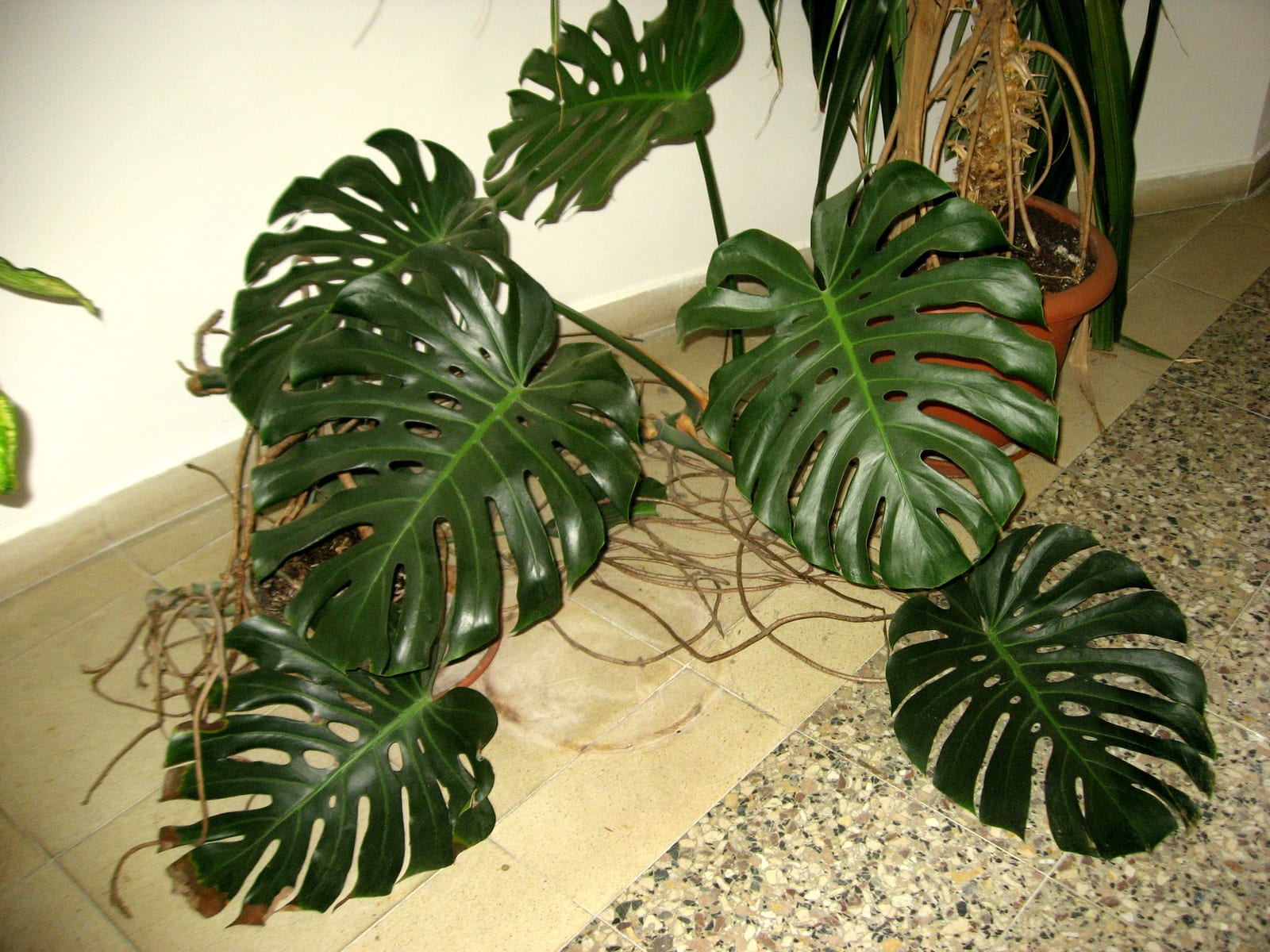
When should I prune a monstera?
Read moreShow less
NC State Extension and the RHS both point to spring for pruning a monstera. General houseplant advice agrees: Clemson Extension suggests a light trim at the end of winter, before spring growth, and Illinois Extension says to cut tropical houseplants back in spring, before active growth.
The real trigger is growth, more than the calendar. NYBG describes active growth from March to September in New York and a slower rest in winter. Where spring comes in September, prune then. In the tropics, where a monstera may grow all year, pick a stretch when it is pushing out new leaves.
Where do I cut a monstera?
Read moreShow less
New growth comes from the nodes. Illinois Extension defines a node as the point where a leaf attaches to the stem, and University of Maryland Extension explains that a cut just above a node gives the plant a place to send out new growth. Penn State Extension gives the same advice for pothos, a related vine: shorten a stem with sharp scissors just above a node, anywhere along its length.
On a monstera, look where each leaf stalk wraps around the main stem. Penn State Extension notes that the aerial roots form at the base of the leaves, so a brown, cord-like root is a handy sign that you have found a node.
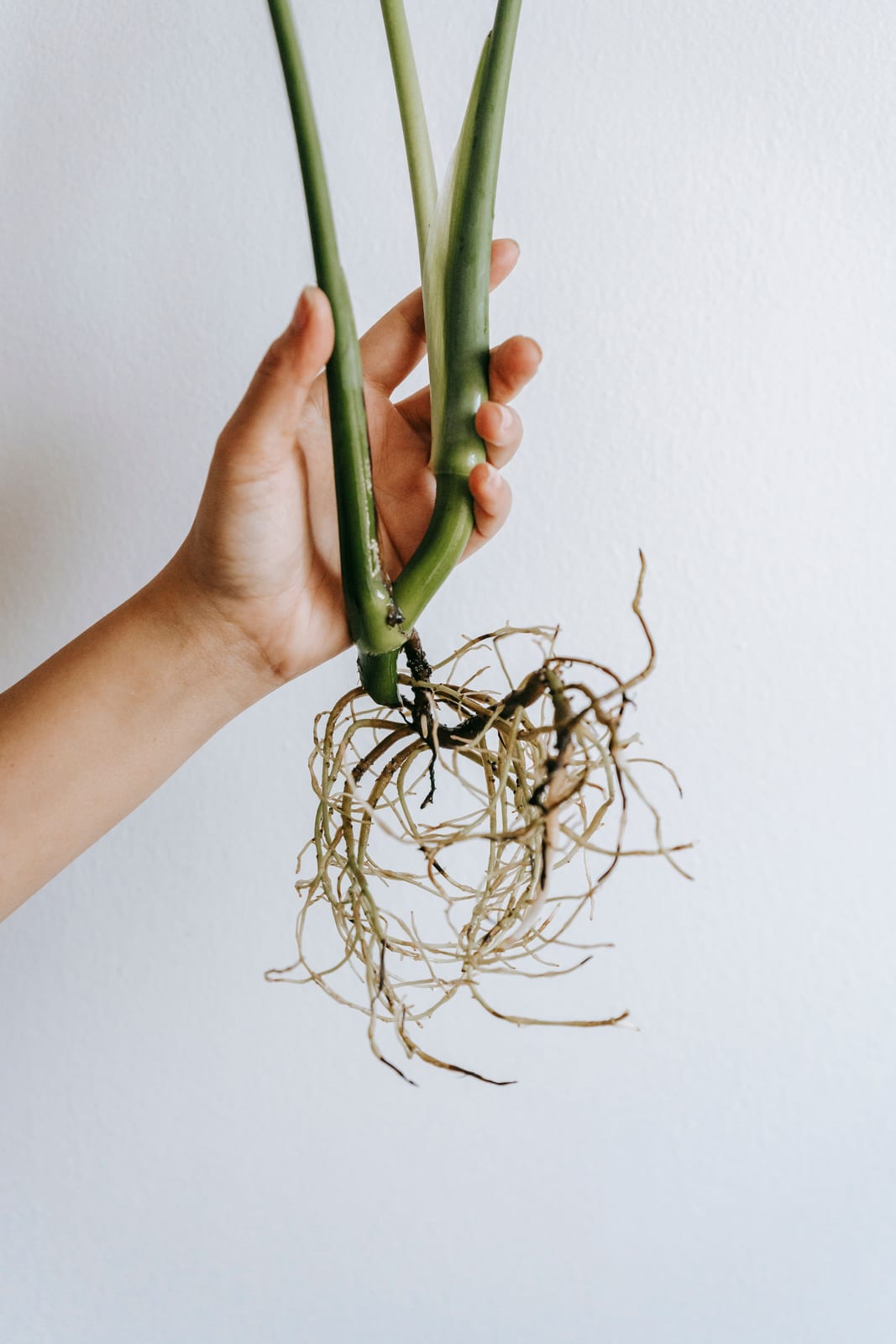
If you want to root the piece you remove, the cut goes the other way: below a node, so the cutting keeps it. Wisconsin Extension cuts the stem tip just below an aerial root, and UConn suggests cutting 3 to 5 inches below a node. Our monstera propagation guide covers that part.
Which leaves and stems should I remove?
Read moreShow less
The RHS says to cut off leaves that are moldy, shriveled, or completely yellow or brown, and to keep leaves that are still mostly green until the plant has made new ones. Remove the whole leaf with its stalk, cutting close to the main stem without nicking it. NYBG adds that a yellow leaf that comes away with a gentle tug can simply be pulled off. Clearing dead growth also gives pests fewer places to hide, according to Clemson Extension and University of Maryland Extension.
An old leaf turning yellow now and then is normal. Lots of yellow leaves point to a care problem, often too much water, and the monstera care card and our yellow leaves guide help you find it.
Leggy stems, with long bare gaps between leaves, are a light problem first. Penn State and NYBG both say low light makes a monstera stretch and its new leaves come in small and without splits. Cut a leggy stem back to a node in spring, and move the plant to bright, indirect light so the new growth comes in compact.
Should I cut off monstera aerial roots?
Read moreShow less
I hold on with these. NYBG says healthy aerial roots make the best-looking monsteras and advises against removing them: guide some into a moss-covered pole and leave the rest in the air, where they can take up moisture. Wisconsin Extension also suggests giving them a damp support to grip.
Iowa State Extension is more relaxed about philodendron, a close relative: you can leave the roots, guide them up a pole, push them into the soil to help steady the plant, or cut them off close to the main stem with sharp pruners, which it says won't harm the plant. So if one root is damaged or blocking a walkway, a clean cut near the stem is fine. For the rest, a moss pole puts them to work.
What do I do if my monstera is too big?
Read moreShow less
Indoors, a monstera usually reaches 6 to 8 feet, according to NC State and Penn State, and NYBG says a well-cared-for plant can grow well over 10 feet. NC State gives it 6 to 12 feet of space. When it outgrows that, the RHS says you can cut it back in spring. Expect the new stems to carry smaller leaves with fewer holes for a while, until the plant settles.
The pot matters too. UConn says a monstera copes with being pot-bound better than with a pot that's too big, and NYBG suggests that once the plant is as large as you can handle, you replace the top layer of soil every other year instead of moving it up a size. That keeps growth steadier.
If the problem is a plant flopping over more than its size, a sturdy support helps more than shears: NC State says support keeps the heavy stems from breaking. Our moss pole guide covers that fix. And if you want a monstera that stays smaller, the RHS points to Monstera adansonii; our monstera types guide compares the options.
Will pruning make my monstera bushier?
Read moreShow less
University of Maryland Extension and Illinois Extension say that cutting houseplants back to a node makes them branch, and Penn State says trimming keeps pothos short and bushy. For a monstera, the RHS only says new stems will grow after you cut it back. The photo above shows what that often looks like: one new shoot from a node on a cut stem.
For a fuller pot, root the tops you cut off and pot them up, which our propagation guide walks through. Good light also keeps growth compact, since a stretched monstera looks sparse whatever you cut.
How do I prune a monstera, step by step?
- Pick a time when the plant is growing, ideally spring, and put on gloves, since the sap can irritate skin.
- Clean sharp pruners or scissors: wash off any sap and dirt, then wipe the blades with 70% rubbing alcohol.
- Remove leaves that are completely yellow, brown or shriveled, cutting each stalk close to the main stem.
- Find the stem you want to shorten and follow it down to a node, where a leaf stalk or aerial root meets the stem.
- Cut just above that node with one clean cut.
- Step back, look at the shape, and repeat on another stem only if the plant still needs it.
- Wipe the blades again before moving to another plant.
- Pick up every cut piece right away, out of reach of pets and children, or keep the tops with a node for rooting.
There's no tried-and-tested limit on how much to cut at once, so we suggest working one stem at a time and stopping once the plant fits its space.
How do I clean my pruning tools?
Read moreShow less
Iowa State Extension recommends 70% isopropyl alcohol for home gardeners: wipe or dip the blades, no soak needed. Its other option is 1 part household bleach to 9 parts water, with the blades soaked for at least 10 minutes, then rinsed, using the mix within two hours. Iowa State says to disinfect at least between plants, and ideally between every cut.
Sap gets in the way, so clean first. Clemson Extension suggests soapy water and a brush to get sap and residue off, and notes that bleach can corrode tools. Sharp blades matter too: Penn State Extension prefers bypass pruners, which slice cleanly, because anvil types can crush stems.
Is monstera sap safe to touch, and what about pets and kids?
NC State Extension lists contact dermatitis from the sap, and Penn State Extension and the RHS both say to wear gloves when handling the plant.
The ASPCA lists monstera as toxic to cats and dogs. Its calcium oxalate crystals can cause a burning mouth, drooling, vomiting and trouble swallowing if chewed. NC State lists every part as poisonous, horses included, and rates the severity as low, usually after a large amount. The RHS says to keep the plant away from children and pets, and fresh clippings on the floor are the easiest bite, so pick them up as you go.
If you think a pet chewed some, call your vet or the ASPCA Animal Poison Control Center at (888) 426-4435 (a fee may apply). If a person swallowed some and feels unwell, call Poison Help at 1-800-222-1222 in the US. The monstera care card has the full safety box.
What can I do with the pieces I cut off?
Read moreShow less
Wisconsin Extension roots stem tips cut just below an aerial root, and the RHS roots cuttings in a glass of water in a bright spot from spring to late summer. Our monstera propagation guide covers every method step by step, and our monstera in water guide explains how long a cutting can stay in a jar.
Sources
- Monstera deliciosa : North Carolina State Extension Gardener Plant Toolbox
- Swiss-Cheese Plant, Monstera deliciosa : University of Wisconsin-Madison Extension (revised October 2026)
- Monstera as a Houseplant : Penn State Extension (updated December 2024)
- Pothos as a Houseplant : Penn State Extension (updated September 2025)
- Keeping Plants Well Groomed : Penn State Extension
- Monstera deliciosa : UConn Home and Garden Education Center
- Monstera : New York Botanical Garden, Mertz Library
- Can I clip off the aerial roots from my Monstera plant? : New York Botanical Garden, Mertz Library Reference (December 2020)
- Why are the leaves on the houseplant I just bought turning yellow? : New York Botanical Garden, Mertz Library Reference (February 2021)
- How to grow Swiss cheese plants : Royal Horticultural Society
- How to help a poorly houseplant : Royal Horticultural Society
- What do I do with the aerial roots of a philodendron? : Iowa State University Extension and Outreach (September 2024)
- How do I sanitize my pruning shears? : Iowa State University Extension and Outreach (April 2026)
- Tool Hygiene : Clemson Cooperative Extension (June 2021)
- End-of-Winter Houseplant Care : Clemson Cooperative Extension (February 2026)
- Grooming Indoor Plants : University of Maryland Extension (March 2023)
- Tips on caring for tropical houseplants : University of Illinois Extension (January 2014)
- Swiss Cheese Plant : ASPCA Animal Poison Control