Plant care card
Kalanchoe
Kalanchoe blossfeldiana · Kalanchoe
Also called flaming Katy, Christmas kalanchoe or florist kalanchoe
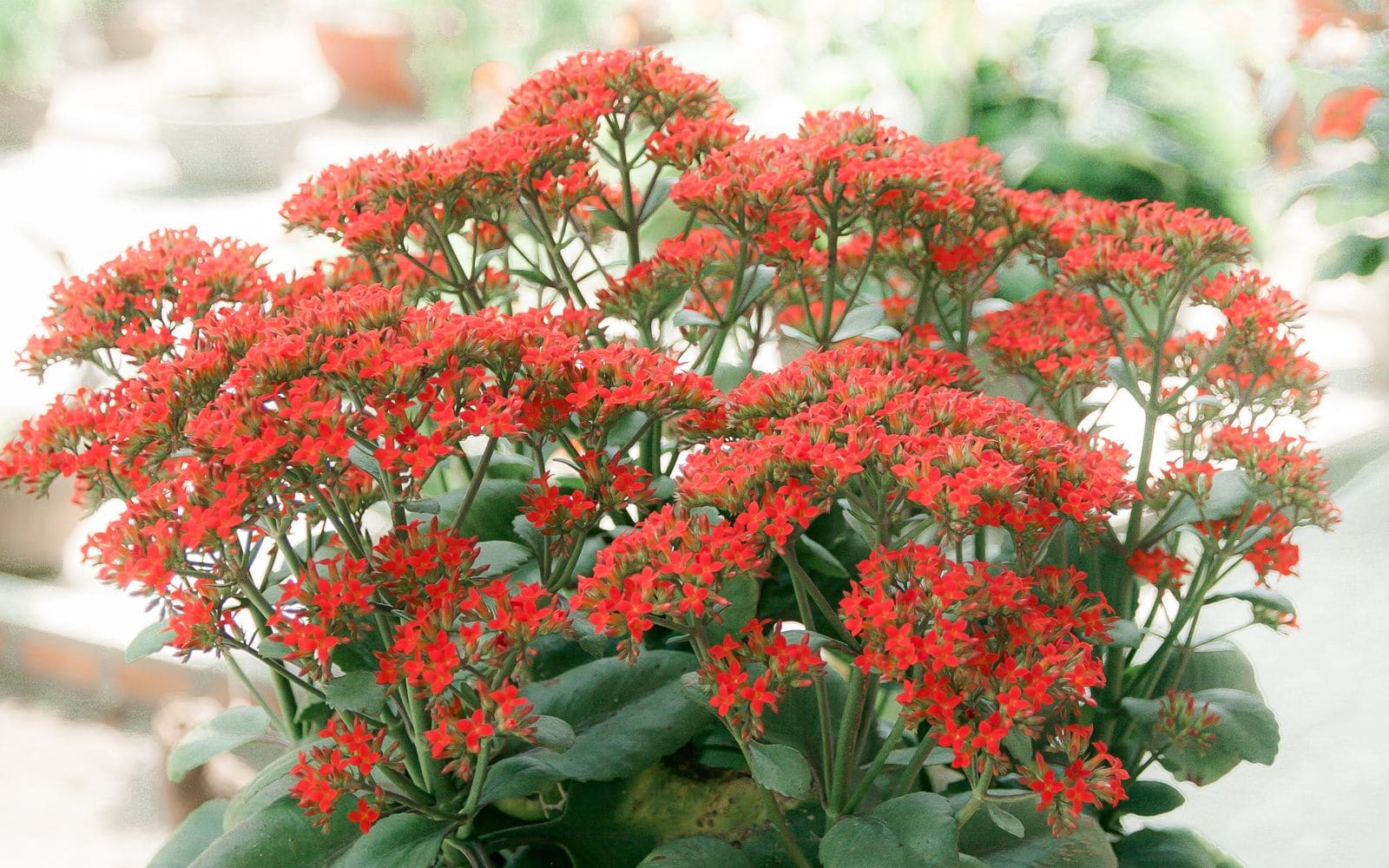
Photo by Du Tử Mộng on Pexels
Kalanchoe is an easy, long-blooming succulent: give it a bright window, let the soil dry between waterings, and keep it cool and away from heat vents. Too much water kills more of them than anything else. It's toxic to cats and dogs, so keep it out of reach. Getting it to bloom again takes six weeks of long, dark nights in fall, and that's the tricky part.
Toxic to cats and dogs · Moderate
Vomiting and diarrhea; rarely an abnormal heart rhythm. Its toxins act on the heart, and the flowers hold the most. Children: moderate severity. NC State rates it medium severity; eating it can cause vomiting and heart rhythm problems.
Pet poison line: ASPCA (888) 426-4435
Good for: winter color, sunny windowsills, people who forget to water · Think twice if: pets or small children chew plants, your only window is dim.
Needs at a glance
- Light3 of 4 · Bright indirectNear a bright window; a few hours of morning sun is fine
- Water1 of 3 · Let the soil dryThen water deeply; never let it sit in water
- Humidity1 of 3 · AverageA normal home is fine; give it some air movement
- Soil when pottedCactus or succulent mixFast-draining, with grit or perlite
Indoors: best at 60 to 70°F (16 to 21°C). Keep it above 45°F (7°C) and away from drafts and heat vents.
How the rating adds up
0 = easiest · 1 = moderate · 2 = hardest
- Missed waterings0 of 2 · EasiestA succulent: fine drying out between waterings
- Light flexibility1 of 2 · ModerateNeeds bright light; gets leggy in low light
- Humidity0 of 2 · EasiestAverage home air is fine
- Pests and disease1 of 2 · ModerateMealybugs, aphids, scale; rot if overwatered
- Sensitivity to change0 of 2 · EasiestDurable indoors; ease it into outdoor sun
Growing outdoors
All year: USDA zones 10 to 12, where the coldest winter nights average 30°F (−1°C) or warmer.
Elsewhere: summer outside in bright light with afternoon shade. Bring it in before nights drop below 45°F (7°C).
- Containers
- Groundcover and rock gardens in warm climates
- Deer resistant
Sources: NC State, Arkansas Extension, RHS, Clemson, Illinois Extension, Iowa State, ASPCA, ASPCA toxicology brief and UF/IFAS. Full list below.
Verified · How we rate plants
Is kalanchoe poisonous to cats and dogs?
Yes. The ASPCA lists kalanchoe as toxic to cats and dogs. Every part of the plant contains bufadienolides, heart toxins (cardiac glycosides), and the flowers hold the most. Most pets that chew it get vomiting and diarrhea, and the ASPCA says an abnormal heart rhythm is rare. A 2004 toxicology brief published by the ASPCA explains that eating enough of the plant can cause serious heart problems, and NC State rates it medium severity for pets and children. Keep it out of reach. If a pet eats any part of it, call your vet or the ASPCA Animal Poison Control Center at (888) 426-4435. If a child eats some, call Poison Help at 1-800-222-1222.
How often should I water a kalanchoe?
Let the soil dry out, then water deeply until it drains from the bottom, and empty the saucer. Its thick leaves store water, so it can handle a missed watering or two. Iowa State suggests watering before it wilts. Too much water is the bigger danger: soggy soil rots the roots and stems.
How much light does a kalanchoe need?
Bright light near a window. NC State suggests bright, indirect light or a few hours of direct sun, with shade in the afternoon so the leaves don't scorch. Clemson says it grows best in full sun and gets leggy in low light. To bloom, it needs 6 to 8 hours of bright light a day.
How do I get my kalanchoe to bloom again?
Kalanchoe sets buds when nights are long. Starting in early October, give it 14 hours of complete darkness every night (Clemson says 14 to 16) for at least six weeks, in a room with no lamps or under a box, and bright light by day. Even a little light at night can stop the buds. Keep nights below 80°F (27°C), because heat delays flowering; Iowa State suggests nights of 60 to 65°F (16 to 18°C). Flowers should open around January, about 12 weeks after the long nights start. Once buds show above the leaves, night light no longer matters. Iowa State notes that reblooming can be difficult, so it's fine to enjoy it as a seasonal plant too.
What do I do when my kalanchoe stops blooming?
Pinch off the faded flowers. Then cut back tall growth and the old flower stems, move it to a slightly larger pot, and keep it in a sunny window. Feed it lightly while it grows: Clemson says monthly with houseplant fertilizer, the RHS says 2 or 3 times a season. It can spend the summer outside once frost is past.
What temperature does a kalanchoe like?
About 60°F (16°C) at night and 70°F (21°C) by day. Clemson and Iowa State give a wider range, 45 to 65°F (7 to 18°C) at night and 50 to 70°F (10 to 21°C) by day, and say cool nights make the flowers last longer. Keep it above 45°F (7°C) and away from heat vents.
Why is my kalanchoe dying?
Usually too much water. Soggy soil rots the roots and stems, so let it dry before you water again and make sure the pot drains. Long, stretched stems mean too little light. Check under the leaves for mealybugs, aphids, scale and spider mites; Clemson suggests wiping mealybugs off with a cotton swab dipped in rubbing alcohol. Powdery mildew shows up in still air, so give it room to breathe.
Can a kalanchoe grow outdoors?
Yes, all year in USDA zones 10 to 12, where it works in containers, rock gardens or as a groundcover. Deer tend to leave it alone, and it handles drought and salt. It can't take frost. In colder places, move it outside once frost is past, to a bright spot with afternoon shade, and let it get used to the sun over a few days so the leaves don't burn. Bring it back in before nights drop to 45°F (7°C). UF/IFAS finds it is not a problem species in Florida.
How do I propagate a kalanchoe?
Take stem cuttings in spring or early summer. Cut a 2 to 3 inch tip from a shoot without flowers, pull off the bottom leaves and let the cut end dry for a few days. Then set it in a cactus mix, or half peat moss and half perlite, in bright indirect light. It should be ready to pot up in two to three weeks. A single leaf can root too, if you let it dry first and lay it on moist mix.
How Grove helps
Grove sets a watering check based on how dry the soil is, so a kalanchoe gets water only once it has dried out. In October, you can add the nightly darkness routine as a repeating task and assign it, so whoever is home that evening covers the plant.
Sources
- NC State Extension Gardener Plant Toolbox: Kalanchoe blossfeldiana
- University of Arkansas Extension, Plant of the Week: Kalanchoe (2008)
- Royal Horticultural Society: Kalanchoe blossfeldiana (flaming Katy)
- Clemson Cooperative Extension HGIC 1563: Kalanchoe
- University of Illinois Extension, Good Growing: Kalanchoe, a nontraditional holiday plant (2025)
- Iowa State University Extension, Yard and Garden: How do I care for kalanchoe?
- ASPCA Animal Poison Control: Kalanchoe
- Smith (2004), Toxicology Brief: Kalanchoe species poisoning in pets, Veterinary Medicine 99(11)
- UF/IFAS Assessment of Non-Native Plants: Kalanchoe blossfeldiana