How to clean plant leaves and make them shine
Wipe each leaf with a soft cloth dampened in lukewarm water, holding the leaf from below, or rinse the whole plant under a gentle shower. That's it. Plain water lifts the dust and brings back the leaf's own shine, so skip leaf shine sprays, oils and soap. Fuzzy leaves, like an African violet's, get a soft dry brush instead. Your plant gets more light, and you get a close look for pests.
Why should I clean my plant's leaves?
Read moreShow less
A leaf is a solar panel, and dust is the grime on the glass. The RHS says wiping dust off lets more light reach the leaf, and the University of Missouri adds that a dust layer cuts the food the plant makes. The New York Botanical Garden (NYBG) puts it plainly for the fiddle-leaf fig: built-up dust gets in the way of photosynthesis, and the plant behaves as if it's getting less light. That matters most for a plant already in a low light spot.
There's a pest bonus too. Iowa State Extension says cleaning may help control insects and mites, and the NYBG says dusting may cut down on mites. Spider mites like dusty, dry leaves, as our spider mites guide explains.
How do I clean plant leaves?
- Get lukewarm water. NC State suggests 16 to 24 °C (60 to 75 °F), because very hot or cold water can damage leaves. Plain water works in nearly all cases with little risk to the leaf, says Iowa State.
- Dampen a soft cloth or sponge and wring it out. A microfiber cloth works well, per Clemson Extension.
- Support the leaf. Rest it on your open hand while you wipe. The NYBG says to support each leaf as you wipe, especially young ones, which bruise at a touch.
- Wipe both sides. Clemson and NC State both say to clean the top and the underside. The underside is also where the NYBG suggests looking for insects.
- Rinse the cloth whenever it gets dirty, so you aren't smearing dust from leaf to leaf (Iowa State).
- Blot off extra water. Clemson says not to leave leaves soggy: go over them with a dry cloth if drops or streaks remain.
Can I rinse my plant in the shower?
Read moreShow less
The NYBG calls a shower rinse more effective than wiping, as long as the water is tepid and the pressure soft. Iowa State says to adjust both before you spray the plant. NC State and Clemson add an outdoor option: in warm weather, a gentle rinse with the garden hose does the same job.
One thing to watch: the RHS says hard tap water sprayed over leaves can leave noticeable chalky marks. If your water is hard, a damp-cloth wipe may look cleaner.
What should I avoid when cleaning leaves?
Read moreShow less
- Leaf shine products. Four sources say no. Iowa State says heavy or frequent use can plug the leaf's pores (stomata) and leave a sticky layer that collects dust. NC State says leaf shine attracts dust, clogs stomata and slows growth, and even suggests passing on plants sold with polished leaves. Clemson says the waxy residue may interfere with the leaf's air exchange, and the NYBG says polishes build up and block more light.
- Oils. The NYBG names oils along with polishes as things that build up on leaves.
- Soap. Iowa State says household soaps can damage the leaf's waxy coating, causing discoloring and browning, and the NYBG says soap strips the shiny cuticle. Plain water is enough.
- Cleaning sprays and air fresheners. The RHS says cleaning products and aerosols landing on leaves commonly cause pale spots. Move plants before you clean the room.
- Milk, mayonnaise, beer, vinegar or banana peel. These are popular online, but none of the extension services or gardens we checked recommends any of them for leaves. University of Minnesota Extension calls cleaning leaves with milk a myth and says it may actually harm the leaf. What the others say: anything that coats a leaf can clog its pores and hold dust, and plain water brings back the natural shine.
How do I clean fuzzy leaves like an African violet's?
Read moreShow less
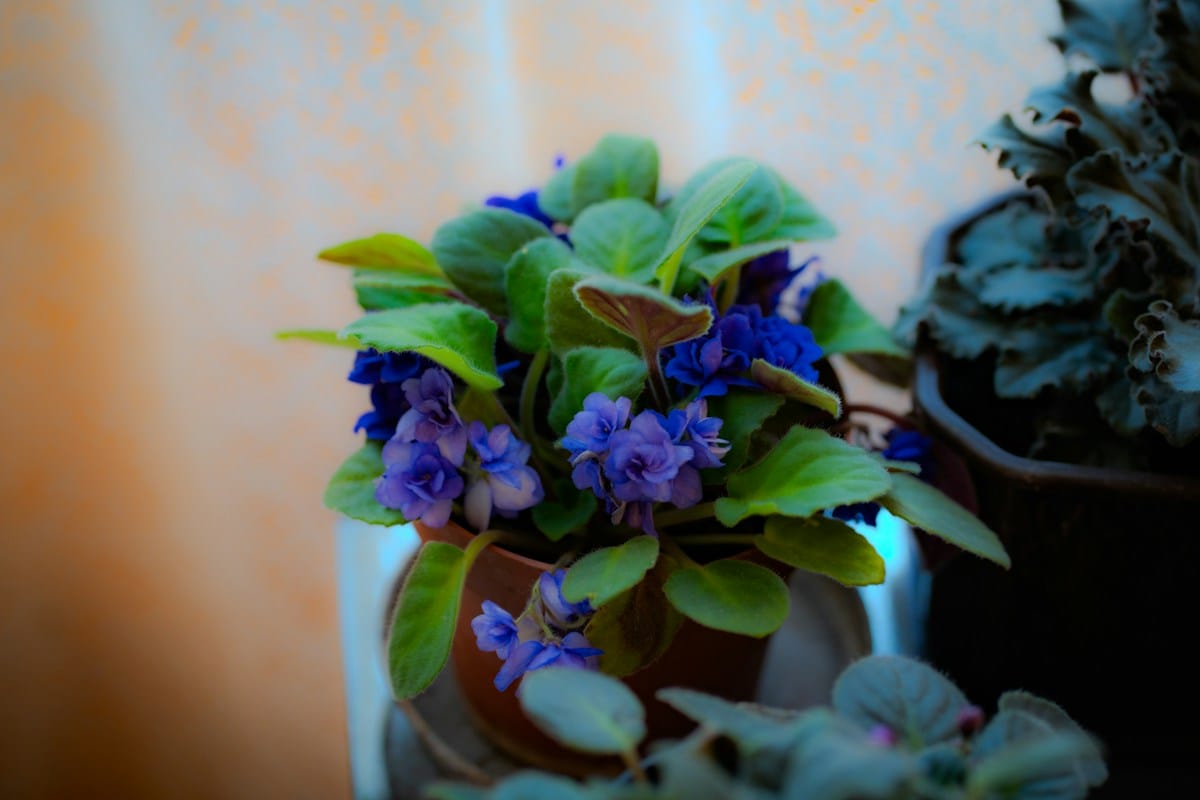
Clemson says hairy leaves should be dusted with a soft cosmetic brush instead of a wet cloth, and NC State suggests a makeup brush or soft painter's brush.
Sources differ a little here: Iowa State also allows a damp, soft cloth on fuzzy leaves. If you use one, make the water room temperature. Our African violet care card explains why: cold water on its leaves leaves pale rings and spots. Clemson adds one firm rule: never use leaf shine products on hairy leaves.
How often should I clean plant leaves?
Read moreShow less
Sources give a range:
- Every two or three months: NC State's routine for keeping houseplants healthy.
- Monthly: the NYBG's shower rinse for plants prone to pests or problems.
- Every other week or more: the RHS, for plants in dusty, busy offices.
- As dust builds up: the University of Missouri, for large-leaved figs. Clemson suggests a thorough cleaning at the end of winter, to clear the dust that built up over fall and winter.
Big leaves show dust first. Our fiddle-leaf fig card and the big leaf houseplants guide list plants that earn a regular wipe.
How does Grove help with cleaning leaves?
Read moreShow less
In Grove, you can add a leaf wipe as a repeating task on any plant and assign it, so the big-leaf plants don't get skipped.
Frequently asked questions (FAQ)
Can I clean plant leaves with milk?
No. University of Minnesota Extension calls it a myth and says milk may actually harm the leaf, and none of the other extension services or botanical gardens we checked recommends it. Iowa State and NC State warn that coatings on leaves clog their pores and collect dust, and Iowa State says plain water brings back the leaf's natural shine. Stick with water.
How do I make my plant leaves shine?
Clean them with plain water. Iowa State says removing dust reveals the natural shine most houseplant leaves already have. Leaf shine products give a quick gloss, but four of our sources advise against them.
Can I use rubbing alcohol or vinegar to clean leaves?
For routine cleaning, use water only. None of our sources recommends vinegar on leaves. Rubbing alcohol is a spot treatment for pests like mealybugs, and even there sources disagree, as our orchid pests guide explains. For sticky leaves or white fluff, see our mealybugs and scale guide.
Should I clean the undersides of leaves?
Yes. Clemson and NC State both say to wipe the top and the underside, and the underside is where pests like spider mites and mealybugs hide.
Is it better to wipe or shower a plant?
Both work. The NYBG calls a damp cloth the easiest way and a gentle, lukewarm shower the more effective one. Use whichever fits the plant and your bathroom.
Sources
- Dust has accumulated on the foliage of my houseplants. How can I clean the plants? : Iowa State University Extension and Outreach (December 2025)
- Diagnosing Houseplant Problems Related to Poor Culture : Iowa State University Extension and Outreach (A. Steil, reviewed January 2024)
- Extension Gardener Handbook, chapter 18: Plants Grown in Containers : NC State Extension
- Indoor Plants: Cleaning, Fertilizing, Containers and Light Requirements (HGIC 1450) : Clemson Cooperative Extension
- End-of-Winter Houseplant Care : Clemson Cooperative Extension (J. Nichols, February 2026)
- Houseplants: Tips and Troubleshooting (April 2026) and Fiddle-leaf fig research guide (October 2026) : New York Botanical Garden
- Ficus, 2026 Houseplant of the Year : University of Missouri IPM (D. Trinklein, February 2026)
- How to help a poorly houseplant and Choosing and caring for office plants : Royal Horticultural Society
- Spring houseplant care : University of Minnesota Extension (checked by hand by Julian, November 2026; the site blocks automated access)