Plant care card
African violet
Streptocarpus ionanthus · Violeta africana
Also called Usambara violet or Kenya violet
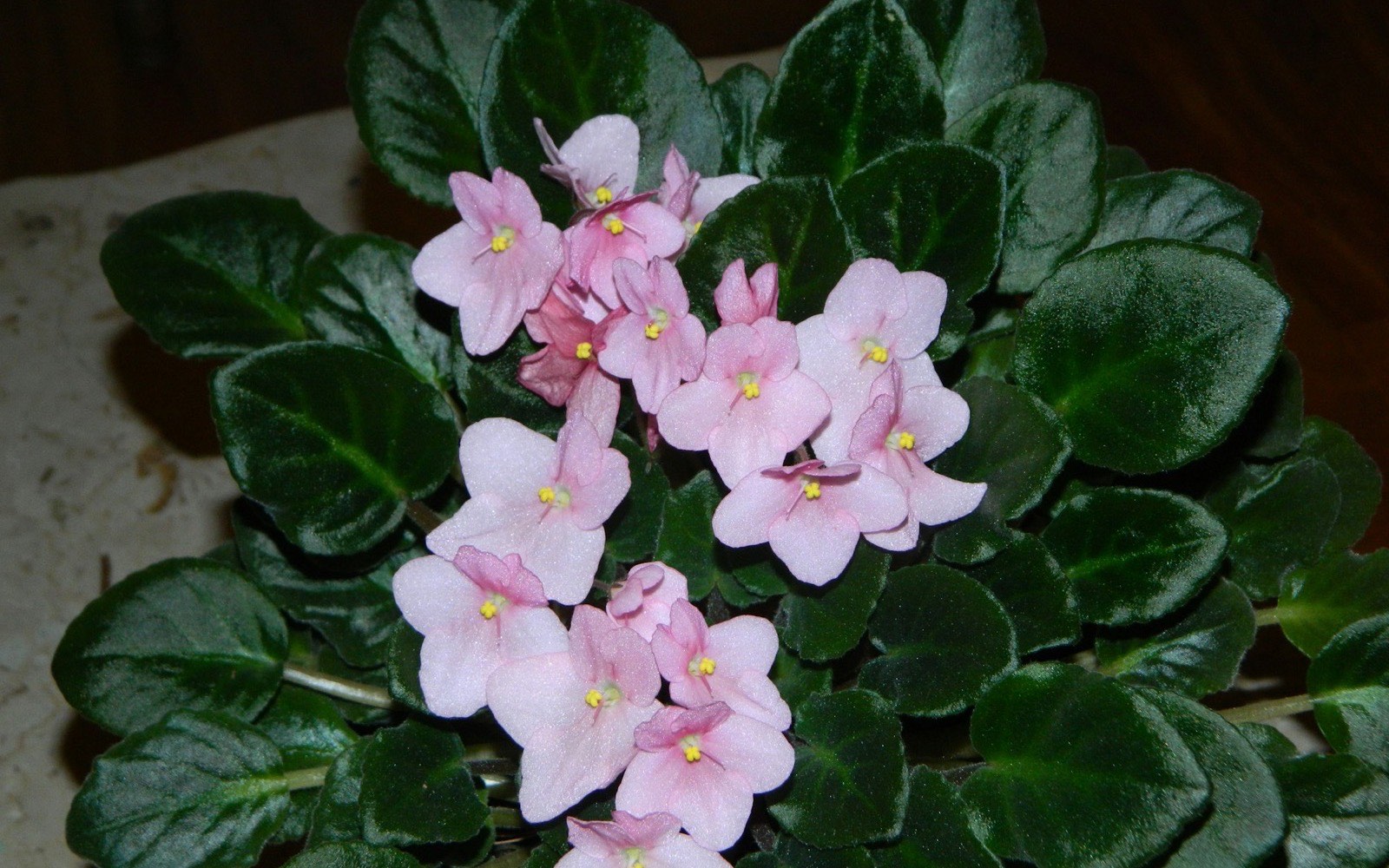
Photo by Portia Weiss on Unsplash
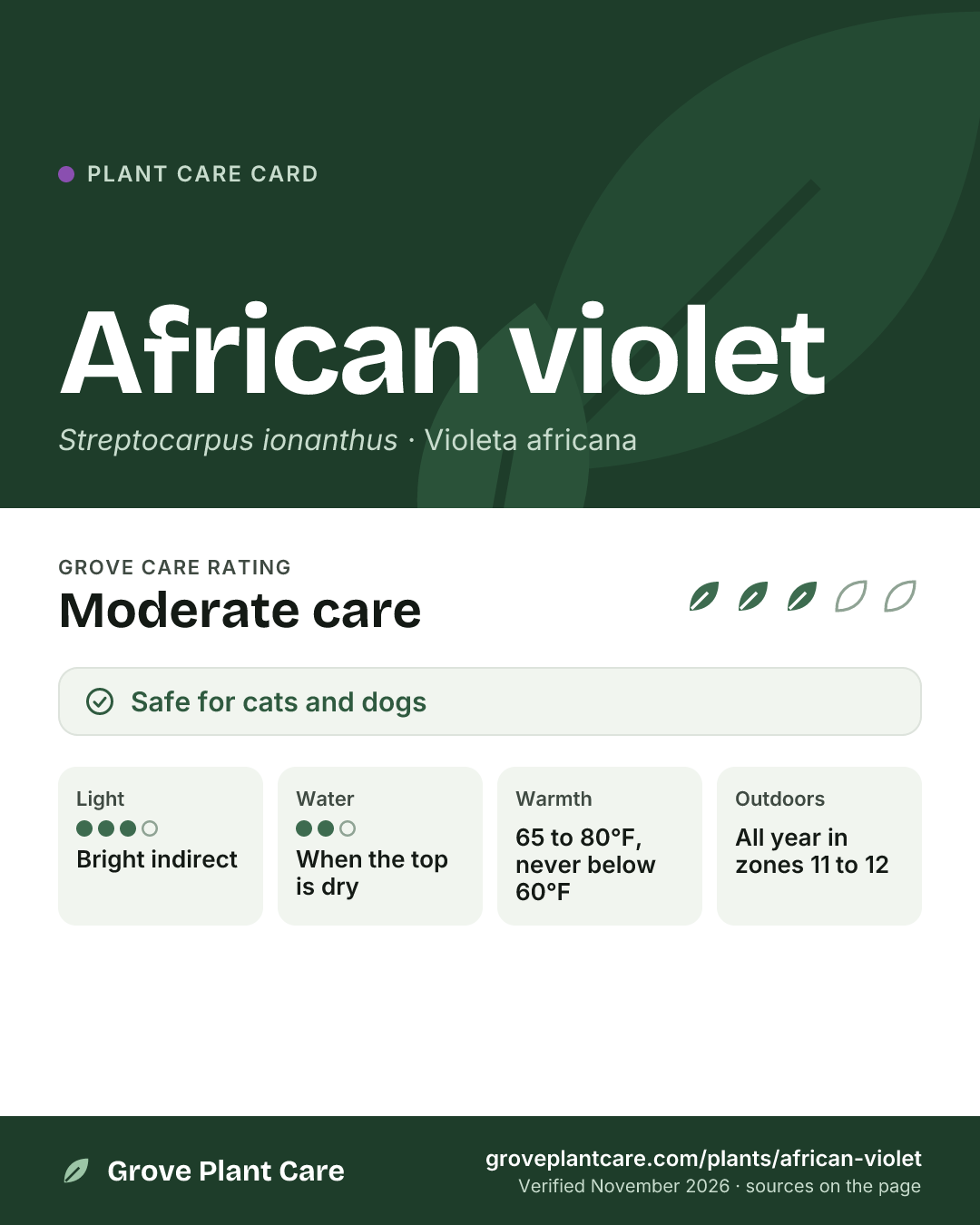
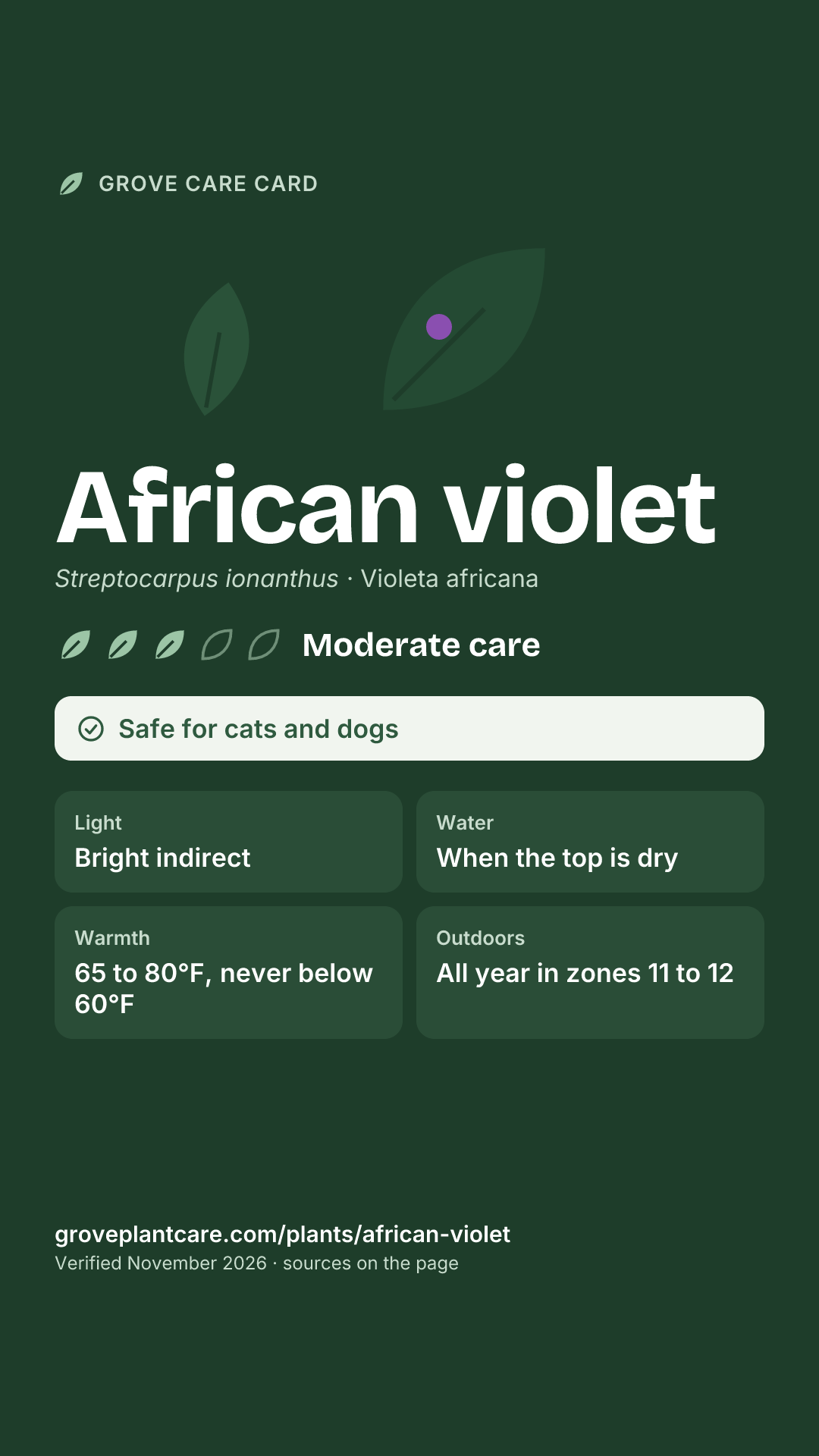
An African violet (Streptocarpus ionanthus, formerly Saintpaulia ionantha) can bloom almost all year indoors if you give it bright, filtered light, steady warmth and room-temperature water kept off its fuzzy leaves. Let the top of the soil dry between waterings, because soggy soil rots the center of the plant. The ASPCA lists it as non-toxic to cats and dogs.
Non-toxic to cats, dogs and horses
No signs of poisoning listed. Any plant can still upset a pet’s stomach if it eats enough. Children: NC State lists no toxicity.
Pet poison line: ASPCA (888) 426-4435
Good for: flowers indoors most of the year, small spaces and windowsills, growing under lights · Think twice if: your only window gets hot afternoon sun, the room gets cold at night.
Needs at a glance
- Light3 of 4 · Bright indirectNear an east window, or under grow lights; no hot sun
- Water2 of 3 · Let the top dryRoom-temperature water at the soil or from below; keep leaves dry
- Humidity2 of 3 · Above averageA pebble tray or humidifier helps; don’t mist
- Soil when pottedAfrican violet mixLoose and fast draining, crown just above the soil
Indoors: best at 65 to 80°F (18 to 27°C). Keep it above 60°F (16°C) and away from drafts and heat vents.
How the rating adds up
0 = easiest · 1 = moderate · 2 = hardest
- Missed waterings1 of 2 · ModerateWater once the surface dries; it can't take drought
- Light flexibility1 of 2 · ModerateNeeds bright, filtered light to bloom
- Humidity1 of 2 · ModeratePrefers humid air, above 50%
- Pests and disease1 of 2 · ModerateCrown rot if overwatered; mealybugs, mites
- Sensitivity to change2 of 2 · HardestCold water spots leaves; dislikes drafts and cool nights
Growing outdoors
All year: USDA zones 11 to 12, where the coldest winter nights average 40°F (4°C) or warmer.
Elsewhere: summer outside in shade, out of direct sun. Bring it in before nights drop below 60°F (16°C).
- Containers
- Houseplant
- Greenhouse
Sources: NC State, Iowa State, NYBG, Colorado State, Clemson Extension, RHS, ASPCA, ASPCA plant list, USDA zone map, UF/IFAS Assessment and FISC. Full list below.
Verified · How we rate plants
Is an African violet safe for cats and dogs?
Yes. The ASPCA lists the African violet as non-toxic to dogs, cats and horses, and NC State lists it as non-toxic too. Any plant can still upset a pet's stomach if it eats a lot of it, so if your pet seems unwell after chewing one, call your vet.
How should I water an African violet?
Water when the top of the soil feels dry, using room-temperature water. Cold water that touches the leaves leaves pale rings and spots, so pour at the soil or water from below: set the pot in a tray of water for up to half an hour, then let it drain and never leave it standing in water. Iowa State Extension suggests watering from the top now and then to rinse out fertilizer salts. Keep the soil lightly moist, never soggy.
NC State, Clemson Extension, Iowa State, Colorado State, RHS, NYBG
How much light does an African violet need to bloom?
Bright, filtered light with no hot direct sun. An east window works well, and the Royal Horticultural Society suggests a brighter south or west window in winter. Too little light is the most common reason it stops blooming, and it shows as thin, dark leaves on long stalks. African violets also bloom well under fluorescent or LED lights: Iowa State Extension suggests 12 to 16 hours a day with the lights 4 to 8 inches above the plants, and Colorado State suggests about 15 hours with fluorescent tubes 12 to 15 inches above. If the leaves turn pale or yellow, the light is too strong.
What temperature and humidity does an African violet like?
Between 65 and 80°F (18 to 27°C). Keep nights above 60°F (16°C): NC State says cooler nights stunt the plant, and it can take a long time to recover. Keep it away from cold drafts and cold window glass. It likes humid air, above 50% if you can. Set the pot on a tray of wet pebbles or run a humidifier, and skip misting, which marks the leaves.
Why is my African violet wilting or rotting in the center?
Usually crown rot, caused by soil that stays too wet. Water molds in soggy soil rot the roots and the center of the plant, and plants that are overwatered, set too deep or just repotted are most at risk. Let the soil dry on top before you water again, use a pot with drainage holes, and keep the crown just above the soil. Clemson Extension suggests throwing out badly rotted plants, so root a healthy leaf first if you want to keep it going. If the center leaves are tight, crinkled and stunted instead, look for cyclamen mites and keep that plant away from your others.
Why is my African violet not blooming?
Light comes first: too little is the usual cause. After that, check warmth (65 to 80°F suits it), feeding and pot size. Feed lightly and regularly with an African violet or balanced fertilizer, because both too much and too little cut flowering. A pot that's too big also holds back flowers, since the plant blooms best a little snug.
When should I repot an African violet?
Sources differ on timing. The Royal Horticultural Society says every two to three years in spring, while NYBG suggests every 6 to 12 months to keep it blooming. Either way, move up only slightly: the RHS says most plants rarely need a pot wider than 4 inches, and NYBG suggests a pot about a third as wide as the leaves spread. Use a light African violet mix and set the crown just above the soil. If the plant has grown a long bare neck, Iowa State Extension suggests burying it up to the lowest leaves.
Can an African violet grow outdoors?
Only where it never gets cold. NC State lists USDA zones 11 to 12, where the coldest winter nights average 40°F (4°C) or warmer, and says it's rarely grown outdoors. Everywhere else, treat it as a houseplant. If you set one outside in warm weather, keep it in shade and bring it in before nights drop to 60°F (16°C).
How do I grow an African violet from a leaf?
Pick a firm, healthy leaf, trim its stalk to about 1½ inches, and push the stalk into moist potting mix, sand or vermiculite, or stand it in water. Keep it warm, around 65 to 80°F, with high humidity. The Royal Horticultural Society says leaf cuttings root readily in spring.
How Grove helps
Grove sets a watering check for when the top of the soil is dry, so nobody waters a plant that's still wet. You can add a light feeding as a repeating task and assign it, so the plant gets fed on time no matter who's home.
Sources
- NC State Extension Gardener Plant Toolbox: Streptocarpus ionanthus
- Iowa State University Extension: All About African Violets
- NYBG Mertz Library: African Violet research guide
- Colorado State University Extension PlantTalk 1301: African Violet
- Clemson HGIC 1550: African Violet
- Clemson HGIC 2250: African Violet Diseases and Insect Pests
- Royal Horticultural Society: How to grow African violets
- ASPCA Animal Poison Control: African Violet
- ASPCA Animal Poison Control: Toxic and Non-Toxic Plants
- USDA ARS Plant Hardiness Zone Map (2023)
- Royal Horticultural Society: Saintpaulia ionantha plant details
- UF/IFAS Assessment of Non-Native Plants (no Saintpaulia or Streptocarpus ionanthus entry)
- Florida Invasive Species Council: Invasive Plant List