Low light indoor plants that actually do well (plus bathroom plants)
Snake plant, ZZ plant, cast iron plant and Chinese evergreen are the toughest picks for a dim room, and pothos, peace lily and parlor palm cope well too. "Low light" still means daylight, though: a spot several feet back from a window, never a closet. Expect slow growth, water less, and give the plant a brighter spell now and then. If your dim room is a bathroom, the steam is a bonus for ferns and other humidity lovers.
What does low light mean for a houseplant?
Read moreShow less
NC State Extension draws the line by distance: more than 8 feet from a window, or a dim corner, is low light, and so is a space lit only by lamps. In numbers, Clemson Extension and Penn State Extension both put the floor for low-light plants at about 100 foot-candles (about 1,080 lux). Clemson adds that even a well-lit room indoors often sits below that.
Here's the part plant tags skip: a low-light plant tolerates dim light. It doesn't prefer it. Our indoor light guide shows how to read your windows, do the shadow test and use a free light-meter app, so you know which spot you really have.
Which indoor plants do well in low light?
| Plant | Light | Pets | Why it works in a dim room |
|---|---|---|---|
| Snake plant (Dracaena trifasciata, formerly Sansevieria) | Low light is fine; grows faster and sturdier in bright, indirect light | Toxic to cats and dogs | Thick leaves store water, so it rides out long gaps between drinks |
| ZZ plant (Zamioculcas zamiifolia) | Low light is fine; grows faster in bright, indirect light, and direct sun scorches it | Toxic to cats and dogs (NC State; the ASPCA has no entry) | Illinois Extension says it grows best in low, indirect light |
| Cast iron plant (Aspidistra elatior) | Low | Non-toxic to cats and dogs (ASPCA) | The RHS says it's known for coping in very poor light |
| Chinese evergreen (Aglaonema) | Low | Toxic to cats and dogs (ASPCA) | Solid green kinds take the least light; colorful ones want a bit more |
| Pothos (Epipremnum aureum) | Medium to bright, indirect; survives low light, but variegated kinds fade there | Toxic to cats and dogs | Trails from a shelf; darker green kinds handle dim spots best |
| Peace lily (Spathiphyllum) | Medium, indirect; takes low light and flowers best in bright, indirect light | Toxic to cats and dogs | Grows in dim light; flowers best with more |
| Heartleaf philodendron (Philodendron hederaceum) | Medium | Toxic to cats and dogs (ASPCA) | Handles ordinary home light and dry air |
| Parlor palm (Chamaedorea elegans) | Medium | Non-toxic to cats and dogs (ASPCA) | Slow and compact, and content in a dim corner |
| Spider plant (Chlorophytum comosum) | Medium, indirect | Mildly toxic to cats (MSD Veterinary Manual); the ASPCA lists it as non-toxic | The Chicago Botanic Garden says it tolerates low light indoors |
Light and pet values match each plant's care card or our beginner plants guide. The RHS picks the same three for low light in offices: Chinese evergreen, snake plant and ZZ plant.
Cast iron plant earns its name. NC State tags it for deep shade, Clemson suggests a north window or a dim spot away from south windows, and the RHS says it handles dark corners and drafty hallways but scorches in direct sun.
Chinese evergreen comes in two moods. Clemson says solid green kinds grow in low light, while variegated ones need low to moderate light. One Penn State Extension master gardener reports that a pink 'Red Emerald' faded within weeks after a sudden move to a dim spot, so give the colorful ones your brighter shelf.
Pothos keeps its gold or white marbling only with more light. Penn State notes that the darker green 'Jade' copes better in a dim room than the brightly variegated kinds.
Which low light plants are safe for cats and dogs?
- Cast iron plant: non-toxic to cats, dogs and horses (ASPCA).
- Parlor palm: non-toxic to cats and dogs (ASPCA).
- Spider plant: the ASPCA lists it as non-toxic, but the MSD Veterinary Manual lists mild stomach upset in cats, so we call it mildly toxic to cats. Its care card has the details.
- Toxic: snake plant, ZZ plant, Chinese evergreen, pothos, peace lily and heartleaf philodendron. The ASPCA says Chinese evergreen, like pothos and peace lily, contains calcium oxalate crystals that irritate the mouth, causing drooling, pain and trouble swallowing.
For a bathroom, the Boston fern is also non-toxic (see below). Our pet-safe plants guide covers many more. If your pet chewed a plant and seems unwell, call your veterinarian. In the US you can also call the ASPCA Animal Poison Control Center at (888) 426-4435 (a fee may apply).
How do I care for a plant in low light?
Read moreShow less
- Water less often. Illinois Extension says low-light plants generally need less water because they grow more slowly. Check the soil before every drink: our watering guide shows how.
- Swap spots. NC State suggests rotating plants monthly between brighter and dimmer places, which lets a plant in a dark corner recharge.
- Clean the leaves. The RHS says wiping dust off leaves lets more light reach them. Our guide to cleaning leaves shows the gentle way.
- Wash the windows. NC State says clean glass and removing window screens can let in as much as 30% more light.
- Watch the new growth. The RHS lists weak, spindly growth, pale leaves, lower leaves yellowing and dropping, and variegated leaves turning plain green as signs of too little light, and NC State adds new leaves that stay smaller than usual. Our guides to leggy plants and dropping leaves help you tell light trouble from other causes.
What are the best plants for a bathroom?
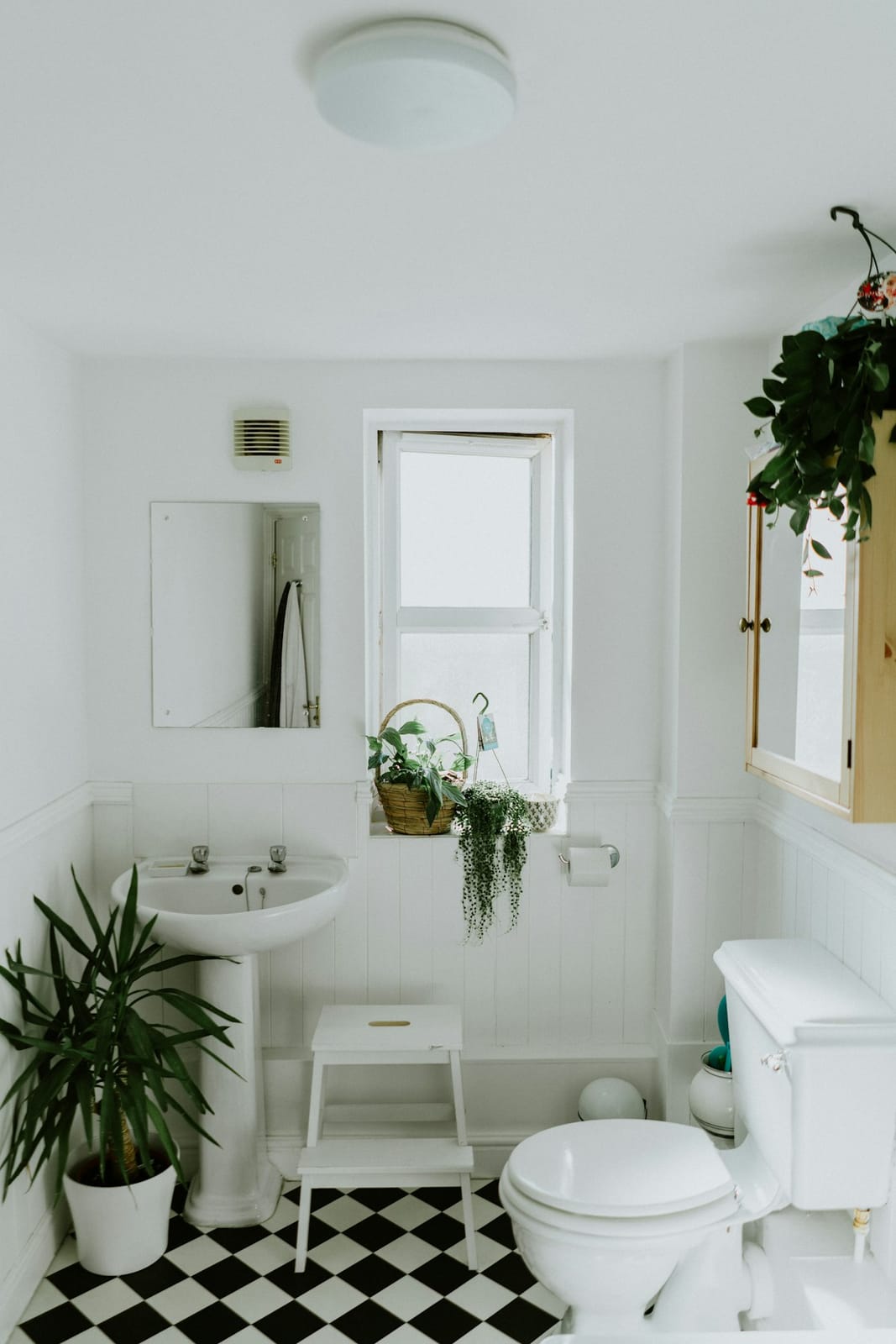
The RHS says a bathroom is likely the most humid room in a home, and that it can be a great spot for plants as long as it gets plenty of natural light. Frosted glass helps by softening the light. Two catches from the RHS: a guest bathroom that rarely sees a shower is much less humid, and underfloor heating dries out pots standing on the floor.
NC State adds the other half of the story. Bathrooms are humid only in short spurts after a shower, and houseplants do best with steady humidity: swings up and down harm them as much as air that's always dry. Many houseplants grow well at 40 to 60% humidity. So treat the steam as a bonus, and choose a plant that matches the light first.
| Plant | Light | Pets | Why it suits a bathroom |
|---|---|---|---|
| Boston fern (Nephrolepis exaltata) | Bright, indirect | Non-toxic to cats and dogs (ASPCA) | NC State says it needs high humidity and suggests a bathroom; keep its soil moist |
| Bird's nest fern (Asplenium nidus) | Bright light or light shade, such as a north window | No ASPCA rating | The RHS says it loves a warm, steamy bathroom |
| Peace lily | Medium, indirect; takes low light | Toxic to cats and dogs | The RHS suggests a warm bathroom with plenty of indirect light |
| Pothos | Medium to bright, indirect; survives low light | Toxic to cats and dogs | On the RHS list of bathroom plants; trails from a shelf |
| ZZ plant | Low light is fine | Toxic to cats and dogs | The RHS suggests it for a bathroom corner |
| Spider plant | Medium, indirect | Mildly toxic to cats (MSD); the ASPCA lists it as non-toxic | On the RHS list of small bathroom plants |
| Monstera (Monstera deliciosa) | Bright, indirect | Toxic to cats and dogs | The RHS says it thrives in indirect light and warm, humid air |
| Peperomia (Peperomia) | Bright, indirect | The ASPCA lists three species as non-toxic | The Chicago Botanic Garden says it does especially well in bathrooms |
Sources for the ferns: NC State on Boston fern, NC State on bird's nest fern, the ASPCA on Boston fern and the RHS. The ASPCA has no entry for the bird's nest fern, so we can't call it pet safe. Peperomia's light comes from our beginner plants guide, and the bathroom note from the Chicago Botanic Garden. With a cat or dog at home, the Boston fern is the safest bathroom pick here. If your pet chewed a plant and seems unwell, call your veterinarian. In the US you can also call the ASPCA Animal Poison Control Center at (888) 426-4435 (a fee may apply).
Can a plant live in a bathroom with no window?
Three ways to make it work:
- Add a grow light. Illinois Extension says a ZZ plant can grow under fluorescent light in a room with little or no natural light, and NC State says the same. Our indoor light guide explains when a grow light makes sense and how to pick one.
- Rotate. NC State's monthly swap between brighter and dimmer spots works here too: two plants take turns, one in the bathroom and one by a window.
- Pick a bathroom with a window. The RHS says plants need natural light, and frosted glass is fine because it softens the light.
How does Grove help with low light plants?
Read moreShow less
In Grove, you can add a monthly "swap spots" task next to each plant's watering checks and assign it, so whoever is home that week moves the plant into the light.
Frequently asked questions (FAQ)
What is the best plant for a dark corner?
A snake plant, ZZ plant or cast iron plant. All three appear on extension and RHS low-light lists. If the corner is more than about 8 feet from a window, give the plant a monthly turn somewhere brighter.
Do low light plants need less water?
Yes, usually. Illinois Extension says plants in low light grow more slowly and need less water. Check the soil before each drink, because a pot in a dim room can stay wet for weeks.
Do bathroom plants absorb moisture or stop mold?
None of the sources we checked says houseplants dry out a bathroom or prevent mold. NC State's advice for mold is the opposite of adding plants: in a tightly closed room, keep humidity below 60%. Choose bathroom plants for how they look and how they handle the light.
Can low light plants grow under room lamps?
Some can. NC State counts a space lit only by lamps as low light, and Illinois Extension says a ZZ plant can grow under fluorescent light alone. Most plants do better with a real grow light. See our indoor light guide.
Which low light plants are safe for cats?
From this list, the cast iron plant and parlor palm, both rated non-toxic by the ASPCA. For a bathroom, add the Boston fern. The spider plant is listed non-toxic by the ASPCA, but the MSD Veterinary Manual lists mild stomach upset in cats. If your cat chewed a plant and seems unwell, call your veterinarian. In the US you can also call the ASPCA Animal Poison Control Center at (888) 426-4435 (a fee may apply).
Sources
- Extension Gardener Handbook, chapter 18: Plants Grown in Containers : NC State Extension
- Indoor Plants: Cleaning, Fertilizing, Containers and Light Requirements (HGIC 1450) : Clemson Cooperative Extension
- Low Light Houseplants : Penn State Extension (J. Jubela, Master Gardener, December 2024)
- Brighten up dim interiors with low-light houseplants : Illinois Extension (B. Haag, January 2023)
- Denizens of the Dark: Indoor Plants for Low-Light Spaces : Chicago Botanic Garden
- Best bathroom plants, Choosing and caring for office plants, How to help a poorly houseplant and How to grow aspidistras : Royal Horticultural Society
- Aspidistra elatior, Aglaonema, Nephrolepis exaltata and Asplenium nidus : NC State Extension Gardener Plant Toolbox
- Cast Iron Plant (January 2024) and Chinese Evergreen (revised October 2025) : Clemson Cooperative Extension
- Cast iron plant, Chinese evergreen, Parlor palm and Boston fern : ASPCA Animal Poison Control
- Snake plant, ZZ plant, pothos, peace lily, spider plant and monstera: light and pet values from each Grove care card, which lists its own sources