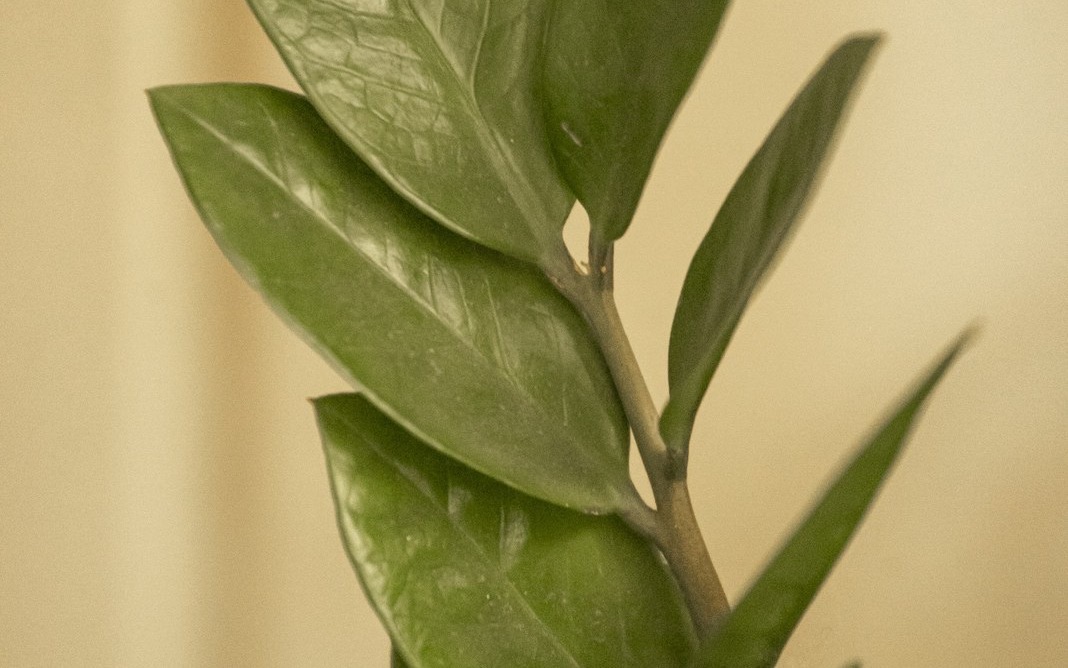
Plant care card
ZZ plant
Zamioculcas zamiifolia · Zamioculca
Also called Zanzibar gem, eternity plant or emerald palm
Photo by Pete Alexopoulos on Unsplash
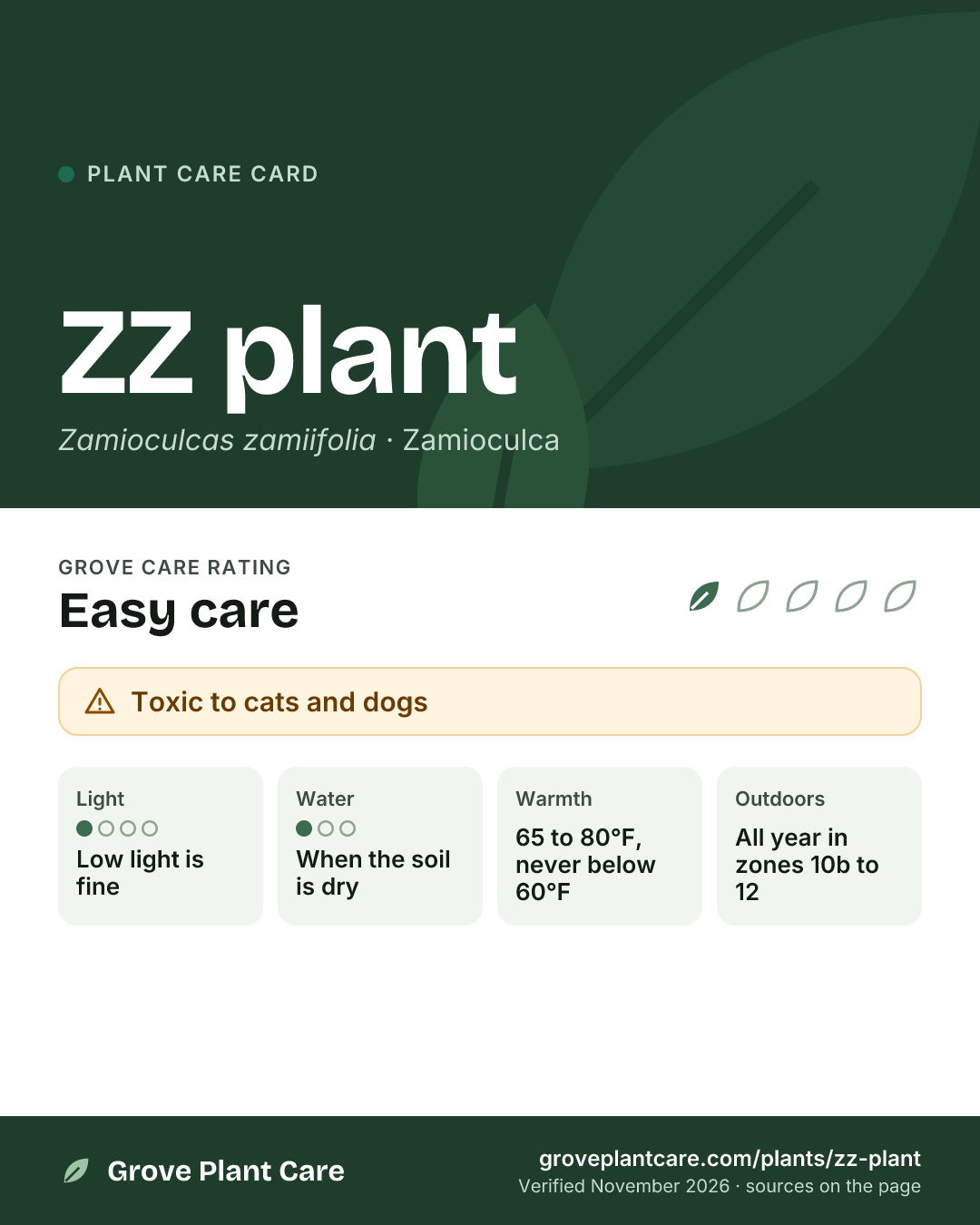
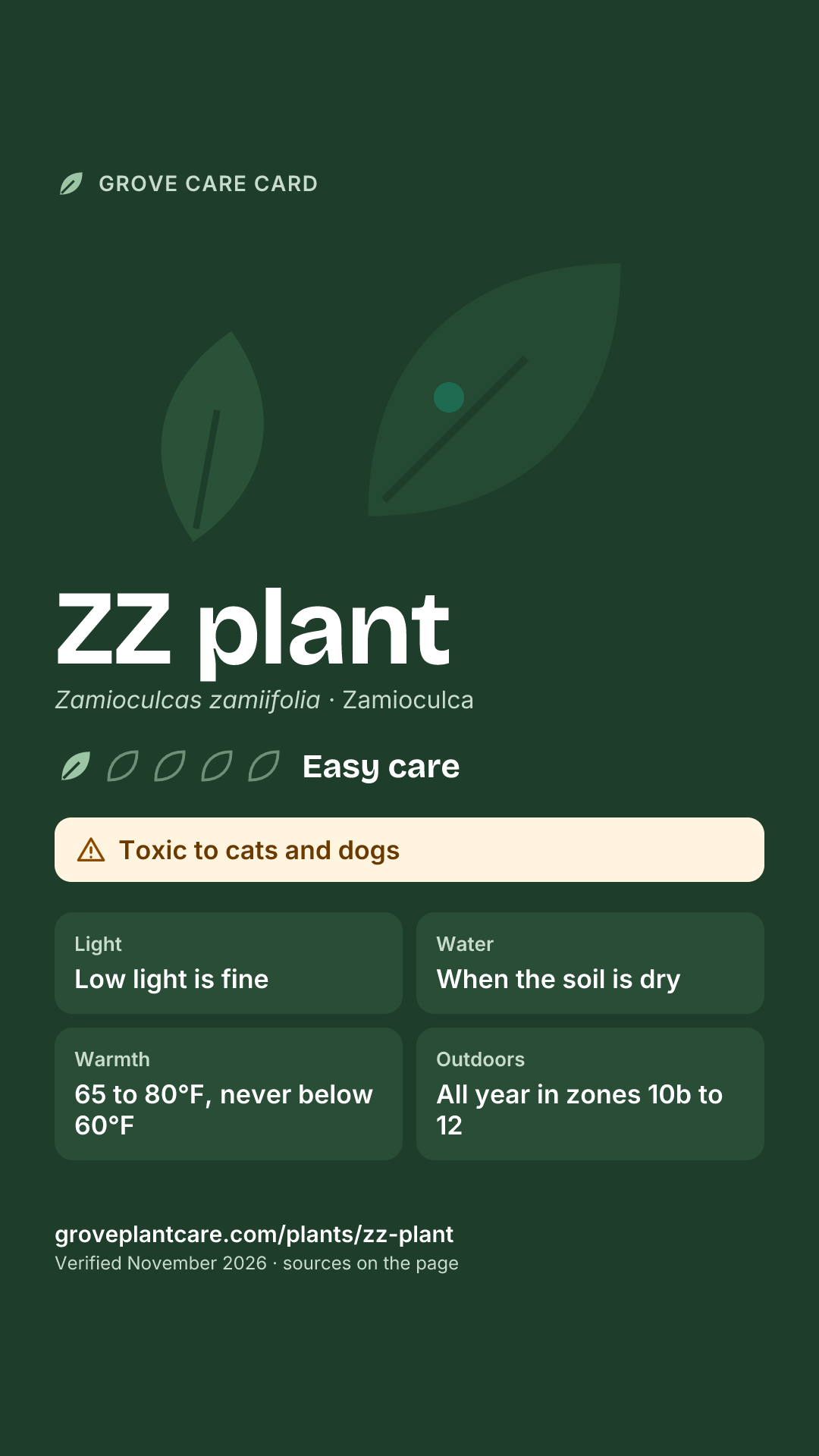
A ZZ plant is about as low-effort as houseplants get: water only when the soil is completely dry, keep it anywhere from a dim corner to a bright room out of direct sun, and keep it above 60°F (16°C). Thick underground rhizomes store water, so too much water is the main way to lose one. It's toxic if chewed, so keep it away from pets and small children.
Toxic to cats and dogs · Moderate
Mouth pain, drooling, vomiting and diarrhea. NC State rates it medium severity; the ASPCA, which has no entry for it, says calcium oxalate plants like it usually cause low-severity cases. Children: moderate severity. Chewing it irritates the mouth and throat, and the sap can irritate skin and eyes.
Pet poison line: ASPCA (888) 426-4435
Good for: beginners, offices and dim rooms, people who travel often · Think twice if: pets or small children chew plants, you tend to water on a schedule.
Needs at a glance
- Light1 of 4 · Low light is fineGrows faster in bright, indirect light; direct sun scorches it
- Water1 of 3 · Let the soil dry completelyAbout twice a month in summer, once a month in winter
- Humidity1 of 3 · AverageNormal indoor air is fine; no misting needed
- Soil when pottedWell-drained potting mixAdd perlite or sand, and use a pot with drainage holes
Indoors: best at 65 to 80°F (18 to 27°C). Keep it above 60°F (16°C) and away from drafts and heat vents.
How the rating adds up
0 = easiest · 1 = moderate · 2 = hardest
- Missed waterings0 of 2 · EasiestWater-storing rhizomes ride out dry spells
- Light flexibility0 of 2 · EasiestTakes deep shade and office lights; no direct sun
- Humidity0 of 2 · EasiestAn average room is fine
- Pests and disease0 of 2 · EasiestRarely bothered; rhizomes rot if kept wet
- Sensitivity to change0 of 2 · EasiestSlow and steady; keep it out of cold drafts and vents
Growing outdoors
All year: USDA zones 10b to 12, where the coldest winter nights average 35°F (2°C) or warmer.
Elsewhere: summer outside in shade, out of direct sun. Bring it in before nights drop below 60°F (16°C).
- Containers
- Shady beds in frost-free areas
Sources: NC State, Clemson, UF/IFAS, UConn, NYBG, RHS, ASPCA, USDA zone map, UF/IFAS Assessment and FISC. Full list below.
Verified · How we rate plants
How often should I water a ZZ plant?
Only when the soil has dried out completely. NC State suggests about twice a month in summer and about once a month in winter, when it barely grows, and Clemson gives one to two times a month. Water until it drains, then empty the saucer, because the rhizomes rot if they sit wet. When in doubt, wait: UConn calls overwatering the most common reason these plants fail.
How little light can a ZZ plant take?
Very little. NC State says it tolerates deep shade and even fluorescent light, and UConn says it can get by in a windowless office with several hours of fluorescent light a day. It grows very slowly in dim light, though, and the NYBG warns that a plant kept in very poor light for years can decline and suddenly collapse. Bright, indirect light keeps it growing. Keep it out of direct sun, which can scorch, curl and yellow the leaves.
Why are my ZZ plant stems turning yellow?
Usually too much water. Soil that stays wet rots the rhizomes, and UConn lists yellowing and rotting rhizomes as the telltale signs. Other causes are direct sun, which can whiten, yellow and then brown the leaves; cold, since UF/IFAS says the plant can discolor below 50°F (10°C); and a long dry spell, when it may drop leaflets and the tops of its stems to save water. Check the soil first. If it's wet, let it dry out completely and water less from then on. Move the plant out of direct sun and away from cold drafts and heating or air-conditioning vents. Small black spots on the stems are normal, Clemson notes.
Is a ZZ plant toxic to cats, dogs and people?
Yes, treat it as toxic. The ZZ plant is missing from the ASPCA's toxic and non-toxic plant list. Even so, the ASPCA names it among plants that contain insoluble calcium oxalate crystals, and NC State rates its poison severity as medium for cats and dogs. Chewing the leaves can irritate the mouth and throat and cause drooling, vomiting and diarrhea. The ASPCA says most cases are mild, though rare large exposures can swell the throat and make breathing hard. The RHS adds that the sap irritates skin and eyes, so wear gloves when you cut it. If a pet eats some, call your vet or the ASPCA Animal Poison Control Center at (888) 426-4435.
When should I repot a ZZ plant?
When the stems crowd the pot. UConn notes that ZZ rhizomes are strong enough to push out and crack a pot they've been left in too long. Move up only one size, because the NYBG warns that an oversized pot holds extra water and rots the rhizomes. Use a fast-draining mix, such as succulent soil or potting mix with perlite and sand, in a pot with drainage holes.
How do I propagate a ZZ plant?
Divide the rhizomes when you repot, or root leaf cuttings. For a cutting, take a whole leaf or single leaflets, let the cut end dry for a few hours, and push it partway into moist potting mix in indirect light. Be patient: UConn says a new rhizome forms in about a month in a greenhouse, but it can take up to nine months indoors.
Can a ZZ plant grow outdoors?
Only where it never freezes. UF/IFAS says it can grow outdoors all year in USDA zones 10b to 12, where the coldest winter nights average 35°F (2°C) or warmer, while NC State lists zones 9a to 10b. Plant it in shade or strong filtered light with no direct sun. Elsewhere it can spend summer outside in a shady spot, and NC State says to bring it in when temperatures drop below 60°F (16°C).
How Grove helps
Grove turns watering into a check of the soil, so nobody waters a pot that's still damp, the main way ZZ plants are lost. You can set the check as a repeating task and assign it to whoever is home, and photo identification can suggest which plant you have, with one tap to correct it.
Sources
- NC State Extension Gardener Plant Toolbox: Zamioculcas zamiifolia
- Clemson Cooperative Extension HGIC 1570: ZZ Plant (Zamioculcas zamiifolia)
- UF/IFAS EDIS ENH1219: Florida Foliage House Plant Care, ZZ Plant (Henny and Chen)
- UConn Home and Garden Education Center: ZZ Plant
- New York Botanical Garden: ZZ Plant (Zamioculcas zamiifolia) research guide
- Royal Horticultural Society: Zamioculcas zamiifolia
- New York Botanical Garden: My ZZ plant is saggy and discolored. What could be wrong?
- ASPCA: These houseplants can cause trouble for your pets (2025)
- USDA ARS Plant Hardiness Zone Map (2023)
- UF/IFAS Extension Charlotte County: Easy ZZ (2026)
- UF/IFAS Assessment of Non-Native Plants (no Zamioculcas entry)
- Florida Invasive Species Council: Invasive Plant List