Plant care card
Pothos
Epipremnum aureum · Potus
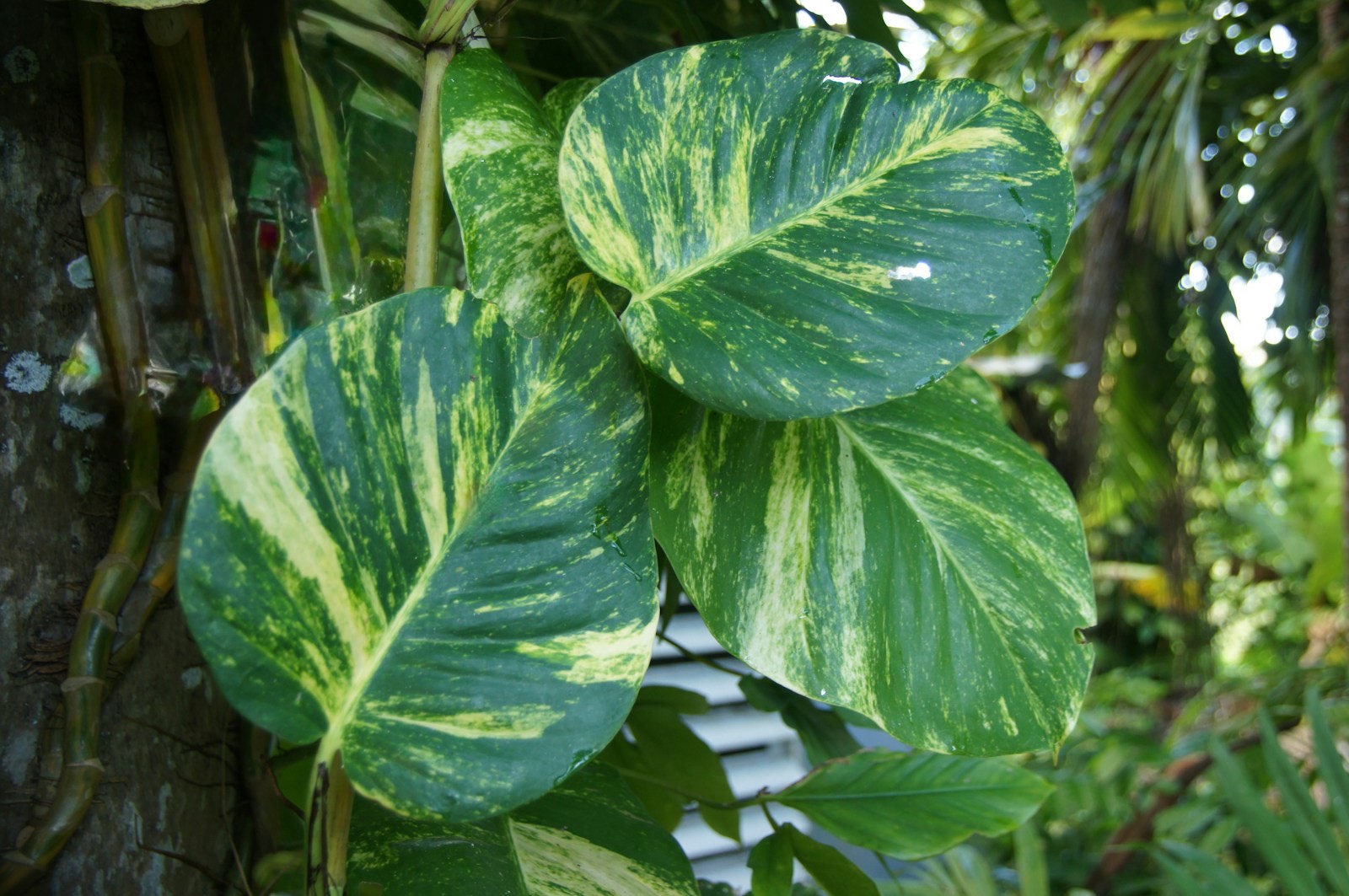
Also called golden pothos or devil's ivy
Photo by Ronald Flores-Gunkle on Unsplash
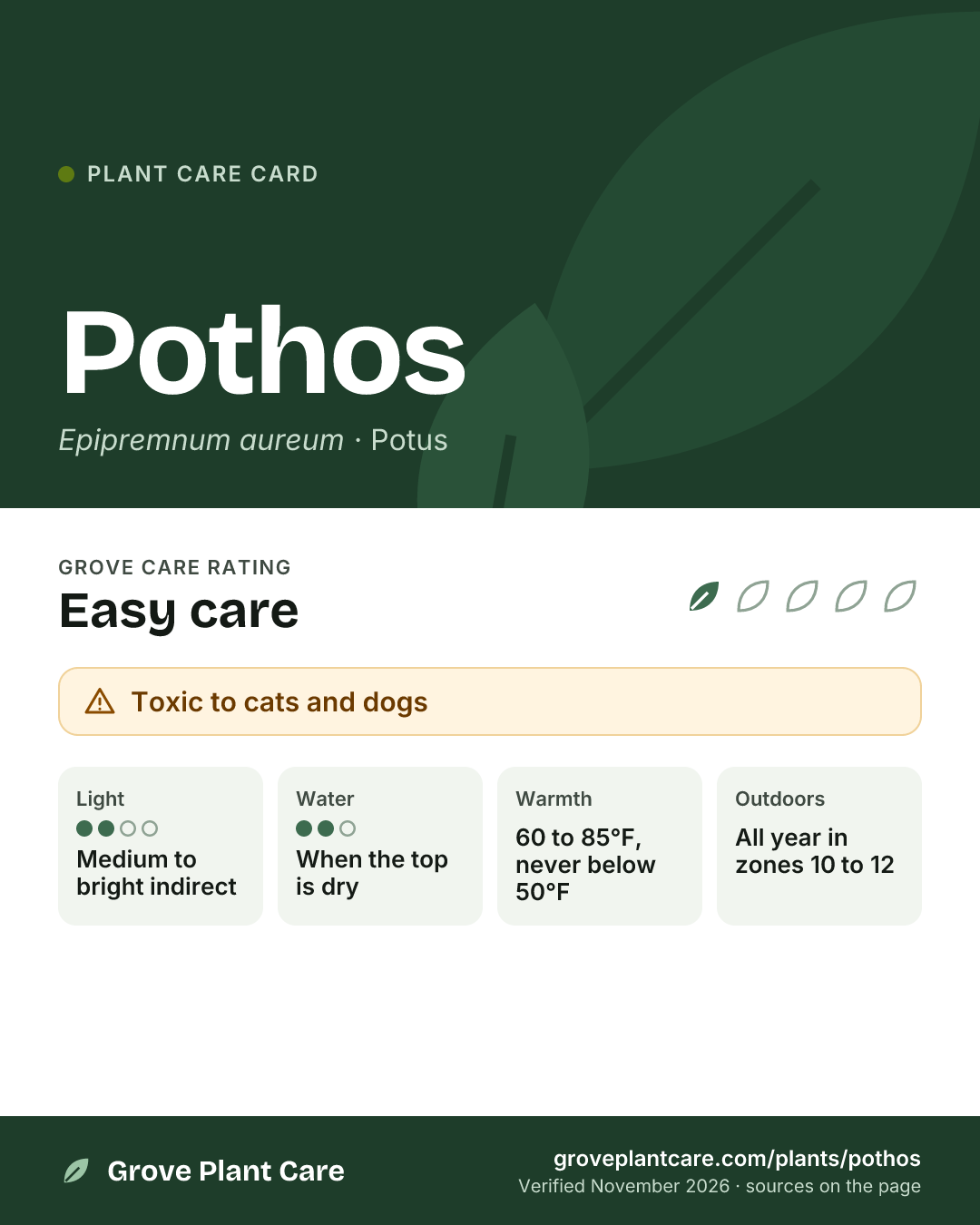
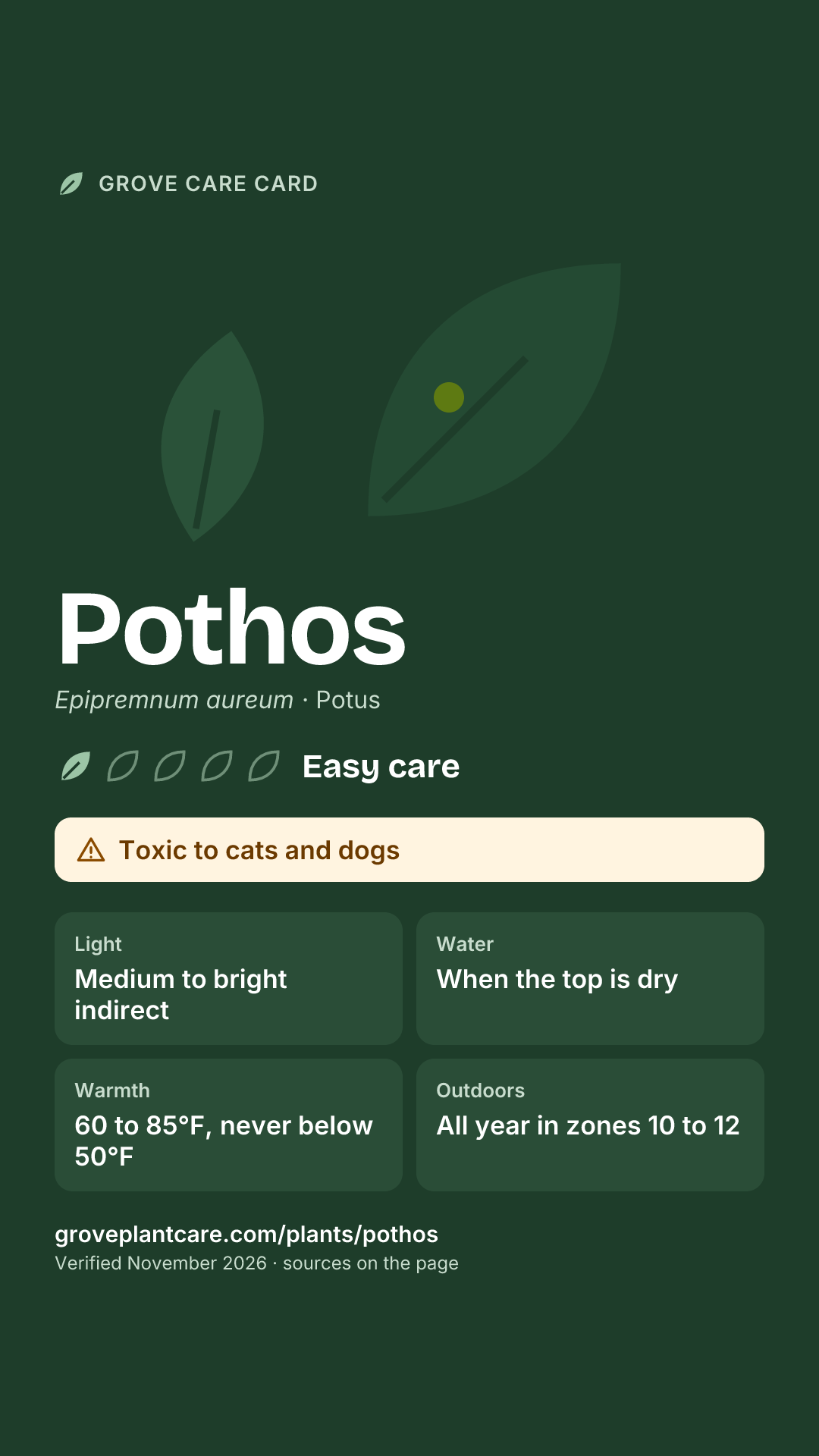
Pothos is one of the easiest houseplants to keep: give it bright, indirect light if you can, and water when the soil surface is dry. It copes with dim rooms and handles dry soil far better than soggy soil, which is what usually hurts it. Low light keeps it alive but fades the gold or white in its leaves. It's toxic to cats and dogs if chewed, and in frost-free Florida it escapes into the wild, so keep it in a pot.
Toxic to cats, dogs and horses · Moderate
Burning mouth, drooling, vomiting and trouble swallowing. NC State rates the severity as medium; the ASPCA lists only mouth and stomach signs. The sap can irritate skin. Children: moderate severity. NC State rates it medium severity; chewing causes mouth pain and swelling, and the sap can irritate skin.
Pet poison line: ASPCA (888) 426-4435
Good for: beginners, dim rooms, shelves and hanging baskets · Think twice if: pets or small children chew plants, you want to plant it outdoors where it never freezes.
Needs at a glance
- Light2 of 4 · Medium to bright indirectSurvives low light, but variegated kinds fade there
- Water2 of 3 · Let the top dryWater when the surface is dry; drier is safer than wetter
- Humidity2 of 3 · Above averageHome air is fine; a pebble tray or humidifier helps
- Soil when pottedAiry, well-drained mixAny soilless potting mix that drains freely
Indoors: best at 60 to 85°F (16 to 29°C). Keep it above 50°F (10°C) and away from drafts and heat vents.
How the rating adds up
0 = easiest · 1 = moderate · 2 = hardest
- Missed waterings0 of 2 · EasiestHandles dry soil far better than soggy soil
- Light flexibility0 of 2 · EasiestDeep shade to bright indirect light; low light fades variegation
- Humidity1 of 2 · ModerateCopes with home air, but prefers 50 to 70%
- Pests and disease1 of 2 · ModerateMealybugs, scale, spider mites; rot if overwatered
- Sensitivity to change0 of 2 · EasiestTakes moves and repotting well; keep it out of cold drafts
Growing outdoors
All year: USDA zones 10 to 12, where the coldest winter nights average 30°F (−1°C) or warmer.
Elsewhere: summer outside in light to heavy shade. Bring it in when nights reach 50 to 60°F (10 to 16°C).
Invasive: UF/IFAS rates it high invasion risk in Florida; keep it in a pot.
- Containers
- Hanging baskets
Sources: NC State, Penn State, Clemson, UF/IFAS, Wisconsin Extension, ASPCA, ASPCA plant list and USDA. Full list below.
Verified · How we rate plants
How often should I water a pothos?
Water when the soil surface feels dry, then soak the pot until water runs out of the drainage holes and empty the saucer. Clemson Extension says you can let the soil dry out completely, while Wisconsin Extension suggests watering once the surface is dry and letting it dry slightly between drinks. Drier is safer than wetter: Penn State says pothos handles dry soil better than wet soil, and too much water rots the roots and blackens the leaf edges. If it dries out too long, it may droop for a while.
How much light does a pothos need?
Bright, indirect light is best, and pothos puts up with low light for a long time. NC State lists it for anything from dappled sun to deep shade. In dim rooms it grows slowly and variegated kinds lose their color, and strong direct sun can scorch the leaves or turn them yellow. A spot near a window, out of the direct rays, suits it well. Penn State suggests turning the pot each week so it grows evenly.
Pothos vs philodendron: how do I tell them apart?
Check the leaf stalk and the newest leaf. A pothos leaf stalk (petiole) has a groove along it, and a heartleaf philodendron's is smooth. A new philodendron leaf comes out wrapped in a thin sheath that dries up and falls off, and a new pothos leaf unrolls with no sheath. Philodendron leaves are also thinner and softer, and pothos leaves are glossier and often flecked with gold, white or yellow. NC State lists heartleaf philodendron (Philodendron hederaceum) as a plant often confused with pothos. Care is similar, though Clemson says pothos wants more light and warmth, and both are toxic to pets.
How do I propagate a pothos in water?
Cut a piece of vine with at least one node, the small bump where a leaf joins the stem, and stand it in a jar of water with the node under the surface. Pothos roots easily this way, and Wisconsin Extension says roots form in about three to four weeks when it is warm. Once the roots are growing, pot several cuttings together for a fuller plant. Cuttings also root straight in moist potting mix. Our water propagation guide walks through each step.
Why are my pothos leaves losing their variegation?
Usually too little light. NC State, Clemson, Penn State and Wisconsin Extension all say pothos kept in low light loses the gold, cream or white in its leaves. Move it closer to a bright window, out of hot direct sun, and watch the new leaves. How much pattern a pothos shows also depends on the kind: Clemson notes that 'Marble Queen' needs more light, and NC State says 'Jade' is solid green and does well in low light.
Why are my pothos leaves turning yellow or brown?
One or two yellow leaves near the base are normal, because pothos drops its oldest leaves as the vines grow. Lots of yellow leaves usually mean too much water or too little fertilizer, according to Clemson, and Penn State adds strong direct sun. Brown, crispy edges point to dry air or harsh light. Blackened edges can come from overwatering, underwatering or salt buildup from too much fertilizer. Brown patches in the middle of a leaf can follow cold or a sudden temperature drop. Check the soil first, since soggy soil leads to root rot.
When should I repot a pothos?
Repot when roots poke out of the drainage holes or the plant looks crowded. Clemson says that is usually every one to two years, and Penn State suggests spring. Move it up to a slightly larger pot with an airy, well-draining mix. To keep a big plant in the same pot, Penn State suggests trimming some of the roots and up to a third of the vines, adding fresh mix, and going easy on water afterward.
Is pothos toxic to cats and dogs?
Yes. The ASPCA lists pothos as toxic to cats and dogs, and NC State adds horses. It contains calcium oxalate crystals that cause a burning mouth, drooling, vomiting and trouble swallowing if chewed. NC State rates the severity as medium, Clemson calls it mildly toxic, and the sap can irritate skin. Hang it or set it high, out of reach of pets and small children. If you think a pet ate some, call your vet or the ASPCA Animal Poison Control Center at (888) 426-4435.
Can pothos grow outdoors?
Yes, all year in USDA zones 10 to 12, where the coldest winter nights average 30°F (−1°C) or warmer, and even there it's safest in a pot. In frost-free Florida, pothos escapes from gardens, climbs trees and can cover them: the UF/IFAS Assessment rates it a high invasion risk and doesn't recommend planting it, and UF/IFAS Extension reports that the Florida Invasive Species Council lists it as a Category II invasive. Elsewhere it can spend summer outside in shade. Move it out once nights stay above 60°F (16°C) and bring it in before they fall to 50°F (10°C). Bag trimmings for the trash, since bits of stem root easily.
How Grove helps
Grove turns watering into a check of the soil, so a pothos that likes to dry out doesn't get watered on a fixed schedule. You can add trimming or turning the pot as a repeating task and assign it to anyone who helps with the plants. If you're unsure whether you have a pothos or a philodendron, a photo gives you a best guess that you can correct.
Sources
- NC State Extension Gardener Plant Toolbox: Epipremnum aureum
- Penn State Extension: Pothos as a Houseplant
- Clemson Cooperative Extension HGIC: How to Grow Pothos Indoors
- UF/IFAS Extension Sarasota County: pothos, mild-mannered or monster? (2021)
- University of Wisconsin-Madison Extension: Pothos, Epipremnum aureum
- ASPCA Animal Poison Control: Golden Pothos
- ASPCA Animal Poison Control: Toxic and Non-Toxic Plants
- Clemson Cooperative Extension HGIC: Moving Plants Indoors and Outdoors
- USDA ARS Plant Hardiness Zone Map (2023)
- UF/IFAS Assessment of Non-Native Plants: Epipremnum aureum
- Clemson Cooperative Extension HGIC 1509: Philodendron
- NC State Extension Gardener Plant Toolbox: Philodendron hederaceum
- USDA PLANTS Database: Epipremnum pinnatum (symbol EPAU resolves here)