Plant care card
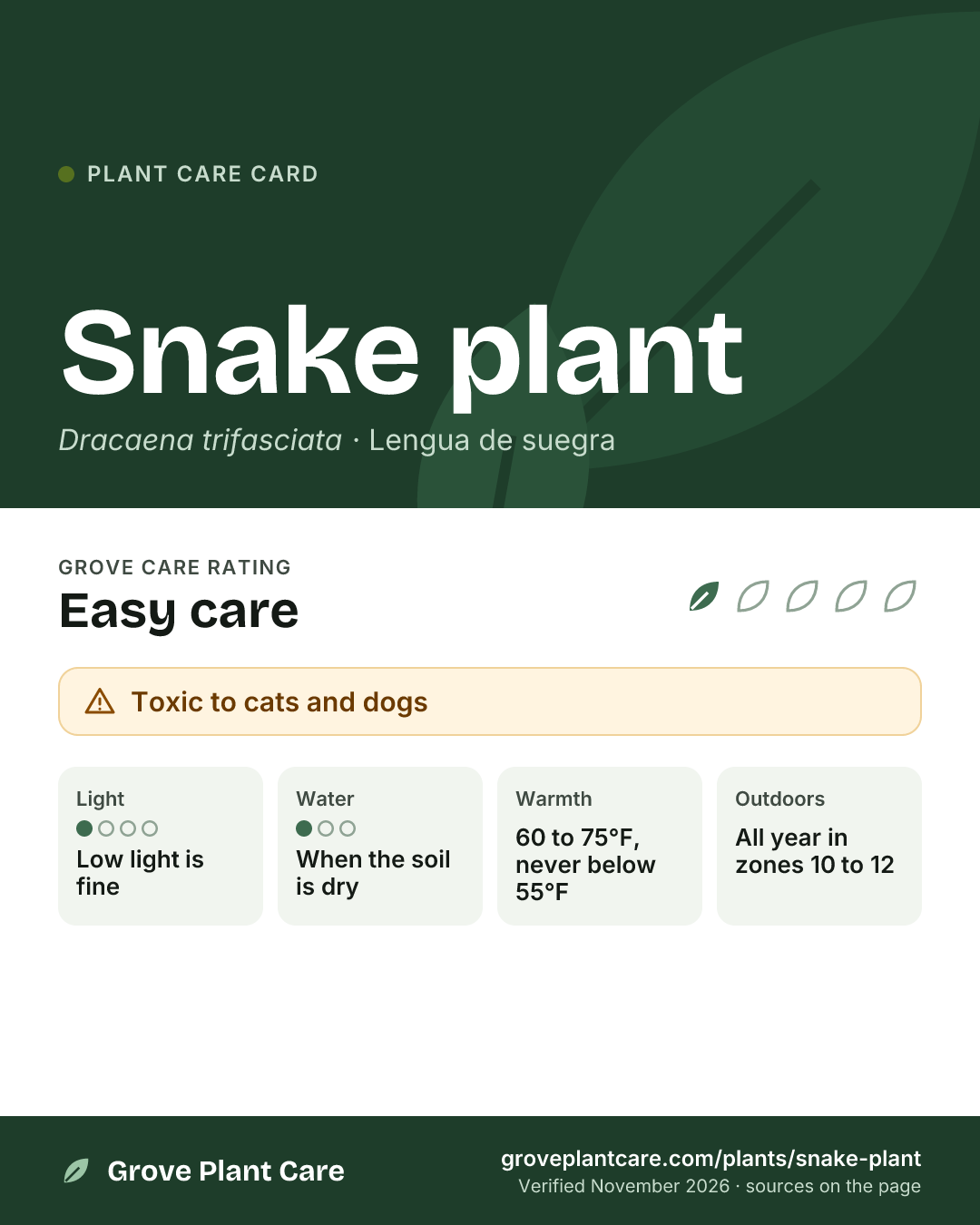
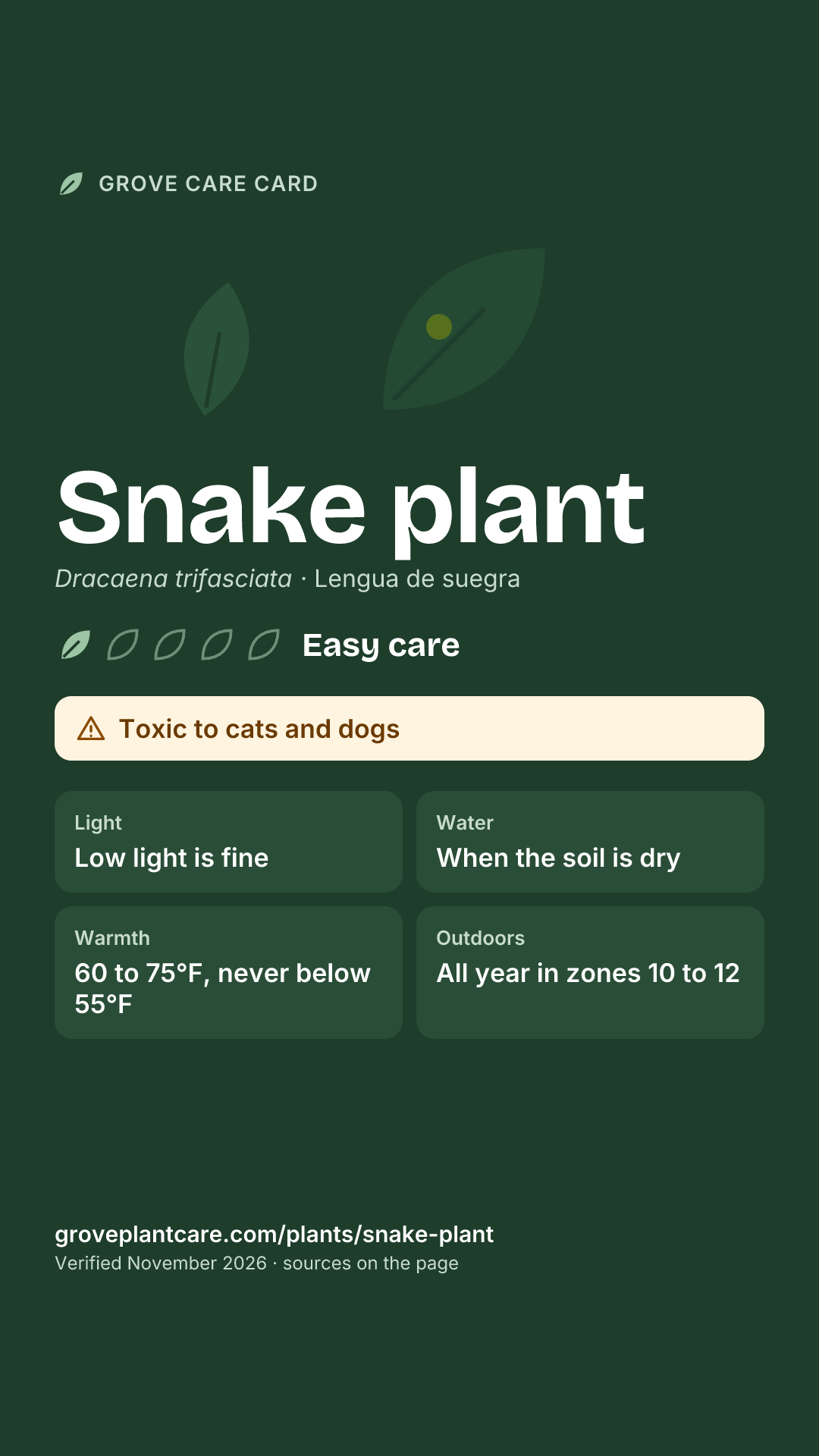
Snake plant
Dracaena trifasciata · Lengua de suegra
Also called mother-in-law’s tongue or sansevieria
A snake plant is one of the easiest houseplants to keep: let the soil dry out completely between waterings, give it any light from a dim corner to a bright window, and keep it away from cold glass in winter. Too much water is the one mistake it won't shrug off. It's toxic to cats and dogs, and in Florida it can escape into the wild, so keep it in a pot.
Toxic to cats and dogs · Moderate
Nausea, vomiting and diarrhea. NC State rates the poison severity as low; the MSD Veterinary Manual also lists damage to red blood cells. Children: low severity. Eating it can upset the stomach, and the sap can irritate skin.
Pet poison line: ASPCA (888) 426-4435
Good for: beginners, rooms with low light, people who forget to water · Think twice if: pets or small children chew plants, you want to plant it in the ground in Florida.
Needs at a glance
- Light1 of 4 · Low light is fineGrows faster and sturdier in bright, indirect light; no hot midday sun
- Water1 of 3 · Let the soil dry completelyThen water well; in winter, about once a month or less
- Humidity1 of 3 · AverageDry indoor air suits it; skip misting
- Soil when pottedFast-draining cactus mixA pot with drainage holes, only a little bigger than the roots
Indoors: best at 60 to 75°F (16 to 24°C). Keep it above 55°F (13°C) and away from drafts and heat vents.
How the rating adds up
0 = easiest · 1 = moderate · 2 = hardest
- Missed waterings0 of 2 · EasiestThick leaves store water; too much water is the danger
- Light flexibility0 of 2 · EasiestSurvives dim corners; grows best in bright, indirect light
- Humidity0 of 2 · EasiestPrefers dry air; no misting needed
- Pests and disease0 of 2 · EasiestFew problems; watch for mealybugs and spider mites
- Sensitivity to change0 of 2 · EasiestHappy in a snug pot for years; keep it off cold windows
Growing outdoors
All year: USDA zones 10 to 12, where the coldest winter nights average 30°F (−1°C) or warmer.
Elsewhere: summer outside in bright shade or filtered sun. Bring it in before nights drop below 55°F (13°C).
Invasive: UF/IFAS rates it a high invasion risk in Florida and advises against planting it.
- Containers
- Enclosed beds where it can’t spread
Sources: NC State, Mississippi State, Penn State, Illinois, RHS, NYBG, UF/IFAS, ASPCA, MSD Veterinary Manual, USDA zone map and UF/IFAS Assessment. Full list below.
Verified · How we rate plants
How often should I water a snake plant?
Water only when the soil has dried out completely, then soak it until water drains out and empty the saucer. How often that is depends on light and warmth, so push a finger into the soil instead of going by the calendar. In winter it rests, and NC State says watering every one to two months is enough. Overwatering is the most common way snake plants die, because soggy soil rots the roots. When in doubt, wait: the thick leaves store water.
NC State, Illinois, Mississippi State, RHS, NYBG, Penn State
Can a snake plant really live in low light?
Yes. It survives in dim rooms and offices where most plants struggle, which is a big part of its reputation. It grows slowly there, though, and tall types kept in low light for a long time get lanky and start to flop. For the sturdiest plant, give it bright, indirect light. Some gentle sun is fine, but keep it out of hot midday sun, and move a plant from shade into a sunnier spot gradually so it doesn't scorch.
Why are my snake plant leaves falling over or curling?
Leaves that fall over usually mean too much water or too little light. Soggy soil rots the roots, and if the whole plant leans or wobbles in its pot, check for root rot. A plant kept growing through winter with regular water, or kept in dim light for months, makes weak, lanky leaves that flop. Wrinkled, puckered or curling leaves usually mean the plant is thirsty. Let wet soil dry out, water much less in winter, and move the plant to brighter indirect light. A leaf that has flopped usually needs a stake or a trim from then on. Tall plants in light pots can also tip over when the soil is dry, so a heavier pot helps.
Why are my snake plant leaves turning yellow or brown?
Soft, mushy leaves that change color usually mean rot from too much water, often with a bad smell. Cold does the same kind of damage: a leaf touching a cold window in winter can freeze, even indoors. Dry, pale or brown patches usually mean sunburn from hot midday or afternoon sun. Cut damaged leaves off at the soil, let the soil dry out, and keep the plant away from cold glass and harsh afternoon sun.
When should I repot a snake plant?
Only when it's crowded, because a snake plant likes a snug pot. Repot when the roots and leaves fill the pot or start to bend or crack it. For many plants that takes several years, and Penn State suggests about every five. Spring is the best time. Go up only one pot size, with drainage holes and a fast-draining cactus mix, because a pot that's too big holds wet soil around the roots.
How do I propagate a snake plant?
The easiest way is division. In spring, split a crowded plant into pieces that each have leaves and roots, or cut off a pup with its own roots and pot it up. You can also cut a leaf into sections (the RHS suggests 2 inches long, Iowa State 3 to 4), let the cut ends dry for a day or two, and push the bottom ends, right way up, partway into damp mix. New shoots appear at the base in about two months. Sections from a plant with yellow edges, such as 'Laurentii', grow into plain green plants, so divide those instead.
Is a snake plant safe for cats and dogs?
No. The ASPCA lists the snake plant, under its old name Sansevieria trifasciata, as toxic to cats and dogs. It contains saponins, which can cause nausea, vomiting and diarrhea if a pet chews it. NC State rates the poison severity as low; the card says moderate because the MSD Veterinary Manual also lists damage to red blood cells. The sap can also irritate skin, so wear gloves when you cut it. If a pet eats some, call your vet or the ASPCA Animal Poison Control Center at (888) 426-4435.
Can a snake plant grow outdoors?
Yes, all year in USDA zones 10 to 12, where the coldest winter nights average 30°F (−1°C) or warmer, in bright shade or filtered sun. Elsewhere it can spend summer outside once nights stay above about 55°F (13°C). Keep it out of hot afternoon sun, and bring it in before nights drop below 55°F (13°C). In Florida, keep it in a pot, because it spreads.
NC State, UF/IFAS, Mississippi State, NYBG, UF/IFAS Assessment
Is snake plant invasive outdoors?
In Florida, yes. The UF/IFAS Assessment of Non-Native Plants rates the snake plant a high invasion risk in north, central and south Florida, and UF/IFAS advises against planting it. It spreads by underground runners, and UF/IFAS Extension notes that leaves and underground parts can regrow, so it's hard to get rid of once it's loose. The Florida Invasive Species Council lists a close relative, bowstring hemp (Dracaena hyacinthoides), as invasive. Anywhere frost-free, grow it in a pot or an enclosed bed, and bag trimmings instead of leaving them on the ground.
How Grove helps
Grove turns watering into a check of the soil, so nobody waters a pot that's still damp, which is what a snake plant needs most. You can set the check as a repeating task and assign it, and photo identification can suggest which plant you have, with one tap to correct it.
Sources
- NC State Extension Gardener Plant Toolbox: Dracaena trifasciata
- Mississippi State University Extension: Sansevieria, a stylish house plant for everyone (2026)
- Penn State Extension: Snake Plant, a forgiving, low-maintenance houseplant
- University of Illinois Extension: Mother-in-law tongue
- Royal Horticultural Society: How to grow sansevierias
- New York Botanical Garden: Snake Plant (Dracaena) research guide
- UF/IFAS Extension Nassau County: Fact sheet, Sansevieria trifasciata
- New York Botanical Garden: My snake plant has mushy leaves. What can I do?
- ASPCA Animal Poison Control: Mother-in-law's tongue
- MSD Veterinary Manual: Houseplants and Ornamentals Toxic to Animals
- USDA ARS Plant Hardiness Zone Map (2023)
- UF/IFAS Extension Sarasota County: Master Gardener Volunteers on sansevieria
- UF/IFAS Extension Orange County: Florida's hidden invaders, invasive houseplants
- UF/IFAS Assessment of Non-Native Plants: Sansevieria trifasciata
- USDA PLANTS Database: Sansevieria trifasciata
- Kew Plants of the World Online: Dracaena trifasciata
- Iowa State University Extension: How to Propagate Houseplants by Leaf Section Cuttings
- New York Botanical Garden: What can I do to keep my snake plant leaves from flopping over?
- Florida Invasive Species Council: Invasive Plant List
- Takawira-Nyenya et al. (2018), Sansevieria is a herbaceous clade within Dracaena, Phytotaxa 376(6)
- International Plant Names Index: Dracaena trifasciata (Prain) Mabb.