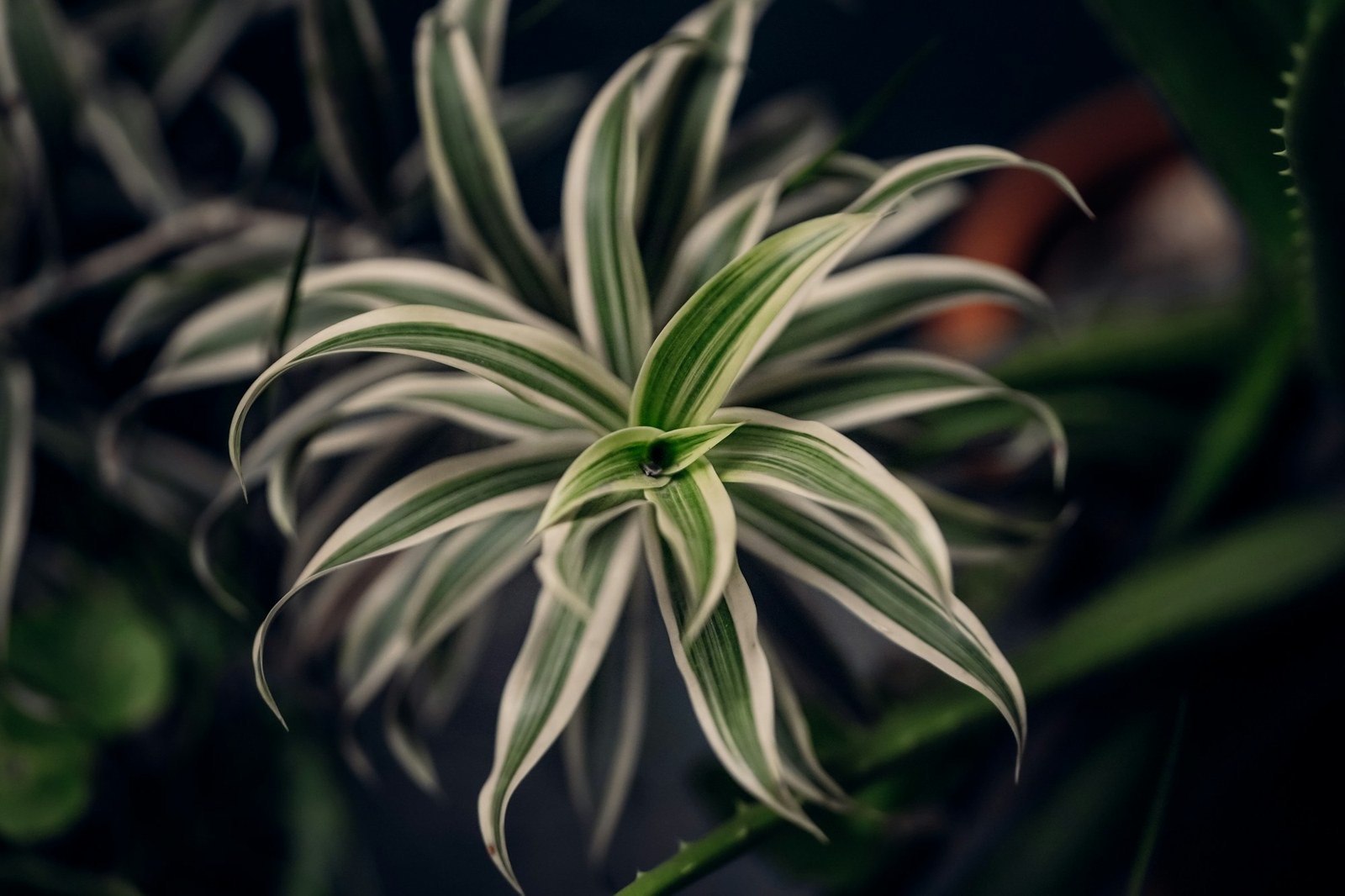
Plant care card
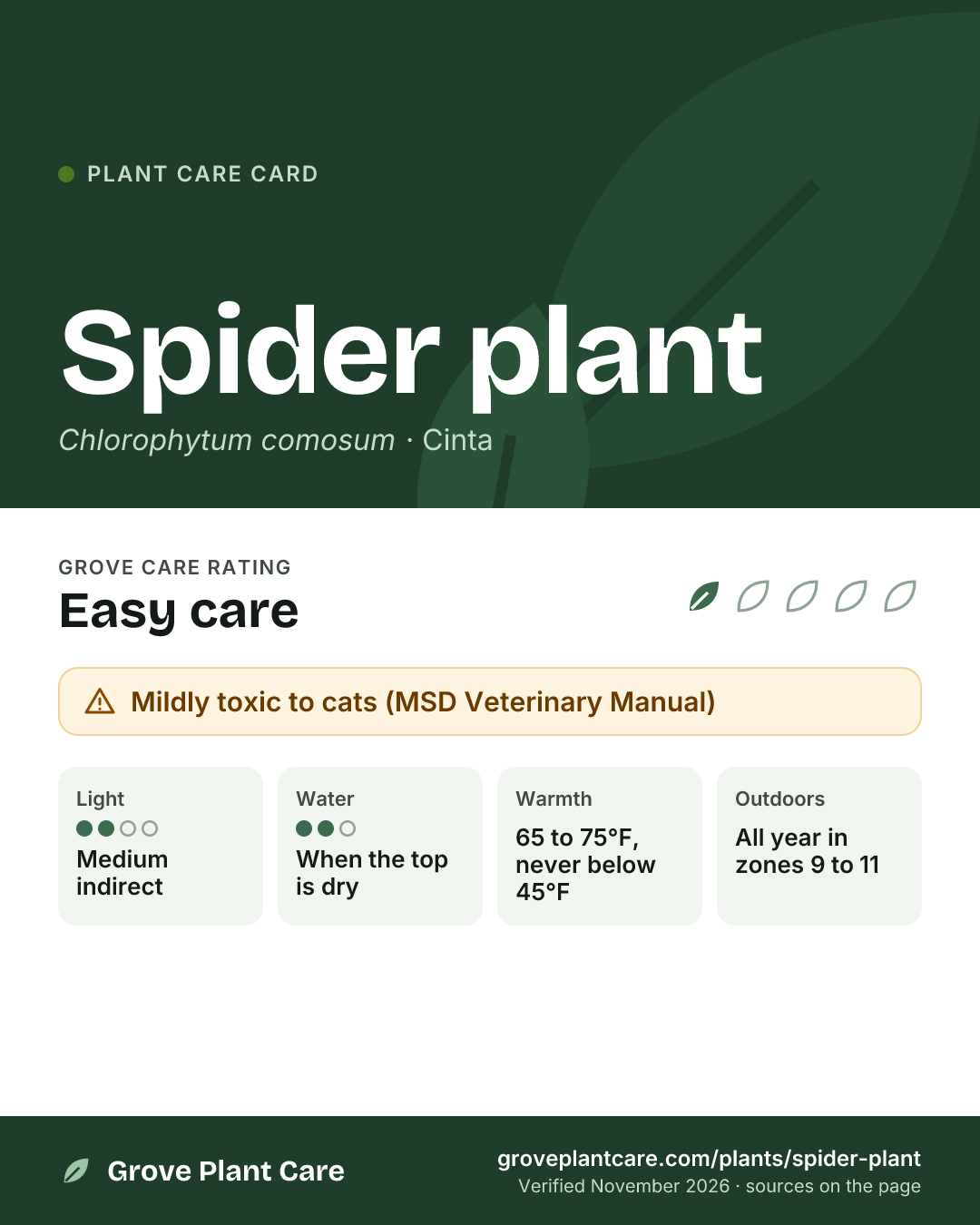
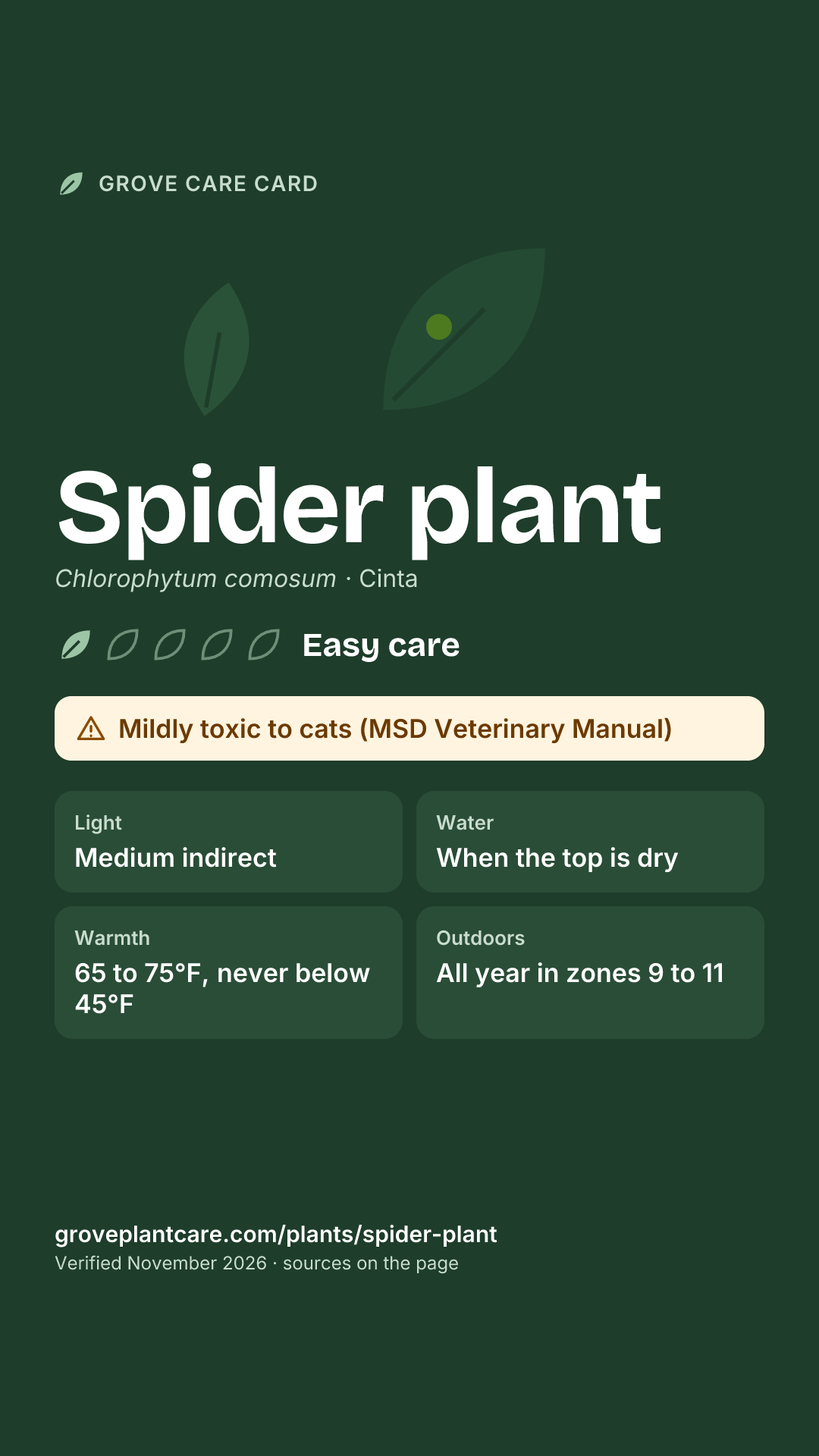
Spider plant
Chlorophytum comosum · Cinta
Also called ribbon plant or spider ivy
Photo by Nithin M R on Unsplash
A spider plant is easy to keep: give it medium to bright indirect light, let the top inch of soil dry between waterings, and keep it out of hot sun. Its thick roots store water, so a missed watering won't hurt it. The ASPCA lists it as non-toxic to cats and dogs, and it makes baby plants on long stems that you can root to share.
Mildly toxic to cats (MSD Veterinary Manual); the ASPCA lists it as non-toxic
The MSD Veterinary Manual lists vomiting, drooling, gagging and a short loss of appetite in cats, with no deaths described. The ASPCA and NC State list it as non-toxic to cats and dogs. Children: NC State lists no toxicity.
Pet poison line: ASPCA (888) 426-4435
Good for: homes with cats and dogs, hanging baskets, sharing baby plants · Think twice if: you want to plant it outdoors in Florida, brown leaf tips would bother you.
Needs at a glance
- Light2 of 4 · Medium indirectMedium to bright indirect light; no hot direct sun
- Water2 of 3 · Let the top dryWater when the top inch is dry; less in winter
- Humidity1 of 3 · AverageA normal home is fine; very dry air browns tips
- Soil when pottedAll-purpose mixAny general potting mix that drains well
Indoors: best at 65 to 75°F (18 to 24°C). Keep it above 45°F (7°C) and away from drafts and heat vents.
How the rating adds up
0 = easiest · 1 = moderate · 2 = hardest
- Missed waterings0 of 2 · EasiestThick roots ride out dry spells
- Light flexibility0 of 2 · EasiestTakes low light to bright indirect; no hot sun
- Humidity0 of 2 · EasiestAverage home humidity is fine
- Pests and disease0 of 2 · EasiestFew pests; root rot if overwatered
- Sensitivity to change1 of 2 · ModerateFluoride and salts in water brown the tips
Growing outdoors
All year: USDA zones 9 to 11, where the coldest winter nights average 20°F (−7°C) or warmer.
Elsewhere: summer outside in part shade. Bring it in when nights reach 45 to 55°F (7 to 13°C).
Invasive: UF/IFAS predicts it will become invasive in Florida and no longer recommends planting it outdoors there.
- Containers
- Hanging baskets
- Summer annual in cold climates
Sources: Missouri Botanical Garden, NC State, UNF Botanical Garden, Wisconsin, RHS, Illinois Extension, Clemson, UF/IFAS, NYBG, Iowa State, MSD Veterinary Manual, ASPCA, UT Extension, ASPCA plant list and Colorado State. Full list below.
Verified · How we rate plants
How often should I water a spider plant?
Water when the top inch of soil feels dry, soak it until some water drains out, and empty the saucer. Check the soil instead of following a schedule, and water less in winter while growth slows. The thick, fleshy roots hold water, so it forgives a missed watering, but very dry soil can brown the leaf tips. Don't let it sit in soggy soil, which rots the roots.
How much light does a spider plant need?
Medium to bright indirect light is ideal. It tolerates low light, though it grows more slowly there and striped leaves can fade. Keep it out of hot, direct sun: NC State calls it intolerant of direct sun, and Clemson Extension says midday sun scorches the leaves, though a little gentle sun is fine.
Why are my spider plant tips turning brown?
Usually something in the water or the air. Six extension and garden sources, including NC State, UF/IFAS, Iowa State and the Royal Horticultural Society, say spider plants are sensitive to fluoride in tap water, and several add chlorine. They suggest rainwater or distilled water if you see brown tips. Salt buildup from too much fertilizer, dry air, and soil that dries out too far or stays too wet can all brown the tips too, and often more than one cause is at work. Water deeply so some drains out, feed lightly, and snip off the brown ends if they bother you.
NC State, UF/IFAS, Iowa State, RHS, NYBG, Wisconsin, Clemson, Colorado State
Why are my spider plant leaves turning yellow or pale?
Check the water and the light first. Pale, dull or yellow spotted leaves often mean it needs more regular watering, according to the Royal Horticultural Society and NYBG. Strong direct sun can yellow or brown the leaves, and very low light fades the stripes. If leaves stay yellow after you move it somewhere brighter, the RHS suggests a balanced liquid feed every other month in the growing season.
How do I grow the babies on a spider plant?
Leave a baby attached to its runner, set it on a small pot of moist mix, and pin it down with a bent paper clip. Roots form in about 2 to 3 weeks; then cut the runner and let it grow on its own. You can also cut babies off and root them in moist potting mix or a glass of water, or divide a big clump. If your plant makes no babies, it may be young, in too little light, or in a pot that's too big: it makes the most when it's a little crowded. Runners form after a few weeks of short days and long, unbroken nights, so many plants send them out in fall, and heavy feeding means fewer babies.
Illinois Extension, Wisconsin, RHS, Colorado State, NC State, Clemson
When should I repot a spider plant?
Repot every year or two into a pot only a little bigger, and sooner if the thick roots start to crack the pot. It grows fast and needs repotting more often than many houseplants, but it makes the most babies when it's slightly crowded, so don't jump to a much larger pot. Clemson Extension says you can repot or divide it any time of year.
Is a spider plant safe for cats?
Mostly, with one caution. The MSD Veterinary Manual lists spider plants among houseplants that can mildly upset cats: vomiting, drooling, gagging and a short loss of appetite, with no deaths described. The ASPCA lists the spider plant as non-toxic to cats and dogs, and NC State lists it as non-toxic for cats, dogs and horses. We follow the most cautious source, so the card marks it mildly toxic to cats. University of Tennessee Extension suggests that if your cat chews plants, you put them up high or in a room the cat can't get into. If your cat seems unwell after chewing a plant, call your vet or the ASPCA Animal Poison Control Center at (888) 426-4435.
MSD Veterinary Manual, ASPCA, NC State, UT Extension, ASPCA plant list
Can a spider plant grow outdoors?
In USDA zones 9 to 11, where the coldest winter nights average 20°F (−7°C) or warmer, it can live outside all year in part shade. In Florida, though, UF/IFAS predicts it will become invasive and no longer recommends planting it outside, because its babies root easily in soil and spread. Elsewhere it can spend summer outdoors in part shade or be planted out as an annual after the last frost. Bring it in before nights drop to 45 to 55°F (7 to 13°C): NC State says to keep it above 45°F, and UF/IFAS calls anything below 55°F too cool.
How Grove helps
Grove turns watering into a check of the soil, so the spider plant gets water when the top has dried instead of on a fixed day. You can add rooting the babies or a repot as a task and assign it, and a photo of an unlabeled plant gets you Grove's best guess at what it is.
Sources
- Missouri Botanical Garden Plant Finder: Chlorophytum comosum
- NC State Extension Gardener Plant Toolbox: Chlorophytum comosum
- University of North Florida Botanical Garden: Chlorophytum comosum
- University of Wisconsin-Madison Extension: Spider plant, Chlorophytum comosum
- Royal Horticultural Society: How to grow spider plants
- University of Illinois Extension: Spider Plant
- Clemson Cooperative Extension HGIC: Spider Plant
- UF/IFAS Gardening Solutions: Spider Plant
- New York Botanical Garden: How much water does my spider plant need?
- Iowa State University Extension: Why does my houseplant have brown leaf tips and edges?
- MSD Veterinary Manual: Houseplants and Ornamentals Toxic to Animals
- ASPCA Animal Poison Control: Spider Plant
- University of Tennessee Extension: Growing Indoor Plants with Pets
- ASPCA Animal Poison Control: Toxic and Non-Toxic Plants
- Colorado State University Extension PlantTalk: Spider Plant
- UF/IFAS Assessment of Non-Native Plants: Chlorophytum comosum
- UF/IFAS Extension Orange County: Florida’s Hidden Invaders, Invasive Houseplants
- University of Illinois Extension: Houseplant specialized structures (plantlets)