Plant care card
Money tree
Pachira aquatica (sometimes sold as P. glabra) · Árbol del dinero
Also called Guiana chestnut, Malabar chestnut or French peanut
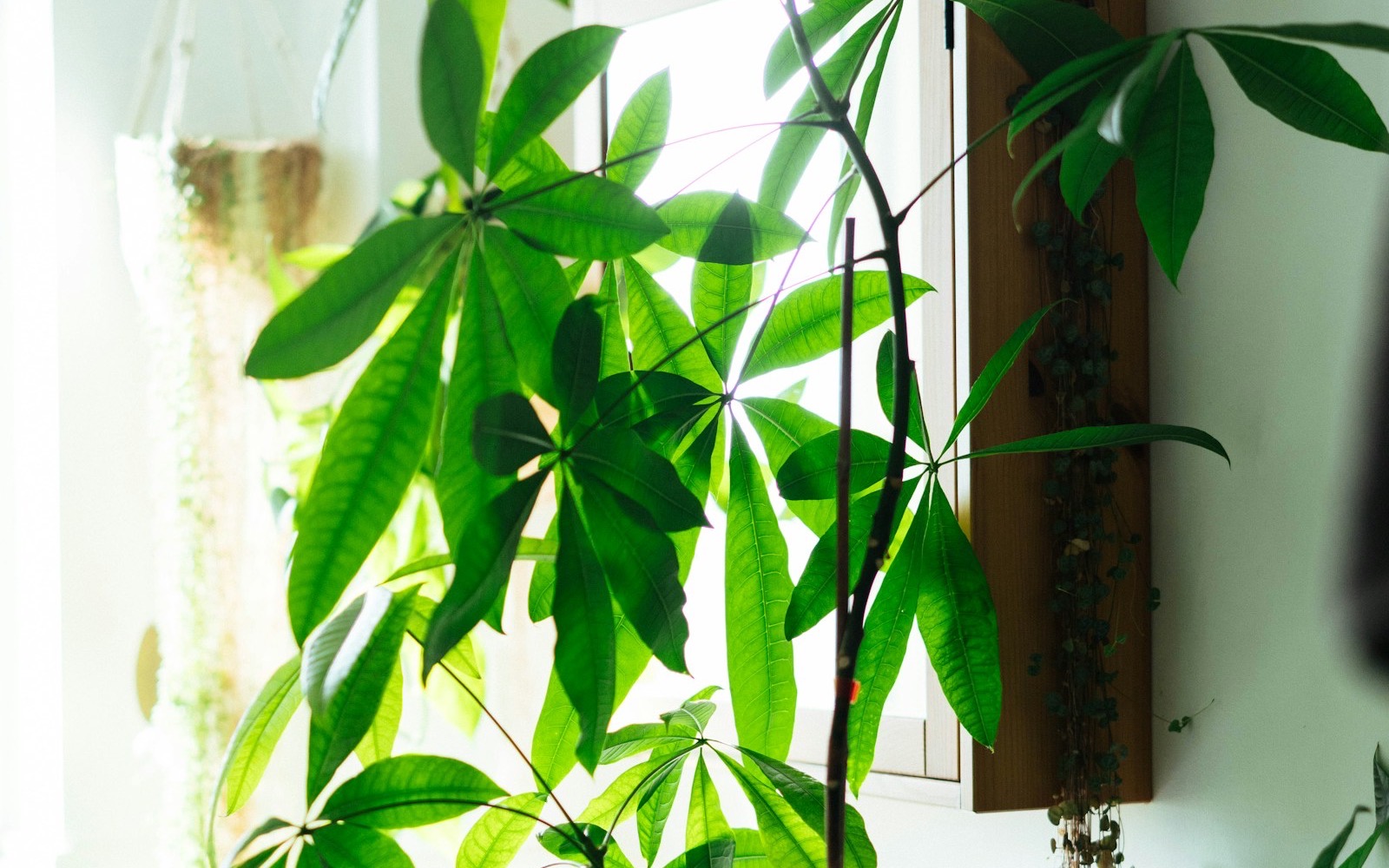
Photo by Phil Hearing on Unsplash
A money tree wants bright, filtered light, water when its mix is nearly dry, and a spot where it can stay put. It comes from tropical swamps and riverbanks, yet in a pot it hates soggy soil, so drainage matters more than how much you water. Most leaf drop comes from a move, a draft, a change of season or a watering mistake, and new leaves usually follow once things settle.
Mildly toxic to cats (seeds only)
NC State lists only the seeds, which can upset a cat’s stomach, and potted plants rarely make seeds. The ASPCA lists the plant as non-toxic to cats, dogs and horses. Children: low severity.
Pet poison line: ASPCA (888) 426-4435
Good for: bright rooms out of direct sun, a tidy indoor tree, people who water on the light side · Think twice if: you like to move plants around, its only spot is next to a heating or AC vent, you tend to overwater.
Needs at a glance
- Light3 of 4 · Bright indirectA sunny room, set back from the glass
- Water2 of 3 · Let the top dryWater when the mix is nearly dry; empty the saucer
- Humidity2 of 3 · Above averageAbout 50%; a pebble tray helps in winter
- Soil when pottedFast-draining potting mixPotting mix with perlite or coarse sand, in a pot with a drain hole
Indoors: best at 65 to 75°F (18 to 24°C). Keep it above 50°F (10°C) and away from drafts and heat vents.
How the rating adds up
0 = easiest · 1 = moderate · 2 = hardest
- Missed waterings1 of 2 · ModerateLet it nearly dry, but dry roots drop leaves
- Light flexibility1 of 2 · ModerateBright, filtered light; tolerates some shade
- Humidity1 of 2 · ModerateAbout 50%; dry winter air crisps leaves
- Pests and disease1 of 2 · ModerateScale, mealybugs, aphids; rot in wet soil
- Sensitivity to change2 of 2 · HardestDrops leaves when moved, chilled or repotted
Growing outdoors
All year: USDA zones 10 to 12, where the coldest winter nights average 30°F (−1°C) or warmer.
Elsewhere: summer outside in dappled shade. Bring it in when nights reach 50 to 55°F (10 to 13°C).
- Containers
- Bonsai
- Shade tree in the tropics
Sources: NC State, NYBG, RHS, University of Arizona, ASPCA, USDA zone map, Flora of China and USDA PLANTS. Full list below.
Verified · How we rate plants
How often should I water a money tree?
Water when the potting mix is nearly dry, then soak it until water runs out of the drain hole and empty the saucer after about 15 minutes. Don't let the roots dry out completely, and when in doubt, wait a day. There is no fixed schedule: winter changes how fast the pot dries, so check the soil with a finger or a moisture meter. Standing water rots the roots, and the New York Botanical Garden warns against splashing water on the trunk too.
How much light does a money tree need?
Bright, filtered light, such as a room that gets sun most of the day with the plant set back from the window. It tolerates some shade and keeps growing, but poor light slowly weakens it and can make it drop leaves in fall. Strong direct sun, especially hot summer sun, scorches the leaves. Turn the pot a little each time you water so it grows evenly.
Why are my money tree leaves turning yellow or falling off?
Yellow leaves with a soft or rotting trunk mean too much water: the soil stays wet, holds too much water, or water keeps splashing on the stems. Crispy, curling leaves that fall point to dry air, too little light or an irregular watering routine. Sudden leaf drop on a healthy-looking plant usually follows a move, a hot or cold draft, or disturbed roots. Some yellowing in autumn is normal as the days get shorter. NC State adds low humidity and a lack of nutrients as causes of yellow leaves. Fix the cause and be patient: new leaves usually come with the next flush of growth.
How do I care for a braided money tree?
Care for it like any money tree, and leave the braid alone. A braid is several young trunks woven together while they were still flexible, so it is set by the time you buy it. When you prune, cut dead growth any time and shape the plant in spring, about half an inch above a leaf or node, taking no more than half of a stem. Never cut into the braided section. You can pinch off new shoots that sprout from the base or trunk. Keep water off the trunk and out of the saucer, since wet stems and soggy soil lead to rot. A braided tree won't flower, which is normal.
Is a money tree Pachira aquatica or Pachira glabra?
It may be either. NC State, the RHS, the ASPCA and the Flora of China file the braided houseplant under Pachira aquatica. The New York Botanical Garden says the braided money tree is Pachira aquatica or a similar species, Pachira glabra. The two are similar, and potted plants rarely flower, so a store label is hard to check. Either way, the care is the same.
When should I repot a money tree?
Every two to three years, in spring. Move up just one pot size, use a pot with a drain hole and fresh, fast-draining mix, and disturb the roots as little as you can. Don't be alarmed if it drops some leaves afterward: that's common after repotting, and new growth should follow.
How do I propagate a money tree?
Take stem cuttings in spring or summer, or air layer a stem, which NC State recommends. The University of Arizona suggests dipping cuttings in rooting hormone and warns that they are slow to root. Money trees also grow from seed, but potted plants rarely flower, so seed is hard to find. A cutting grows into a single-stemmed plant; the braid only comes from weaving several young plants together.
Is a money tree safe for cats and dogs?
Mostly, but use caution with cats. The ASPCA lists the money tree as non-toxic to cats, dogs and horses, though eating it can still cause nausea, vomiting or loose stool. NC State is more cautious: it lists the seeds as a low-severity poison and says a cat that eats them may vomit, drool or have diarrhea. Potted money trees rarely or never make seeds. If a pet eats part of the plant and seems unwell, call your vet or the ASPCA Animal Poison Control Center at (888) 426-4435.
Can a money tree grow outdoors?
Yes, all year in USDA zones 10 to 12, where the coldest winter nights average 30°F (−1°C) or warmer, and it can grow into a tree of about 30 feet there. The University of Arizona's arboretum puts the range a little colder, at zones 9b to 11. It wants a mix of sun and shade and shelter from strong wind. Elsewhere it can spend summer outside in dappled light. Bring it in before nights drop to about 50°F (10°C); NC State's cutoff is 45°F (7°C). Check under the leaves for pests before it comes inside, and expect it to drop a few leaves while it adjusts to lower light.
How Grove helps
Grove turns watering into a check of the soil, so a money tree that's still damp gets skipped instead of soaked. You can add a quarter turn of the pot as a repeating task and assign it, so whoever waters also keeps the tree growing straight.
Sources
- NC State Extension Gardener Plant Toolbox: Pachira aquatica
- New York Botanical Garden: How much water does my money tree need?
- New York Botanical Garden: Why did my money tree lose all its leaves?
- New York Botanical Garden: Can I grow a money tree in a low light apartment?
- Royal Horticultural Society: Pachira aquatica
- University of Arizona Campus Arboretum: Pachira aquatica
- New York Botanical Garden: Money Tree (Pachira aquatica) research guide
- New York Botanical Garden: How do I care for my money tree houseplant?
- ASPCA Animal Poison Control: Money Tree
- USDA ARS Plant Hardiness Zone Map (2023)
- Flora of China, vol. 12 (2007): Pachira aquatica
- USDA PLANTS Database: Pachira aquatica
- New York Botanical Garden Plant Talk: The Key to Good Fortune with Your Money Tree
- New York Botanical Garden: Can I trim my money tree?