Plant care card
Dill
Anethum graveolens · Eneldo
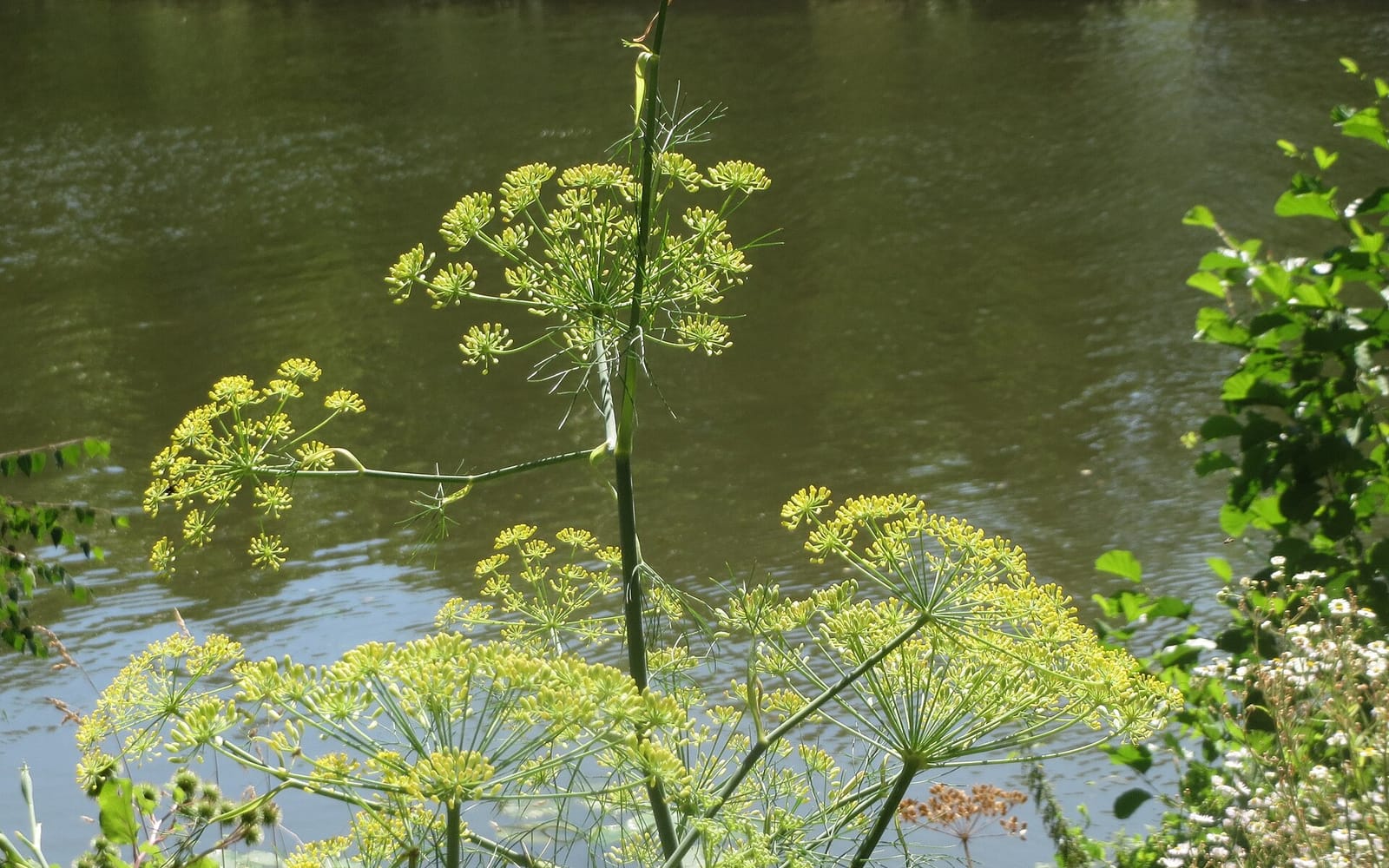
Photo by AnRo0002 on Wikimedia Commons

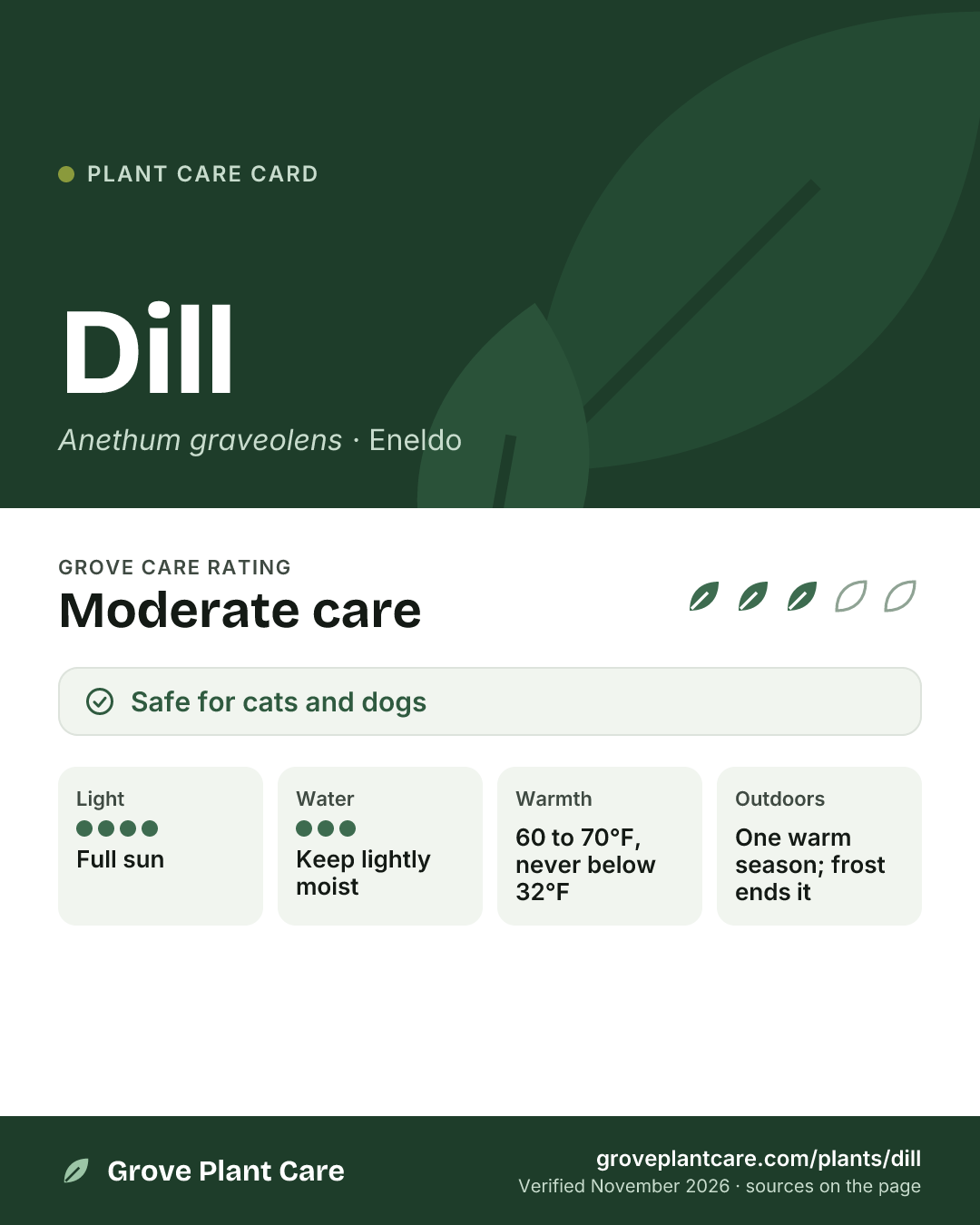
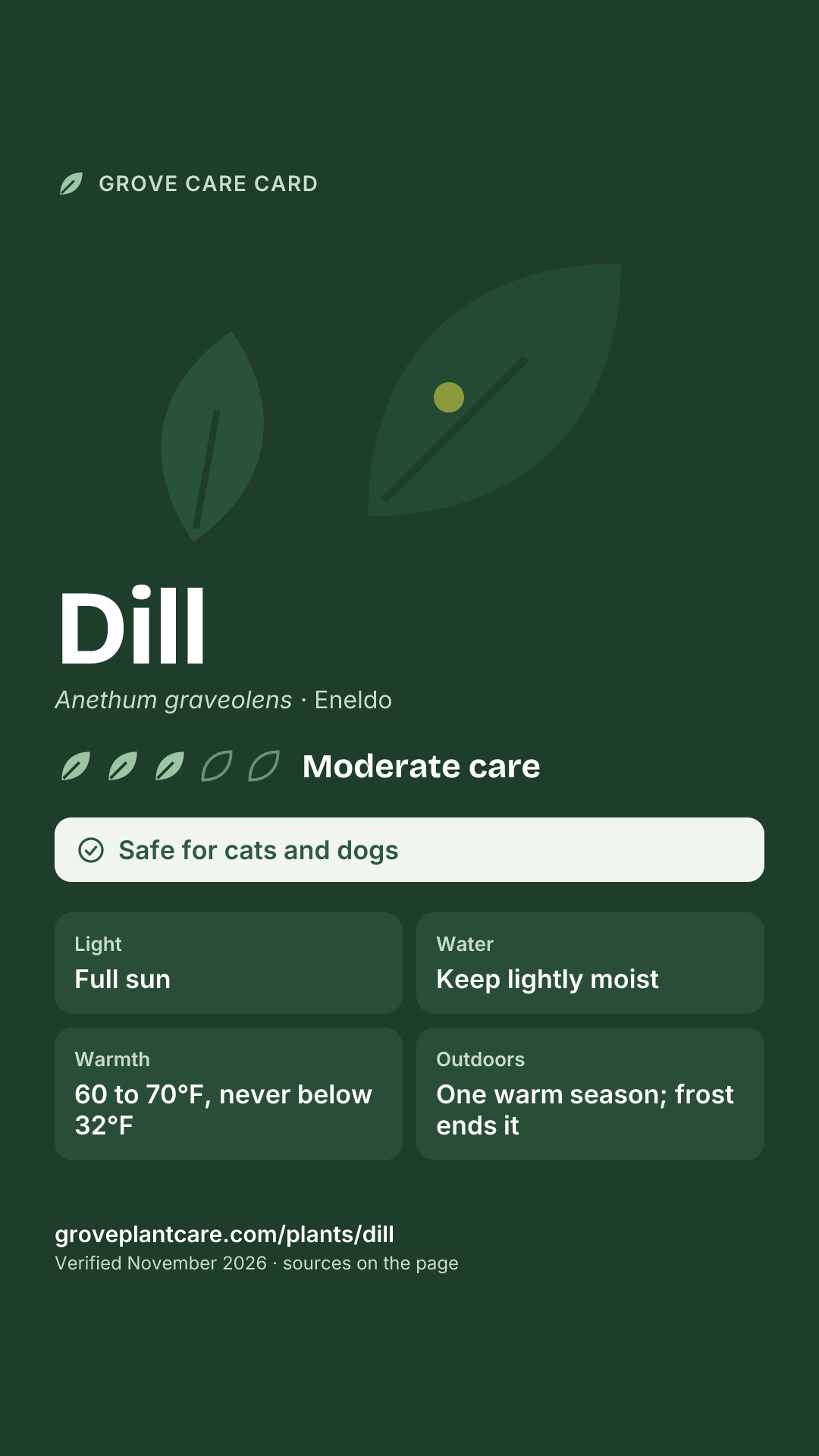
Dill is a fast annual you grow from seed: sow it where it will grow, in full sun, and keep the soil lightly moist. Its long taproot hates being moved, and heat or a dry spell makes it flower early, after which it stops making leaves. Sow a little every few weeks for a steady supply. The ASPCA lists dill as non-toxic to cats, dogs and horses.
Non-toxic to cats, dogs and horses
Long skin contact may cause a rash (ASPCA). Eating a lot of any plant can still upset a pet’s stomach. Children: A kitchen herb; NC State lists leaves, seeds and flowers as edible.
Pet poison line: ASPCA (888) 426-4435
Good for: fresh leaves and seed for cooking, black swallowtail caterpillars, bees and other pollinators · Think twice if: you want a plant that lasts all year, your summers are hot and dry, which rush it into flower.
Needs at a glance
- Light4 of 4 · Full sun6 or more hours of sun for sturdy stems
- Water3 of 3 · Keep lightly moistSteady moisture delays flowering; pots dry out fast
- Humidity1 of 3 · AverageA sheltered spot out of strong wind
- Soil when pottedRich, well-drainedLoose soil with compost; never waterlogged
Indoors: best at 60 to 70°F (16 to 21°C). Keep it above 32°F (0°C) and away from drafts and heat vents.
How the rating adds up
0 = easiest · 1 = moderate · 2 = hardest
- Missed waterings1 of 2 · ModerateDry spells make it flower early and stop leafing
- Light flexibility2 of 2 · HardestFull sun; shade makes it lanky
- Humidity0 of 2 · EasiestNo humidity needs; shelter it from strong wind
- Pests and disease1 of 2 · ModerateAphids now and then; powdery mildew, blight and aster yellows
- Sensitivity to change2 of 2 · HardestIts taproot hates being moved, and heat makes it bolt
Growing outdoors
Each year: grown for one warm season. Frost kills it, so it is sown or planted again each year.
Elsewhere: summer outside in full sun. Bring it in before nights drop below 32°F (0°C).
- Herb and vegetable gardens
- Deep containers
- Butterfly gardens
- Reseeds itself
Sources: NC State, Penn State Extension, RHS, Illinois Extension, Maryland Extension, ASPCA, USDA zone map, USDA PLANTS, FISC, Cal-IPC and GISD. Full list below.
Verified · How we rate plants
Is dill safe for cats and dogs?
Yes. The ASPCA lists dill as non-toxic to dogs, cats and horses, and NC State tags it non-toxic for all three. The ASPCA does note that its essential oils can cause a skin rash with long contact. Non-toxic means low risk: eating a lot of any plant can still upset a pet's stomach. If your pet seems unwell after chewing a plant, call your vet.
When should I plant dill?
In spring. NC State and Illinois Extension say to sow 1 to 2 weeks before the last frost, Penn State says once nights stay above 45°F (7°C), and Maryland Extension says after the last frost, so pick whichever fits your weather. Seeds sprout in 10 to 14 days (NC State, Penn State). Penn State says the seeds need light to sprout, so barely cover them; NC State says about a quarter inch deep. In Florida, UF/IFAS says to sow from September through December. Sow again every few weeks for more leaves: every 2 to 4 weeks (NC State), every 2 weeks (Illinois) or every 10 days in cool weather (Penn State).
NC State, Illinois Extension, Penn State Extension, Maryland Extension, UF/IFAS
Can I transplant dill?
It's best not to. I grow one long taproot, and I don't like having it disturbed: NC State, Penn State, Illinois and Maryland Extension all say dill transplants poorly, so sow the seed where you want the plant. If you start seeds indoors anyway, the RHS says to move the seedlings about 4 weeks after sowing, before the taproot forms, and to harden them off first.
NC State, Penn State Extension, Illinois Extension, Maryland Extension, RHS
Why is my dill flowering so soon?
Heat and dry soil push dill to flower, or bolt (Penn State, RHS), and the plant declines soon after it blooms (Penn State, Illinois). To slow it down, keep the soil evenly moist (NC State) and cut the leaves often (Penn State, RHS). Slow-to-bolt varieties help: Illinois names Green Sleeves and Fernleaf. Sowing a new batch every few weeks keeps fresh plants coming.
How often should I water dill?
Keep the soil evenly moist but never waterlogged. NC State says steady moisture prevents early flowering, while too much water makes the stems floppy. The RHS says to water in dry spells and to watch pots most closely, because their mix dries out fast.
Can I grow dill in a pot or indoors?
Yes, in a deep pot. The RHS suggests one at least 12 inches (30 cm) deep and wide, and Penn State's indoor herb guide says dill needs deep pots because of its taproot. Pick a compact variety: Penn State lists Fernleaf at 12 to 18 inches, and NC State also calls Fernleaf a dwarf for containers. The RHS says you can sow it indoors any time of year, and that it does best indoors with plenty of light.
How do I harvest dill leaves and seeds?
Cut leaves any time before it flowers; the RHS says they're ready about 6 weeks after sowing, and never to take more than a third of the plant at once. Leaves are best fresh and keep a few days in the fridge (Penn State). For seed, wait until the seeds turn brown, about 2 to 3 weeks after the flowers open (Illinois), then cut the heads, dry them in a paper bag in an airy place and store the seed sealed (Penn State, Illinois).
RHS, Penn State Extension, Illinois Extension, Maryland Extension
What are the caterpillars on my dill?
Most likely black swallowtail caterpillars. Dill is one of their host plants, according to NC State, Penn State and UF/IFAS, and the caterpillars grow up into black swallowtail butterflies. If you want to feed them and still have dill to cook with, sow a few extra plants.
Will dill come back next year?
Not the same plant: dill is an annual (NC State) that declines soon after it flowers (Penn State). It often comes back on its own from dropped seed, though. NC State, Illinois and Maryland Extension all say it reseeds readily; Penn State suggests cutting off the flower heads if you don't want seedlings everywhere.
NC State, Penn State Extension, Illinois Extension, Maryland Extension
How Grove helps
Grove can remind you to sow a new batch every few weeks, so there's always fresh dill coming. You can add soil checks for hot spells and a harvest task, and assign them to whoever tends the garden.
Sources
- NC State Extension Gardener Plant Toolbox: Anethum graveolens
- Penn State Extension: Herb Garden Plants: Dill (S. Kapadia, updated 2026-04-22)
- Royal Horticultural Society: How to grow dill
- Illinois Extension: Herb Gardening, Dill
- University of Maryland Extension: Dill (updated 2023-02-20)
- ASPCA Animal Poison Control: Dill
- USDA ARS Plant Hardiness Zone Map (2023)
- USDA PLANTS Database: Anethum graveolens (symbol ANGR2)
- Florida Invasive Species Council: Invasive Plant List and Watch List (April 2026)
- California Invasive Plant Council (Cal-IPC): Inventory (lists Foeniculum vulgare, Moderate; no Anethum)
- IUCN Global Invasive Species Database: Anethum graveolens (no entry)
- Penn State Extension: Growing Herbs Indoors (E. Sánchez and E. Kinley, updated 2024-11-01)
- Kew WCVP data release (2026-06-04 file), plant_name_id 2638934: Anethum graveolens
- UF/IFAS Gardening Solutions: Dill