Plant care card
Gerbera daisy
Gerbera jamesonii · Gerbera
Also called gerber daisy, Barberton daisy or Transvaal daisy
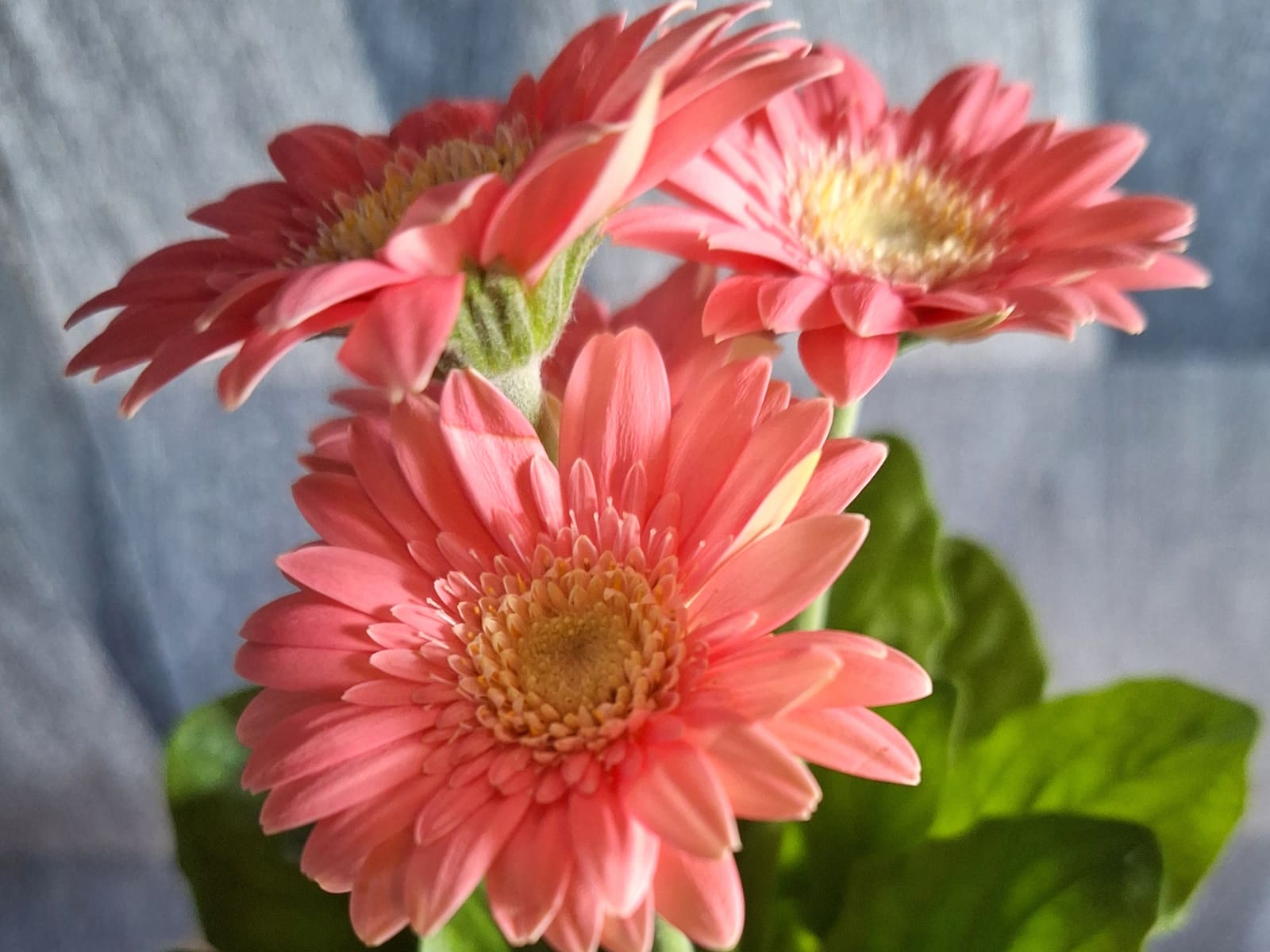
Photo by Blanka Luppová on Wikimedia Commons, CC BY 4.0

A gerbera daisy wants a bright window with some sun, a cool room and soil that never dries out completely or stays soggy. Keep the crown, where the leaves meet the soil, dry and above the soil line, because that's where rot starts. The ASPCA lists it as non-toxic to cats and dogs. It's a perennial you can keep, but getting a gift gerbera to bloom again indoors is hard, so a summer outside gives it the best chance.
Non-toxic to cats, dogs and horses
No signs of poisoning listed. Any plant can still upset a pet’s stomach if it eats enough. Children: NC State lists no toxicity.
Pet poison line: ASPCA (888) 426-4435
Good for: bright, sunny windows, homes with cats and dogs, summer pots and window boxes · Think twice if: your only window is dim, your home runs warm all winter, you want a plant that blooms for many years.
Needs at a glance
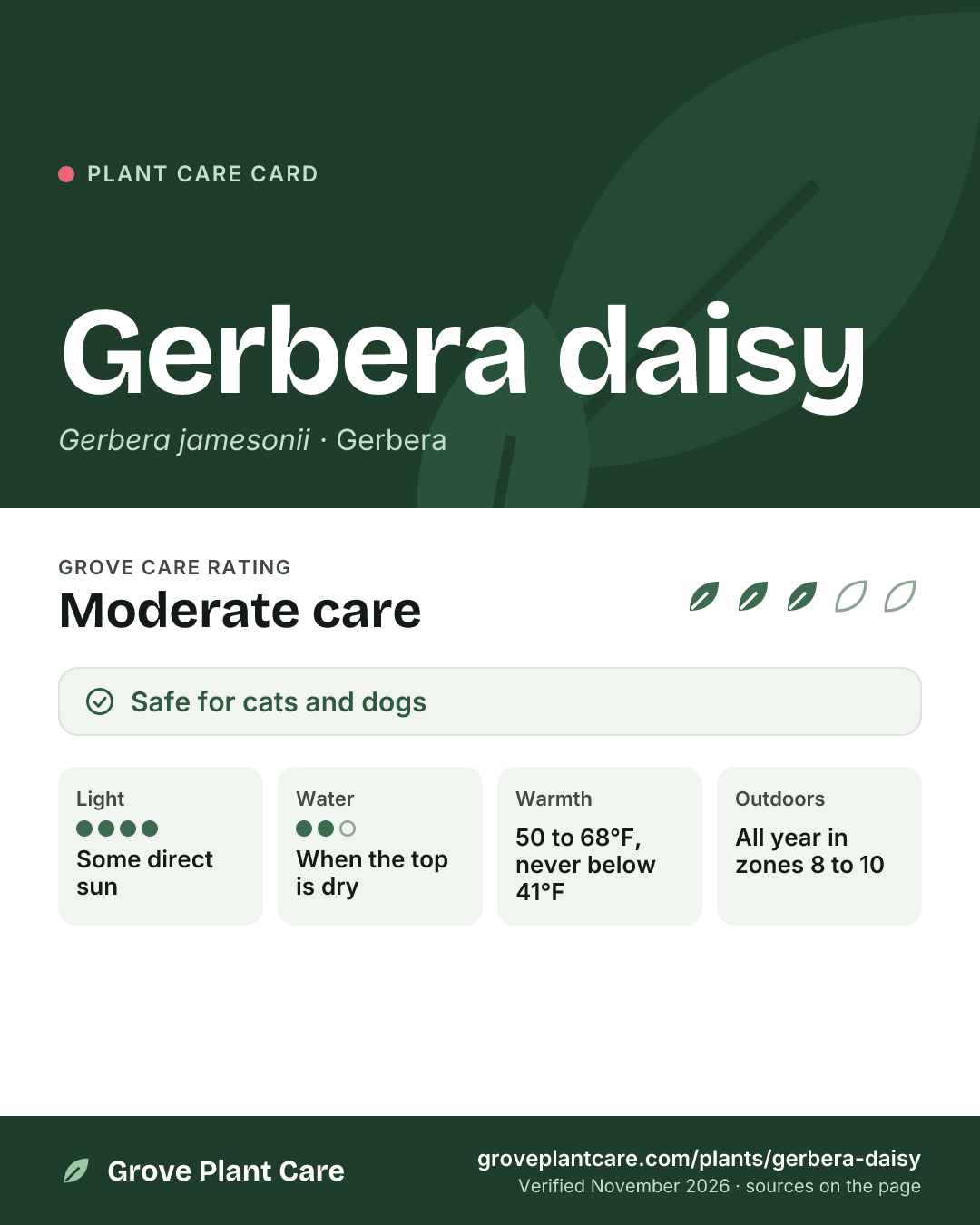
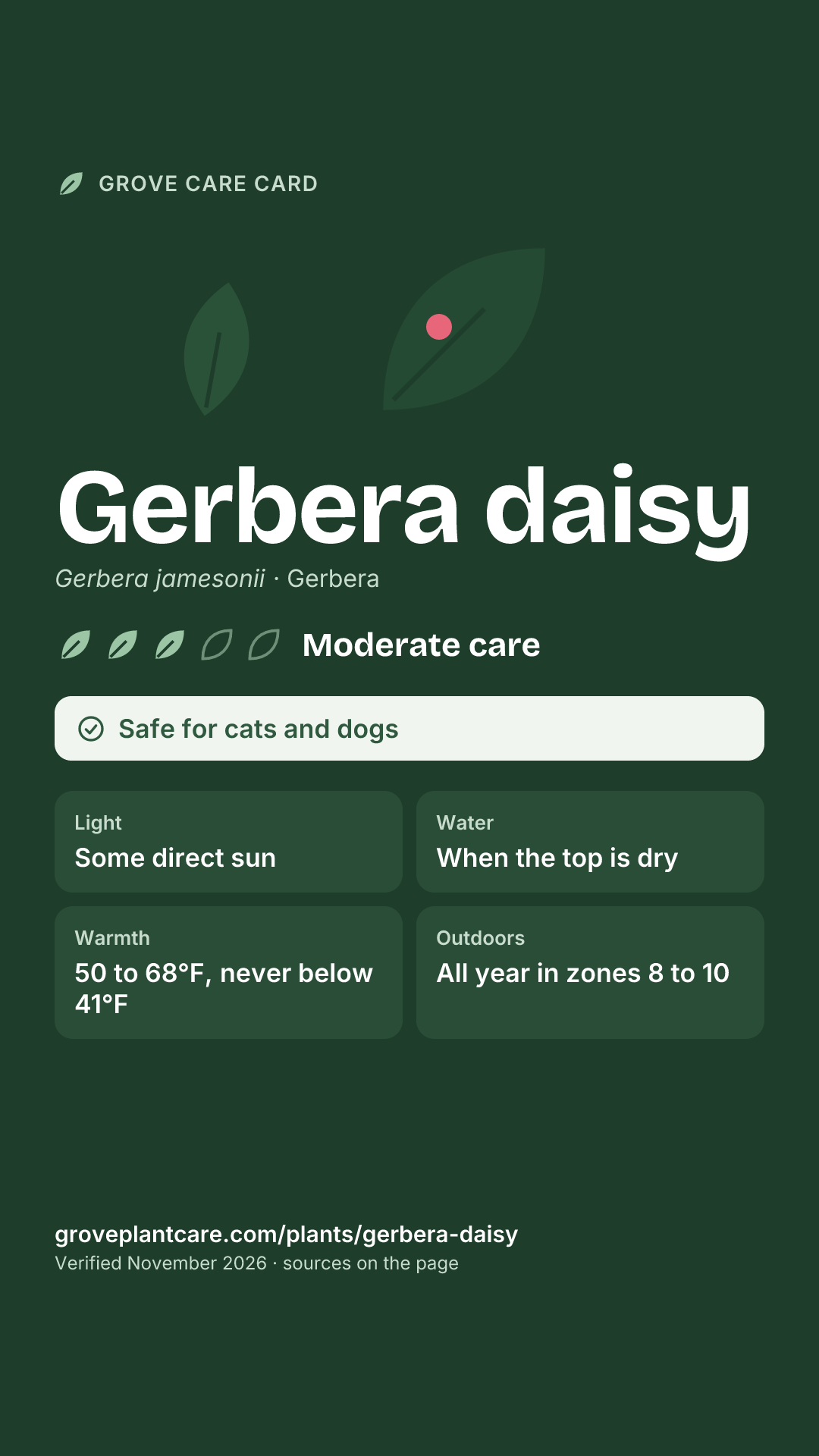
- Light4 of 4 · Some direct sunA bright window; shade it from hot midday summer sun
- Water2 of 3 · Let the top dryWater the soil, keep the crown dry, and empty the saucer
- Humidity1 of 3 · AverageGood airflow; damp, still air brings gray mold
- Soil when pottedRich, fast-draining potting mixIn a deep pot, with the crown just above the soil
Indoors: best at 50 to 68°F (10 to 20°C). Keep it above 41°F (5°C) and away from drafts and heat vents.
How the rating adds up
0 = easiest · 1 = moderate · 2 = hardest
- Missed waterings1 of 2 · ModerateShouldn’t dry out fully or stay wet
- Light flexibility2 of 2 · HardestNeeds bright light with some sun
- Humidity0 of 2 · EasiestAverage home air is fine; airflow matters more
- Pests and disease2 of 2 · HardestWhiteflies, thrips, mites, aphids; gray mold and crown rot
- Sensitivity to change1 of 2 · ModerateStops flowering in a warm room; crown rots if set too deep
Growing outdoors
All year: USDA zones 8 to 10, where the coldest winter nights average 10°F (−12°C) or warmer.
Elsewhere: summer outside in morning sun, afternoon shade. Bring it in when nights reach 41 to 50°F (5 to 10°C).
- Containers and window boxes
- Borders and cutting gardens
- Perennial bedding in Central and South Florida
Sources: NC State, Iowa State, RHS, Clemson, UF/IFAS, Virginia Tech, UC IPM, ASPCA, ASPCA plant list, USDA zone map, FISC, Cal-IPC, USDA noxious weed list and GISD. Full list below.
Verified · How we rate plants
Is a gerbera daisy safe for cats and dogs?
Yes. The ASPCA lists the gerber daisy as non-toxic to dogs, cats and horses, and NC State lists it as non-toxic too. Any plant can still upset a pet's stomach if it eats a lot of it, so if your pet seems unwell after chewing one, call your vet.
Can I keep a gerbera daisy after it stops blooming?
Yes, it's a perennial, so it can live for years. Be ready for some effort, though. Iowa State says potted gerberas are hard to bring back into bloom, and many people toss them after the flowers fade. Virginia Tech calls it a short-term plant and suggests replacing it after 2 to 3 years at most. If you want to try, cut off each faded flower stem at the base, keep it in your brightest window in a cool room, and move it outside for the summer. Treating it as a seasonal plant is fine too.
How do I get my gerbera daisy to bloom again?
Cool, bright and well fed. The RHS says it flowers best between 50 and 68°F (10 and 20°C); flowering stops when the room is warmer or colder and starts again once the temperature is back in range. Cut each spent flower stem off at its base so the plant makes new ones. Feed it in spring and summer: Clemson suggests a liquid feed every 2 weeks, UF/IFAS a complete fertilizer monthly, and the RHS a high-potassium feed in summer to push flowers. Once nights stay above 50 to 55°F (10 to 13°C), Iowa State suggests moving it outdoors in a pot or window box. After a few years, divide a crowded clump in spring.
How often should I water a gerbera daisy?
Water when the top of the soil starts to dry. Iowa State says to keep the soil damp without letting it get soggy or dry out completely, and the RHS lets the mix dry slightly between waterings. Water the soil and keep the crown and leaves dry; the RHS suggests watering from below and never leaving the pot standing in water. Virginia Tech is drier and lets the soil dry thoroughly. In winter, water less. Soggy soil rots the crown and roots.
How much light does a gerbera daisy need?
A lot. Iowa State says bright light, indirect or direct, and Virginia Tech suggests bright light with a little full sun. The RHS picks a bright windowsill and warns that direct summer sun can scorch it, so shade it at midday in summer. Outdoors, Clemson and UF/IFAS like morning sun with afternoon shade in hot climates.
What temperature does a gerbera daisy like?
Cool. The RHS gives 50 to 68°F (10 to 20°C) for flowering and says to keep it above 41°F (5°C). Virginia Tech gives 40 to 70°F (4 to 21°C) while it blooms, and Iowa State says florist gerberas prefer cool conditions. In winter, Clemson keeps it at 45 to 50°F (7 to 10°C), barely moist, in a sunny spot with fresh air. Keep it away from heat vents.
Why is my gerbera daisy dying?
Look at the crown first. If it sits below the soil or stays wet, it rots; UF/IFAS, Clemson and the RHS all say to keep the crown at or just above the soil line, and UF/IFAS adds that plants sink over time and need lifting. Then check under the leaves: whiteflies, thrips, spider mites and aphids are common, and gray mold and powdery mildew show up in damp, still air. Pale, weak growth can mean it needs feeding; Clemson and UF/IFAS say gerberas often run short of iron and manganese, especially in potting mix, so use a fertilizer that has them.
Can a gerbera daisy grow outdoors?
Yes. It's a perennial in USDA zones 8 to 10 (NC State, Clemson), where the coldest winter nights average 10°F (−12°C) or warmer. Zone 8 is the cold edge: NC State says it keeps going there with winter protection. UF/IFAS grows it as perennial bedding in Central and South Florida. Elsewhere, treat it as a summer plant: set it out once nights stay above 50 to 55°F (10 to 13°C), give it morning sun and afternoon shade, and plant the crown slightly above the soil. Bring it back in before nights drop below 41°F (5°C). It isn't on the Florida, California, US federal or global invasive species lists.
NC State, Clemson, USDA zone map, UF/IFAS, Iowa State, RHS, FISC, Cal-IPC, USDA noxious weed list, GISD
Is a gerbera daisy the same as an African daisy?
Sometimes. The ASPCA and NC State list African daisy as one of the gerbera's names, but NC State also uses African daisy for Arctotis and Dimorphotheca, which are different plants. Check the botanical name on the tag. Most potted gerberas are hybrids of Gerbera jamesonii and Gerbera viridifolia, and tags may say Gerbera hybrida. This card covers them all.
How Grove helps
Grove sets a watering check for when the top of the soil is dry, so the gerbera gets water before it dries out and nobody waters it while it's still wet. You can add deadheading and a feeding every two weeks as repeating tasks and assign them, so they happen no matter who's home.
Sources
- NC State Extension Gardener Plant Toolbox: Gerbera jamesonii
- Iowa State University Extension, Yard and Garden: How do I care for a Gerber daisy purchased as a flowering potted plant?
- Royal Horticultural Society: How to grow gerberas
- Clemson Cooperative Extension HGIC 1199: Gerbera Daisy (2025)
- UF/IFAS Gardening Solutions: Gerbera Daisy
- Virginia Cooperative Extension 426-101: Care of Specialty Potted Plants (2022)
- UC Statewide IPM Program: Gerbera Daisy, Barberton Daisy, Transvaal Daisy
- Royal Horticultural Society: Gerbera jamesonii (Barberton daisy)
- ASPCA Animal Poison Control: Gerber Daisy
- ASPCA Animal Poison Control: Toxic and Non-Toxic Plants
- USDA ARS Plant Hardiness Zone Map (2023)
- Florida Invasive Species Council: Invasive Plant List
- California Invasive Plant Council (Cal-IPC): Inventory (no Gerbera listing)
- USDA Federal Noxious Weed List, 7 CFR 360.200 (no Gerbera listing)
- IUCN Global Invasive Species Database: Gerbera jamesonii (no entry)
- Kew WCVP data release (2026-06-04 file), plant_name_id 3039335
- NC State Extension Gardener Plant Toolbox: Arctotis (African daisy)
- NC State Extension Gardener Plant Toolbox: Dimorphotheca sinuata (African daisy)
- HortScience 41(3): 843 (2006), gerbera breeding history (University of Florida)