Plant care card
Hens and chicks
Sempervivum tectorum · Siempreviva
Also called common houseleek, houseleek or roof houseleek
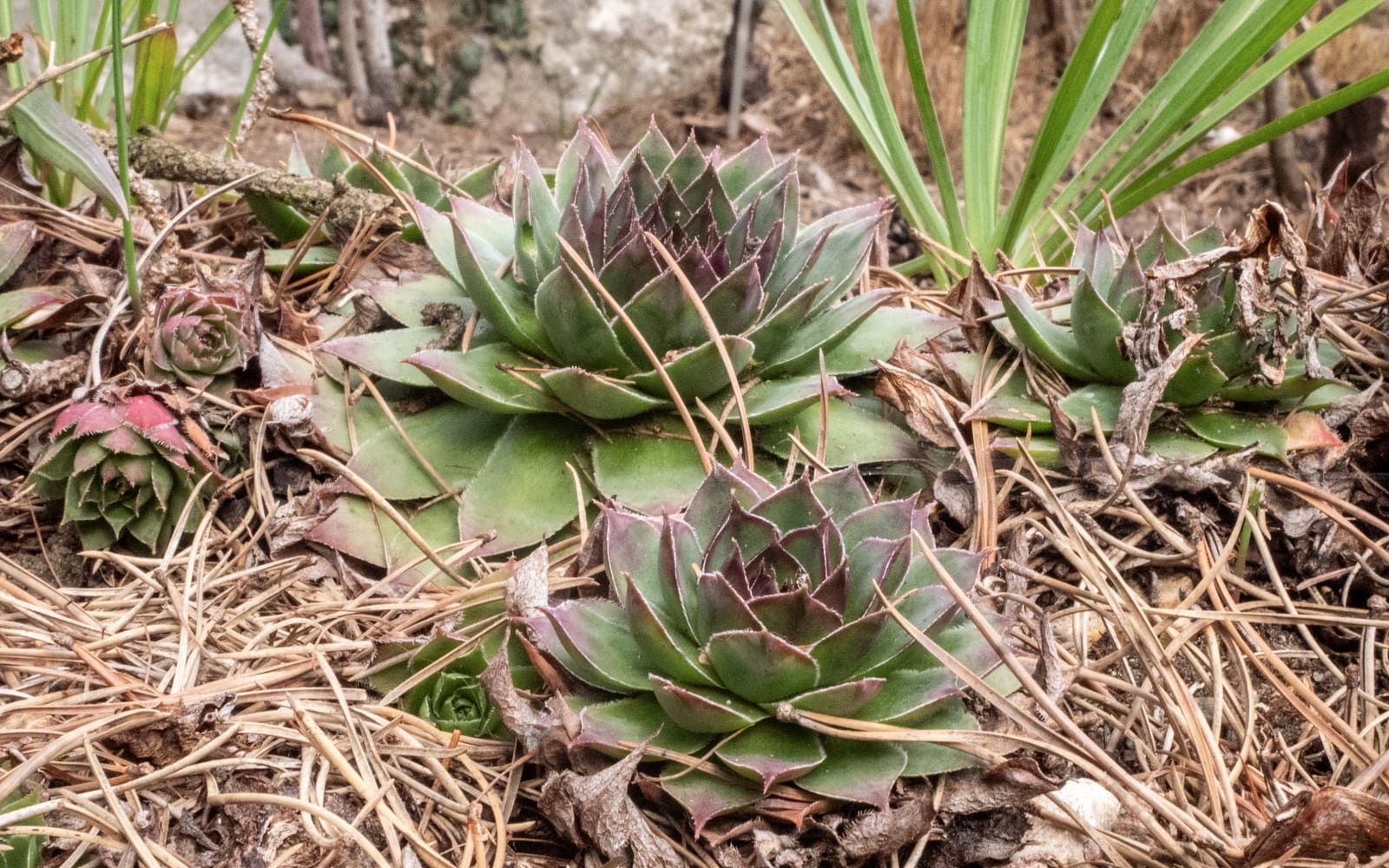
Photo by chrisaliv on Wikimedia Commons, CC BY 4.0
Hens and chicks is a tough little succulent that thrives on neglect outdoors: full sun, gritty soil that drains fast, and almost no watering. Each big rosette, the hen, sends out small offsets, the chicks, until a clump fills a crack in a wall or a shallow pot. It shrugs off cold winters in USDA zones 4 to 8. Wet soil is what kills it. When a hen finally flowers, that rosette dies, and its chicks carry on. The ASPCA lists it as safe for cats and dogs.
Non-toxic to cats and dogs
No signs of poisoning listed. The ASPCA lists it as a safe plant. Its “hens and chickens” database entry is a different plant, Echeveria elegans, also non-toxic. Any plant can still upset a pet’s stomach if it eats enough. Children: low severity. NC State rates it low severity for people: the effects of eating it are unknown, and the sap can irritate skin.
Pet poison line: ASPCA (888) 426-4435
Good for: sunny rock gardens, walls and troughs, cold winters, people who forget to water · Think twice if: your spot is shady or the soil stays wet, your summers are very hot.
Needs at a glance
- Light4 of 4 · Some direct sun6 or more hours of direct sun; afternoon shade in very hot places
- Water1 of 3 · Let the soil dry completelyWater in long dry spells only; none outdoors in winter
- Humidity1 of 3 · AverageOutdoor air is fine; keep winter rain from pooling
- Soil when pottedGritty, sharp-draining mixSandy or gravelly soil; in pots, about one part sharp sand to two parts compost
Indoors: a garden plant. No source covers growing it indoors or in a pot.
How the rating adds up
0 = easiest · 1 = moderate · 2 = hardest
- Missed waterings0 of 2 · EasiestDrought tolerant; outdoor plants often need no watering at all
- Light flexibility2 of 2 · HardestFull sun; afternoon shade only in very hot places
- Humidity0 of 2 · EasiestTakes humid air; drainage matters more than humidity
- Pests and disease1 of 2 · ModerateCrown rot in wet soil; vine weevils in pots, sometimes rust
- Sensitivity to change0 of 2 · EasiestTough and steady; only the hairy types mind cold, wet winters
Growing outdoors
All year: USDA zones 4 to 8, where the coldest winter nights average −30°F (−34°C) or warmer.
- Rock gardens, walls and crevices
- Troughs, shallow pots and green roofs
- Edging and small patches of ground cover
Sources: NC State, RHS, ASPCA, Iowa State, USDA zone map, FISC and GISD. Full list below.
Verified · How we rate plants
Are hens and chicks safe for cats and dogs?
Yes. Two ASPCA articles list Sempervivum, hens and chicks, among plants that are safe for pets. Watch the label, though. The ASPCA's plant database uses the name "hens and chickens" for a different plant, Echeveria elegans, which it also lists as non-toxic, and the ASPCA warns that common names overlap, so keep the botanical names of your plants handy. Any plant can upset a pet's stomach if it eats enough. If a pet chews it and seems unwell, call your vet or the ASPCA Animal Poison Control Center at (888) 426-4435 (a fee may apply).
Are hens and chicks safe for kids?
They're low risk. NC State rates the genus low severity for people: the effects of eating it are unknown, and the sap can irritate skin. NC State even lists it for children's gardens. If a child swallows some and seems unwell, call Poison Help at 1-800-222-1222.
Does the hen die after it flowers?
Yes, but the clump lives on. When a rosette flowers, it dies afterward, and NC State says to remove it. The RHS says rosettes usually flower after 2 or 3 growing seasons, sending up a stalk 6 to 9 inches tall in summer. The chicks around it keep growing and fill the gap. NC State notes that crowding can make rosettes bloom early, a sign they're unhappy, so divide a packed clump. To stop self-seeding, the RHS cuts the flower stalk off before seed forms.
How often should I water hens and chicks?
Hardly ever. NC State says to let it dry out between waterings, and the RHS waters pots and beds only in dry spells in spring and summer, noting that plants can survive without it. Outdoor plants need no water in winter. Overwatering is the real risk: NC State says it leads to crown rot. If you grow one in a pot, the pot needs a drain hole.
Can hens and chicks survive winter outside?
Yes, that's where they do best. NC State lists the species for USDA zones 3 to 8 and the genus for 4 to 8, and says most are frost hardy and actually prefer cool nights and a cold rest in winter. The bigger winter risk is wet. The RHS says grey or hairy types may need shelter from rain, such as a cold frame or a clear cover in wet regions. Skip winter watering. In hot climates, NC State notes they handle heat less well than other succulents, especially in zone 8 and warmer.
Can I grow hens and chicks indoors?
You can, but they're happiest outside. NC State calls the genus an easy houseplant, yet also says plants prefer cool nights and a cold winter rest, which a warm room can't give. Indoors, use your sunniest window: Iowa State says most succulents need at least 6 to 8 hours of bright light. Water only when the soil is completely dry, and give the pot a summer outdoors if you can.
How do I propagate hens and chicks?
The chicks do the work. In spring, pull off an offset and press it into gritty compost; the RHS says it settles in within 4 to 6 weeks. Some chicks sit on a runner: cut it close to the little rosette and press that in. NC State says offsets form every season and separate easily, and a clump can be divided too. Seed works, but the RHS notes named varieties usually don't come true.
What soil do hens and chicks need?
Something gritty that drains fast. NC State says sandy or gravelly soil with sharp drainage, and notes it tolerates poor soil. The RHS avoids heavy clay and, for pots, mixes equal parts soil-free compost, loam-based compost and sharp sand, or half grit and half loam-based compost for troughs. Shallow pans, troughs, wall crevices and green roofs all work. Fertilizer is rarely needed in the ground.
What pests bother hens and chicks?
Not many. Rot from wet soil is the main killer, per NC State and the RHS. The RHS names vine weevil as a pest of potted plants, along with the sempervivum leaf miner, occasional rust, and birds that pull up new plantings. Good drainage and a sunny, open spot head off most trouble.
How Grove helps
Grove sets watering around how dry the soil is, so hens and chicks rarely get water, and none outdoors in winter. Add a spring task to divide a crowded clump or pot up chicks, and assign it to whoever is home that week.
Sources
- NC State Extension Gardener Plant Toolbox: Sempervivum tectorum
- Royal Horticultural Society: How to grow sempervivums
- NC State Extension Gardener Plant Toolbox: Sempervivum (genus)
- ASPCA: Do You Know Which Flowers and Plants are Toxic to Pets? Our Experts Explain! (2026), safe plants
- ASPCA: Are Succulents Safe to Have Around Pets? (2021), non-toxic list
- ASPCA Animal Poison Control: Hens and Chickens (Echeveria elegans)
- Iowa State University Extension: Growing Succulents Indoors
- USDA ARS Plant Hardiness Zone Map (2023)
- Florida Invasive Species Council: Plant List, Category I and II and Watch List (April 2026)
- IUCN Global Invasive Species Database: Sempervivum tectorum (no entry)
- Kew WCVP data release (2026-06-04 file), plant_name_id 2490030: Sempervivum tectorum