Plant care card
Jade plant
Crassula ovata · Árbol de jade
Also called jade tree, money plant or friendship tree
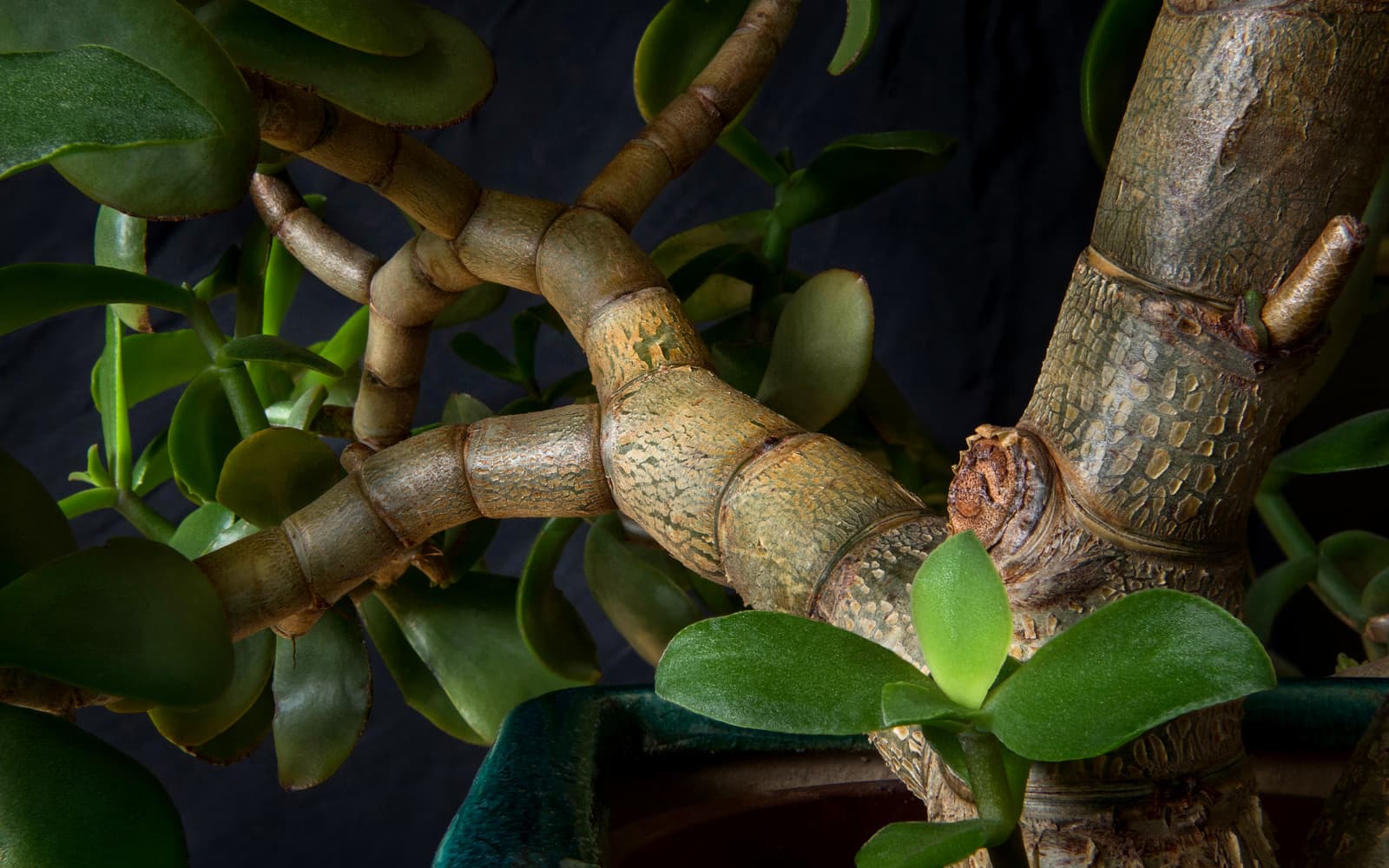
Photo by W.carter on Wikimedia Commons, CC0 1.0

A jade plant wants sun, a fast-draining cactus mix and water only once the soil has dried. It's a South African succulent that stores water in its thick leaves, so a forgotten watering does far less harm than an extra one: overwatering and root rot are what usually kill it. Give it four or more hours of direct sun and it stays compact, and its leaves may blush red at the edges.
Toxic to cats, dogs and horses · Moderate
Vomiting and diarrhea are most common and some pets turn sleepy or wobbly. The ASPCA says cats seem more sensitive than dogs; severe signs are rare. Children: low severity. SDSU Extension says the sap can cause a rash on skin.
Pet poison line: ASPCA (888) 426-4435
Good for: a sunny windowsill, people who forget to water, sharing cuttings with friends · Think twice if: pets chew plants, your brightest window gets no direct sun, you like to water on a fixed schedule.
Needs at a glance
- Light4 of 4 · Some direct sun4 or more hours of direct sun a day, like a south-facing window
- Water1 of 3 · Let the soil dryWater deeply once the soil has dried, then let it drain; in winter, just enough to keep the leaves plump
- Humidity1 of 3 · AverageNormal home humidity is fine
- Soil when pottedCactus or succulent mixFast draining, in a heavy pot with a drain hole so the top-heavy plant doesn’t tip
Indoors: best at 65 to 75°F (18 to 24°C). Keep it above 45°F (7°C) and away from drafts and heat vents.
How the rating adds up
0 = easiest · 1 = moderate · 2 = hardest
- Missed waterings0 of 2 · EasiestStores water in its leaves and tolerates neglect
- Light flexibility2 of 2 · HardestNeeds 4 or more hours of direct sun to stay compact
- Humidity0 of 2 · EasiestAverage home air is fine
- Pests and disease1 of 2 · ModerateMealybugs most often; root rot when overwatered
- Sensitivity to change0 of 2 · EasiestTakes moves well; ease it into stronger sun so the leaves don’t burn
Growing outdoors
All year: USDA zones 11 to 12, where the coldest winter nights average 40°F (4°C) or warmer.
Elsewhere: summer outside in sun, after a gradual start in light shade. Bring it in before nights drop below 45°F (7°C).
- Containers
- Bonsai
- Landscape shrub in frost-free climates
Sources: NC State, Wisconsin Extension, NYBG, Penn State, Clemson, UConn, RHS, ASPCA, SDSU Extension, USDA zone map and Cal-IPC. Full list below.
Verified · How we rate plants
How often should I water a jade plant?
There's no fixed schedule: water deeply when the soil has dried, let it drain, and never leave the pot sitting in water. The sources differ on how dry is dry. The New York Botanical Garden and Penn State say to let the soil dry completely, UConn waters again once the top inch feels dry, and Clemson keeps it barely moist while it grows in spring and summer. From about October to February it grows slowly and needs much less. NYBG waters then only often enough to keep the leaves from puckering, while UConn says to cut back without letting it dry out completely. Too much water is the bigger danger: it drops the leaves and rots the stem.
Why are my jade plant’s leaves wrinkled?
Usually it's thirsty. Wrinkled, puckered or shriveled leaves mean the plant has used up the water stored in them, say the New York Botanical Garden, UConn and SDSU Extension. Check the soil: if it's dry, water deeply and let it drain, and the leaves should firm up again. Clemson and Wisconsin warn that even a succulent suffers from long drought, which can stunt it, spot the leaves and make them fall. If the soil is wet and the leaves are soft or squishy instead, that's too much water, SDSU says.
How much light does a jade plant need?
Lots: four or more hours of direct sun a day, such as a south-facing window, say Clemson, Wisconsin and Penn State. It survives in bright indirect light, but grows dark green, droopy and stretched, without the red leaf edges it gets in strong light. NC State suggests a sunny spot with some afternoon shade, and NYBG says to protect it from the harshest midday sun. When you move it into stronger light, do it gradually so the leaves don't sunburn, UConn and Wisconsin advise.
Clemson, Wisconsin Extension, Penn State, NC State, NYBG, UConn
Why is my jade plant dropping leaves or getting spots?
Check the water first. Overwatering makes leaves drop and the stem rot, and extreme dryness can drop leaves too, say Wisconsin, Penn State and Clemson. Losing a few lower leaves as it ages is normal. Corky brown or gray scabs usually mean more water than it can use: the leaf cells burst, a problem called edema. White spots that wipe off are minerals from hard water or fertilizer, while tiny dots that don't wipe off are normal pores, Penn State says. Sunburn and frost also kill leaves, but new ones sprout. Look for white cottony mealybugs, the most common pest. Clemson, Wisconsin and UConn wipe them off with a cotton swab dipped in rubbing alcohol; the American Orchid Society finds alcohol weak against mealybugs and says it can strip a plant's waxy coating, so test one leaf first. Clemson warns that insecticidal soap may damage jade.
Wisconsin Extension, Penn State, Clemson, NYBG, UConn, American Orchid Society
Can a jade plant flower?
Yes, but it rarely does indoors, say NC State and Penn State. Mature plants make clusters of small, starry white or pink flowers. Long nights trigger them: Wisconsin suggests keeping it dry and cool, around 55°F (13°C), in fall, with no lamps on it after sunset, for several weeks, then watering normally again. UConn also credits cool nights and no light after dark. Sources disagree on when: Clemson and UConn say winter, NC State says spring outdoors, and the RHS says late summer.
NC State, Penn State, Wisconsin Extension, UConn, Clemson, RHS
When should I repot a jade plant?
Not often. It's happy root-bound for years, so repot every 2 or 3 years, or when it gets top-heavy and starts to tip, say Wisconsin, UConn and Penn State. Do it as new growth starts. Use a cactus or succulent mix in a heavy clay or terracotta pot with a drain hole. Water sparingly until it settles in, and wait about four months before feeding, Clemson and Penn State advise.
How do I propagate a jade plant?
From a leaf or a stem cutting. Let the cut piece dry for a few days so the end heals over, then set it in barely moist, well-drained mix, say Wisconsin and UConn. Roots form in a few weeks. Summer is easiest, but it can root any time of year. NC State calls leaf cuttings the easy route, which is why it's such a classic plant to share.
Is a jade plant toxic to cats and dogs?
Yes. The ASPCA lists the jade plant (under its old name, Crassula argentea) as toxic to dogs, cats and horses, with vomiting, depression and loss of coordination. Its Animal Poison Control Center puts jade among moderately toxic plants: most pets get vomiting or diarrhea, some turn sleepy or wobbly, cats seem more sensitive than dogs, and severe signs are rare. NC State also tags it a problem for cats, dogs and horses. Keep it where pets can't chew it, and if one eats some and seems unwell, call your vet or the ASPCA at (888) 426-4435.
Can a jade plant grow outdoors?
Yes, all year in USDA zones 11 to 12, where the coldest nights stay around 40°F (4°C) or warmer, say NC State and Penn State. There it grows into a shrub of 3 to 8 feet. Elsewhere it can spend summer outside: move it into sun gradually so it doesn't scorch, and bring it in before frost. Wisconsin says it may survive a light frost but freezing kills it, and the RHS rates it as not surviving being frozen. We suggest bringing it in by about 45°F (7°C), the low end of the winter range NYBG gives.
NC State, Penn State, USDA zone map, RHS, Wisconsin Extension, UConn, NYBG
Is a jade plant the same as a money plant?
Sometimes, which is why the botanical name helps. NC State lists "money plant" and "lucky plant" among the jade plant's names, and the RHS adds "money tree" and "friendship tree". But the braided "money tree" sold in stores is Pachira, and the "Chinese money plant" is Pilea peperomioides, with round leaves held on long stalks attached at the center, like little lily pads. They need different care, and they differ for pets too: the ASPCA lists the money tree as non-toxic and the jade as toxic.
How Grove helps
Grove turns watering into a check of the soil, so the jade gets a deep drink when it's dry and nobody waters it out of habit. You can add a monthly look under the leaves for mealybugs as a task and assign it, so whoever is home catches them early.
Sources
- NC State Extension Gardener Plant Toolbox: Crassula ovata
- University of Wisconsin-Madison Extension: Jade Plant, Crassula ovata (2025)
- New York Botanical Garden: Jade Plant (Crassula ovata) research guide
- Penn State Extension: Jade Plant, a No-Fuss Houseplant (2023)
- Clemson Cooperative Extension HGIC 1507: Jade Plant
- UConn Home and Garden Education Center: Jade Plants
- Royal Horticultural Society: Crassula ovata
- ASPCA Animal Poison Control: Jade Plant (Crassula argentea)
- ASPCA Animal Poison Control Center: Is That Houseplant Safe for Your Pets? (2019)
- South Dakota State University Extension: Jade Plant, Houseplant How-To (2024)
- USDA ARS Plant Hardiness Zone Map (2023)
- Cal-IPC (California Invasive Plant Council): plant search, "Crassula" (no listing)
- American Orchid Society: Mealybugs on Orchids
- NC State Extension Gardener Plant Toolbox: Pachira aquatica
- NC State Extension Gardener Plant Toolbox: Pilea peperomioides
- ASPCA Animal Poison Control: Money Tree
- ASPCA Animal Poison Control: Chinese Jade (Crassula arborescens)