Plant care card
Moss rose
Portulaca grandiflora · Portulaca
Also called portulaca, rose moss or sun plant
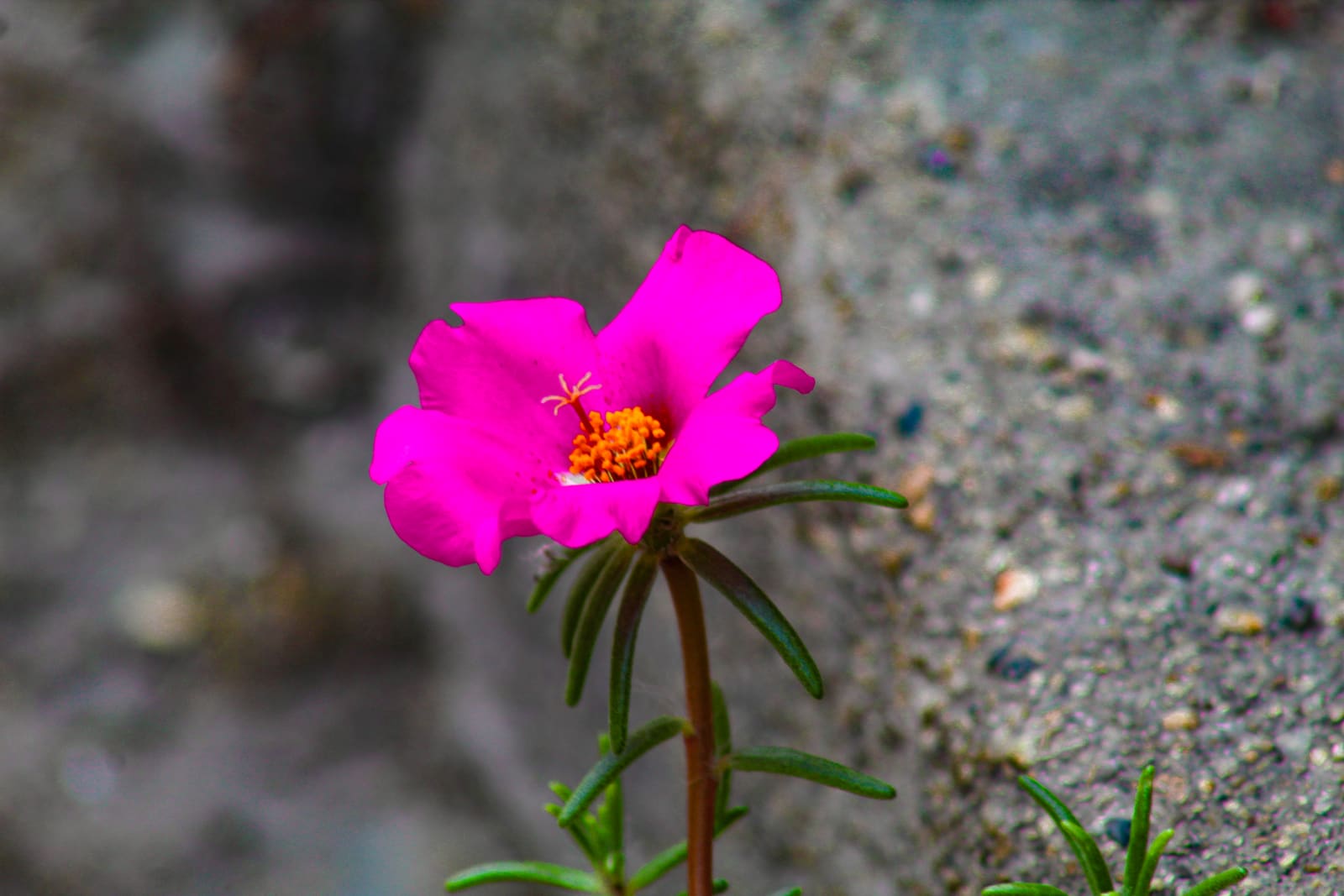
Photo by Sentimentalna on Wikimedia Commons, CC0 1.0

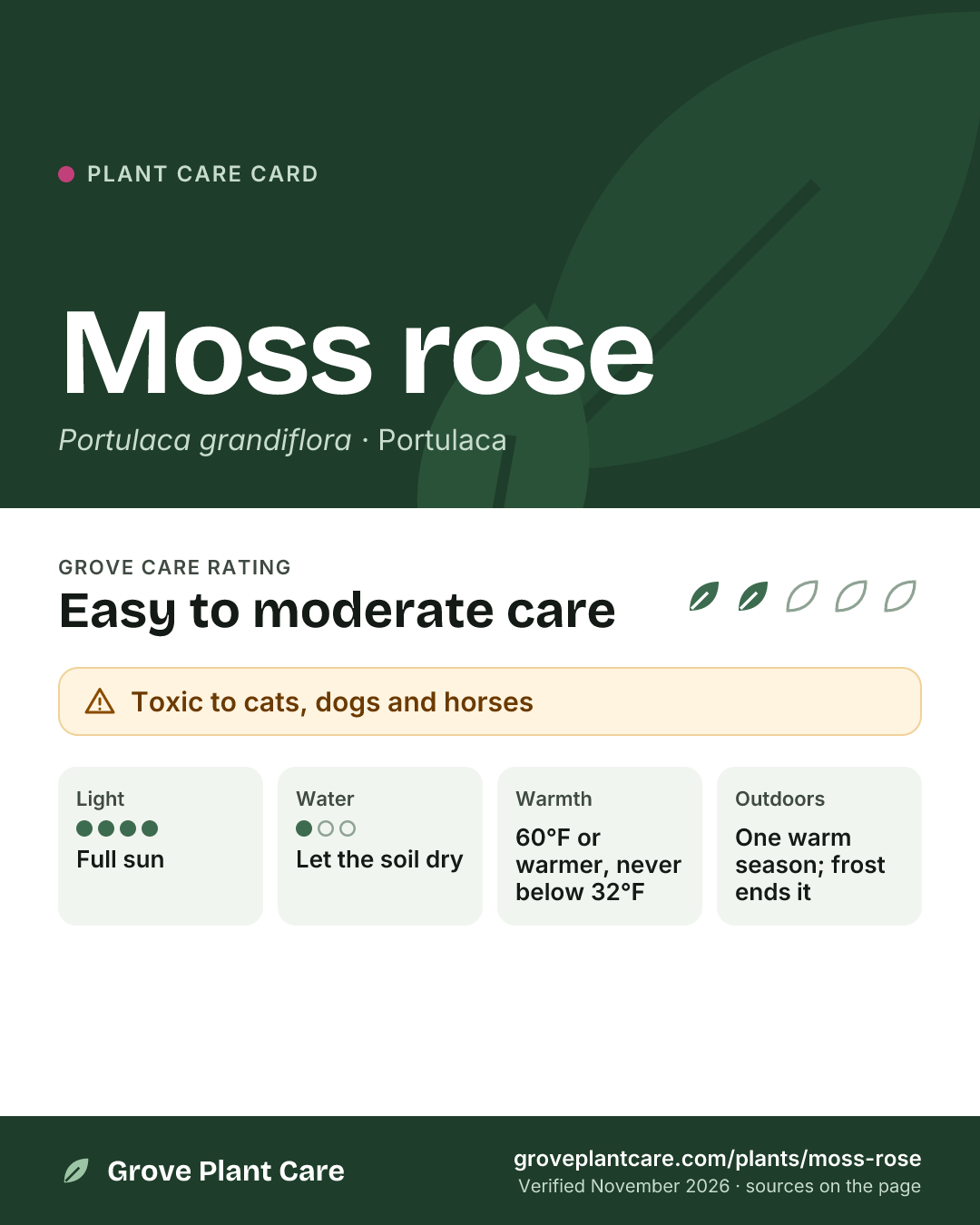
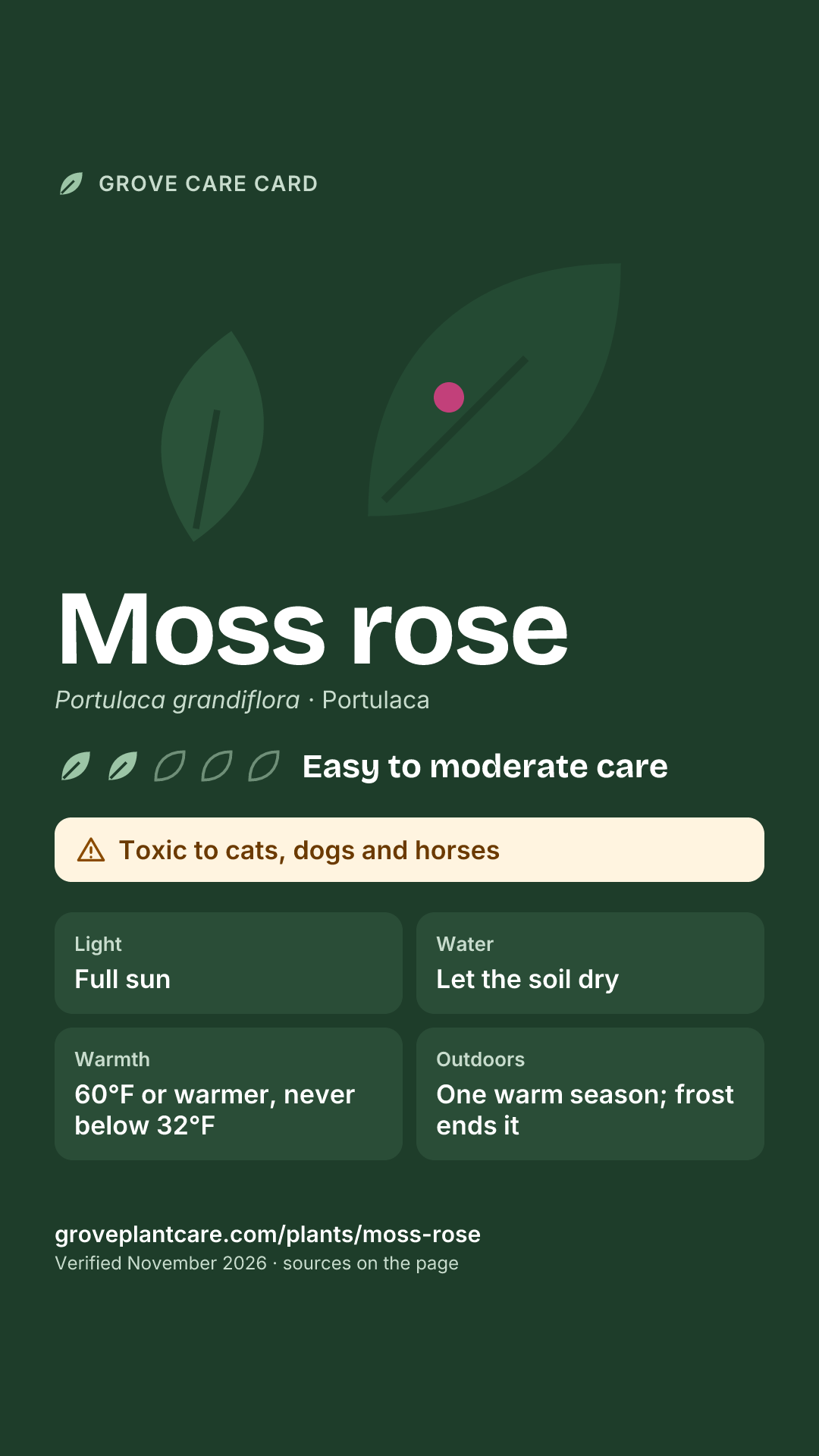
Moss rose is a low, fleshy-leaved summer annual that loves heat, full sun and dry, sandy soil. Give it at least 6 hours of direct sun, water only in long dry spells and make sure the soil drains, because wet soil rots it. Its flowers open in bright sun and close at night and on cloudy days. It isn't a rose at all, and the ASPCA lists moss rose as toxic to cats, dogs and horses.
Toxic to cats, dogs and horses (ASPCA, listed as moss rose)
Drooling and tremors; kidney failure is rare in cats and dogs. The ASPCA's moss rose entry names purslane (Portulaca oleracea), a close relative. UF/IFAS says moss rose is reportedly toxic to pets too, so treat it as toxic. Children: No poisoning information for people found. UF/IFAS says moss rose isn't edible.
Pet poison line: ASPCA (888) 426-4435
Good for: hot, dry, sunny spots where other flowers struggle, hanging baskets and pots on a sunny patio, rock gardens and the edges of paths · Think twice if: cats, dogs or horses graze where you plant it, your spot gets less than 6 hours of sun, the soil stays wet after rain.
Needs at a glance
- Light4 of 4 · Full sun6+ hours of direct sun; flowers close at night and in cloudy weather
- Water1 of 3 · Let the soil dryWater in long dry spells; wet soil rots the stems and roots
- Humidity1 of 3 · AverageDry air is fine; no source asks for more
- Soil when pottedSandy or gritty, well drainedLean, sandy or rocky soil works; it flowers more in richer soil that still drains
Indoors: best at 60°F (16°C) or warmer. Keep it above 32°F (0°C) and away from drafts and heat vents.
How the rating adds up
0 = easiest · 1 = moderate · 2 = hardest
- Missed waterings0 of 2 · EasiestDrought tolerant; it stores water in its fleshy leaves
- Light flexibility2 of 2 · HardestFull sun; the flowers stay shut in shade and on cloudy days
- Humidity0 of 2 · EasiestNo source asks for humidity; it likes hot, dry spots
- Pests and disease0 of 2 · EasiestFew pests: now and then aphids, slugs or mealybugs
- Sensitivity to change1 of 2 · ModerateDoesn't transplant well, and frost kills it
Growing outdoors
Each year: grown for one warm season. Frost kills it, so it is sown or planted again each year.
Elsewhere: summer outside in full sun, in a bed, pot or hanging basket. Bring it in before nights drop below 32°F (0°C).
- Summer annual in beds and edging
- Pots and hanging baskets
- Rock gardens and wall cracks
- Ground cover in hot, dry spots
Sources: NC State, UW-Madison Extension, Illinois Extension, UF/IFAS, ASPCA, ASPCA plant list, Clemson, USDA zone map, FISC, Cal-IPC, Global Invasive Species Database, UF/IFAS Assessment and Hawaii weed risk assessment. Full list below.
Verified · How we rate plants
Is moss rose a kind of rose?
No. Moss rose (Portulaca grandiflora) is a small succulent related to purslane, with narrow, fleshy leaves and flowers that look a bit like little roses. The name causes mix-ups because "moss roses" are also a real group of roses: an old garden rose class named for the mossy growth on the flower stalk and sepals, which smells of pine when you rub it, says the American Rose Society. Illinois Extension adds that those first appeared as sports of Centifolia roses in the 1700s. If your plant is a woody shrub with prickles, it's a rose; if it's a low mat of fleshy leaves, it's this one.
How much sun does moss rose need?
Full sun, at least 6 hours of direct sun a day, say NC State, UW-Madison and Illinois Extension. Light also controls the flowers: the classic types open only in bright sun and close from sundown to sunup and on cloudy or rainy days. Newer series such as Sundial and Sundance stay open longer, even on cool, gray days, UW-Madison notes. In shade it grows poorly and barely blooms.
How often should I water moss rose?
Not often. It stores water in its fleshy leaves and stems, and NC State rates it highly drought and heat tolerant. Water in long dry spells, and more often in a pot or basket, which dries faster. It grows lusher and blooms more with some moisture, UW-Madison says, but soil that stays wet causes stem, root and crown rot. Good drainage matters more than how much you water.
Is moss rose toxic to cats and dogs?
Treat it as toxic. The ASPCA lists "moss rose" and "portulaca" as toxic to dogs, cats and horses, under the name of its close relative purslane (Portulaca oleracea). The toxin is soluble calcium oxalates, and signs include drooling and tremors; kidney failure is rare in cats and dogs. UF/IFAS Extension says moss rose (P. grandiflora) is reportedly toxic to dogs, cats and horses too. Plant it where pets and horses don't graze. If a pet eats some and seems unwell, call your vet or the ASPCA Animal Poison Control Center at (888) 426-4435.
Is moss rose the same as purslane?
No, but they're cousins in the same genus, and nursery labels mix them up, UW-Madison says: plants sold as moss rose may be labeled P. oleracea, P. umbraticola or P. grandiflora, and many are hybrids. The leaves tell them apart. Moss rose has narrow, plump, almost needle-like leaves; purslane and its hybrids have flat leaves. Moss rose flowers are bigger, 1 to 3 inches across. Some purslanes are grown as a vegetable, but UF/IFAS Extension says moss rose isn't edible.
Can moss rose grow in a pot or hanging basket?
Yes, and it's one of its best uses. NC State and UW-Madison both suggest pots and hanging baskets, where the stems trail over the edge. Use a mix that drains fast, give it full sun, and check the soil more often than you would in a garden bed. In the ground it makes a mat 3 to 8 inches tall and up to a foot wide, good for edging, rock gardens and the cracks of a sunny wall. It won't take foot traffic.
Does moss rose come back every year?
Usually it comes back as new seedlings. It's grown as a summer annual, and frost kills it, so plant it only after the last frost, once the soil has warmed. It often reseeds: the capsules split and drop tiny blue-gray seeds that may sprout next year, and deadheading cuts that down. In South Florida it can bloom all year, says UF/IFAS Extension in Nassau County. NC State and UW-Madison say it self-seeds without becoming invasive, and UF/IFAS finds it isn't a problem in Florida's natural areas. Hawaii's weed risk screen still rates it high risk because it seeds so freely, so near wild areas there, pick another plant.
UW-Madison Extension, NC State, UF/IFAS, UF/IFAS Assessment, Hawaii weed risk assessment
Why is my moss rose not blooming?
Check the light first. The flowers open only in bright sun, so a shady spot or a run of cloudy days keeps them shut, and they always close at night. Wet soil is the next suspect, since it rots the stems. Pinch off spent flowers to keep new ones coming, and if the plant gets straggly by midsummer, shear it back for fuller growth, UW-Madison suggests.
How Grove helps
Grove can remind you to water pots and baskets in hot, dry weeks and skip the beds after rain. You can add pinching off spent flowers as a repeating task and assign it, so whoever is out on the patio keeps the blooms coming.
Sources
- NC State Extension Gardener Plant Toolbox: Portulaca grandiflora
- University of Wisconsin-Madison Extension, Wisconsin Horticulture: Moss Rose, Portulaca grandiflora (2025)
- University of Illinois Extension, Flowers: Portulaca
- UF/IFAS Extension Charlotte County: Moss rose, the other portulaca (2026)
- ASPCA Animal Poison Control: Moss Rose (listed as Portulaca oleracea)
- ASPCA Animal Poison Control: Toxic and Non-Toxic Plants
- UF/IFAS Extension Nassau County: Fact sheet: Portulaca (2017, updated 2022)
- Clemson Cooperative Extension HGIC 1454: Moving Houseplants Indoors and Outdoors
- USDA ARS Plant Hardiness Zone Map (2023)
- Florida Invasive Species Council: 2026 Plant List, Category I and II (April 2026)
- California Invasive Plant Council: Cal-IPC Inventory
- Global Invasive Species Database (IUCN ISSG): search for Portulaca grandiflora
- UF/IFAS Assessment of Non-Native Plants in Florida's Natural Areas: Portulaca grandiflora
- Hawaii-Pacific Weed Risk Assessment (Plant Pono): Portulaca grandiflora (2009)
- Kew WCVP data release (2026-06-04 file), plant_name_id 2573991: Portulaca grandiflora
- American Rose Society: Rose Classifications (2018)
- University of Illinois Extension, Our Rose Garden: Types of Roses