Plant care card
Rose
Rosa (garden hybrids, often listed as Rosa × hybrida) · Rosal
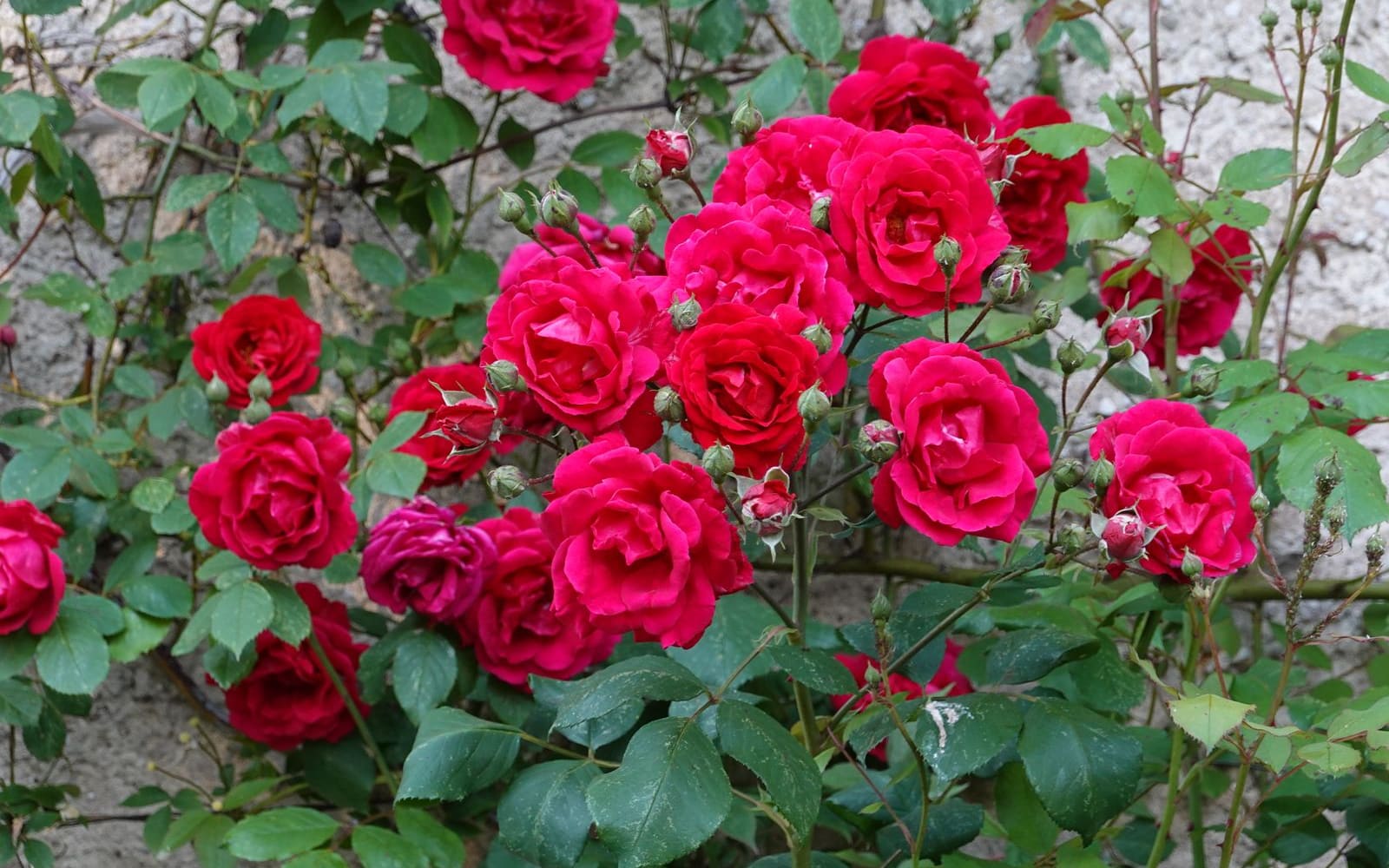
Photo by Guilhem Vellut on Wikimedia Commons, CC BY 2.0

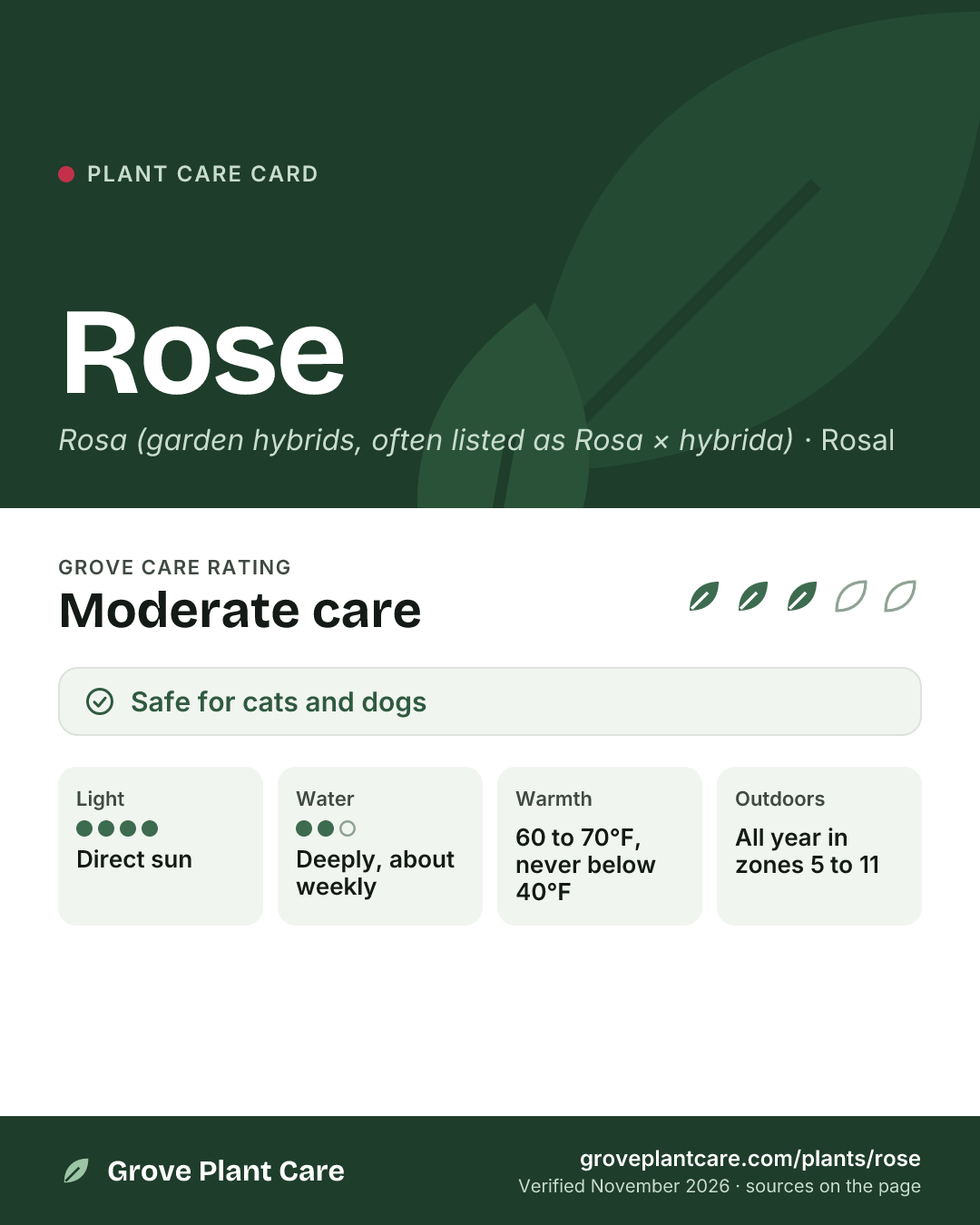
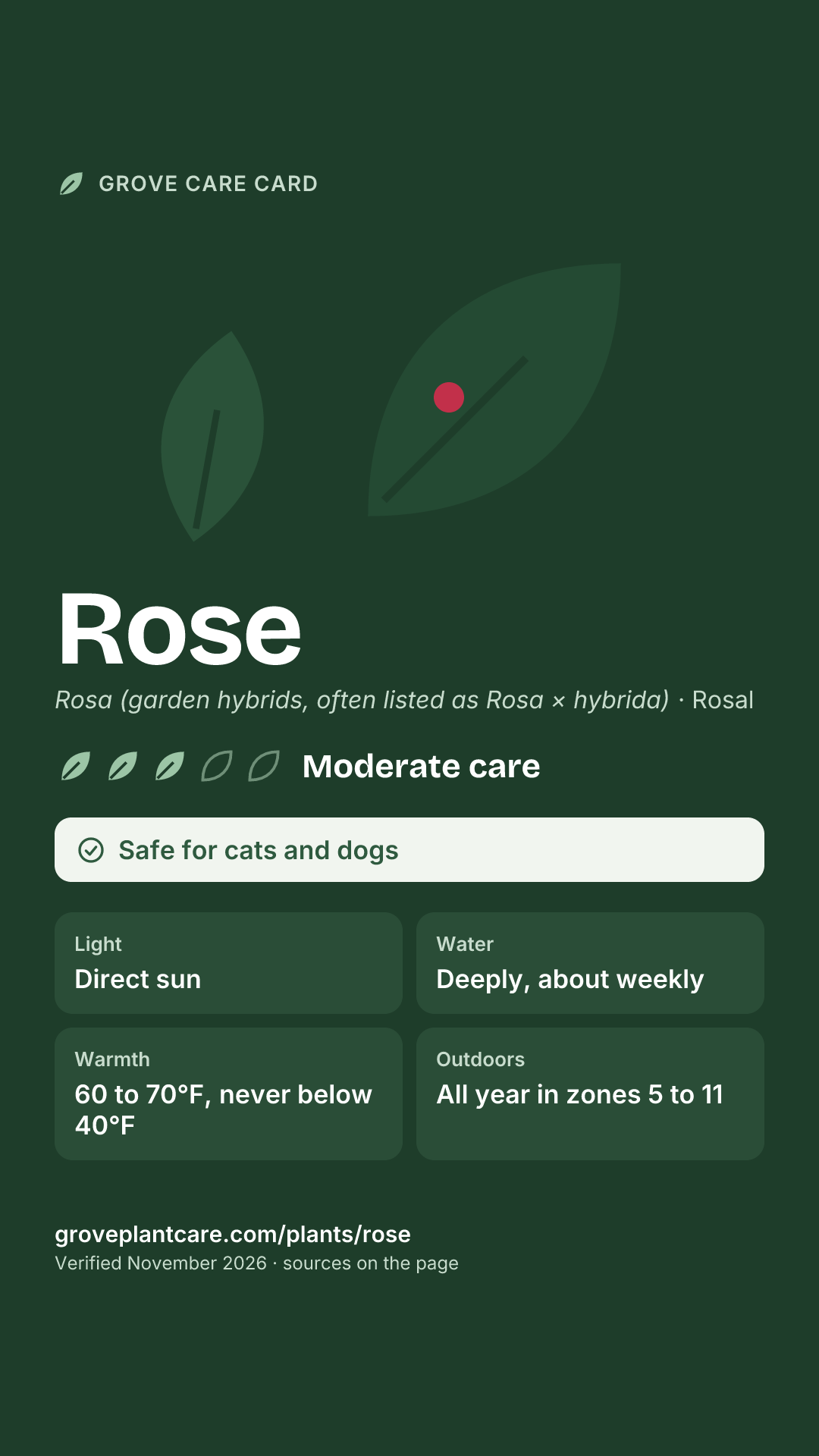
Roses want full sun, at least 6 hours a day, deep watering about once a week, and rich soil that drains well. Disease is the main fight: black spot and powdery mildew show up most on the fancier roses, so keep water on the soil and off the leaves, and pick disease-resistant types. Roses are safe for cats and dogs per the ASPCA, but the prickly stems can hurt. Which group your rose belongs to changes how you prune it and how much winter protection it needs, so start there.
Non-toxic to cats, dogs and horses
No signs of poisoning listed. The prickles are the risk: chewed or stepped-on stems can hurt and lead to infection. Children: NC State gives no poison rating, but flags roses as a problem for children; the stems have prickles.
Pet poison line: ASPCA (888) 426-4435
Good for: sunny gardens, cut flowers, pet-friendly homes · Think twice if: you have less than 6 hours of sun, you won’t spray or pick a disease-resistant rose, kids or pets brush past prickly stems.
Needs at a glance
- Light4 of 4 · Direct sun6 or more hours a day; morning sun dries the leaves
- Water2 of 3 · Water deeplyAbout 1 inch a week in the ground; pots dry faster
- Humidity1 of 3 · AverageKeep water off the leaves
- Soil when pottedRich, well-drained soilLoose and full of organic matter, acidic to neutral
Indoors: best at 60 to 70°F (16 to 21°C). Keep it above 40°F (4°C) and away from drafts and heat vents.
How the rating adds up
0 = easiest · 1 = moderate · 2 = hardest
- Missed waterings1 of 2 · ModerateWants deep, regular water; wilts and drops leaves if it goes dry
- Light flexibility2 of 2 · HardestNeeds full sun, 6 or more hours a day
- Humidity0 of 2 · EasiestOutdoor air is fine; wet leaves invite disease
- Pests and disease2 of 2 · HardestBlack spot, powdery mildew, beetles, aphids and mites
- Sensitivity to change0 of 2 · EasiestNo trouble with moves noted; winter cold matters by group
Growing outdoors
All year: USDA zones 5 to 11, where the coldest winter nights average −20°F (−29°C) or warmer.
Elsewhere: summer outside in full sun. Bring it in before nights drop below 40°F (4°C).
- Beds and borders
- Hedges
- Climbing on fences and arbors
- Containers (miniatures)
- Cutting gardens
Sources: NC State, Illinois Extension, Clemson, Iowa State, RHS, ASPCA, NYBG, Pennsylvania Dept. of Agriculture and Global Invasive Species Database. Full list below.
Verified · How we rate plants
What kind of rose do I have?
Look at the flowers and the size of the plant. Hybrid teas carry one large, shapely bloom on a long stem, the classic florist rose. Floribundas carry clusters of smaller flowers, several open at once, on plants about 2 to 3 feet tall. Grandifloras look like tall hybrid teas with their blooms in small clusters. Miniatures are small in every way: most stay around 18 inches, with tiny flowers and leaves, and they are the potted roses sold as gifts. Climbers grow long canes, 5 to 20 feet or more, that you tie to a fence or arbor, since roses don't really climb on their own. Shrub or landscape roses are a catch-all group known for a rounded shape, cold hardiness and better disease resistance. The sources draw the lines a little differently, and the same rose can land in two groups, so treat this as a guide.
Illinois Extension, Iowa State, American Rose Society, NC State, Clemson
Are roses poisonous to cats and dogs?
No. The ASPCA lists roses as non-toxic to cats, dogs and horses. The prickles are the problem. The ASPCA warns that a pet that bites, steps on or swallows a prickly stem can get hurt or end up with an infection, so trim the prickles off cut roses or keep the vase out of reach. NC State gives no poison rating for people, but flags roses as a problem for children because of the prickles. If your pet chewed a stem and seems unwell, call your vet or the ASPCA Animal Poison Control Center at (888) 426-4435 (a fee may apply).
How much sun do roses need?
Full sun: at least 6 hours of direct sun a day, and 8 is better. Clemson says morning sun matters most, because it dries the dew off the leaves and that helps keep disease away. In shade, roses bloom less and get sick more. The RHS, writing for cloudy Britain, gives 4 hours as the bare minimum.
How often should I water roses?
Water deeply and not too often. Illinois Extension suggests about 1 inch of water a week in the growing season, more in hot weather or sandy soil. Iowa State says a thorough soak every 7 to 10 days in dry weather. Short of water, a rose wilts, drops leaves and stops blooming. Aim the water at the soil with a soaker hose, since wet leaves invite disease, and water in the morning if you must wet them. Roses in pots dry out faster and may need water every day in a heat wave.
How do I feed roses?
Roses are hungry plants. Feed when new leaves appear in spring, then again after each flush of flowers. Illinois Extension says to stop by August 15 so the plant can harden off for winter; Clemson says to stop about six weeks before your first frost. Iowa State notes that hybrid teas, grandifloras and floribundas need the most food and water, and shrub roses get by on less. Roses in pots need feeding more often, about every two weeks from mid-spring to late summer per the RHS.
Why does my rose have black spots on its leaves?
That's most likely black spot, a fungus that Clemson calls common and serious. It spreads in warm, wet weather and can strip a plant of most of its leaves. Powdery mildew, a white dusting on leaves and buds, is the other big one. To prevent both: plant in full sun, space plants so air moves, water the soil in the morning, and clear away infected leaves. Iowa State says fungicides work only as prevention, so save them for roses that have struggled before. The easiest fix is a disease-resistant rose: shrub roses resist black spot far better than hybrid teas. Also watch for Japanese beetles, aphids and spider mites. Rose rosette, a virus spread by tiny mites, has no cure, and infected plants usually die within a couple of years.
When should I prune roses?
Most roses get pruned in spring, around the time forsythia blooms, once the worst cold is over. First cut out dead, damaged and pencil-thin canes. Hybrid teas, floribundas, grandifloras and miniatures bloom on new growth, so they get the hardest cut: Illinois Extension says to remove one half to two thirds of the height and keep 3 to 5 strong canes. Shrub roses need less: take out about a third of the oldest canes each spring. Roses that bloom only once, including ramblers and many old garden roses, flower on old wood, so prune them right after they bloom. Cut about 1/4 inch above a bud that faces outward.
How do I get roses through winter?
It depends on the group. Iowa State says shrub, species and old garden roses are generally hardy, while hybrid teas, grandifloras and floribundas aren't reliably hardy in cold climates and need protection. Help them harden off: stop feeding by mid-August and stop cutting flowers in early fall so hips can form. After a hard frost, Illinois Extension suggests mounding 10 to 12 inches of soil or compost over the base of tender roses, then adding leaves or straw once the mound freezes. Wet, cold soil does more damage than dry cold, so good drainage helps. Keep watering in dry spells until the ground freezes.
Are roses invasive?
Garden roses aren't on the official lists we checked. A few wild species are. Multiflora rose (Rosa multiflora) is a noxious weed in Pennsylvania and is in the Global Invasive Species Database, which notes it reached the US in 1866 as a rootstock for garden roses and later spread from erosion plantings. Macartney rose (Rosa bracteata) is also in that database. As a garden plant, roses are hardy outdoors in USDA zones 5 to 11 overall, though each group differs.
Pennsylvania Dept. of Agriculture, Global Invasive Species Database, NC State
How Grove helps
Grove sets a watering check for each rose, so a potted one gets water before it wilts and a garden one gets its weekly soak in dry spells. You can add spring pruning, feeding after each bloom flush and fall winter prep as repeating tasks and assign them, so whoever is home that week takes care of it.
Sources
- NC State Extension Gardener Plant Toolbox: Rosa
- University of Illinois Extension, Our Rose Garden: Care
- Clemson Cooperative Extension HGIC 1172: Growing Roses
- Iowa State University Extension: Rose Care by Season (reviewed 2026)
- Royal Horticultural Society: How to grow roses
- Iowa State University Extension: Rose Types and Cultivars (reviewed 2025)
- Clemson Cooperative Extension HGIC 2106: Rose Diseases
- University of Illinois Extension, Our Rose Garden: Types of Roses
- ASPCA Animal Poison Control: Rose
- ASPCA: 3 Expert Tips for a Pet-Safe Valentine’s Day (2025)
- ASPCA: Keeping Pets Safe on Valentine’s Day (2016)
- NYBG Mertz Library: Can I keep miniature roses indoors? (2023)
- Pennsylvania Department of Agriculture: Controlled Plant and Noxious Weed Lists
- Global Invasive Species Database (IUCN ISSG): Rosa multiflora
- Global Invasive Species Database (IUCN ISSG): Rosa bracteata
- Kew WCVP data release (2026-06-04 file), plant_name_id 2964569: Rosa
- American Rose Society: Rose Classifications (2018)
- University of Illinois Extension, Our Rose Garden: Pruning