Plant care card
Shrub rose
Rosa Shrub Group · Rosal arbustivo
Also called Landscape rose
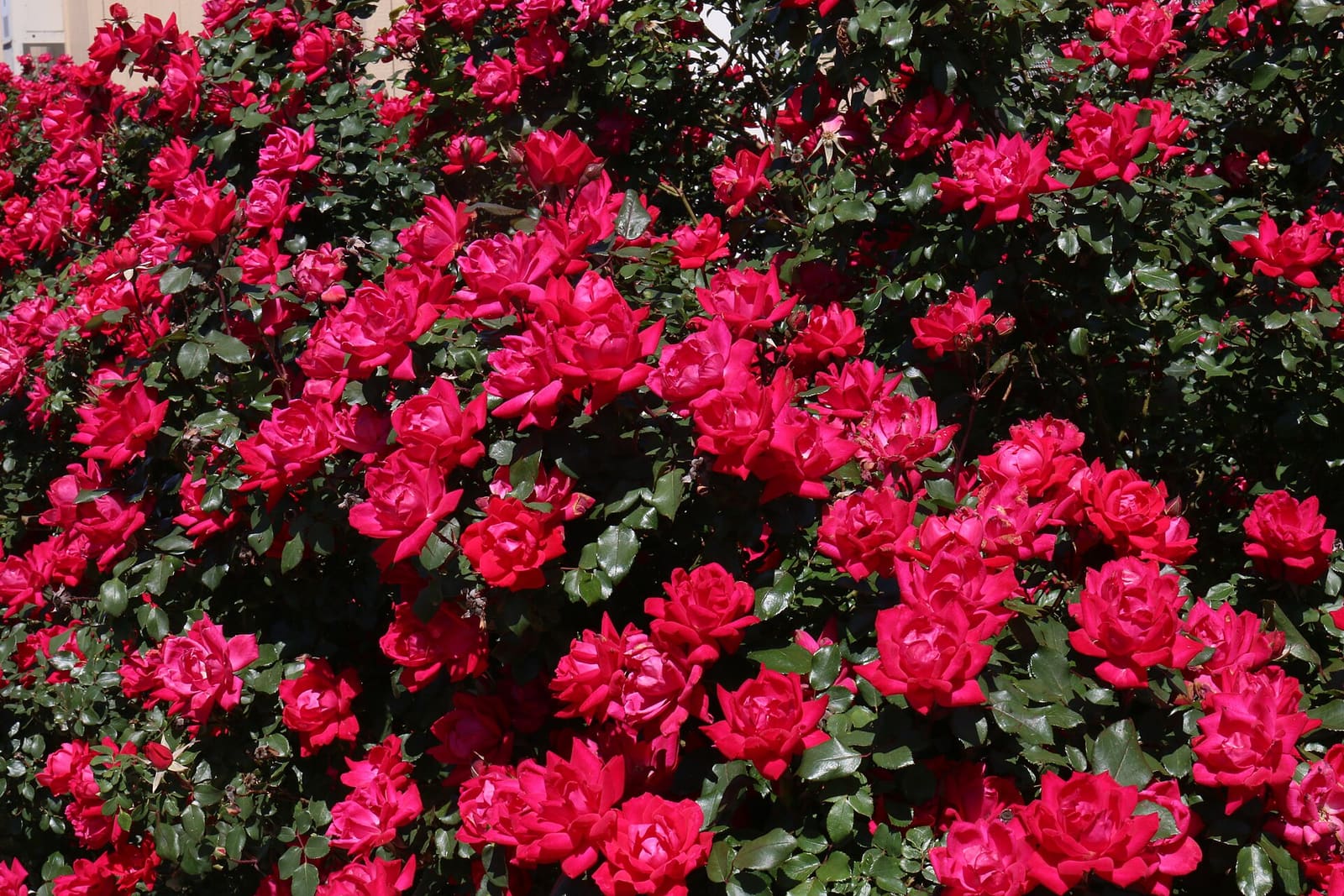
Photo by gosdin on Wikimedia Commons, CC0 1.0

Shrub roses, also called landscape roses, are the easygoing roses: hardy, repeat blooming and bred to shrug off black spot and mildew, so most need no spraying. They grow on their own roots and fit into hedges and mixed borders like any other shrub. Give them full sun, water in dry spells and a light trim each spring; they need far less pruning than hybrid teas, and most get through cold winters without cover. They're safe for cats and dogs per the ASPCA, but the prickles can hurt.
Non-toxic to cats, dogs and horses
No signs of poisoning listed. The prickles are the risk: chewed or stepped-on stems can hurt and lead to infection. Children: NC State gives no poison rating, but flags roses as a problem for children; the stems have prickles.
Pet poison line: ASPCA (888) 426-4435
Good for: gardens without spraying, hedges and borders, pet-friendly homes · Think twice if: your space is small and the variety is one of the big, arching kinds.
Needs at a glance
- Light4 of 4 · Direct sun6 hours or more is best; a few manage with less
- Water2 of 3 · Water in dry spellsAbout 1 inch a week, at the soil; forgives some unevenness
- Humidity1 of 3 · AverageKeep water off the leaves
- Soil when pottedFertile, well-drained soilMoist, acidic to neutral; mulch helps
Indoors: best at 60 to 70°F (16 to 21°C). Keep it above 40°F (4°C) and away from drafts and heat vents.
How the rating adds up
0 = easiest · 1 = moderate · 2 = hardest
- Missed waterings1 of 2 · ModerateCopes with uneven watering better than other modern roses; blooms best with steady moisture
- Light flexibility2 of 2 · HardestFull sun is best; some bloom fairly well in part shade
- Humidity0 of 2 · EasiestOutdoor air is fine; wet leaves invite disease
- Pests and disease1 of 2 · ModerateResists black spot and mildew; beetles and aphids still visit
- Sensitivity to change0 of 2 · EasiestNo trouble with moves noted; hardy, with some tip dieback after harsh winters
Growing outdoors
All year: USDA zones 4 to 9, where the coldest winter nights average −30°F (−34°C) or warmer.
Elsewhere: summer outside in full sun. Bring it in before nights drop below 40°F (4°C).
- Hedges
- Mixed borders
- Mass plantings
- Containers
Sources: NC State, Iowa State, Illinois Extension, Clemson, ASPCA, NYBG, Pennsylvania Dept. of Agriculture and Global Invasive Species Database. Full list below.
Verified · How we rate plants
What is a shrub or landscape rose?
It's a catch-all group. Illinois Extension calls shrub roses the class for roses that don't fit well anywhere else, from hybrid rugosas and hybrid musks to the newest landscape roses, and notes that every rose is technically a shrub. Iowa State says shrub roses, also called landscape roses, have become the main type sold at garden centers, prized for repeat bloom, winter hardiness and disease resistance, and that they grow on their own roots. Popular examples the sources name include the Knock Out and Canadian Explorer series and the Griffith Buck roses. Sizes vary a lot: Iowa State gives 1½ to 4 feet, while the American Rose Society describes sprawling plants of 5 to 15 feet. The ARS also puts David Austin's English roses in this class.
Illinois Extension, Iowa State, American Rose Society, NC State
Are shrub roses poisonous to cats and dogs?
No. The ASPCA lists roses as non-toxic to cats, dogs and horses. The prickles are the danger: the ASPCA warns that a pet that bites, steps on or swallows a prickly stem can get hurt or end up with an infection, which matters for a rose hedge along a path. NC State gives roses no poison rating, but flags them as a problem for children because of the prickles. If your pet chewed a stem and seems unwell, call your vet or the ASPCA Animal Poison Control Center at (888) 426-4435 (a fee may apply).
Do shrub roses need spraying for black spot?
Most don't. Iowa State says shrub roses resist black spot and powdery mildew naturally, so you can grow them without fungicides, and Clemson says shrub-type roses need fewer chemical controls. NC State describes the Explorer roses as extremely resistant to black spot, mildew and rust, and the Knock Out roses as bred to resist black spot. Illinois Extension warns that fungicides often damage the leaves of rugosa roses. Insects still show up: NC State lists Japanese beetles, aphids, cane borers and rose midges. Clemson adds that English roses, though often sold as disease resistant, usually aren't in the South.
How do I prune a shrub rose?
Lightly. Illinois Extension says to leave a new shrub rose unpruned for its first two or three seasons, then use the one-third method: each spring, cut about a third of the oldest canes to the ground, so the plant keeps renewing itself. For repeat-blooming shrub roses, the RHS suggests shortening strong growth by up to a third in late winter and cutting a few old stems to the base. Shrub roses that bloom only once get pruned after flowering. NC State says Knock Out roses need less pruning than most roses, mainly to manage their size, with a light trim in late February.
How much sun and water does a shrub rose need?
Full sun is best, at least 6 hours a day. Some manage with less: NC State says Knock Out roses are among the few that bloom reasonably well in part shade, and Illinois Extension says hybrid musks can bloom with about 5 hours of direct sun. Iowa State says shrub roses handle uneven soil moisture better than hybrid teas, but still grow and bloom best with steady moisture. Water deeply in dry spells, about 1 inch a week, aimed at the soil, and mulch to hold moisture in.
Do shrub roses survive cold winters?
Most do. Iowa State says shrub roses are winter hardy there and need no extra protection, though some see tip dieback after a very cold winter, and Knock Out roses sometimes lose their upper stems. NC State lists the Explorer roses as hardy to USDA zone 3, a few to zone 2. Because shrub roses grow on their own roots, a plant that freezes back regrows as the same rose; Illinois Extension notes that Parkland roses can die back to the snow line and still regrow and flower well.
How should I feed a shrub rose?
Lightly. Iowa State says most roses are best fed in spring, and NC State suggests feeding Oso Easy roses in spring and summer. Don't overdo it: Illinois Extension says the hardy Explorer and Parkland roses do better without heavy feeding, which pushes lush, soft growth. Stop feeding by mid-August so the plant can harden off for winter.
Do I need to deadhead a shrub rose?
Usually it's optional. NC State says Oso Easy roses don't need deadheading, and some will set hips if the faded flowers stay on. Illinois Extension suggests leaving the old flowers on rugosa and other shrub roses grown for their hips, which give color in fall and winter. Iowa State says deadheading does help modern and shrub roses bloom again, so trim spent flowers if you want more blooms.
How Grove helps
Grove sets a watering check for your shrub rose, so it gets a deep soak when a dry spell runs long. You can add the spring one-third prune and a summer check for beetles as repeating tasks and assign them, so whoever is home that week takes care of it.
Sources
- NC State Extension Gardener Plant Toolbox: Rosa Knock Out Group (shrub rose)
- NC State Extension Gardener Plant Toolbox: Rosa Explorer Group (shrub rose)
- NC State Extension Gardener Plant Toolbox: Rosa Oso Easy Group (landscape rose)
- NC State Extension Gardener Plant Toolbox: Rosa Carefree Beauty (Buck shrub rose)
- Iowa State University Extension: Rose Care by Season (reviewed 2026)
- University of Illinois Extension, Our Rose Garden: Types of Roses
- NC State Extension Gardener Plant Toolbox: Rosa
- Clemson Cooperative Extension HGIC 2106: Rose Diseases
- University of Illinois Extension, Our Rose Garden: Care
- Iowa State University Extension: Rose Types and Cultivars (reviewed 2025)
- ASPCA Animal Poison Control: Rose
- ASPCA: 3 Expert Tips for a Pet-Safe Valentine’s Day (2025)
- ASPCA: Keeping Pets Safe on Valentine’s Day (2016)
- NYBG Mertz Library: Can I keep miniature roses indoors? (2023)
- Clemson Cooperative Extension HGIC 1172: Growing Roses
- Pennsylvania Department of Agriculture: Controlled Plant and Noxious Weed Lists
- Global Invasive Species Database (IUCN ISSG): Rosa multiflora
- Global Invasive Species Database (IUCN ISSG): Rosa bracteata
- American Rose Society: Rose Classifications (2018)
- Royal Horticultural Society: How to grow roses
- Royal Horticultural Society: Rose pruning, shrub roses
- University of Illinois Extension, Our Rose Garden: Pruning