Plant care card
Hybrid tea rose
Rosa Hybrid Tea Group · Rosa híbrida de té
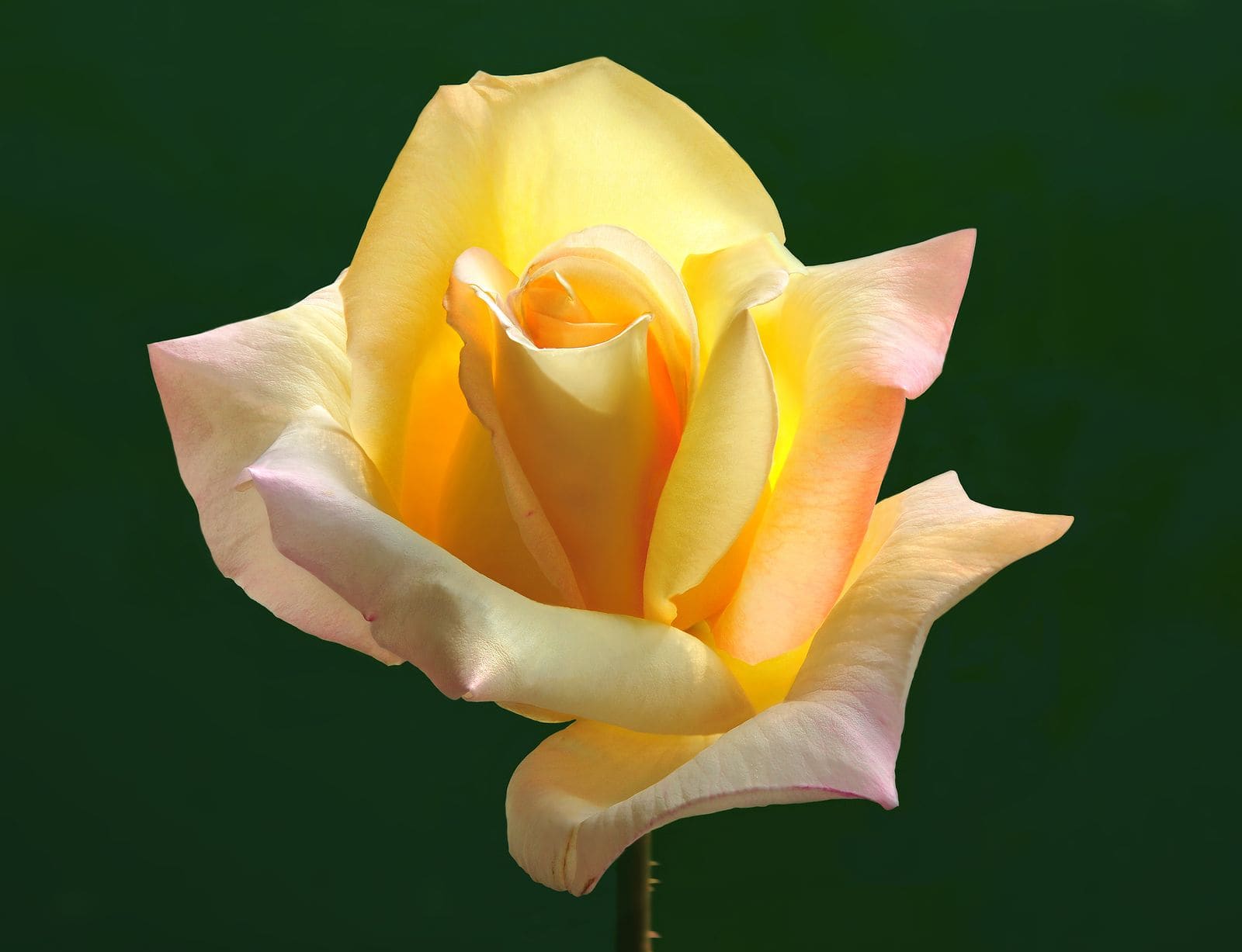
Photo by Michael Gäbler on Wikimedia Commons, CC BY 3.0

Hybrid teas are the classic long-stemmed roses: one large, shapely bloom on each stem, made for cutting. They're also among the fussiest roses. They want full sun, deep watering, regular feeding, a hard prune every spring, and in cold climates winter protection. Black spot and powdery mildew hit them harder than tougher shrub roses, so many gardeners spray. They're safe for cats and dogs per the ASPCA, but the prickles can hurt.
Non-toxic to cats, dogs and horses
No signs of poisoning listed. The prickles are the risk: chewed or stepped-on stems can hurt and lead to infection. Children: NC State gives no poison rating, but flags roses as a problem for children; the stems have prickles.
Pet poison line: ASPCA (888) 426-4435
Good for: long-stemmed cut flowers, sunny beds, pet-friendly homes · Think twice if: you want a low-care rose, you won’t spray for black spot or cover it for winter.
Needs at a glance
- Light4 of 4 · Direct sun6 to 8 hours a day; morning sun dries the leaves
- Water2 of 3 · Water deeplyAbout 1 inch a week, at the soil, more in heat
- Humidity1 of 3 · AverageKeep water off the leaves
- Soil when pottedRich, well-drained soilAmended with organic matter, acidic to neutral
Indoors: best at 60 to 70°F (16 to 21°C). Keep it above 40°F (4°C) and away from drafts and heat vents.
How the rating adds up
0 = easiest · 1 = moderate · 2 = hardest
- Missed waterings2 of 2 · HardestAmong the thirstiest roses; wilts and drops leaves when dry
- Light flexibility2 of 2 · HardestNeeds full sun, 6 to 8 hours a day
- Humidity0 of 2 · EasiestOutdoor air is fine; wet leaves invite disease
- Pests and disease2 of 2 · HardestProne to black spot and mildew; often needs spraying
- Sensitivity to change0 of 2 · EasiestNo trouble with moves noted; needs winter protection in cold areas
Growing outdoors
All year: USDA zones 5 to 9, where the coldest winter nights average −20°F (−29°C) or warmer.
Elsewhere: summer outside in full sun. Bring it in before nights drop below 40°F (4°C).
- Cutting gardens
- Beds and borders
- Large containers
Sources: NC State, Iowa State, Clemson, Illinois Extension, ASPCA, NYBG, Pennsylvania Dept. of Agriculture and Global Invasive Species Database. Full list below.
Verified · How we rate plants
How do I know my rose is a hybrid tea?
Look for one large bloom at the tip of a long, straight stem. The buds are long and pointed, and the flowers are shapely with about 30 to 50 petals, per the American Rose Society. Plants are upright, usually 2½ to 6 feet tall. Iowa State notes they are usually grafted onto a rootstock. A grandiflora looks similar but carries its blooms in small clusters on a taller plant; a floribunda has clusters of smaller flowers. The class began in 1867 with 'La France'.
American Rose Society, Illinois Extension, Iowa State, Clemson
Are hybrid tea roses poisonous to cats and dogs?
No. The ASPCA lists roses as non-toxic to cats, dogs and horses, and that includes a bouquet of long-stemmed roses. The prickles are the danger: the ASPCA warns that a pet that bites, steps on or swallows a prickly stem can get hurt or end up with an infection, so strip the prickles from cut stems or keep the vase out of reach. NC State gives roses no poison rating, but flags them as a problem for children because of the prickles. If your pet chewed a stem and seems unwell, call your vet or the ASPCA Animal Poison Control Center at (888) 426-4435 (a fee may apply).
How much sun and water does a hybrid tea need?
Full sun, 6 to 8 hours a day, with morning sun to dry the dew off the leaves. Water deeply, about 1 inch a week, more in hot weather or sandy soil, and aim it at the soil. Iowa State says hybrid teas, grandifloras and floribundas need the most water and food of all roses, and Clemson warns that a thirsty rose wilts, drops leaves and stops blooming.
Why does my hybrid tea get black spot?
Hybrid teas are especially prone to it. Illinois Extension says heavy inbreeding has cut the disease resistance of many, and Iowa State says that without regular fungicide, black spot and powdery mildew can leave them almost bare. Clemson calls hybrid teas susceptible roses that need a spray program that starts before the season. Help them by planting in full sun with space for air, watering the soil in the morning and clearing fallen leaves. If you don't want to spray, a shrub rose is the easier choice.
How do I prune a hybrid tea rose?
Hard, in early spring, around the time forsythia blooms. Hybrid teas flower on new growth, and Illinois Extension says they need the most severe pruning of any rose. Cut out dead, damaged and pencil-thin canes first. Then keep 3 to 5 strong canes spread around the plant and remove one half to two thirds of the height, cutting about 1/4 inch above a bud that faces outward.
How do I cut hybrid tea roses for a vase?
Cut the stem just above an outward-facing bud that sits over a leaf with five or seven leaflets; that's also how you deadhead. New flowering stems grow from there. Illinois Extension says to stop cutting flowers after October 1 in cold climates, so the plant can harden off for winter.
Will my hybrid tea survive the winter?
It depends on your winters. Iowa State says hybrid teas aren't fully hardy and need winter protection, and Illinois Extension says they suffer considerable cold damage. NC State lists 'Dainty Bess' for USDA zones 5 to 9 and notes it needs protection from late frost. Stop feeding by mid-August, and after a hard frost mound 10 to 12 inches of soil or compost over the base, then add leaves or straw once it freezes. Because most hybrid teas are grafted, keep the graft protected: Illinois notes grafted roses are more easily killed by severe cold than roses on their own roots if they aren't planted properly.
How often should I feed a hybrid tea?
Regularly. Feed when the leaves come out in spring and again after each flush of flowers. Clemson suggests halving the amount in June, July and August and stopping about six weeks before the first frost; Illinois Extension stops by August 15. Water well after feeding and keep dry fertilizer off the canes.
How Grove helps
Grove sets a watering check for your hybrid tea, so it gets its deep weekly soak in dry spells. You can add spring pruning, feeding after each bloom flush, a weekly look for black spot and fall winter protection as repeating tasks and assign them, so whoever is home that week takes care of it.
Sources
- NC State Extension Gardener Plant Toolbox: Rosa 'Dainty Bess' (hybrid tea)
- Iowa State University Extension: Rose Care by Season (reviewed 2026)
- Clemson Cooperative Extension HGIC 1172: Growing Roses
- University of Illinois Extension, Our Rose Garden: Care
- NC State Extension Gardener Plant Toolbox: Rosa
- Clemson Cooperative Extension HGIC 2106: Rose Diseases
- Iowa State University Extension: Rose Types and Cultivars (reviewed 2025)
- University of Illinois Extension, Our Rose Garden: Types of Roses
- ASPCA Animal Poison Control: Rose
- ASPCA: 3 Expert Tips for a Pet-Safe Valentine’s Day (2025)
- ASPCA: Keeping Pets Safe on Valentine’s Day (2016)
- NYBG Mertz Library: Can I keep miniature roses indoors? (2023)
- Pennsylvania Department of Agriculture: Controlled Plant and Noxious Weed Lists
- Global Invasive Species Database (IUCN ISSG): Rosa multiflora
- Global Invasive Species Database (IUCN ISSG): Rosa bracteata
- American Rose Society: Rose Classifications (2018)
- University of Illinois Extension, Our Rose Garden: Pruning