Plant care card
Oriental arborvitae
Platycladus orientalis · Tuya oriental
Also called Chinese arborvitae, oriental thuja or Thuja orientalis (its former name)
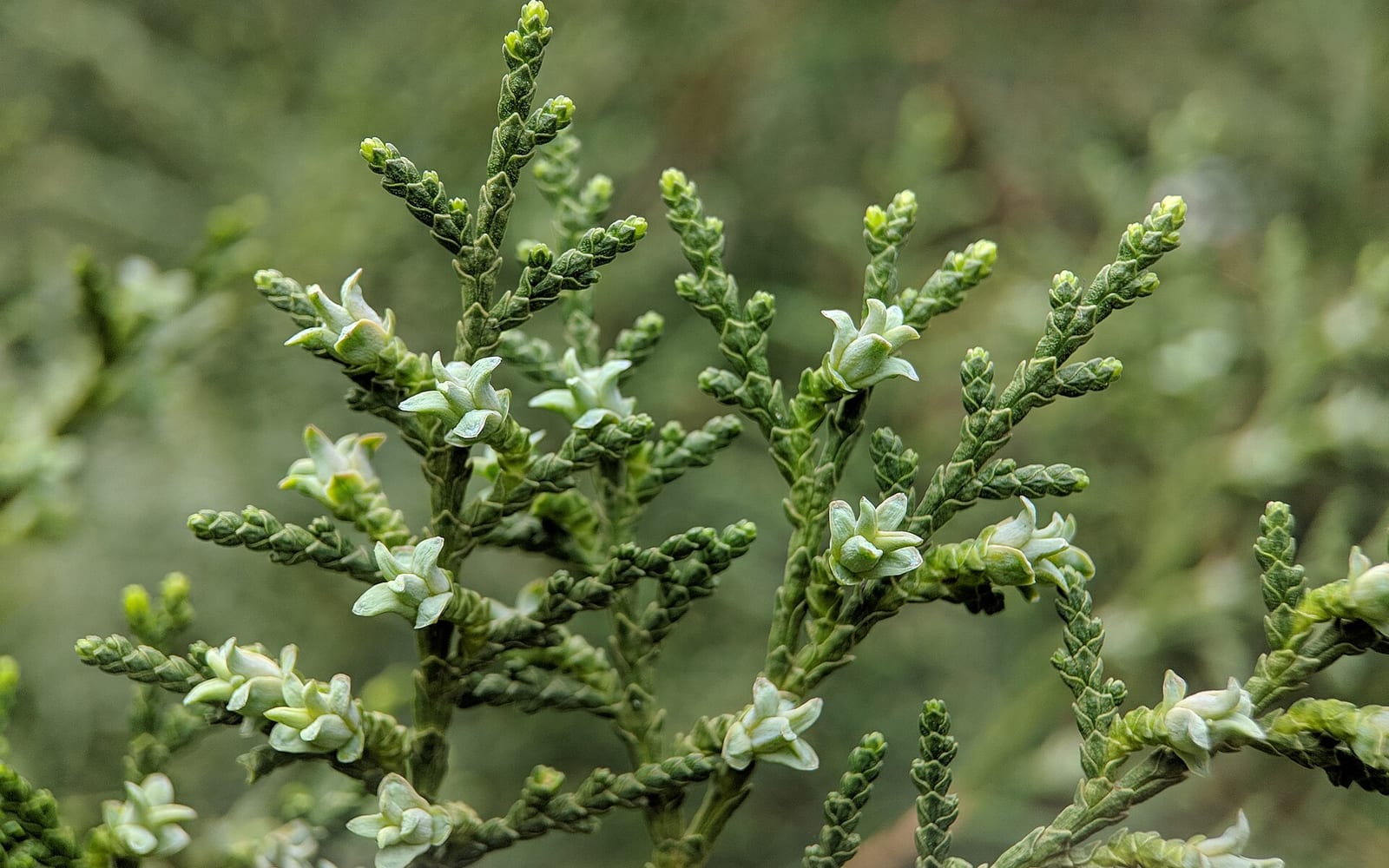
Photo by Sun Jiao (Interaccoonale) on Wikimedia Commons, CC BY 4.0

Oriental arborvitae (Platycladus orientalis, formerly Thuja orientalis) is an evergreen shrub or small tree with flat sprays of scale-like leaves held upright, like pages in a book. It grows in USDA zones 6 to 9, wants full sun or light shade and soil that drains well, and handles drought once it is established. It grows 15 to 25 ft tall, and dwarf cultivars stay much smaller. Plant it where it has room, because it handles pruning poorly. No pet toxicity rating exists.
Not rated for pets
Neither the ASPCA nor NC State rates oriental arborvitae. No reputable source lists it as toxic, but none rates it either, so keep it away from pets that chew plants. Children: No poisoning information in NC State or the ASPCA lists.
Pet poison line: ASPCA (888) 426-4435
Good for: a formal hedge or privacy screen, hot, dry spots once it is established, small yards, with a dwarf cultivar · Think twice if: your winters bring heavy snow or ice, which breaks branches, you want to shape it often: it handles pruning poorly, the soil stays wet.
Needs at a glance
- Light4 of 4 · Sun to part shadeFull sun is best; it takes 2 to 6 hours of sun
- Water2 of 3 · Water while youngRegular water until established, then it handles drought; never soggy
- Humidity1 of 3 · AverageOutdoor air with good circulation
- Soil when pottedWell-drained soilSand or loam is best; clay only where it drains, as on a slope
Indoors: a garden plant. No source covers growing it indoors or in a pot.
How the rating adds up
0 = easiest · 1 = moderate · 2 = hardest
- Missed waterings1 of 2 · ModerateDrought tolerant once established; water young plants regularly
- Light flexibility1 of 2 · ModerateFull sun is best; takes light or partial shade
- Humidity0 of 2 · EasiestGrows outdoors; good air flow keeps the foliage dry
- Pests and disease1 of 2 · ModerateSpider mites, bagworms and a twig blight
- Sensitivity to change1 of 2 · ModerateHandles pruning poorly; snow, ice and harsh winter wind damage it
Growing outdoors
All year: USDA zones 6 to 9, where the coldest winter nights average −10°F (−23°C) or warmer.
- Screens and hedges
- Specimen shrub
- Foundation planting
Sources: NC State, UF/IFAS, UConn, ASPCA plant list, Hawaii weed risk assessment, USDA zone map, Oregon State, FISC, Cal-IPC, GISD and UF/IFAS Assessment. Full list below.
Verified · How we rate plants
Is oriental arborvitae toxic to cats and dogs?
We can't say for sure. Neither the ASPCA nor NC State rates oriental arborvitae, and we found no reputable source that lists it as toxic. Hawaii's weed risk assessment notes no toxicity, which helps but isn't a pet safety rating. If your pet chewed a plant and seems unwell, call your vet or the ASPCA Animal Poison Control Center at (888) 426-4435. If a child eats some, call Poison Help at 1-800-222-1222.
Is oriental arborvitae invasive?
No official list we checked names it. UF/IFAS finds it isn't a problem species anywhere in Florida and says it may be recommended there. Hawaii's weed risk assessment rates it low risk. It is also absent from the Florida Invasive Species Council lists, the Cal-IPC inventory in California, Hawaii's noxious weed list and the Global Invasive Species Database.
UF/IFAS Assessment, UF/IFAS, Hawaii weed risk assessment, FISC, Cal-IPC, GISD
How much sun and water does oriental arborvitae need?
Full sun is best. NC State says it also takes partial shade, 2 to 6 hours of sun, and UF/IFAS and UConn say light shade. Give it soil that drains well: UF/IFAS says sand or loam is best and clay works only on a slope where water runs off. NC State and UConn say it does poorly in wet, boggy spots. Water young plants regularly; once it is established, UF/IFAS rates its drought tolerance as high.
How cold can oriental arborvitae get?
NC State lists USDA zones 6a to 9b, and UF/IFAS 6A to 10A, so it takes winter nights that average −10°F (−23°C) or warmer. UConn and Oregon State say zone 5 is possible in a protected spot. UConn suggests avoiding sites with harsh winter wind, and the foliage can turn bronze or brownish in winter, which NC State and Oregon State describe as normal. Heavy snow and ice can break its branches.
How big does oriental arborvitae get, and can I prune it?
UF/IFAS gives 15 to 20 ft tall and 10 to 15 ft wide, and NC State and UConn 18 to 25 ft tall. Dwarf cultivars stay small: NC State lists 'Westmont' at about 2 ft and 'Juniperoides' at about 3 ft, and UF/IFAS gives 'Aureus' 3 to 5 ft. Choose the size you want up front, because UF/IFAS says it does not take pruning well: all its foliage sits on the outside of the crown. It can be raised into a small tree by removing the lowest branches.
What pests and problems affect oriental arborvitae?
NC State, UF/IFAS and UConn all name spider mites and bagworms. UF/IFAS adds a fungal blight that browns the inner twigs; cut out the affected parts and plant it in sun with good air flow so the foliage stays dry. Healthy, well-placed plants have few problems, NC State says.
How is oriental arborvitae different from American arborvitae?
They are different plants that people often mix up, NC State says. American arborvitae is Thuja occidentalis. Oriental arborvitae now has its own genus, Platycladus, though some nurseries still sell it as Thuja orientalis, Oregon State notes. Look at the sprays: on oriental arborvitae they stand upright and nearly parallel, and its cones are fleshy and blue-green at first, with a hooked tip on each scale.
How Grove helps
Grove can remind you to water a young hedge until it is established and to check for spider mites and bagworms each season. You can assign both as tasks to anyone who helps with the garden.
Sources
- NC State Extension Gardener Plant Toolbox: Platycladus orientalis (oriental arborvitae)
- UF/IFAS Extension ENH648: Platycladus orientalis, Oriental Arborvitae (Gilman et al., rev. 2018)
- UConn Plant Database: Platycladus orientalis (oriental arborvitae)
- ASPCA Animal Poison Control: Toxic and Non-Toxic Plants
- Hawaii-Pacific Weed Risk Assessment (Plant Pono): Platycladus orientalis
- USDA ARS Plant Hardiness Zone Map (2023)
- Oregon State University Landscape Plants: Platycladus orientalis
- Florida Invasive Species Council: 2026 Plant List, Categories I and II (April 2026)
- California Invasive Plant Council: Cal-IPC Inventory
- IUCN Global Invasive Species Database: search for Platycladus orientalis
- UF/IFAS Assessment of Non-Native Plants in Florida: Platycladus orientalis
- Kew WCVP data release (2026-06-04 file), plant_name_id 378336: Platycladus orientalis