Plant care card
Peperomia 'Hope'
Peperomia deppeana × quadrifolia · Peperomia Hope
Also called peperomia Hope or Peperomia rotundifolia 'Hope'
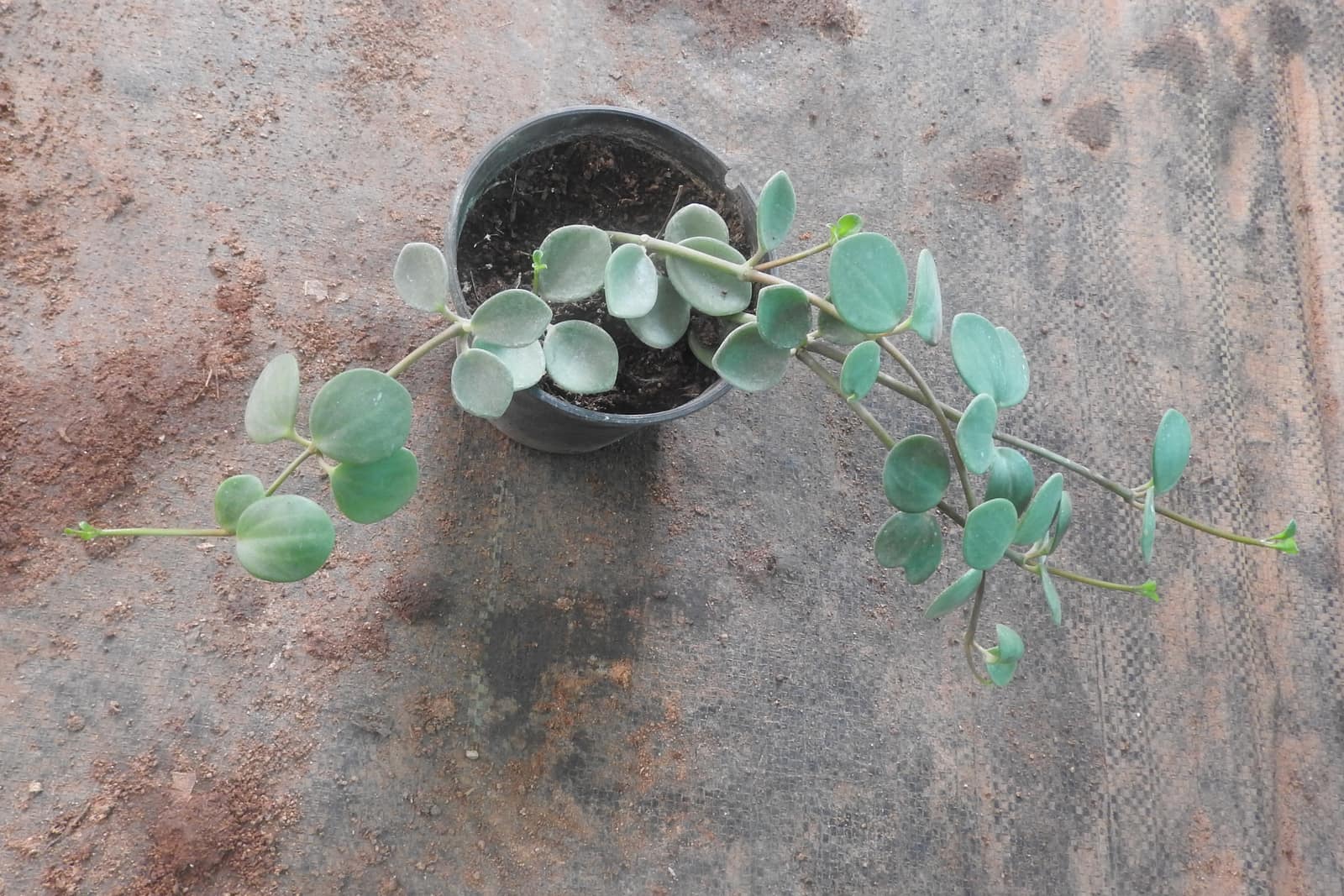
Photo by Yercaud-elango on Wikimedia Commons, CC BY 4.0

Peperomia 'Hope' is a trailing hybrid with round, fleshy leaves set in fours along its stems. Give it bright, indirect light, let the mix dry between waterings, and keep it warm and out of cold drafts. Overwatering is the classic mistake: it drops leaves and rots the roots. Treat it like a semi-succulent and it stays tidy and easy, and NC State lists it as safe for cats and dogs.
Non-toxic to cats and dogs (NC State)
No signs of poisoning listed. NC State lists it under Peperomia rotundifolia, which the ASPCA also rates non-toxic. The ASPCA has no page for Hope or its parents. Children: No poisoning information found.
Pet poison line: ASPCA (888) 426-4435
Good for: hanging baskets and shelf edges, a bright window out of hot sun, homes with cats and dogs · Think twice if: you like to water on a fixed schedule, your only spot gets hours of direct sun, your room gets cold drafts in winter.
Needs at a glance
- Light3 of 4 · Bright indirectAn east or west window, or set back from a south one; no hot direct sun
- Water2 of 3 · Let the mix dryLet it dry between waterings, drain the pot, and water less in winter
- Humidity1 of 3 · AverageA normal home is fine
- Soil when pottedFree-draining mixHouseplant or cactus mix, with extra perlite if you tend to overwater
Indoors: best at 65 to 86°F (18 to 30°C). Keep it above 55°F (13°C) and away from drafts and heat vents.
How the rating adds up
0 = easiest · 1 = moderate · 2 = hardest
- Missed waterings1 of 2 · ModerateLet the mix dry between waterings; overwatering drops leaves and rots roots
- Light flexibility1 of 2 · ModerateBright, indirect light; it puts up with a bright north window, and direct sun scorches it
- Humidity0 of 2 · EasiestAverage home air is fine; a humidifier helps in a dry winter
- Pests and disease1 of 2 · ModerateMealybugs, spider mites, fungus gnats, scale and whiteflies; root rot from overwatering is the most common problem
- Sensitivity to change1 of 2 · ModerateKeep it out of cold drafts; fluoride in tap water can brown the leaf tips
Growing outdoors
All year: USDA zones 10 to 12, where the coldest winter nights average 30°F (−1°C) or warmer.
Elsewhere: summer outside in bright shade with no direct sun. Bring it in before nights drop below 60°F (16°C).
- Houseplant
- Hanging basket
- Shady patio pot in summer
Sources: NC State, Clemson HGIC, RHS, ASPCA, ASPCA plant list, Arkansas Extension, USDA zone map, FISC, Hawaii noxious weed list, GISD and Cal-IPC. Full list below.
Verified · How we rate plants
What is Peperomia 'Hope'?
A hybrid made by a breeder. Its US plant patent (PP24,794, granted in 2014) says it came from a 2007 cross in the Netherlands between Peperomia deppeana and Peperomia quadrifolia, two species that Kew says grow wild in Mexico and Central America. The patent describes thicker, brighter green leaves than its parents, about 3 cm (1.2 in) long, in whorls of four. If your tag says Peperomia tetraphylla 'Hope', that is a different species name: Kew treats P. tetraphylla, P. quadrifolia and P. deppeana as three separate species. NC State files 'Hope' under Peperomia rotundifolia. No source covers the care of 'Hope' alone, so this card uses advice for peperomias as a group.
How often should I water Peperomia Hope?
Let the mix dry out between waterings, says Clemson, then drain the pot before it goes back on its saucer. The RHS says to let it partly dry and to check with a finger instead of watering on a routine, and to water less in winter. Overwatering is the main danger: Clemson says it makes peperomias drop leaves and calls root rot from too much water their most common disease, and NC State warns about root rot too.
How much light does Peperomia Hope need?
Bright, indirect light. The RHS suggests an east or west window, or a spot set back from a south window. Clemson says it puts up with a bit less light near a large north window. Direct sun can scorch the leaves (Clemson, NC State), and too much shade gives thin, straggly stems (RHS).
Why are my Peperomia Hope's leaves falling off or turning yellow?
Check the soil first. Yellow leaves point to overwatering, says NC State, and Clemson says overwatering makes leaves drop. Curling leaves can mean dry soil or very dry air (NC State). Brown leaf tips can come from fluoride in tap water or low humidity, says the RHS, which suggests rainwater or filtered water at room temperature. Cold drafts upset it too, so move it away from cold windows and vents.
What temperature and humidity does Peperomia Hope need?
Warm rooms and ordinary home air. The RHS gives an ideal range of 18 to 30°C (65 to 86°F). The University of Arkansas Extension puts peperomias in its medium group, with nights of 55 to 60°F (13 to 16°C), so we use 55°F (13°C) as the low end. NC State says peperomias adapt to most home humidity, and the RHS says most do fine in normal household air. Clemson suggests a humidifier during a dry winter.
What soil and pot does Peperomia Hope need?
A free-draining mix in a pot with a drain hole. Clemson suggests a well-drained houseplant or cactus potting mix, with extra perlite if you tend to overwater. The RHS likes a houseplant compost with added perlite. Repotting is rare: Clemson says it can stay in the same pot for several years, and the RHS repots in spring into a pot only a few centimeters wider than the roots.
How do I propagate Peperomia Hope?
From stem cuttings. The patent says the breeder grew every new plant from cuttings, which rooted in about 25 days at around 20°C (68°F). Clemson suggests a 3 to 5 inch (8 to 13 cm) piece with the lowest leaves removed, set in moist mix under clear plastic out of direct sun, or a 4 to 6 inch (10 to 15 cm) cutting in water. The RHS takes cuttings in spring or summer. Cutting a stem just above a leaf also makes the plant branch and fill out (Clemson).
Is Peperomia Hope safe for cats and dogs?
Yes, as far as the sources go. NC State lists 'Hope' on its Peperomia rotundifolia page, which it tags as non-toxic to cats, dogs and horses, and the ASPCA lists Peperomia rotundifolia as non-toxic too. The ASPCA has no page for 'Hope' itself or for its two parent species. Clemson adds that most peperomias are considered safe for pets. Any plant can still upset a pet's stomach if it eats enough.
Can Peperomia Hope go outside?
In summer, in shade. Clemson waits until nights stay at 60°F (16°C) or higher, then moves peperomias to deep shade first and keeps them out of direct sun all summer. Bring it back in before nights drop below that. NC State lists USDA zones 10 to 12 for the plant it files 'Hope' under. No source gives a cold limit, so the coldest night we show is the bottom of zone 10, 30°F (-1°C). We found no invasive listing for the hybrid or either parent (Florida FISC, Hawaii's noxious weed rules, Cal-IPC and the IUCN database), checked November 2026.
Clemson HGIC, NC State, USDA zone map, FISC, Hawaii noxious weed list, Cal-IPC, GISD
How Grove helps
Grove schedules a check on the soil instead of a fixed watering day, so the pot gets water only once the mix has dried, and less in winter. You can add a monthly pest check and a reminder to bring it in before cool nights as tasks you can assign to whoever takes care of the plants that week.
Sources
- NC State Extension Gardener Plant Toolbox: Peperomia rotundifolia (lists 'Hope' as a cultivar)
- NC State Extension Gardener Plant Toolbox: Peperomia (radiator plant)
- Clemson HGIC 1567: Peperomia (Peperomia spp.) Indoor Plant Care and Growing Guide (2026)
- RHS: How to grow peperomia
- ASPCA Animal Poison Control: Peperomia Rotundifolia
- ASPCA Animal Poison Control: Toxic and Non-Toxic Plants
- Clemson HGIC: Peperomia Houseplants (2025)
- University of Arkansas Cooperative Extension: Temperature Requirements of Selected House Plants
- USDA ARS Plant Hardiness Zone Map (2023)
- Florida Invasive Species Council: Plant List, Category I and II (April 2026)
- Hawaii Administrative Rules 4-68: plant species designated as noxious weeds (Hawaii Department of Agriculture)
- IUCN Global Invasive Species Database: Peperomia deppeana and Peperomia quadrifolia (no record)
- California Invasive Plant Council (Cal-IPC): plant search, "peperomia" (nothing found)
- US Plant Patent PP24,794: Peperomia plant named 'Hope' (J. M. van der Velden, granted 2014-08-19)
- Kew WCVP data release (2026-06-04 file), plant_name_id 2555310: Peperomia deppeana
- Kew WCVP data release (2026-06-04 file), plant_name_id 2555275: Peperomia quadrifolia
- Kew WCVP data release (2026-06-04 file), plant_name_id 2558494: Peperomia tetraphylla