Plant care card
Peruvian apple cactus
Cereus repandus · Cadushi
Also called apple cactus, hedge cactus or Peruvian apple
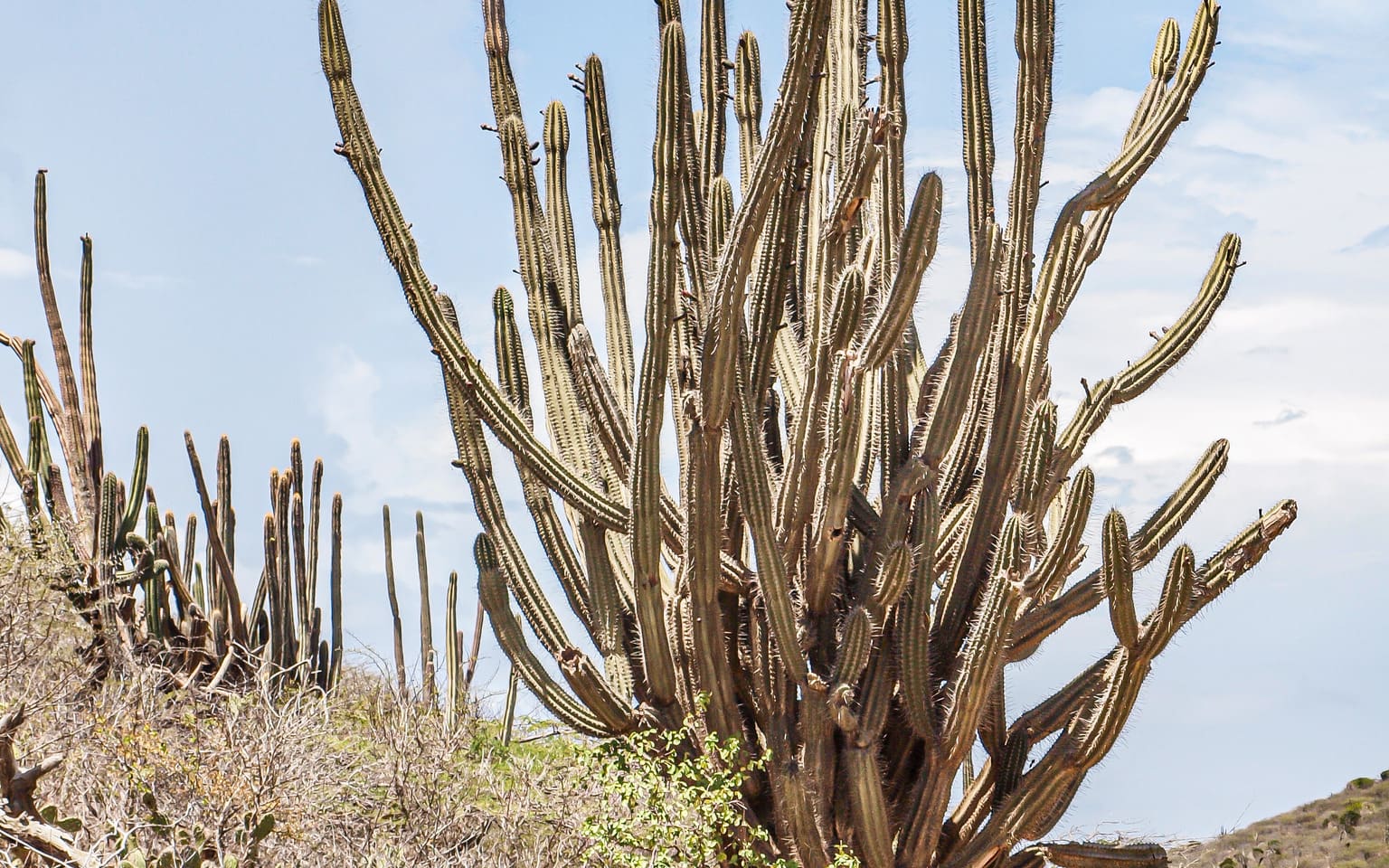
Photo by rainerburkard on Wikimedia Commons, CC BY 4.0

Peruvian apple cactus is a tall, blue-green column cactus that's easy in a pot if you give it full sun and let the soil dry out between waterings. Soggy soil and dim light are what hurt it. Outdoors it takes cold down to about 20°F (−7°C) if the growing tips are protected. Big, older plants open huge white flowers for a single night, then make edible red fruit. Despite the name, it doesn't come from Peru, and no trusted source rates it for pets yet.
Not rated for pets
The ASPCA plant list doesn’t include it (its “night blooming cereus” is a different cactus). NC State has no page for it. No trusted source rates it, and the spines can hurt a curious pet, so keep it out of reach. Children: low severity. No source lists it as poisonous (the University of Arizona rates its toxicity benign), but its clusters of spines can hurt.
Pet poison line: ASPCA (888) 426-4435
Good for: sunny windows and patios, people who forget to water, night flowers and edible fruit on big, mature plants · Think twice if: small children or pets play right next to it, you have no direct sun.
Needs at a glance
- Light4 of 4 · Some direct sunFull sun in your brightest window; ease young plants into it
- Water1 of 3 · Let the soil dry completelyEvery 1 to 2 weeks in summer; about monthly in winter
- Humidity1 of 3 · AverageDry indoor air is fine
- Soil when pottedCactus mix with sharp drainageSandy, gritty mix in a pot with a drain hole
Indoors: best at 65 to 85°F (18 to 29°C). Keep it above 45°F (7°C) and away from drafts and heat vents.
How the rating adds up
0 = easiest · 1 = moderate · 2 = hardest
- Missed waterings0 of 2 · EasiestDrought resistant; water only when the soil is dry
- Light flexibility2 of 2 · HardestFull sun; in dim light it grows thin and leans
- Humidity0 of 2 · EasiestDry indoor air suits a desert cactus
- Pests and disease1 of 2 · ModerateMealybugs and scale; rot in wet soil
- Sensitivity to change1 of 2 · ModerateSunburns if moved into strong sun too fast; stretches in dim winter light
Growing outdoors
All year: USDA zones 9 to 11, where the coldest winter nights average 20°F (−7°C) or warmer.
Elsewhere: summer outside in full sun, after a few weeks in part shade. Bring it in when nights reach 45 to 50°F (7 to 10°C).
- Containers and large patios
- Rock gardens and dry, low-water gardens in warm climates
- Living fences where it grows wild
Sources: RHS, UA Campus Arboretum, Arizona State University, BYU Greenhouse, NYBG, Clemson, ASPCA plant list, FISC, UF/IFAS, Hawaii noxious weed list, GISD and Kew. Full list below.
Verified · How we rate plants
Is Peruvian apple cactus safe for cats and dogs?
We can't say yet. The ASPCA plant list doesn't include it (the "night blooming cereus" on that list is a different cactus, Hylocereus), and NC State has no page for it. We found no reputable source that calls it toxic, and the University of Arizona rates its toxicity as benign, but that isn't a pet rating. The spines are the clear hazard, so keep it where curious pets can't reach. If a pet chews it and seems unwell, call your vet or the ASPCA Animal Poison Control Center at (888) 426-4435 (a fee may apply).
Is it from Peru, and is it the same as Cereus peruvianus?
It isn't from Peru: the University of Arizona and BYU both call the name a misnomer. Kew treats Cereus peruvianus as an older name for Cereus repandus, a cactus native to northern Colombia, Venezuela and nearby Caribbean islands, which the Colombian plant catalog confirms. The Atlas of Florida Plants notes that the name C. peruvianus has been widely misapplied. Many US garden sources describe the plant sold under these names as coming from Argentina, Brazil and Uruguay, which matches a related cactus, Cereus hildmannianus (also sold as C. uruguayanus). The care sources on this card describe the same blue-green garden cactus under these names.
UA Campus Arboretum, BYU Greenhouse, Kew, Catálogo de Plantas de Colombia, Atlas of Florida Plants, NYBG
How often should I water a Peruvian apple cactus?
Only when the soil is dry. In spring and summer, the University of Arizona and BYU water about every 1 to 2 weeks, soaking the pot thoroughly; in winter, about once a month. NYBG waits until the top inch is completely dry, and in a cool winter rest gives just enough that the soil never dries out fully. The RHS keeps it nearly dry outside the growing season. Overwatering and soggy soil rot the roots: Clemson says they cause most root and stem rot in cacti.
UA Campus Arboretum, BYU Greenhouse, NYBG, RHS, Arizona State University, Clemson
How much light does a Peruvian apple cactus need?
Full sun, as much as you can give it. ASU and the RHS both call for full sun. NYBG says to turn the pot regularly so it doesn't lean toward the window. Young plants are the exception: the University of Arizona gives them light shade, and moves even older plants into part shade in the hottest summer sun to prevent sunburn. When you move a pot outside, Clemson suggests part shade for the first few weeks.
Arizona State University, RHS, NYBG, UA Campus Arboretum, Clemson
How cold can a Peruvian apple cactus get?
In the ground, the University of Arizona, ASU and BYU all say it takes about 20°F (−7°C), which fits USDA zones 9 to 11. Zone 9 is marginal: protect the growing tips on frosty nights. A pot is a different story. Indoors, give it a cool winter rest, around 45 to 55°F (7 to 13°C) per Clemson; NYBG suggests about 50°F (10°C). Bring pots in before nights fall to 45 to 50°F (7 to 10°C). It isn't on Florida's 2026 invasive plant lists, and UF/IFAS finds it isn't a problem in Florida. Hawaii's noxious weed list does name Cereus uruguayanus, a related cactus also called Peruvian apple, so check the label before planting it there.
UA Campus Arboretum, Arizona State University, BYU Greenhouse, Clemson, NYBG, FISC, UF/IFAS, Hawaii noxious weed list
Does a Peruvian apple cactus flower, and can you eat the fruit?
Big, older plants do. The flowers are large, white with reddish tips, open at night and last a single night; the University of Arizona says hawk moths pollinate them. In Phoenix, ASU sees the main show in late spring, sometimes with a second round in late summer. The fruit is round and red with white flesh, up to about 2.5 inches across, and the University of Arizona says it's edible and widely eaten where the cactus grows wild. Don't expect flowers on a small potted plant: NYBG says houseplants rarely bloom.
UA Campus Arboretum, Arizona State University, NYBG, BYU Greenhouse
How big does a Peruvian apple cactus get indoors?
In a small pot, NYBG expects it to stay around 3 feet; Clemson says 3 to 6 feet indoors. Outdoors it becomes a tree-like cactus 20 feet tall or more. BYU says feeding less often slows it down. Repot young plants each spring, just one size up. Feed only in the growing season, with a balanced fertilizer or, as NYBG suggests, tomato food every 2 to 4 weeks.
NYBG, Clemson, Arizona State University, BYU Greenhouse, UA Campus Arboretum
Why is my Peruvian apple cactus getting thin at the top?
It's reaching for light. NYBG says that without enough light in the short days of winter, it grows a thin stem. Give it your sunniest window and turn it regularly. NYBG also suggests a cooler spot in winter, ideally down to about 50°F (10°C), so it can rest. NYBG's desert cactus guide agrees: rest it cool in winter, with less water, but keep it in direct sun.
How do I propagate a Peruvian apple cactus?
Cuttings are easiest. ASU says stem cuttings of almost any length root well: let the cut end dry and callus for several weeks, then plant it right side up in soil. The University of Arizona also uses offsets, which it often makes in spring or summer. Seed is possible but slow, and the University of Arizona says seeds sprout only at 70 to 80°F (21 to 27°C). Handle it with care: the University of Arizona warns about its spines.
How Grove helps
Grove sets watering around how dry the soil is, so a Peruvian apple cactus gets a deep drink only after it dries out, and much less in winter. You can add a gloves-on repotting job or a turn-the-pot reminder as tasks and assign them to whoever is home.
Sources
- Royal Horticultural Society: Cereus repandus (cadushi)
- University of Arizona Campus Arboretum: Cereus repandus (apple cactus)
- Arizona State University Library plant pages: Cereus repandus
- Brigham Young University Greenhouse: Column cactus (Cereus peruvianus, syn. C. repandus)
- New York Botanical Garden: question on a Cereus cactus (C. uruguayanus, syn. C. peruvianus) as a houseplant
- New York Botanical Garden Mertz Library: Cacti Indoors: Desert Cacti
- Clemson Cooperative Extension HGIC 1502: Indoor Cacti
- ASPCA Animal Poison Control: Toxic and Non-Toxic Plants
- Florida Invasive Species Council: Plant List, Category I and II and Watch List (April 2026)
- UF/IFAS Assessment of Non-Native Plants: Cereus repandus
- Hawaii Administrative Rules 4-68: plant species designated as noxious weeds (Hawaii Department of Agriculture)
- IUCN Global Invasive Species Database: Cereus repandus (no entry)
- Kew WCVP data release (2026-06-04 file), plant_name_id 2712498: Cereus uruguayanus, a synonym of Cereus hildmannianus subsp. uruguayanus
- Kew WCVP data release (2026-06-04 file), plant_name_id 2712302: Cereus repandus (syn. Cereus peruvianus)
- Catálogo de Plantas y Líquenes de Colombia (Universidad Nacional de Colombia), Cereus repandus record, via GBIF
- Atlas of Florida Plants (USF Institute for Systematic Botany): Cereus hexagonus, with the note on misapplied Cereus peruvianus