Plant care card
Sage
Salvia officinalis · Salvia
Also called garden sage, common sage or culinary sage
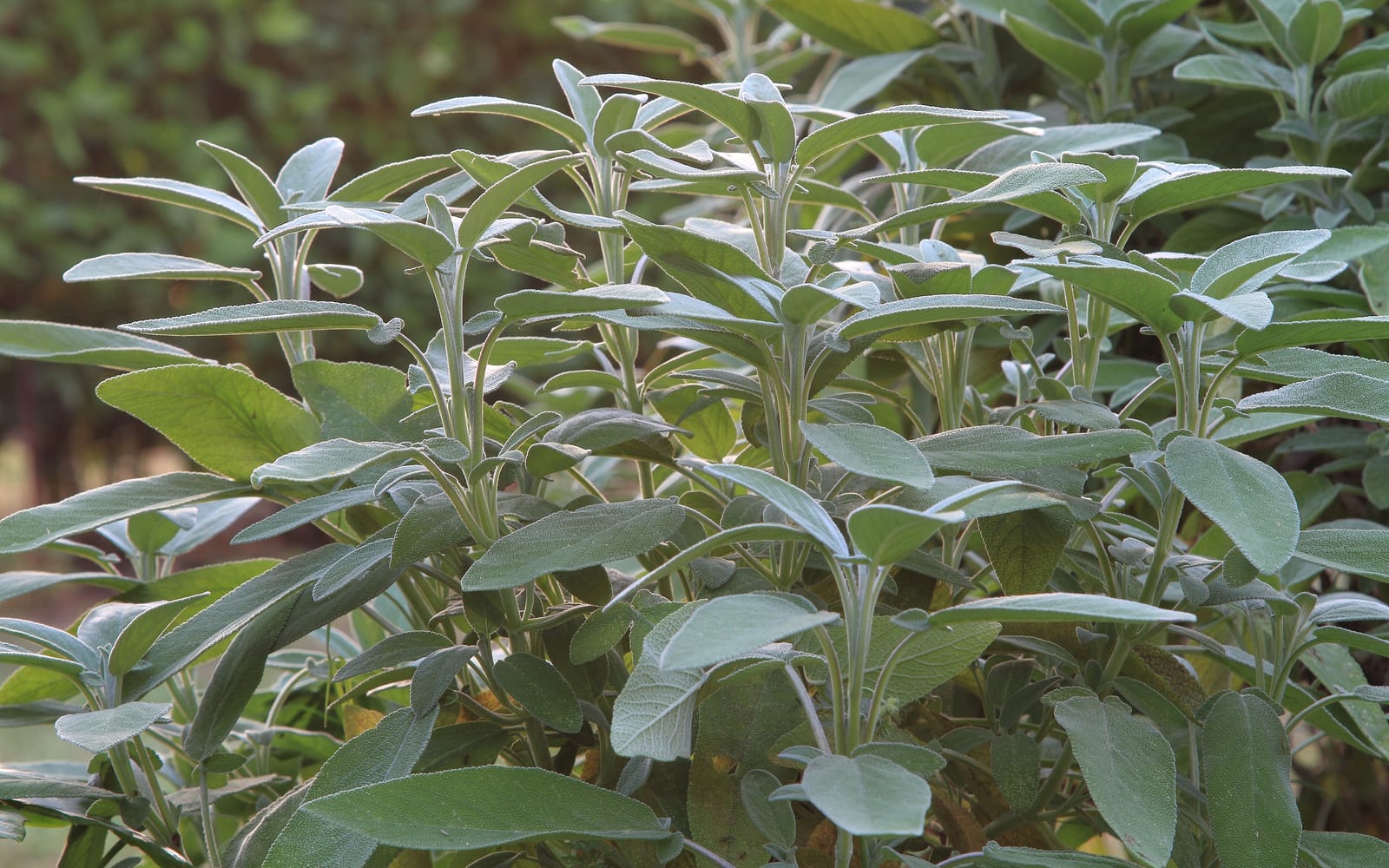
Photo by Silvio Rossi on Wikimedia Commons, CC BY 3.0

Kitchen sage (Salvia officinalis) is a shrubby Mediterranean herb that wants full sun and soil that drains fast. Once it settles in, it shrugs off dry spells; wet soil, especially in winter, is what kills it. It comes back every year in USDA zones 4 to 8, gets woody with age, and the ASPCA lists it as non-toxic to cats, dogs and horses.
Non-toxic to cats, dogs and horses
No signs of poisoning listed. Eating a lot of any plant can still upset a pet’s stomach. Children: A kitchen herb; NC State lists the leaves as edible.
Pet poison line: ASPCA (888) 426-4435
Good for: snipping for cooking, sunny, dry spots, bees and butterflies · Think twice if: your soil stays wet, especially in winter, your only spot is shady.
Needs at a glance
- Light4 of 4 · Full sunA sunny spot; NC State allows part shade
- Water2 of 3 · Let it dry slightlyLittle water in the ground once settled; check pots in summer
- Humidity1 of 3 · AverageSpace plants so air can move around them
- Soil when pottedVery well-drainedNever soggy, especially in winter; add grit to pots
Indoors: best at 55 to 70°F (13 to 21°C). Keep it above 40°F (4°C) and away from drafts and heat vents.
How the rating adds up
0 = easiest · 1 = moderate · 2 = hardest
- Missed waterings0 of 2 · EasiestDrought tolerant once established; wet soil is the danger
- Light flexibility2 of 2 · HardestFull sun; NC State says part shade works too
- Humidity0 of 2 · EasiestNo humidity needs; give it room so air moves
- Pests and disease1 of 2 · ModerateSlugs, mites, leafhoppers, mildew and root rot in wet soil
- Sensitivity to change0 of 2 · EasiestLow; soggy winter soil is its real risk
Growing outdoors
All year: USDA zones 4 to 8, where the coldest winter nights average −30°F (−34°C) or warmer.
Elsewhere: summer outside in full sun. Bring it in before nights drop below 40°F (4°C).
- Herb and vegetable gardens
- Borders and edging
- Containers
- Deer and rabbit resistant
Sources: NC State, Clemson, RHS, Wisconsin Extension, Illinois Extension, Maryland Extension, ASPCA, Penn State Extension, USDA zone map, USDA PLANTS, FISC, Cal-IPC and GISD. Full list below.
Verified · How we rate plants
Is sage safe for cats and dogs?
Yes. The ASPCA lists sage (Salvia officinalis) as non-toxic to cats, dogs and horses, and NC State tags it the same. Non-toxic means low risk: eating a lot of any plant can still upset a pet's stomach. If your pet seems unwell after chewing a plant, call your vet.
How often should I water sage?
Not much once it's settled. NC State and Clemson both call it drought tolerant, and the RHS says plants in the ground need no extra water after their first year; water new plants during dry spells. Pots are different: the RHS says to keep the mix slightly moist, never saturated, and to check often in summer, and Penn State's indoor herb guide says to let sage dry slightly between waterings. Wisconsin adds that it grows better with steady water, even though it survives drought. Soggy soil is the real risk: NC State says it doesn't tolerate wet or poorly drained ground.
NC State, Clemson, RHS, Penn State Extension, Wisconsin Extension
Does sage need full sun?
It does best there. Illinois, Maryland and Wisconsin Extension and the RHS all say full sun, and the RHS adds a sheltered spot. NC State says part shade, about 2 to 6 hours of direct sun, works too. Think of me as a plant from the sunny coasts of the northern Mediterranean: the more sun, the better.
Illinois Extension, Maryland Extension, Wisconsin Extension, RHS, NC State
Does sage come back every year?
Yes, where winters suit it. NC State lists USDA zones 4 to 8 and Clemson 4 to 8; Wisconsin Extension gives 4 to 10. The coldest of those, zone 4, has winter nights that average −30°F (−34°C). Colorful types are tender: Wisconsin rates Aurea and Tricolor to zone 5b or 6a and Purpurea to zone 6, and Illinois says golden, purple and tricolor sage aren't dependably hardy in zone 5. Good drainage matters most for getting through winter, say Illinois and Maryland Extension. In colder places, grow a small plant in a pot and bring it in for winter (Wisconsin). In the UK, the RHS rates it hardy to about 5 to 14°F (−15 to −10°C).
NC State, Clemson, Wisconsin Extension, USDA zone map, Illinois Extension, Maryland Extension, RHS
Why is my sage woody and leggy?
That's normal with age. Sage forms woody stems by its second year (Wisconsin) and gets straggly over time. Prune it lightly each spring as new growth starts, and trim again during the season to keep it bushy, but don't cut back into bare old wood, because those stems rarely sprout again (NC State, RHS). Sooner or later it's time for a new plant: Maryland Extension says every 3 to 4 years, the RHS after 6 or 7, using plants you've grown from cuttings or layers.
Wisconsin Extension, NC State, RHS, Maryland Extension, Illinois Extension
Can I grow sage in a pot or indoors?
Yes. The RHS suggests a pot at least 12 inches (30 cm) wide and deep with plenty of drainage holes, and a soil-based mix with up to a quarter grit. Compact types such as Compacta, about 10 inches tall, suit pots (NC State, Wisconsin). For winter indoors, Illinois and Maryland Extension suggest rooting cuttings in late summer and keeping them in a sunny window; replant outside after the last frost. Penn State's indoor herb guide gives 65 to 70°F (18 to 21°C) by day and 55 to 60°F (13 to 16°C) at night for herbs in general, and says most survive the low to mid 40s°F (4 to 7°C).
RHS, NC State, Wisconsin Extension, Illinois Extension, Maryland Extension, Penn State Extension
Why is my sage dying?
Check the roots first. NC State lists root rot and says sage won't tolerate wet or poorly drained soil, and the RHS warns against waterlogged ground; on heavy soil, use a raised bed or a pot. A white dusty coating is powdery mildew (RHS); NC State and Wisconsin say good air circulation helps. Pests such as slugs, spider mites, spittlebugs and leafhoppers show up, but the RHS says they rarely do serious harm.
How do I harvest sage?
Pick leaves or young shoots any time; the RHS says fresh spring and summer growth tastes best, and regular picking keeps the plant bushy. Wisconsin suggests cutting the top 6 to 8 inches at least twice a season, before it flowers, and never taking more than half the plant. To dry it, hang sprigs in a warm, dark, airy place (RHS).
How do I propagate sage?
Cuttings are the easy way. Take softwood cuttings from new growth in late spring or summer (RHS, Wisconsin); Wisconsin says rooting hormone usually isn't needed. Layering also works: peg a low stem to the soil in spring or fall and let it root (RHS). Seed is slow, taking a year or more to reach harvest size (RHS, Illinois), and named varieties don't come true from seed (Wisconsin).
RHS, Wisconsin Extension, Illinois Extension, Maryland Extension
How Grove helps
Grove can set a light watering check for a potted sage instead of a fixed schedule, so nobody drowns it. You can add a spring pruning task and a reminder to root fresh cuttings every few years, and assign them to whoever looks after the garden.
Sources
- NC State Extension Gardener Plant Toolbox: Salvia officinalis
- Clemson Cooperative Extension HGIC: Sage, the Wisest Herb (S. A. Turner, 2024-11-18)
- Royal Horticultural Society: How to grow sage
- University of Wisconsin-Madison Extension: Sage, Salvia officinalis (S. Mahr, revised May 2026)
- Illinois Extension: Herb Gardening, Sage
- University of Maryland Extension: Sage (updated 2023-02-20)
- ASPCA Animal Poison Control: Sage
- Penn State Extension: Growing Herbs Indoors (E. Sánchez and E. Kinley, updated 2024-11-01)
- USDA ARS Plant Hardiness Zone Map (2023)
- USDA PLANTS Database: Salvia officinalis (symbol SAOF2)
- Florida Invasive Species Council: Invasive Plant List and Watch List (April 2026)
- California Invasive Plant Council (Cal-IPC): Inventory (no listing for Salvia officinalis)
- IUCN Global Invasive Species Database: Salvia officinalis (no entry)
- Kew WCVP data release (2026-06-04 file), plant_name_id 183353: Salvia officinalis
- Royal Horticultural Society: Salvia officinalis (plant details, hardiness H5)
- ASPCA Animal Poison Control: Scarlet Sage (Salvia coccinea)
- NC State Extension Gardener Plant Toolbox: Salvia rosmarinus
- Royal Horticultural Society: How to grow rosemary