Plant care card
Silver dollar eucalyptus
Eucalyptus cinerea · Eucalipto cinerea
Also called silver dollar tree, Argyle apple or silver dollar gum
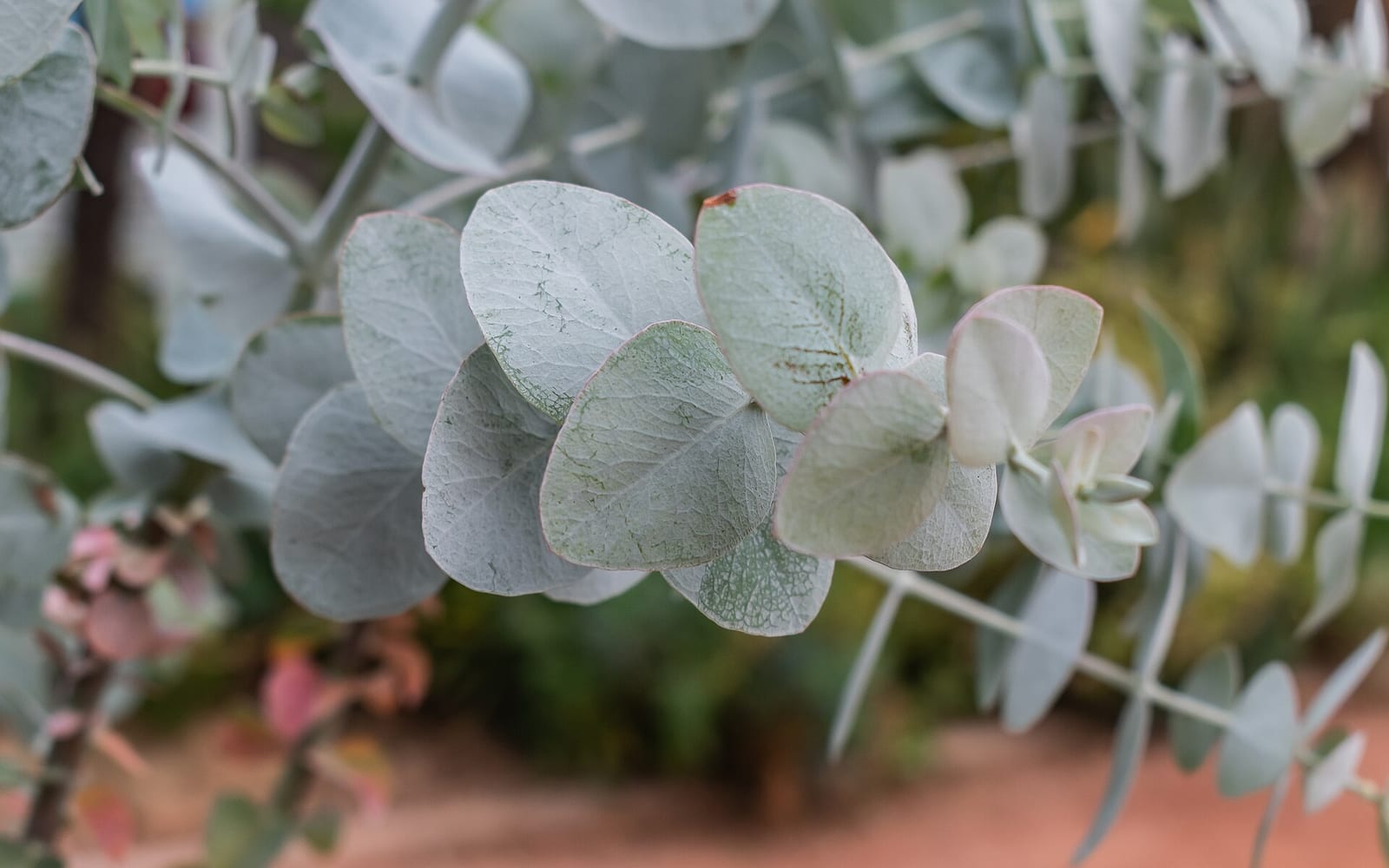
Photo by Tournasol7 on Wikimedia Commons, CC BY 4.0

Silver dollar eucalyptus (Eucalyptus cinerea) is a fast Australian tree grown for its round, silvery blue leaves. It wants full sun, soil that drains well and water that lets the soil nearly dry between drinks. In the ground it grows in USDA zones 8 to 11; in colder places people keep it in a pot and bring it in before the first frost. The leaves, bark and sap hold eucalyptus oil, and the ASPCA lists it as toxic to cats, dogs and horses. UF/IFAS advises against planting it in Florida.
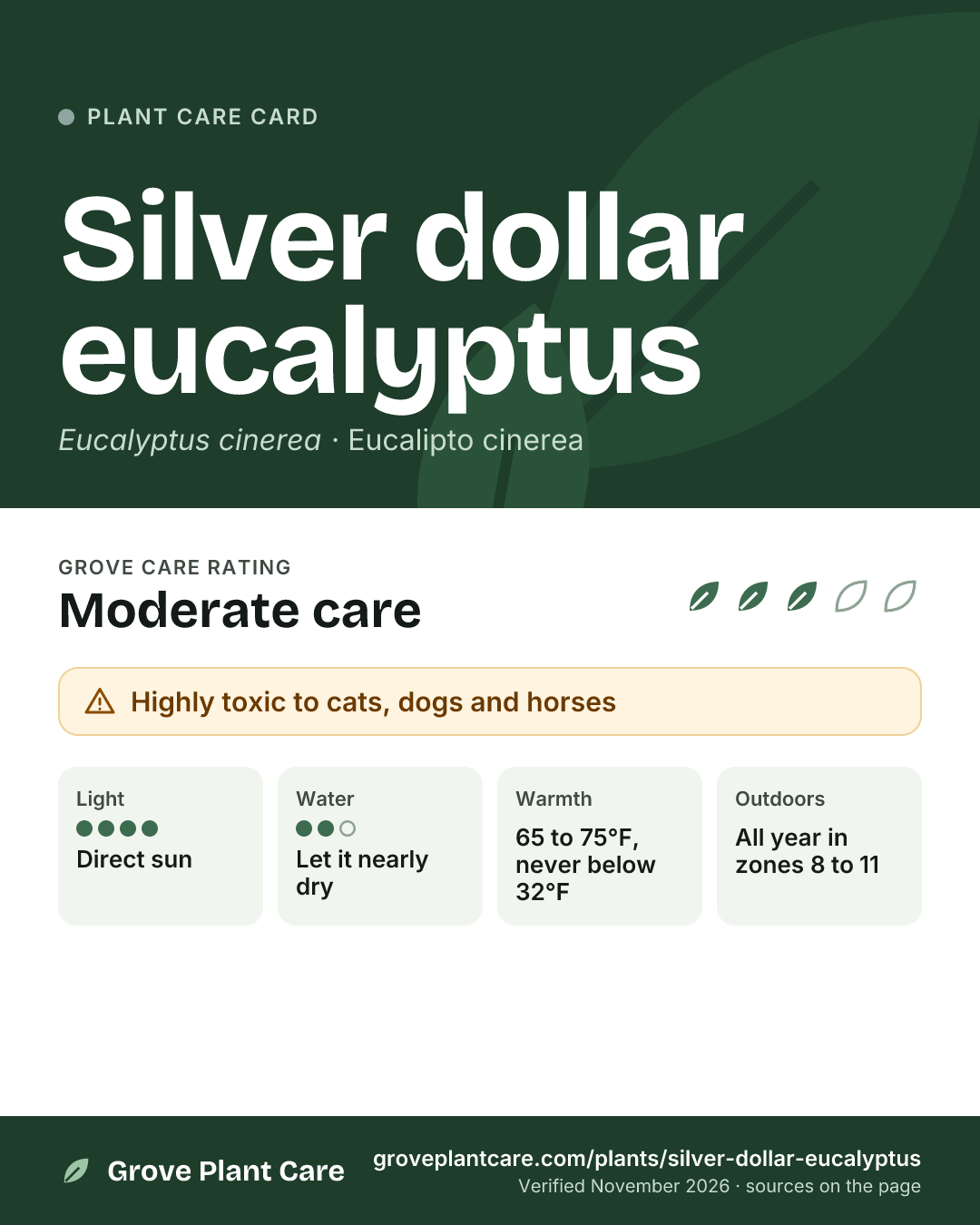
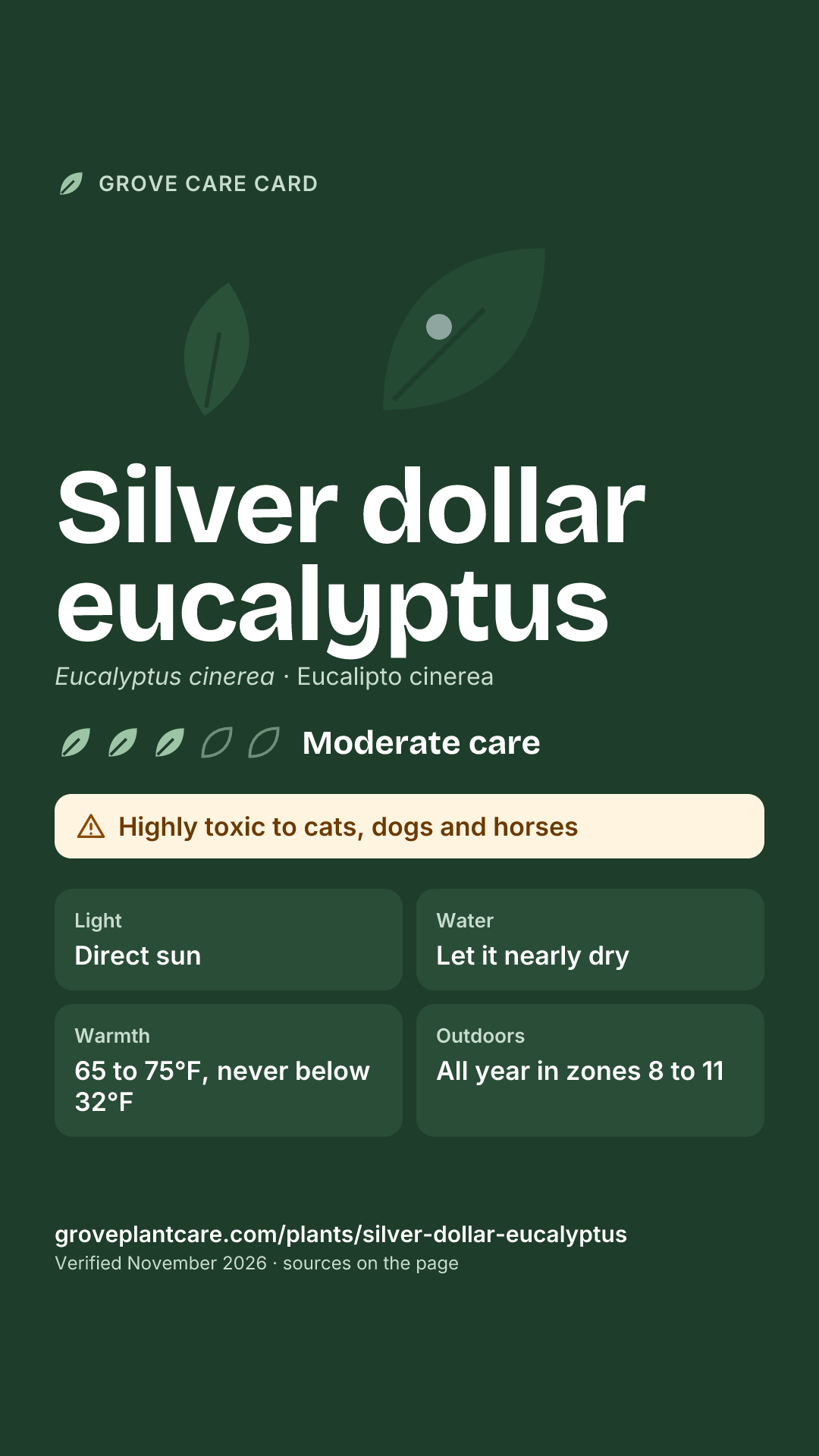
Toxic to cats, dogs and horses · Severe
Pet ate leaves or bark and is vomiting or weak? Call your vet right away.
Drooling, vomiting, diarrhea, depression and weakness. The leaves, bark and sap hold eucalyptus oil (eucalyptol). NC State rates the severity as high and lists it as a problem for dogs, cats and horses. Children: high severity. NC State rates it high severity: the oil is very toxic if swallowed in quantity, and handling the leaves or bark can irritate skin.
Pet poison line: ASPCA (888) 426-4435
Good for: a sunny patio or deck, fresh or dried foliage for arrangements, dry spells, once it is growing in the ground · Think twice if: pets or small children chew plants, your brightest spot gets only a few hours of sun, you garden in Florida, where UF/IFAS advises against planting it.
Needs at a glance
- Light4 of 4 · Direct sun6+ hours: full sun outside, your sunniest window indoors
- Water2 of 3 · Let it nearly dryWater deeply, then let the soil nearly dry; less in winter
- Humidity1 of 3 · AverageA normal home is fine
- Soil when pottedWell-drained, neutral to acidLoam or sandy soil; in a pot, a gritty mix and a drain hole
Indoors: best at 65 to 75°F (18 to 24°C). Keep it above 32°F (0°C) and away from drafts and heat vents.
How the rating adds up
0 = easiest · 1 = moderate · 2 = hardest
- Missed waterings1 of 2 · ModerateDrought tolerant once established in the ground; a pot needs regular water
- Light flexibility2 of 2 · HardestNeeds full sun, 6 or more hours
- Humidity0 of 2 · EasiestNormal home humidity is fine; no misting needed
- Pests and disease1 of 2 · ModerateFew serious problems; eucalyptus psyllids, gall wasps and silver leaf are possible
- Sensitivity to change1 of 2 · ModerateEarly and late freezes hurt it; indoors it needs a cool winter rest
Growing outdoors
All year: USDA zones 8 to 11, where the coldest winter nights average 10°F (−12°C) or warmer.
Elsewhere: summer outside in full sun. Bring it in before nights drop below 32°F (0°C).
- Containers and patios
- Cutting garden for foliage
- Accent tree in mild climates
Sources: NC State, RHS, NYBG, University of Arizona, Hawaii weed risk assessment, ASPCA, ASPCA plant list, USDA zone map, FISC, Cal-IPC, NEMBA lists, GISD and UF/IFAS Assessment. Full list below.
Verified · How we rate plants
Is silver dollar eucalyptus toxic to cats and dogs?
Yes. The ASPCA lists eucalyptus as toxic to dogs, cats and horses. The essential oil in it, eucalyptol, can cause drooling, vomiting, diarrhea, depression and weakness. NC State rates the severity as high and says the leaves, bark and sap all carry the oil. Keep the plant and cut stems where pets can't chew them. If your pet ate some and seems unwell, call your vet or the ASPCA Animal Poison Control Center at (888) 426-4435.
Is silver dollar eucalyptus safe around children?
Keep it out of their reach. NC State rates it high severity and says the oil is extremely toxic if large amounts are swallowed. Handling the bark or leaves can also redden and irritate skin, and the University of Arizona suggests gloves when you prune it. If a child eats some, call Poison Help at 1-800-222-1222.
Is silver dollar eucalyptus invasive?
No official invasive list we checked names it. We looked at the Florida Invasive Species Council list and watch list, the Cal-IPC inventory in California, Hawaii's noxious weed list, South Africa's national list and the Global Invasive Species Database. Florida is the exception to watch. UF/IFAS rates it a high invasion risk and does not recommend planting it anywhere in the state. Hawaii's weed risk assessment came out the other way and rates it low risk. If you garden in Florida, choose another plant for the ground, or keep this one in a pot.
FISC, Cal-IPC, NEMBA lists, GISD, UF/IFAS Assessment, Hawaii weed risk assessment
How cold can silver dollar eucalyptus get?
NC State and the University of Arizona both list USDA zones 8 to 11, where winter nights average 10°F (−12°C) or warmer. The RHS rates it H5, hardy in most of the UK. NC State adds that it isn't reliably hardy: it often grows back from the base after a hard freeze, but early and late freezes hurt it. In a pot, bring it in before the first frost, as NC State advises.
Can I grow silver dollar eucalyptus in a pot or indoors?
Yes, for a while. NC State says it is often grown in containers in cold climates and brought in before frost. Indoors, the New York Botanical Garden's guide asks for at least 6 hours of direct sun, home temperatures of 65 to 75°F (18 to 24°C) and normal humidity. Hardy eucalyptus also need a winter rest: from November to February, keep it at about 45 to 50°F (7 to 10°C) with little water and no fertilizer. NYBG warns that most eucalyptus outgrow a home within a few years.
How much sun and water does silver dollar eucalyptus need?
Full sun, 6 hours or more, from NC State, the RHS and NYBG alike. Give it soil that drains well; the RHS prefers loam or sand that is neutral to acid. Water deeply, then let the soil nearly dry before the next drink, and water less in winter. Once it is settled in the ground, NC State and the RHS say it handles dry spells.
How do I keep the round silver leaves?
The round, coin-shaped leaves are its young leaves. As the tree matures it grows long, narrow leaves instead, as NC State and the University of Arizona describe. The RHS lists pruning group 7, a hard cut back each spring, for the best young foliage. NC State notes that plants in zone 7b usually never reach the adult stage.
What pests bother silver dollar eucalyptus?
Not many. NC State reports no serious insect or disease problems. The RHS says it may get eucalyptus gall wasp and eucalyptus suckers, which are psyllids, and diseases such as silver leaf, oedema and honey fungus. Hawaii's weed risk assessment also names a eucalyptus psyllid as a pest it hosts.
How Grove helps
Grove can remind you to bring the pot in before the first frost, to ease off watering for its winter rest, and to cut it back in spring. You can assign each one as a task to anyone who helps with the plants.
Sources
- NC State Extension Gardener Plant Toolbox: Eucalyptus cinerea (silver dollar tree)
- Royal Horticultural Society: Eucalyptus cinerea (Argyle apple)
- New York Botanical Garden, Mertz Library plant guide: Eucalyptus (houseplant care)
- University of Arizona Campus Arboretum: Eucalyptus cinerea (argyle apple, silver dollar eucalyptus)
- Hawaii-Pacific Weed Risk Assessment (Plant Pono): Eucalyptus cinerea
- ASPCA Animal Poison Control: Eucalyptus
- ASPCA Animal Poison Control: Toxic and Non-Toxic Plants
- USDA ARS Plant Hardiness Zone Map (2023)
- Florida Invasive Species Council: 2026 Plant List, Categories I and II (April 2026)
- California Invasive Plant Council: Cal-IPC Inventory
- South Africa, NEMBA Alien and Invasive Species Lists, 2020 (Government Notice 1003)
- IUCN Global Invasive Species Database: search for Eucalyptus cinerea
- UF/IFAS Assessment of Non-Native Plants in Florida: Eucalyptus cinerea
- Kew WCVP data release (2026-06-04 file), plant_name_id 72671: Eucalyptus cinerea
- Virginia Tech Dendrology: Eucalyptus polyanthemos (silver dollar gum)