How to make a kokedama: a moss ball, step by step
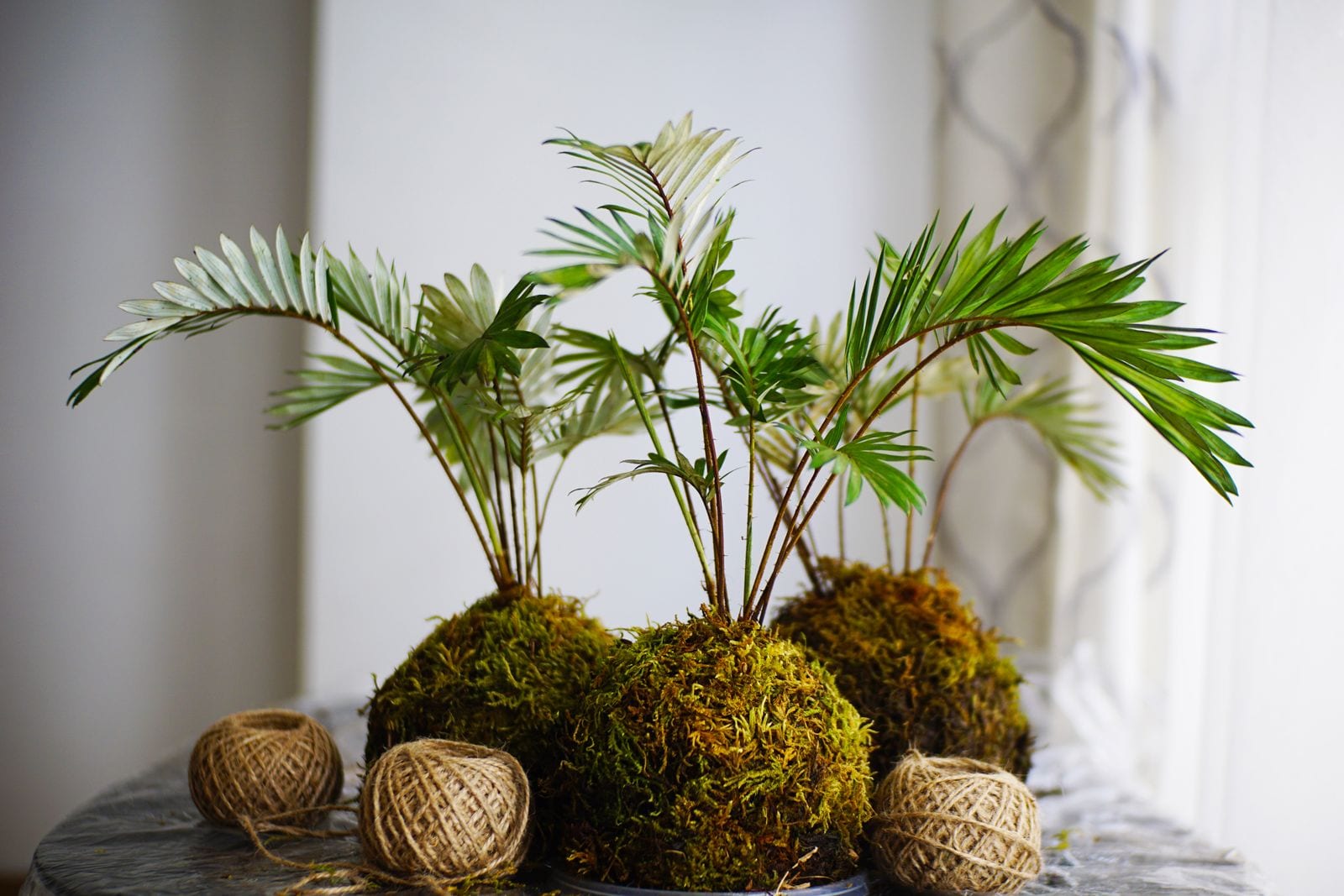
A kokedama is a plant in a ball of damp potting mix, wrapped in moss and tied with string. Making one takes a bag of potting mix, a sheet of moss, strong string and a small plant. Wet the mix until a pressed ball holds together, clear most of the old soil off the roots, close the ball around them, then wrap it in moss and wind the string firmly in every direction. Care after that lives in our kokedama care guide.
What do I need to make a kokedama?
Read moreShow less
Every guide we checked works from the same short list: a plant, a soil mix, moss and string. The details:
- A plant with a modest root system. University of Illinois Extension starts with a plant from a 4 to 5 inch pot. Our guide to the best plants for kokedama has ideas
- Potting mix or peat moss, plus akadama (a clay-like bonsai soil) if you want a firmer ball
- Sheet moss, fresh or dried, and a bowl of water to soak it
- String: waxed thread or another strong cord; more on choosing it below
- Scissors, gloves and newspaper or a tarp. Illinois, UC Master Gardeners and the UF/IFAS kokedama activities all list gloves
What soil mix works for a kokedama?
Read moreShow less
The base. Six of the seven organizations we checked build the ball from potting mix or peat moss. Brooklyn Botanic Garden uses an ordinary potting mix, because its perlite and peat keep air around roots in a tight space.
Akadama or clay. Illinois Extension mixes 70% potting mix or peat with 30% akadama, and its string garden guide allows clay cat litter in place of akadama. Penn State Extension adds about one third akadama or clay cat litter only for trees, shrubs, thirsty plants and plants with packed roots, and uses plain potting soil for the rest. UC Master Gardeners mix bonsai soil with peat. Orchids are the exception: Longwood Gardens says they do best without akadama.
How wet. This is the step that makes or breaks the ball. Illinois, Brooklyn, UC Master Gardeners, UF/IFAS and Missouri Botanical Garden all describe the same target: add water a little at a time until the mix forms a firm ball when you press it, without falling apart. Brooklyn's test is to toss the ball in the air and catch it. If it crumbles, it needs more water or more pressing.
Which moss and string should I use?
Read moreShow less
Moss. Sheet moss, fresh or dried, is what nearly every guide uses. Wet it first: six of the organizations we checked pre-moisten the moss, and Illinois soaks dried moss for about an hour, then squeezes out the extra water. UF/IFAS and Longwood also lay damp sphagnum moss around the soil ball before the sheet moss goes on, which holds extra moisture next to the roots.
String. The guides disagree here. Brooklyn Botanic Garden prefers waxed thread, dental floss or polyester thread, and avoids cotton, jute and hemp because they rot over repeated soakings until the ball no longer hangs. Missouri Botanical Garden uses waxed string or fishing line. Illinois and UC Master Gardeners use jute, and Longwood uses twine, including a thin inner twine that breaks down on purpose. If you want the outer string to last, choose a synthetic cord.
How do I make a kokedama, step by step?
- Soak the moss in a bowl of water, squeeze out the extra and set it aside
- Mix the soil and add water a little at a time until a pressed ball holds together without crumbling
- Take the plant out of its pot and gently remove most of the old soil, loosening the roots with your fingers
- Split the soil ball in two, set the roots on one half and press the halves back together around them, firming the mix at the base of the stem. Pushing the roots into a hole in the ball works too
- Lay the moss flat, set the ball in the middle and fold the moss up around it, trimming any extra
- Tie the string onto the ball and wind it around in every direction, keeping it taut and out of the plant's leaves, until the moss is held snugly
- Tie the end off on a nearby strand and trim it. Add a hanging loop now if you want to hang the ball
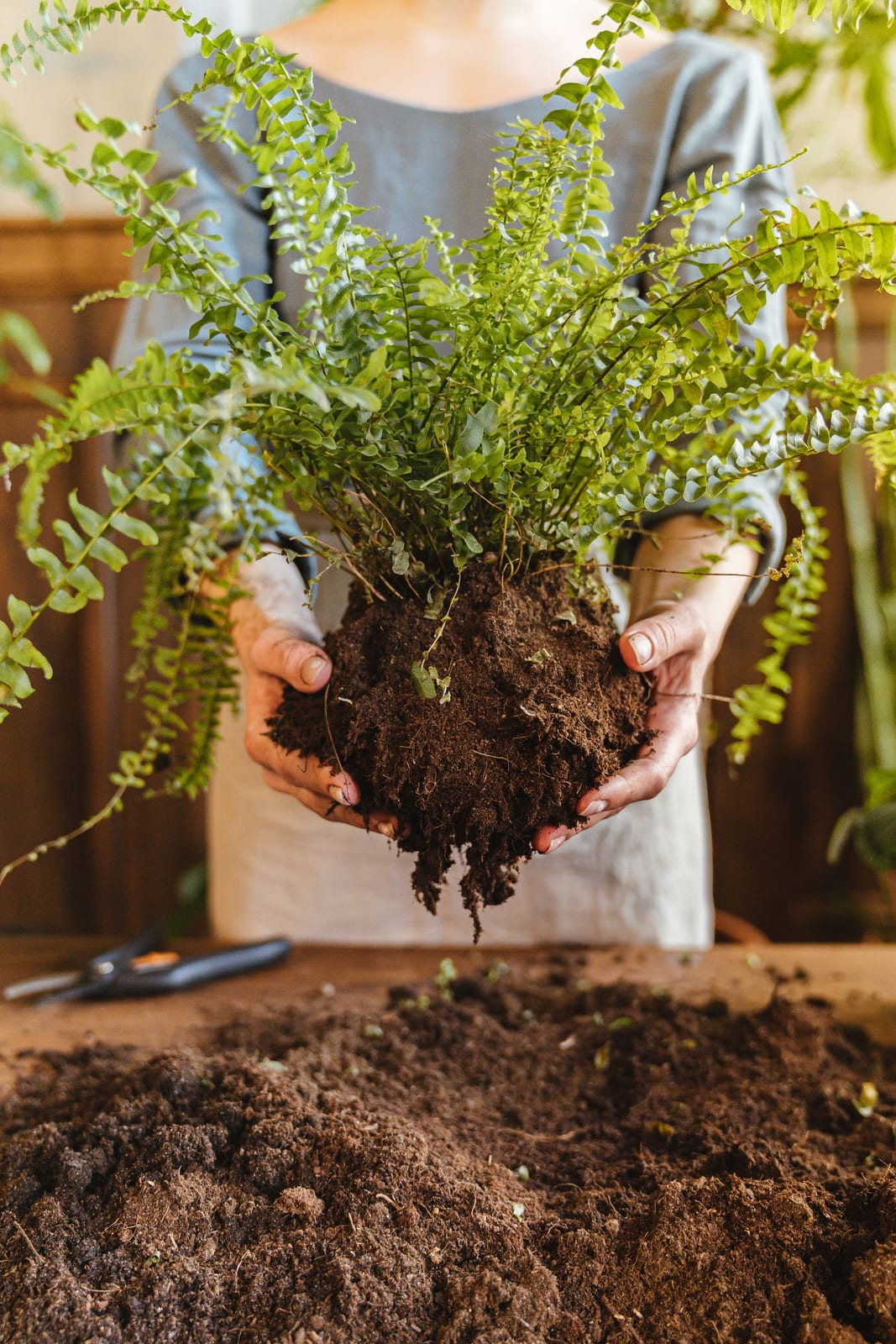
Why these steps: removing most of the old soil appears in five of the guides (Illinois, Brooklyn, UC Master Gardeners, UF/IFAS and Longwood), so the roots sit in the new mix. Penn State is the exception and packs fresh mix around the whole root ball, which it suggests for a plant that has outgrown its pot. Closing a split ball around the roots, making a hole, and building the ball around the roots are all used, so pick whichever feels easiest. Winding in every direction holds the moss on all sides, and Brooklyn warns that loose string means the ball won't hang.
How do I hang a kokedama?
Read moreShow less
Five of the guides add a separate hanging string or loop once the ball is wrapped. Missouri Botanical Garden starts the wrap at the top of the ball and leaves a long tail to tie the ends together for hanging.
Brooklyn Botanic Garden gives the most detailed method:
- Cut a string about a foot long, or twice the plant's height
- Tie one end to the wrapping on one side of the ball and the other end on the opposite side, anchoring each to several strands
- Lift the ball by the string to see which way it leans, then add a third string on that side
- Pinch the three strings together about 3 inches above the ball and knot them into a loop
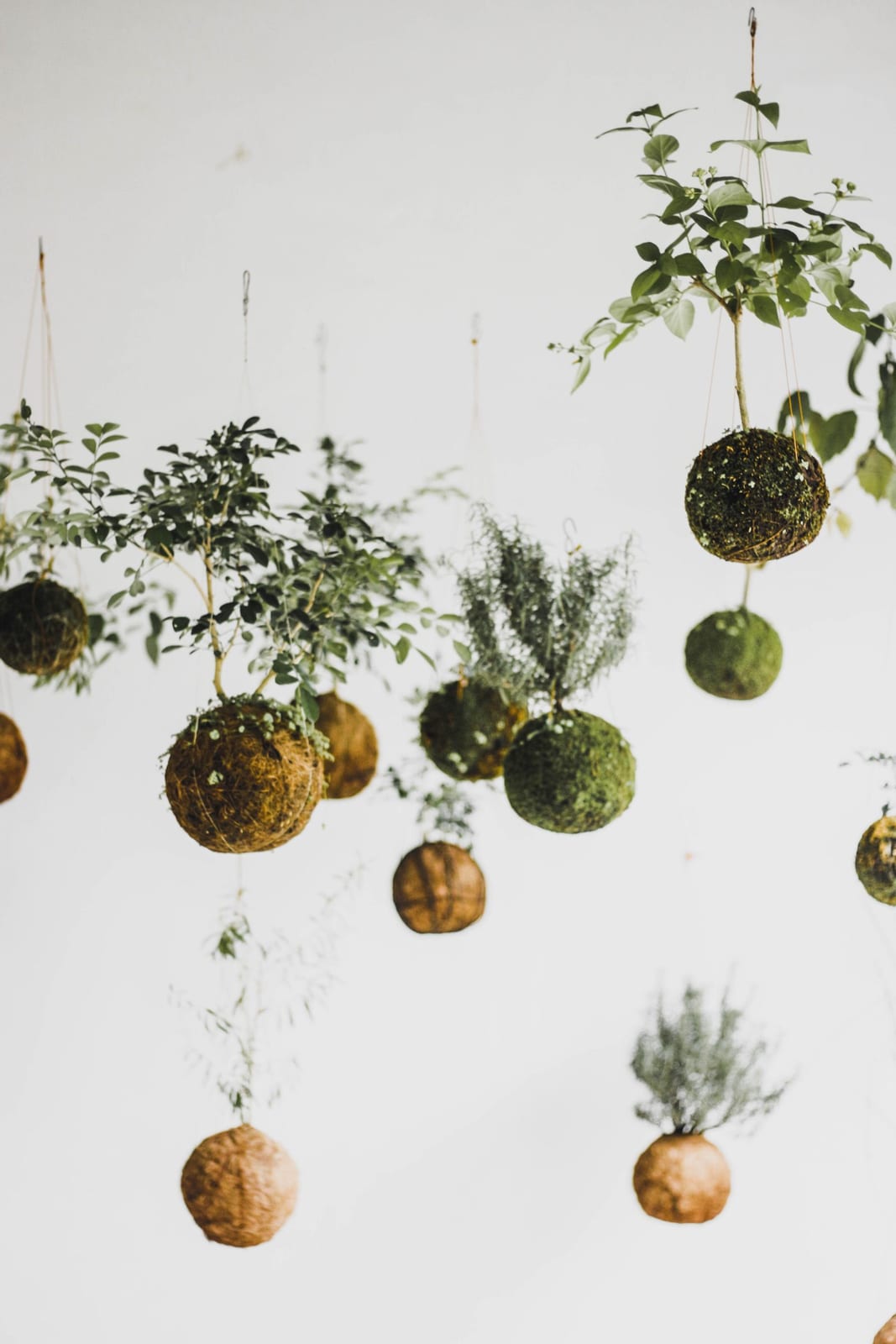
Hang it where the plant gets the light it likes, out of full sun, and where you can take it down for a soak. Our care guide has more display ideas.
How do I make an orchid kokedama?
Read moreShow less
Illinois Extension lists small orchids among good kokedama plants, and Longwood Gardens publishes an orchid version. In Longwood's method:
- A handful of well-drained orchid mix is knotted into a piece of nylon stocking to make a small core
- All the old potting material and any dead roots come off the orchid
- The roots wrap around the core, and clumps of damp sphagnum moss cover them completely, since that is where new roots will grow
- Damp sheet moss goes on the outside, and thin twine is wound in a crisscross pattern, starting just below the plant
- The finished ball hangs where it is easy to water often
Longwood's text doesn't name the orchid it uses. If you have cats or dogs, a moth orchid (Phalaenopsis) is a good pick: the ASPCA lists it as non-toxic. Our orchid watering guide covers how orchid roots like to dry between drinks.
What should I do right after making it?
Read moreShow less
UC Master Gardeners and UF/IFAS mist the plant as soon as the ball is finished. After that, the routine is the one in our kokedama care guide: soak the ball when it feels light, let it drain, and mist the moss between soaks. Keep it away from full sun and drafts, which Illinois Extension says dry a moss ball too quickly.
How do I redo a kokedama or move it to a bigger ball?
Read moreShow less
Illinois Extension says a plant can live as a kokedama for several years, and gives the signal to move up: roots growing through the moss. Missouri Botanical Garden adds that a plant that has grown large and looks stressed despite good watering and feeding may need a larger ball. Either way, unwrap the old string, then build a new, bigger ball with the steps above, or move the plant into a pot.
The string wears out first. Illinois notes that older balls sometimes need new string, and Brooklyn's reason for avoiding natural fibers is that they rot. If the ball is slumping but the plant is fine, a fresh wrap of string may be all it needs.
How does Grove help with a kokedama?
Read moreShow less
Grove builds each plant's care plan from its species, how you grow the plant, and whether it lives indoors or outdoors. Pick kokedama as the method and the plan's watering, feeding and repotting follow a moss ball. You can edit the plan whenever you like.
Frequently asked questions (FAQ)
How big should a kokedama ball be?
UC Master Gardeners and Missouri Botanical Garden both make a ball about 4 inches across, and Missouri says about 2 cups of potting soil makes one that size. Illinois Extension and UF/IFAS size the ball to the plant instead: big enough for the roots, or about the size of the pot the plant came from.
Do I need akadama?
No. Brooklyn Botanic Garden and Penn State use plain potting mix for most plants. Akadama, or clay cat litter in its place, helps the ball keep its shape, and Penn State saves it for trees, shrubs and thirsty plants. Leave it out for orchids, as Longwood Gardens advises.
Why did my kokedama fall apart?
Usually the mix was too dry or not pressed hard enough, or the string was too loose. The guides agree on a mix that holds together when pressed, and Brooklyn tests it by tossing the ball before wrapping. UF/IFAS notes the kneading takes time and shouldn't be rushed. Rewrap with the string pulled taut.
Can I make a kokedama from a cutting?
Yes. Penn State wraps a rooted pothos cutting with a little soil and hangs it by a bright window, and Illinois Extension lists rooted cuttings as a good start. Pothos is toxic to cats and dogs, so hang it out of reach.
Can I make a kokedama without moss, or with coconut fiber?
Every guide we checked uses moss, and none tests coconut fiber or a moss-free ball, so we can't tell you how they turn out. The moss is what holds moisture around the ball and keeps it together under the string.
Sources
- Kokedama String Gardens, Give houseplants new life with DIY kokedama moss balls and Kokedama fact sheet (PDF) : University of Illinois Extension
- DIY Kokedama: Japanese-Style Houseplant Display With Moss Balls : Brooklyn Botanic Garden
- The Art of Kokedama : Penn State Extension
- Creating a Kokedama, lesson plan : University of California Agriculture and Natural Resources, Master Gardeners
- Earth Day Hanging Kokedama (PDF) and Spring Kokedama in Vases (PDF) : UF/IFAS Therapeutic Horticulture
- The Art of Kokedama, orchid activity (PDF) : Longwood Gardens
- How to Make a Kokedama : Missouri Botanical Garden
- Phalaenopsis Orchid and Golden Pothos : ASPCA