Winter houseplant care in the Northeast, Midwest and Canada
Winters across the Northeast, the Great Lakes, the Upper Midwest and much of Canada bring three things together: some of the shortest days on the continent, a long season of forced-air heat and window glass that turns icy cold. This page covers what is different about caring for houseplants here. For the basics that apply everywhere, start with our winter houseplant care guide.
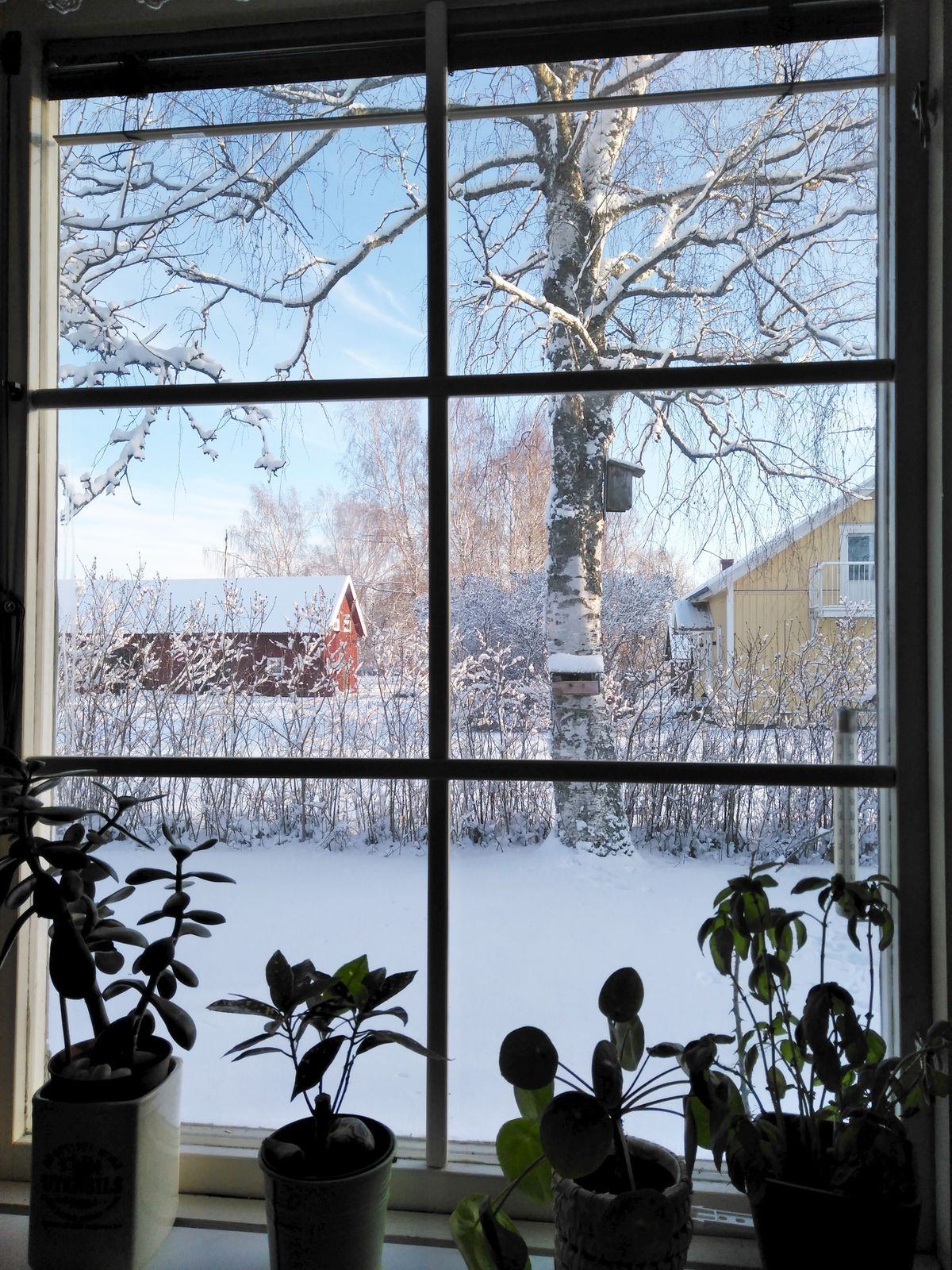
What makes winter different here?
Light is the first change. On December 21, Chicago gets about 9 hours 7 minutes of daylight, Boston 9 hours 4 minutes, Toronto 8 hours 55 minutes and Minneapolis 8 hours 46 minutes, based on the formula behind the National Oceanic and Atmospheric Administration (NOAA) Solar Calculator. Gray, overcast stretches cut that light further.
Heat is the second. University of Illinois Extension Garden Scoop notes that indoor relative humidity in heated homes can fall below 20%, while most houseplants prefer 40 to 50%. The heating season here runs long, so dry air is a months-long condition.
With less light, plants grow slowly and use less water. Keep checking the soil before every watering, and expect more answers of wait. Our guide to checking whether your plant needs water walks through each method. Grove's watering task works the same way: it builds on how you grow the plant and asks whether the plant needs water today, and our overwatering page explains why that check matters most in winter.
When should I bring plants back inside?
Many people here summer their houseplants on porches and decks. University of Illinois Extension Good Growing suggests bringing them in once nights stay below 55°F. University of Minnesota (UMN) Extension notes that in Minnesota this often means late September, since temperatures below 45 to 50°F can damage many species.
Before a plant comes inside:
- Look under leaves and along stems for insects and webbing
- Natural option: spray the leaves with water to wash off dust and soft-bodied insects, then wash both sides of the leaves with water and mild dish soap and rinse (UMN Extension)
- Chemical option: if pests show up later, treat with an insecticidal soap labeled for houseplants, follow the label, and keep pets away until the leaves dry
- Wash the outside of the pots, and keep new arrivals apart from your other plants for a while
UMN Extension warns that an abrupt move can shock plants, causing yellow leaves or wilting, and suggests easing the move by starting the plant in a very sunny window and shifting it to a less sunny spot over time. A few dropped leaves in the first weeks are a normal response to lower light.
How do I make the most of short, gray days?
On December 21, cities across this region land near the short end of the daylight table on our winter care hub, and Canada and the far north are shorter still. The University of Saskatchewan Gardening at USask program points out that a plant in a shady spot outdoors in July gets far more light than a plant in a south-facing window in December.
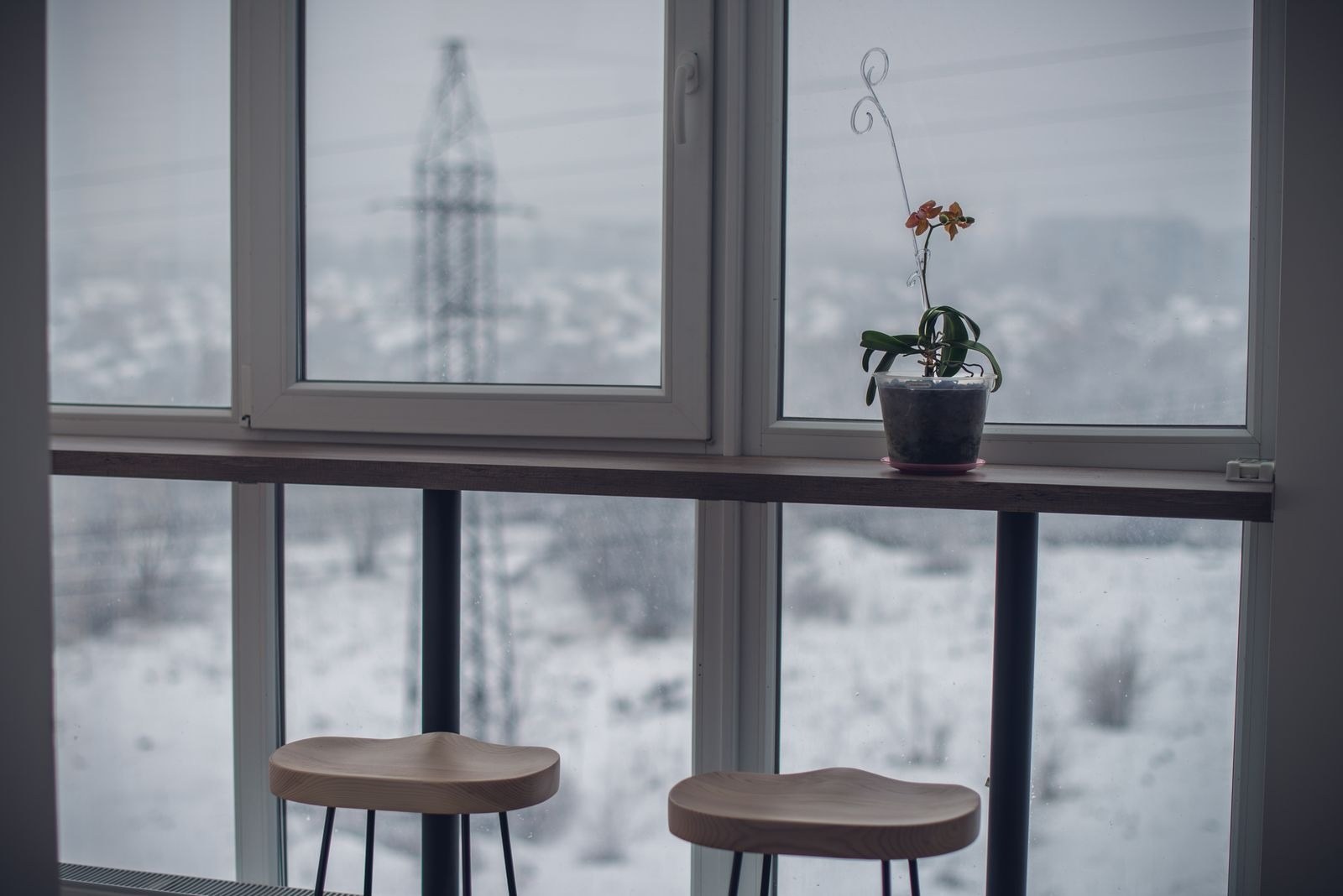
UMN Extension's winter houseplant tips say supplemental light may be necessary here. UMN notes that no special grow light is needed: a full-spectrum bulb or an LED lamp works, run so plants get about 12 to 14 hours of light a day. Turning pots now and then evens out growth. The Washington State University Pacific Northwest Gardener's Handbook adds a limit of 16 hours, since plants also need darkness.
How dry does forced-air heat get, and what helps?
Forced-air heating is common across the Northeast and Midwest, and it drives indoor humidity down for months. Humidity lovers such as ferns, carnivorous plants and Norfolk Island pine feel it first, according to UMN Extension. University of Saskatchewan gardening staff note that many plants in dry, centrally heated homes develop burned or scorched looking tips.
What helps most here:
- A room humidifier near the plants, recommended by University of Wisconsin-Madison Extension
- Grouping plants so the moisture each one releases stays close
- A saucer of clay pebbles and water, with the water level below the top of the pebbles (UMN Extension)
- A terrarium for small plants that need very humid air
Our winter care hub covers dry heated air in general, including why misting fades in minutes.
How do I keep plants safe from cold windows and hot vents?
Radiators and forced-air registers are common heating here, and cold glass is a winter constant. Wisconsin Extension warns against spots near heat vents, fireplaces and radiators, or near windows and doors with cold drafts.
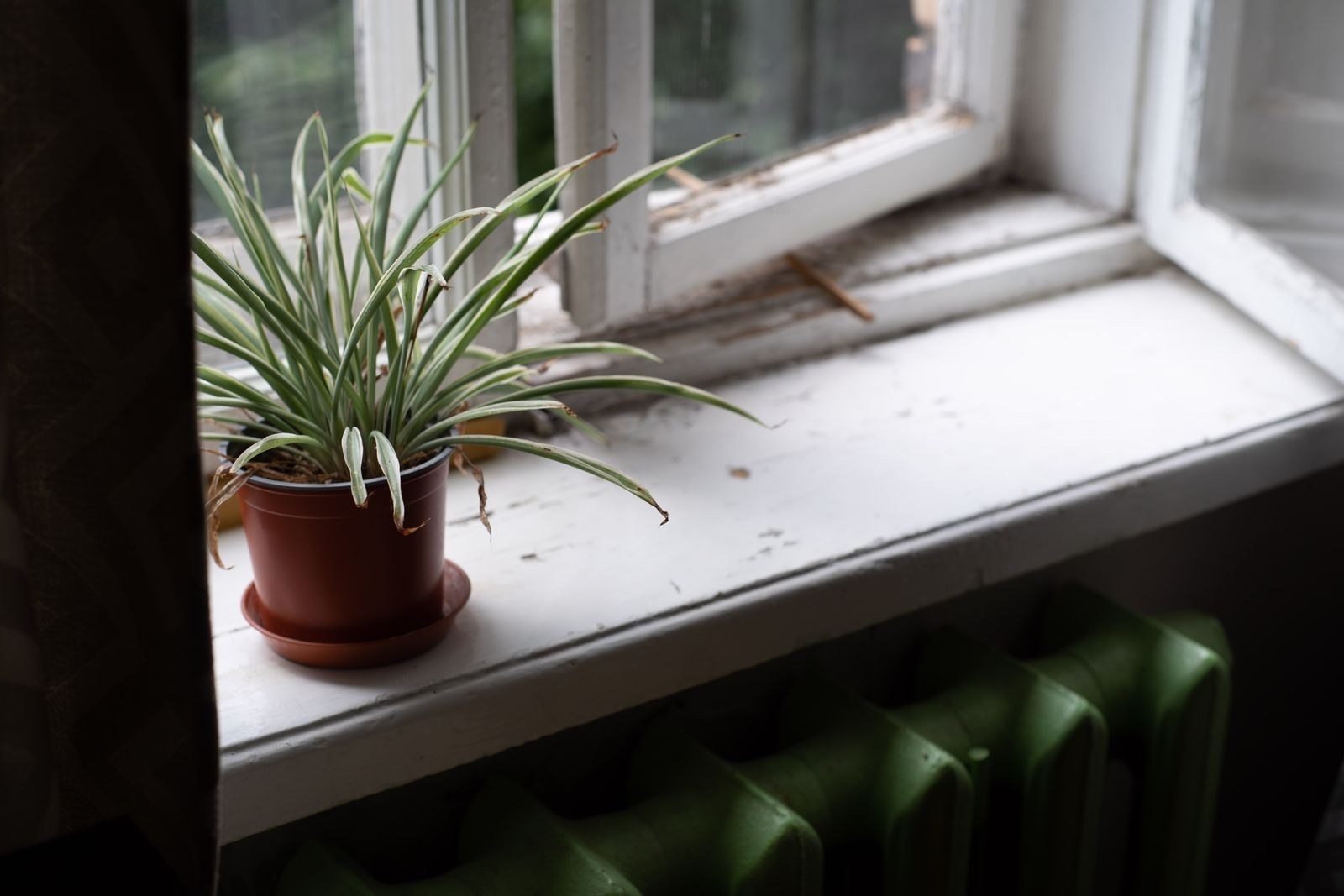
A sill above a radiator, like the one pictured, gives a plant hot, dry air from below and cold glass beside the leaves. Slide plants a few inches back from the glass on very cold nights, draw a curtain after dark, and move pots off sills that sit directly above radiators. Our winter care hub covers cold glass, drafts and heat vents for any climate.
What changes in Canada and the far north?
Farther north, daylight shrinks fast. On December 21, Edmonton gets about 7 hours 28 minutes, Anchorage 5 hours 27 minutes and Yellowknife 4 hours 56 minutes (NOAA). At those latitudes a window alone rarely keeps a light-loving plant growing, and a grow light does much of the work. The University of Saskatchewan suggests a grow light for any dark or poorly lit home.
Humidity has a ceiling here. Health Canada recommends keeping indoor humidity between 30 and 50% and notes that high humidity can lead to mold. Use a humidifier within that range, and group humidity lovers together for a local boost.
The University of Saskatchewan also notes that many plants prefer cooler winter temperatures, or at least five degrees of difference between day and night temperatures, which is often what triggers flowering in Christmas cactus and orchids. A cool room away from the furnace can suit them well.
Northeast and Midwest winter FAQ
Does my hardiness zone matter for houseplants?
The United States Department of Agriculture (USDA) Plant Hardiness Zone Map describes outdoor winter cold. Indoors, the zone mainly tells you how cold your windows get and when porch plants need to come in.
Should I repot in winter?
UMN Extension says repotting can happen any time of year when a plant has outgrown its pot.
Why do my plants get spider mites every winter?
Warm, dry heated air suits them. Rinse leaves, raise humidity and see the pest section of our winter care guide for natural and chemical treatments.
My plant dropped leaves after coming in from the deck. Is it dying?
UMN Extension notes that an abrupt move indoors can cause yellow leaves and wilting while the plant adjusts. Keep checking the soil and give the plant time to adjust.
Sources
- How to overwinter house plants : University of Illinois Extension, Garden Scoop
- Tips for moving houseplants indoors and overwinter care : University of Illinois Extension, Good Growing
- When to bring houseplants inside for the winter and Winter houseplant tips : University of Minnesota Extension
- Winter Care of Houseplants : University of Wisconsin-Madison Extension, Chippewa County
- Basic houseplant care : University of Saskatchewan, College of Agriculture and Bioresources
- Chapter 14: Houseplants : Washington State University Extension, Pacific Northwest Gardener's Handbook
- Healthy home guide : Health Canada
- Solar Calculator : National Oceanic and Atmospheric Administration Global Monitoring Laboratory
- USDA Plant Hardiness Zone Map : United States Department of Agriculture Agricultural Research Service