Plant care card
Alocasia
Alocasia · Alocasia
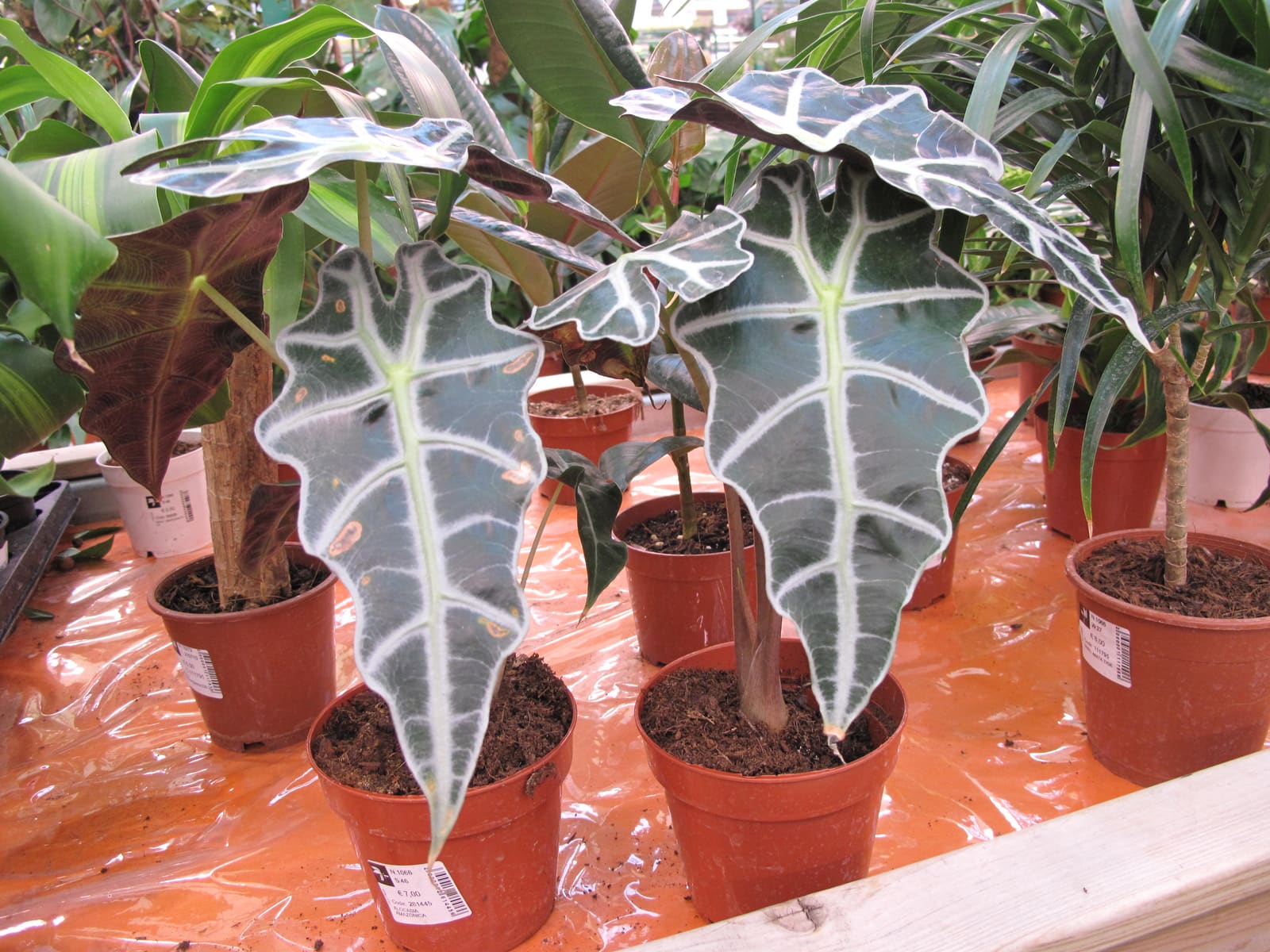
Also called elephant ear, African mask plant or Amazonian elephant ear
Photo by Tangopaso on Wikimedia Commons

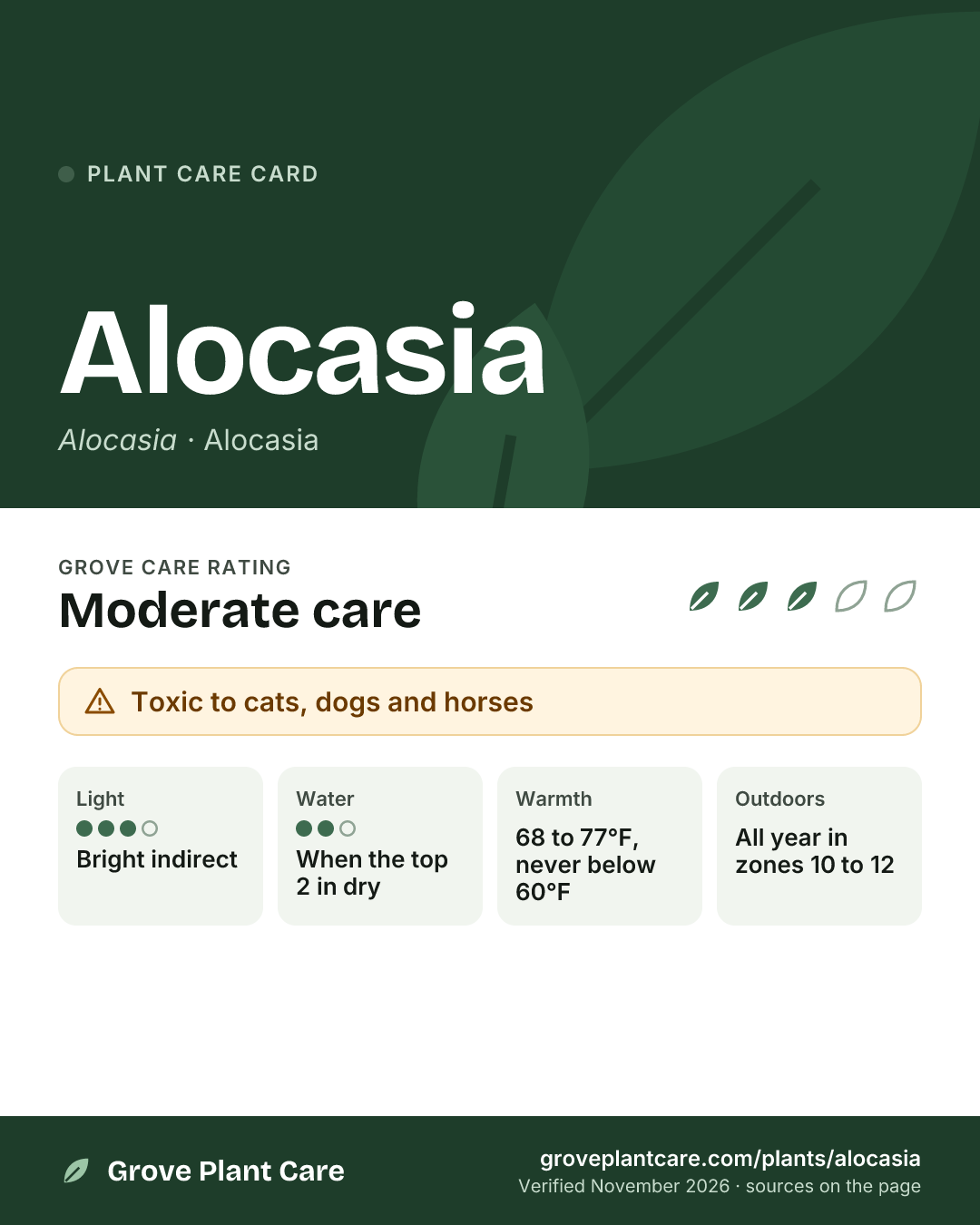
Alocasia, the elephant ear with arrow-shaped, boldly veined leaves, grows well indoors when it gets bright, indirect light, humid air and warmth. Water when the top 2 inches (5 cm) of mix are dry, keep it above 60°F (16°C) while it grows, and don't panic if it drops a few leaves in winter: the RHS says that rest is normal. It's toxic to cats, dogs and horses, and NC State rates the risk as medium.
Toxic to cats, dogs and horses · Moderate
Mouth pain and swelling, drooling, vomiting and trouble swallowing. All parts hold needle-like calcium oxalate crystals; NC State and UF/IFAS rate the severity as medium. Children: moderate severity. NC State and UF/IFAS rate it medium severity; the sap irritates skin and eyes.
Pet poison line: ASPCA (888) 426-4435
Good for: bold, patterned leaves, humid rooms such as a bright bathroom, summer pots on a shady patio · Think twice if: pets or small children chew plants, your home is dry or drafty in winter.
Needs at a glance
- Light3 of 4 · Bright indirectBright, filtered light; strong sun scorches the leaves, and low light slows growth
- Water2 of 3 · Let the top dryWater when the top 2 in (5 cm) is dry from spring to fall; keep it on the dry side in winter
- Humidity2 of 3 · Above averageLikes humid air; dry air brings spider mites and brown leaf edges
- Soil when pottedRich, well-drained potting mixHouseplant mix with about one part grit to three parts mix
Indoors: best at 68 to 77°F (20 to 25°C). Keep it above 60°F (16°C) and away from drafts and heat vents.
How the rating adds up
0 = easiest · 1 = moderate · 2 = hardest
- Missed waterings1 of 2 · ModerateWater when the top 2 in (5 cm) is dry; soggy soil rots the roots
- Light flexibility1 of 2 · ModerateBright, indirect light; lower light only slows it down
- Humidity1 of 2 · ModerateLikes medium to high humidity; a pebble tray or humidifier helps
- Pests and disease1 of 2 · ModerateSpider mites in dry air, mealybugs; root and stem rot when overwatered
- Sensitivity to change1 of 2 · ModerateCold drafts damage it, and it may drop leaves in its winter rest
Growing outdoors
All year: USDA zones 10 to 12, where the coldest winter nights average 30°F (−1°C) or warmer.
Elsewhere: summer outside in part shade or filtered sun, out of the wind; strong sun scorches the leaves. Bring it in before nights drop below 60°F (16°C).
- Pots on a shaded patio in summer
- A bold accent or border in shady tropical beds
Sources: NC State, RHS alocasia guide, UF/IFAS, RHS, ASPCA, ASPCA plant list, USDA zone map, FISC, Hawaii noxious weed list, GISD, Cal-IPC, Plant Pono and Rojas-Sandoval and Acevedo-Rodríguez. Full list below.
Verified · How we rate plants
Is alocasia toxic to cats and dogs?
Yes. The ASPCA lists every Alocasia as toxic to cats, dogs and horses. All parts hold insoluble calcium oxalate crystals, tiny needles that irritate the mouth. A pet that chews a leaf may drool, paw at its mouth, vomit and have trouble swallowing. NC State and UF/IFAS rate the severity as medium, a step above many common houseplants, and NC State lists children as at risk too. The sap also irritates skin and eyes, so the RHS suggests gloves when you handle it. If a pet eats some and seems unwell, call your vet or the ASPCA Animal Poison Control Center at (888) 426-4435. If a child eats some, call Poison Help at 1-800-222-1222.
ASPCA, NC State, UF/IFAS, RHS alocasia guide, RHS, ASPCA plant list
Which alocasia do I have, and is it an elephant ear?
Alocasia is a genus from tropical Asia to Australia, with about 80 species per NC State and more than 90 per UF/IFAS, and many plants sold are hybrids. The most common is 'Polly', the African mask plant, with dark green arrow-shaped leaves and pale veins; it's sold as Alocasia × amazonica, a name Kew counts as invalid, so NC State files it under A. × mortfontanensis. Others include zebrina (striped stems), 'Frydek' (velvety leaves with pale veins) and the black velvet alocasia (A. reginula). The biggest, giant taro (A. macrorrhizos), has its own card. 'Elephant ear' also names Colocasia: Clemson's easy test is that alocasia leaves point up and colocasia leaves point down, and UF/IFAS warns the two get confused, which matters because Colocasia can be invasive.
NC State, UF/IFAS, Kew WCVP, RHS alocasia guide, Clemson HGIC
How much light does an alocasia need?
Bright, indirect light. The RHS says bright but filtered light is best, since strong sun scorches the leaves, and UF/IFAS gives the same advice for alocasias grown as houseplants. NC State says direct sun can scorch the leaves of 'Polly'. It will put up with less light, but the RHS says it then grows much more slowly. Turning the pot a little each time you water keeps it from leaning toward the window (RHS).
How often should I water an alocasia?
From spring to fall, water once the top 2 inches (5 cm) of mix are dry, per the RHS. NC State says keep the soil moist but well drained, and warns that overwatering brings root rot and bacterial stem rot. In winter, the RHS cuts watering to a minimum, because wet soil in its rest period rots the roots. If the mix dries out very fast after watering, the RHS says the plant is probably pot-bound and ready for a bigger pot.
Why is my alocasia dropping leaves in winter?
Often it's resting. The RHS says alocasias go dormant in cooler, drier winter conditions and may lose some leaves, which is normal, with new ones coming in spring. Help it through: water very little, stop feeding, and keep it above 50°F (10°C) at all times, out of cold drafts, which the RHS says damage it. If leaves yellow in the growing season instead, NC State points to too much water, too little water or too little light, so check the soil first.
What humidity and temperature does an alocasia need?
Warm, humid air. The RHS says alocasias need medium to high humidity, which most homes lack, so use a pebble tray, a humidifier, a group of plants or a bright bathroom. NC State says 'Polly' prefers high humidity. For warmth, NC State says the genus grows best around 68 to 77°F (20 to 25°C). Keep it above 60°F (16°C) while it's growing (NC State, RHS), and never below 50°F (10°C) in its winter rest (RHS). Low humidity shows as brown leaf edges.
What pests bother alocasia?
Spider mites above all. NC State calls alocasias prone to them, and the RHS says red spider mites thrive in dry air, so raising the humidity is also pest control. Check under the leaves for fine webbing and speckling. NC State and the RHS also list mealybugs, and NC State adds aphids. UF/IFAS says none of these are major problems for the genus. The disease risk is rot: root rot and stem rot from overwatering (NC State, RHS).
How do I repot or propagate an alocasia?
Repot every couple of years in spring, when the roots are crowded, into a pot about 2 inches (5 cm) wider, with the top of the root ball just under the surface (RHS). Use houseplant mix with grit, about three parts mix to one part grit. To make new plants, pot up the small offsets that form at the base in spring, with as much root as you can, or divide the fleshy rhizome in late spring or early summer (RHS, NC State). Wear gloves, because the sap irritates skin.
Can alocasia grow outdoors, and is it invasive?
In warm places, yes. NC State puts the genus in USDA zones 10 to 12. UF/IFAS says frost kills the leaves, but from zone 8A south the plant often regrows from the base in spring. Give it part shade and shelter from wind, which damages the tender leaves (NC State, UF/IFAS). In colder places, NC State says to dig it up or bring the pot in before the first fall frost; for a growing plant, bring it in before nights drop to 60°F (16°C), the minimum NC State and the RHS give. No official invasive list names any Alocasia: Florida's FISC list leaves the genus out and UF/IFAS says it isn't known to be invasive there. Hawaii's weed risk assessment does rate the dwarf elephant ear (A. cucullata) high risk, and FISC lists wild taro (Colocasia esculenta), its look-alike, as a Category I invasive.
NC State, UF/IFAS, RHS alocasia guide, FISC, Hawaii noxious weed list, GISD, Plant Pono
How Grove helps
Grove sets a watering check based on how dry the soil is, so your alocasia gets water once the top 2 inches have dried, and much less in its winter rest. You can add a monthly spider mite check under the leaves as a repeating task and assign it, and set a reminder to bring the pot inside before cool nights.
Sources
- NC State Extension Gardener Plant Toolbox: Alocasia (genus page, lists giant taro)
- RHS: How to grow alocasias
- NC State Extension Gardener Plant Toolbox: Alocasia × mortfontanensis (formerly A. × amazonica; African mask, 'Polly')
- UF/IFAS EDIS FPS 33: Alocasia spp., Elephant's Ear, Alocasia, Taro (rev. 2025)
- RHS: Alocasia × amazonica (African mask)
- ASPCA Animal Poison Control: Alocasia (Elephant's Ear)
- ASPCA Animal Poison Control: Toxic and Non-Toxic Plants
- USDA ARS Plant Hardiness Zone Map (2023)
- Florida Invasive Species Council: Plant List, Category I and II (April 2026)
- Hawaii Administrative Rules 4-68: plant species designated as noxious weeds (Hawaii Department of Agriculture)
- IUCN Global Invasive Species Database: Alocasia (no record)
- California Invasive Plant Council (Cal-IPC): plant search, "alocasia" (no listing)
- Plant Pono (Hawaii-Pacific Weed Risk Assessment): Alocasia cucullata, High Risk, score 9
- J. Rojas-Sandoval and P. Acevedo-Rodríguez (2015), Naturalization and invasion of alien plants in Puerto Rico and the Virgin Islands, Biological Invasions 17 (supplementary list)
- Kew WCVP data release (2026-06-04 file), plant_name_id 6678: genus Alocasia
- Kew WCVP data release (2026-06-04 file), plant_name_id 6792: Alocasia × mortfontanensis (A. × amazonica, 376801, is an invalid name for it)
- Clemson HGIC: Fun with Elephant Ears in the Garden (2020)