Plant care card
Aloe vera
Aloe vera · Sábila
Also called Barbados aloe or true aloe
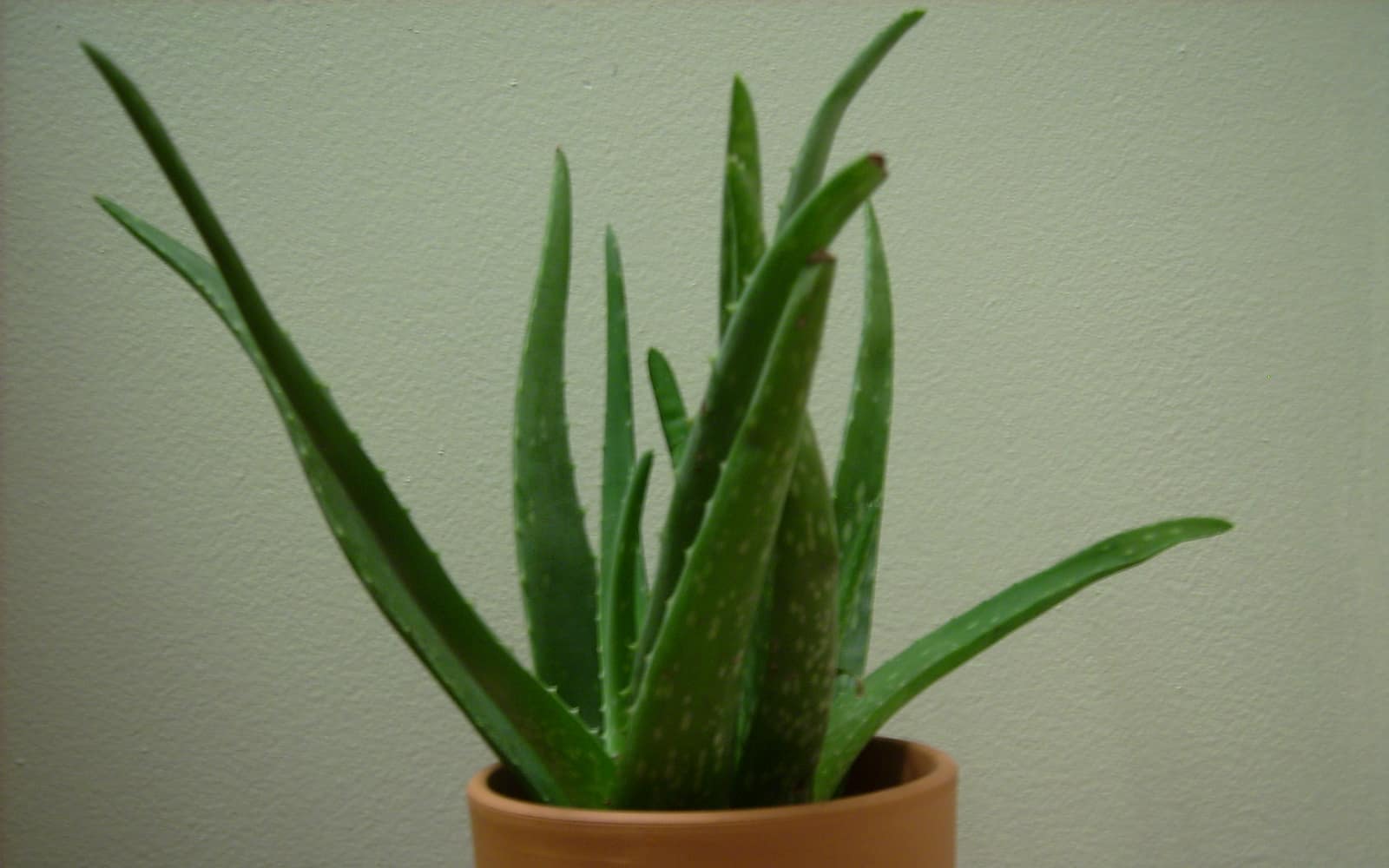
Photo by Arjun01 on Wikimedia Commons

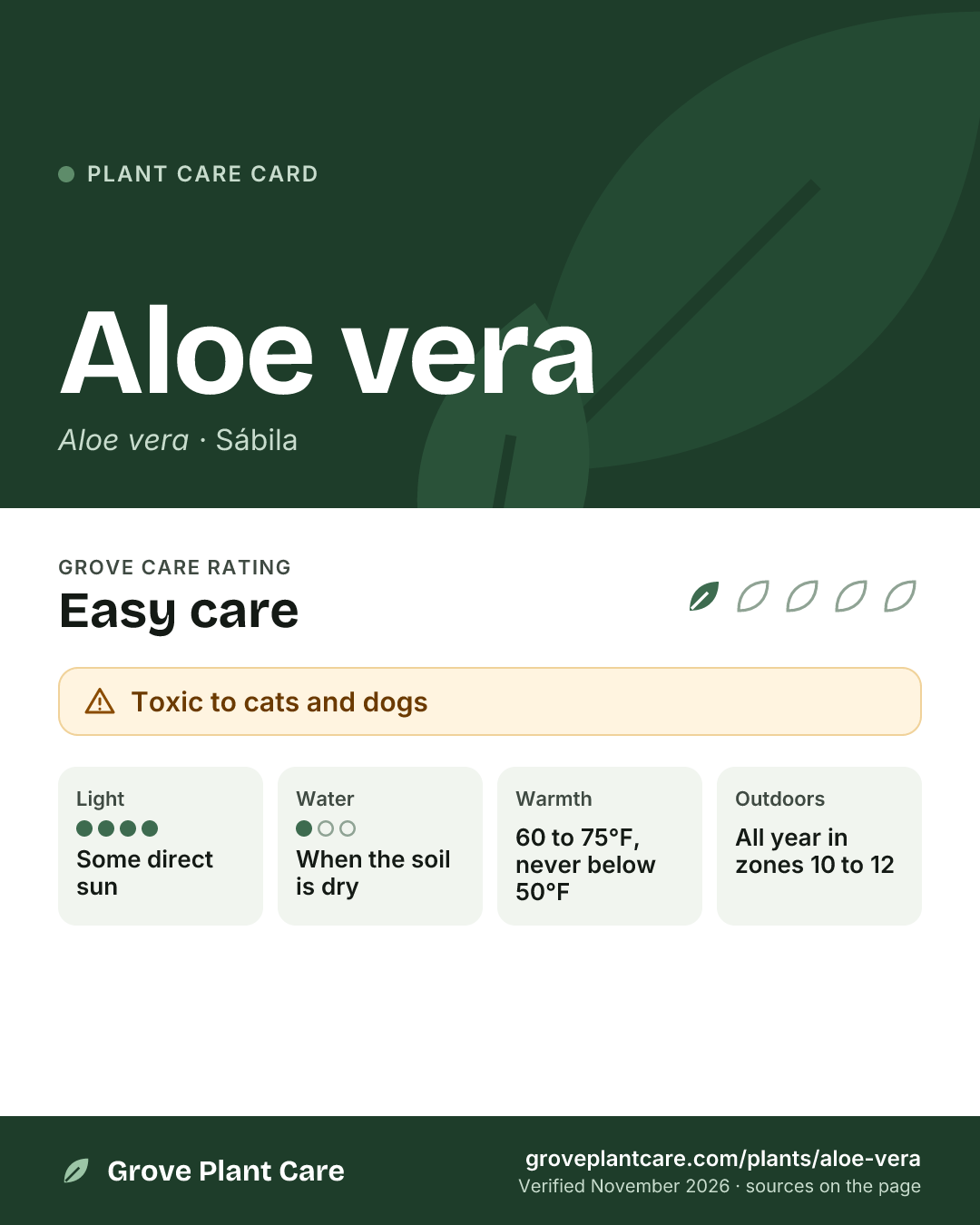
Aloe vera is an easy succulent if you give it your sunniest window and let the soil dry out before you water again. Its thick leaves hold water, so a missed watering is fine; too much water is what rots it. Water much less in winter. It’s toxic to cats and dogs, so keep it where pets can’t chew it.
Toxic to cats and dogs · Mild
Vomiting, lethargy and diarrhea. NC State and the RHS also list it as harmful to pets if eaten. Children: low severity. NC State rates it low severity; eating the leaves can cause cramps and diarrhea. The RHS suggests gloves when handling it.
Pet poison line: ASPCA (888) 426-4435
Good for: a sunny windowsill, people who forget to water, a patio in summer · Think twice if: pets chew plants, your only window is dim, you like to water often.
Needs at a glance
- Light4 of 4 · Some direct sunYour sunniest window; ease it into stronger sun
- Water1 of 3 · Let the soil dryThen water deeply; much less in winter; never let it sit in water
- Humidity1 of 3 · AverageA normal home is fine, even dry winter air
- Soil when pottedCactus or succulent mixGritty and fast draining, in a pot with big drain holes; clay helps
Indoors: best at 60 to 75°F (16 to 24°C). Keep it above 50°F (10°C) and away from drafts and heat vents.
How the rating adds up
0 = easiest · 1 = moderate · 2 = hardest
- Missed waterings0 of 2 · EasiestA succulent: let the soil dry completely between waterings
- Light flexibility1 of 2 · ModerateNeeds bright light or sun; stretches and flops in low light
- Humidity0 of 2 · EasiestDry home air is ideal; no misting
- Pests and disease1 of 2 · ModerateMealybugs, scale, aloe rust; rot if overwatered
- Sensitivity to change0 of 2 · EasiestTough indoors; ease it into strong sun so it doesn’t scorch
Growing outdoors
All year: USDA zones 10 to 12, where the coldest winter nights average 30°F (−1°C) or warmer.
Elsewhere: summer outside in sun, after a week or two in bright shade. Bring it in before nights drop below 50°F (10°C).
- Containers
- Patio plant
- Rock and dry gardens in warm climates
Sources: NC State, SDSU, UF/IFAS, Penn State, NYBG, RHS, ASPCA, USDA zone map and UF/IFAS Assessment. Full list below.
Verified · How we rate plants
How often should I water an aloe vera plant?
When the soil has dried. NC State and SDSU say to let it dry completely between waterings, while UF/IFAS waters once the top inch is dry. Then water deeply, let it drain and empty the saucer: it should never sit in water. In winter, water much less; the NYBG gives it just enough from October to February to keep the soil from drying out completely. If the leaves look thin, puckered and yellowish, it’s thirsty, and SDSU says they plump back up after a drink.
How much light does an aloe vera need?
A lot. The NYBG asks for at least six hours of direct sun, and the RHS lists full sun. Penn State says a sunny window with full sun to bright indirect light works, and to turn the pot now and then. SDSU adds a caution: sun it isn’t used to can scorch the leaves, so move it into stronger light over a week or two. In a dim room it stretches, the leaves go thin and limp, and the plant leans.
Why are my aloe vera leaves brown or soft?
Squeeze a leaf, then check the soil. Soft, mushy leaves and a wet pot mean too much water: the NYBG says rot usually starts in soggy soil, often in winter, and SDSU warns that root rot can kill the plant if it isn’t caught early. Let it dry out and make sure the pot drains. Brown patches after a sudden move into sun are sun scorch. Thin, yellowish, puckered leaves mean it’s too dry. Yellow spots that turn brown can be aloe rust, which SDSU says comes with cool, damp conditions and usually needs no treatment. Cold windowsills and drafts can also discolor the leaves, the NYBG says.
Why is my aloe vera bending or falling over?
Almost always too little light. The NYBG says an aloe without enough sun stretches, its leaves go limp and flat, and the plant leans or topples. SDSU agrees: low light makes it leggy, with weak, drooping leaves. Move it to your sunniest window, easing it in so it doesn’t scorch. Two exceptions: a mature plant’s outer leaves droop a little on their own, which is normal, and a stem buried too deep can rot and tip the plant.
When should I repot an aloe vera?
About every two years, Penn State says, to refresh the mix and give the roots room. Go up only a little: Penn State leaves 1 to 1.5 inches between the root ball and the pot, and UF/IFAS warns against jumping more than two sizes, since a big pot holds water and rots the roots. Use a cactus or succulent mix in a pot with large drain holes; NC State says clay is best. Set the plant at the same depth as before, with the leaves just above the soil.
How do I propagate aloe vera?
From its pups. Aloe vera makes small offsets around its base. The RHS says to separate them in spring or early summer and pot each one in cactus compost, and Penn State says the same: lift the pups away and give them their own pots. None of our sources covers growing aloe vera from a cut leaf, so we stick to pups.
Is aloe vera toxic to cats and dogs?
Yes. The ASPCA lists aloe vera as toxic to cats, dogs and horses, with vomiting, lethargy and diarrhea as the signs. NC State also flags it as a problem for cats and dogs and rates it low severity for people, and the RHS says it’s harmful to pets if eaten. Keep it on a shelf pets can’t reach. If a pet eats part of it and seems unwell, call your vet or the ASPCA Animal Poison Control Center at (888) 426-4435.
Can aloe vera grow outdoors?
All year only where winters stay frost free: NC State gives USDA zones 10 to 12, while UF/IFAS says 8 to 11, so the two differ on zones 8 and 9. Anywhere else, give it a summer outside and bring it in before nights get cold; the RHS rates it for a minimum of about 41 to 50°F (5 to 10°C), and Penn State says to bring it in before frost. Move it into full sun over a week or two so it doesn’t scorch. UF/IFAS finds it isn’t a problem species in Florida.
Will my aloe vera flower?
Maybe, once it’s grown up. NC State says only mature plants, about three years old, bloom, with tubular yellow, orange or red flowers on a stalk that can reach nearly 3 feet. UF/IFAS says plants grown indoors rarely bloom, so lots of sun and a summer outside give it the best chance.
How Grove helps
Grove sets a watering check based on how dry the soil is, so the aloe gets a drink only once it has dried out and nobody waters it on autopilot in winter. You can add moving it outside for summer and bringing it in before cold nights as tasks and assign them, so whoever is home that day carries the pot.
Sources
- NC State Extension Gardener Plant Toolbox: Aloe vera
- SDSU Extension: Aloe Vera: Houseplant How-To
- UF/IFAS Gardening Solutions: Aloe Vera
- Penn State Extension: Aloe, a Hardy Houseplant
- New York Botanical Garden, Mertz Library: Aloe Houseplants
- Royal Horticultural Society: Aloe vera plant details
- ASPCA Animal Poison Control: Aloe
- USDA ARS Plant Hardiness Zone Map (2023)
- UF/IFAS Assessment of Non-Native Plants in Florida: Aloe vera
- ASPCA Animal Poison Control: Toxic and Non-Toxic Plants
- Kew Plants of the World Online: Aloe vera
- Kew: World Checklist of Vascular Plants (June 2026 release), the data behind Plants of the World Online