Plant care card
Amaryllis
Hippeastrum hybrids (sold as amaryllis) · Amarilis
Also called fire lily
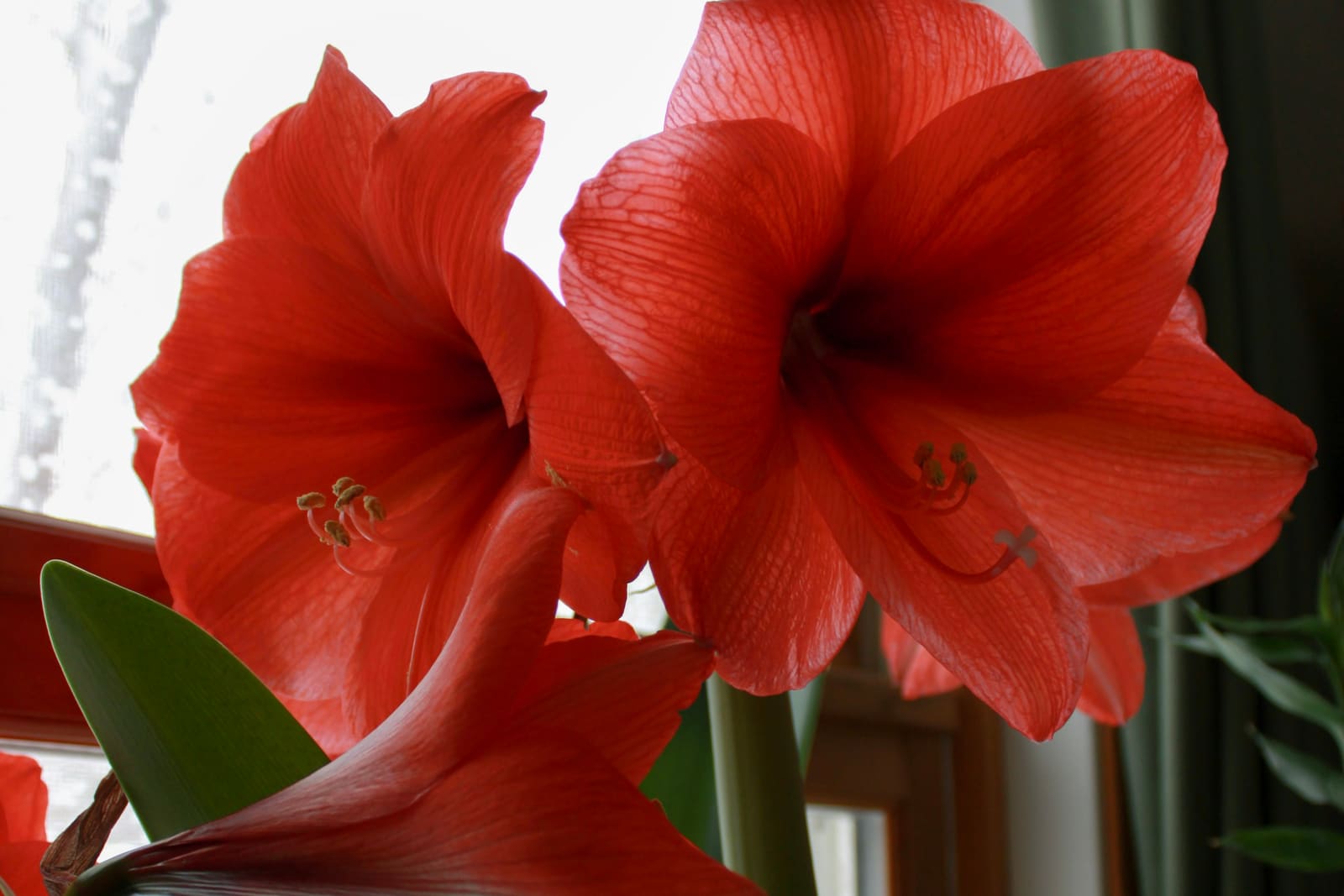
An amaryllis is one of the easiest bulbs to bring into bloom: pot it in a sunny window, keep it barely moist, and the flowers open in about 4 to 8 weeks. Getting it to bloom again takes a summer of sun and food for the leaves, then a cool rest. Waxed bulbs are sold to bloom once. Keep every amaryllis away from pets, because the bulb is the most poisonous part.
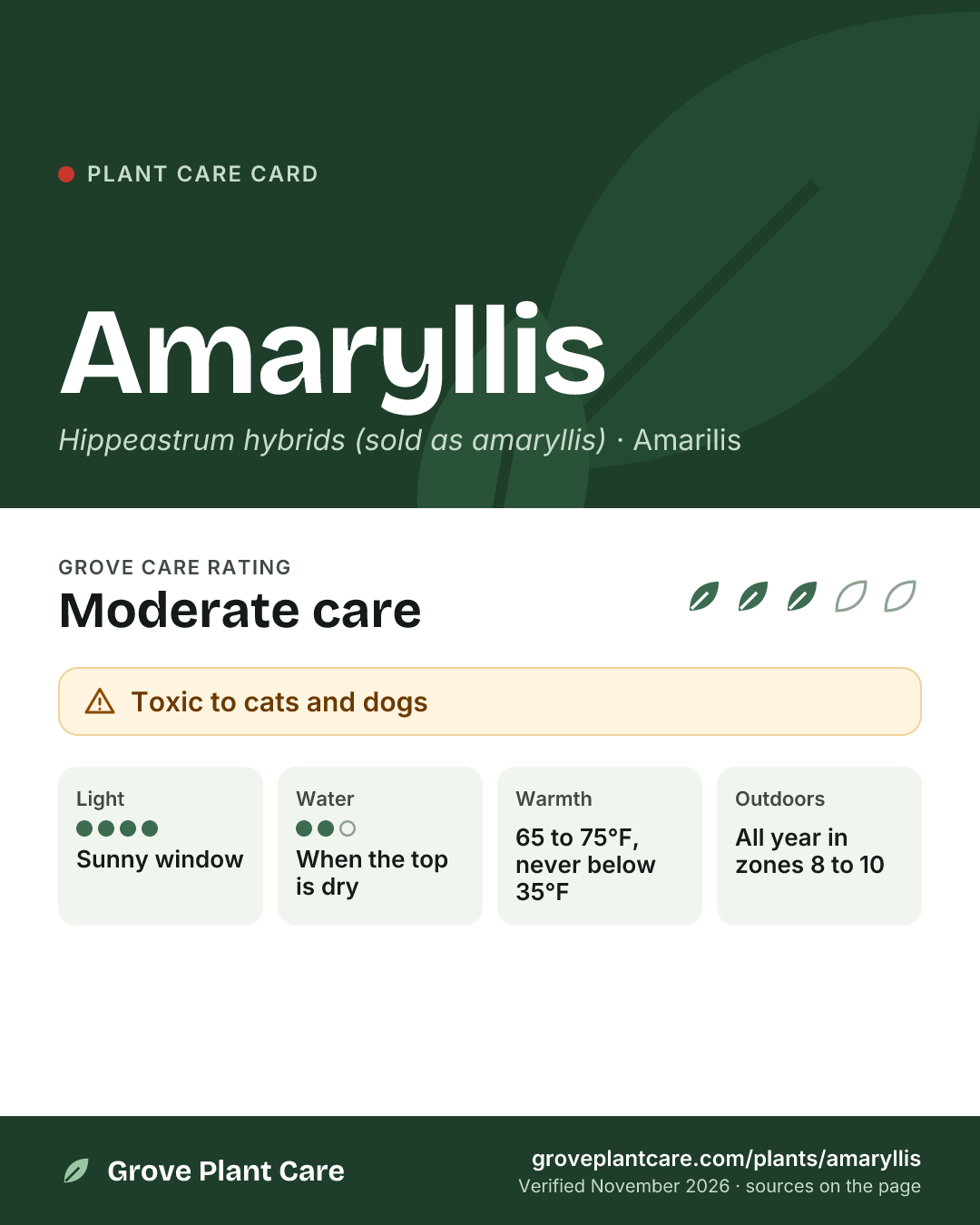
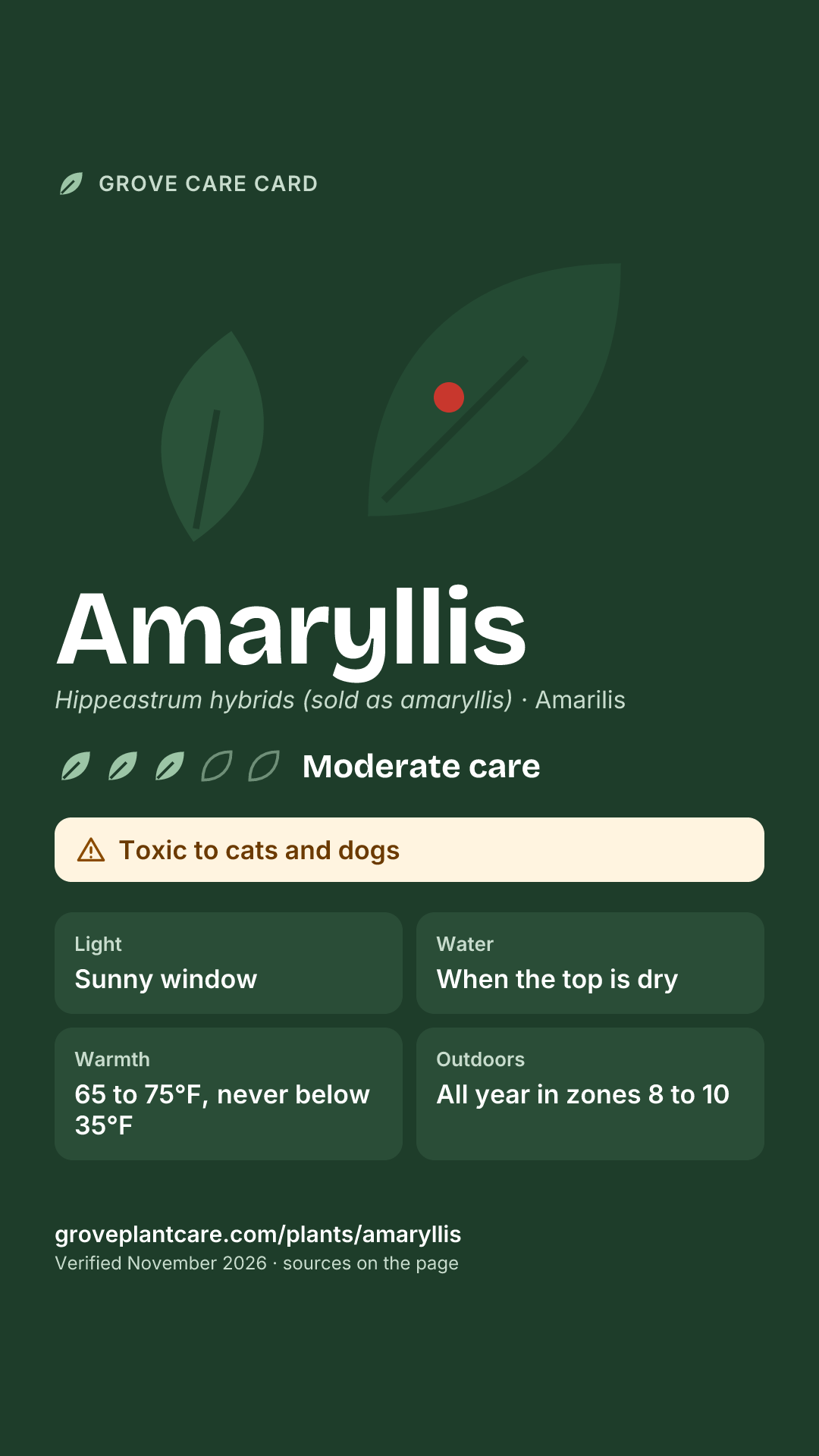
Toxic to cats, dogs and horses · Moderate
Vomiting, drooling and diarrhea; large amounts can cause tremors, seizures and heart rhythm problems. The bulb is the most poisonous part. Children: moderate severity. Every part is poisonous if eaten, the bulb most of all.
Pet poison line: ASPCA (888) 426-4435
Good for: winter holiday gifts, big flowers from a single bulb, spring color in warm-climate gardens · Think twice if: pets chew plants or dig in pots, you want a waxed bulb to bloom again.
Needs at a glance
- Light4 of 4 · Sunny windowAt least 4 hours of direct sun; less while in bloom
- Water2 of 3 · Let the top dryBarely moist until it grows, then water when the surface is dry
- Humidity1 of 3 · AverageA normal home is fine
- Soil when pottedWell-drained potting mixPot 1 to 2 inches wider than the bulb, top half above the soil
Indoors: best at 65 to 75°F (18 to 24°C). Keep it above 35°F (2°C) and away from drafts and heat vents.
How the rating adds up
0 = easiest · 1 = moderate · 2 = hardest
- Missed waterings1 of 2 · ModerateKeep it barely moist; wet soil rots the bulb
- Light flexibility2 of 2 · HardestNeeds a sunny window to bloom again
- Humidity0 of 2 · EasiestNo extra humidity needed
- Pests and disease1 of 2 · ModerateRed blotch, mealybugs; bulb rot if wet
- Sensitivity to change1 of 2 · ModerateHeat and drafts shorten the bloom
Growing outdoors
All year: USDA zones 8 to 10, where the coldest winter nights average 10°F (−12°C) or warmer.
Elsewhere: summer outside in sun, 6+ hours, after a few days in shade. Bring it in before nights drop below 35°F (2°C).
- In the ground in warm climates
- Containers
- Borders and mass plantings
- Deer resistant
Sources: NC State, Wisconsin Extension, Clemson, Iowa State, University of Illinois, UF/IFAS, UGA, UNH, ASPCA and USDA zone map. Full list below.
Verified · How we rate plants
Is amaryllis poisonous to cats, dogs and children?
Yes. The ASPCA lists amaryllis (Hippeastrum) as toxic to cats, dogs and horses. Eating it can cause vomiting, drooling and diarrhea, and large amounts can lead to tremors, seizures, low blood pressure and heart rhythm problems. The bulb is the most poisonous part, so keep loose and waxed bulbs where pets can't chew them, and watch for digging in the pot. NC State rates it medium severity and lists it as a risk for children too: every part is poisonous if eaten, though it doesn't irritate skin. If a pet eats some and seems unwell, call your vet or the ASPCA Animal Poison Control Center at (888) 426-4435. If a person eats some, call Poison Help at 1-800-222-1222.
How often should I water an amaryllis?
Check the soil instead of following a schedule. Right after potting, water well, then keep the mix barely moist until you see growth: a bulb with no leaves can rot in wet soil. Once the stalk and leaves are growing, water when the top of the soil feels dry, which Clemson says is about once or twice a week in bloom, and empty the saucer. Illinois Extension waits until the top 2 inches are dry.
Clemson, Iowa State, Wisconsin Extension, University of Illinois
How much light does an amaryllis need?
Lots. Give it a sunny window, ideally facing south, with at least 4 hours of direct sun a day while the stalk and leaves grow, and turn the pot every few days so the stalk grows straight. Once the flowers open, move it out of direct sun to make them last longer. After it blooms, put it back in the sun: the leaves need light to refill the bulb for next year.
Clemson, Iowa State, University of Illinois, Wisconsin Extension
What temperature does an amaryllis like?
Warm while it grows, a little cooler while it blooms. Clemson and Iowa State suggest 70 to 75°F (21 to 24°C) until the stalk forms, then about 65 to 70°F (18 to 21°C) once it flowers; Wisconsin says 60 to 65°F (16 to 18°C) in bloom. Keep it away from heaters and vents, since heat makes the flowers fade sooner. NC State says the plant is injured below 35°F (2°C).
How do I plant an amaryllis bulb?
Pick a large, firm bulb: the biggest ones usually send up 2 or 3 stalks. Use a pot with drainage holes about 1 to 2 inches wider than the bulb and a well-drained potting mix. Set the bulb so its top half (at least the top third) sits above the soil, water it well and keep it warm. Flowers usually open 4 to 8 weeks later, depending on the variety, so potting in early to mid November is timed for Christmas.
Iowa State, Clemson, University of Illinois, Wisconsin Extension
What do I do with an amaryllis after it blooms?
Keep it growing as a houseplant. Cut the flower stalk 1 to 2 inches above the bulb once it fades or yellows, and keep every leaf, because the leaves refill the bulb for next year. Leave it in a sunny window, water when the top of the soil is nearly dry, and feed it every 2 to 4 weeks with a balanced fertilizer at half strength. After your last frost you can move the pot outside: a few days in shade first, then 6 or more hours of sun.
Iowa State, Clemson, University of Illinois, Wisconsin Extension
How do I get my amaryllis to bloom again?
Give it a full season of growth, then a cool rest. Bring it inside before frost (Iowa State says mid September), stop watering and let the leaves die back. Store the bulb somewhere cool and dim at 50 to 55°F (10 to 13°C) for at least 8 to 10 weeks; Illinois and Wisconsin say 45 to 55°F (7 to 13°C). Then move it to a warm, bright spot and start watering again, and it usually blooms 4 to 8 weeks later. The rest mainly sets the timing: Illinois and Wisconsin say modern bulbs can rebloom without it, and UNH suggests keeping the plant growing instead. A bulb that only makes leaves usually needed more sun and food the summer before.
Iowa State, NC State, Clemson, University of Illinois, Wisconsin Extension, UNH
Can a waxed amaryllis bloom again?
Sometimes, so enjoy it once and treat anything more as a bonus. Waxed bulbs bloom on the food already stored in the bulb, with no soil or water, and the wax keeps them from taking in more, so they shrink. Iowa State, Clemson, Illinois and NC State all describe them as made to be thrown out after flowering. If the bulb is still firm, you can try: peel off the wax (and any wire in the base) without tearing new roots, throw out a bulb with soft or dark spots, and pot it like a regular bulb. Give it plenty of sun and fertilizer through spring and summer, then the usual cool rest. Iowa State and NC State say success isn't guaranteed, because the bulb has used up so much of its stored food.
Iowa State, Clemson, University of Illinois, NC State Extension, University of Delaware
Can an amaryllis grow outdoors?
Yes, all year in USDA zones 8 to 10, where the coldest winter nights average 10°F (−12°C) or warmer; NC State says it can survive zone 7 with mulch. In Florida it is a tough garden bulb that blooms in spring and can stay in the ground for years. Plant bulbs about a foot apart in well-drained soil, with the neck at or just above the surface, in light shade or a sunny spot with afternoon shade: full sun can yellow the leaves, and deep shade cuts flowering. Mulch it in winter. Deer usually leave it alone. When clumps get crowded, dig and divide them; offsets a third the size of the mother bulb usually bloom within two years.
How Grove helps
Grove sets a watering check based on how dry the soil is, so nobody waters a bulb that is still wet. When the leaves die back in fall, you can add the cool rest as a task and assign the day it comes back into the light, so whoever is home that week wakes it up on time.
Sources
- NC State Extension Gardener Plant Toolbox: Hippeastrum
- University of Wisconsin-Madison Extension: Amaryllis
- Clemson Cooperative Extension HGIC 1551: Amaryllis (2024)
- Iowa State University Extension: All About Amaryllis
- University of Illinois Extension: How to take care of amaryllis and get them to rebloom (2021)
- UF/IFAS Extension EDIS EP060: Amaryllis
- UGA Extension Circular 951: Care of Holiday and Gift Plants (2026)
- UNH Extension: Care of Flowering Gift Plants in the Home
- ASPCA Animal Poison Control: Ridderstjerne (Hippeastrum spp., amaryllis)
- UF/IFAS Extension EDIS FPS-255: Hippeastrum x hybridum, Amaryllis (2023)
- USDA ARS Plant Hardiness Zone Map (2023)
- Iowa State University Extension: Can I get my waxed amaryllis bulb to rebloom? (2025)
- NC State Extension, New Hanover County: What to do with your wax-dipped amaryllis after the holidays (2026)
- University of Delaware Cooperative Extension (Master Gardeners): Prep your waxed amaryllis to rebloom next year (2022)
- ASPCA Animal Poison Control: Amaryllis (Amaryllis spp., belladonna lily)