Plant care card
Bougainvillea
Bougainvillea (B. glabra, B. spectabilis and hybrids) · Bugambilia
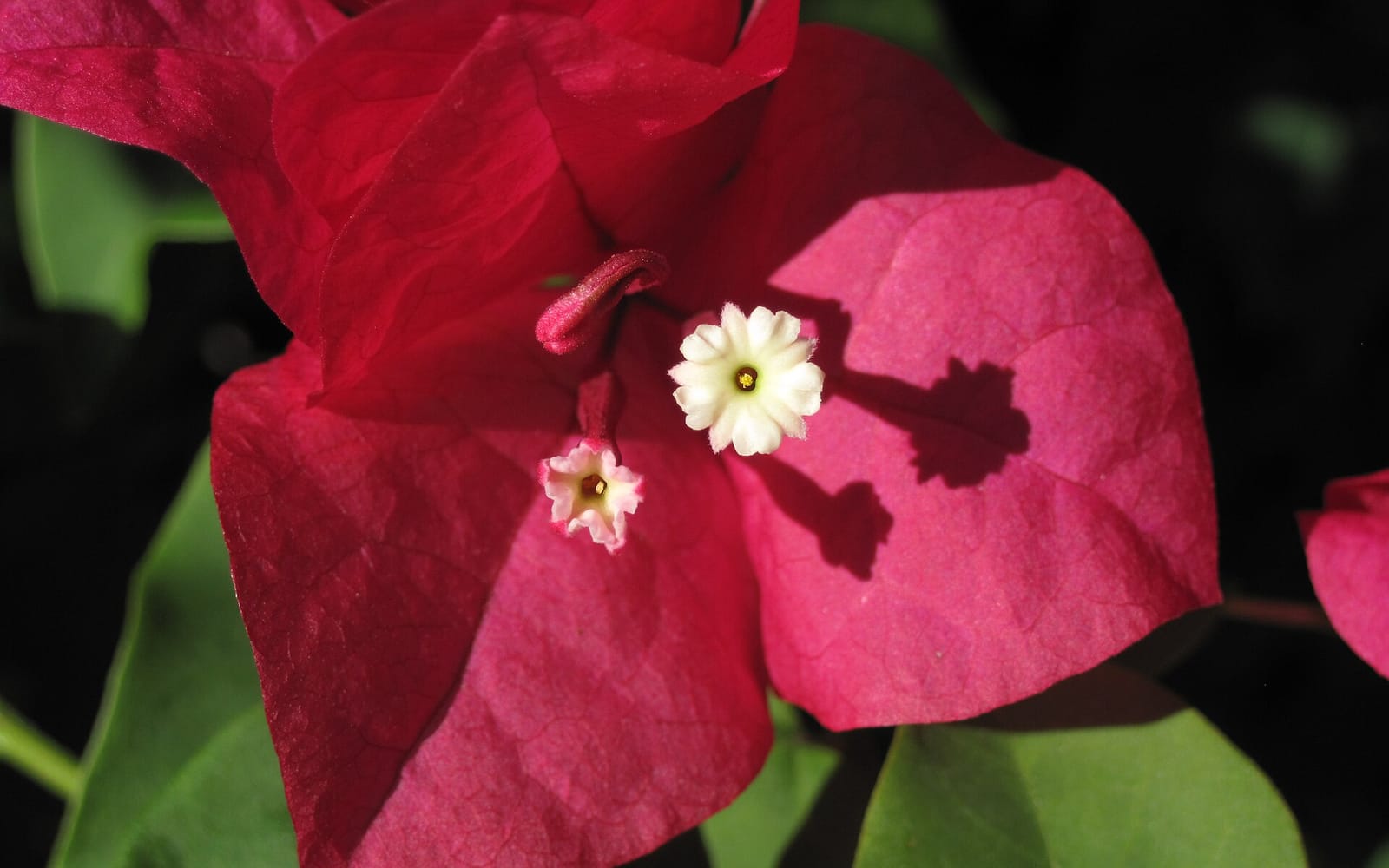
Also called paper flower
Photo by James St. John on Wikimedia Commons, CC BY 2.0

Bougainvillea is a thorny, sun-loving climber whose bright color comes from papery bracts around tiny white flowers. Give it full sun, at least 6 hours and more if you can, and let the soil dry between deep waterings: too much water, too much fertilizer and too little sun are the usual reasons it won't bloom. It is frost tender, so in zones colder than 9b grow it in a big pot and bring it in before nights drop to 50 to 60°F (10 to 16°C). Wear thick gloves to prune. No pet source rates it.
Not rated for pets
Neither the ASPCA nor NC State rates bougainvillea. No pet source lists it as toxic, but none rates it either. UC ANR says the sap is mildly toxic only if eaten in large amounts, and the thorns can scratch and cause a rash. Children: low severity. UC ANR: the sap is mildly toxic only if eaten in large amounts, and thorn pricks can cause a rash.
Pet poison line: ASPCA (888) 426-4435
Good for: hot, sunny spots, people who forget to water, color for months in warm climates · Think twice if: it would grow by a path, door or play area: the thorns are sharp, your sunniest spot gets less than 6 hours of sun.
Needs at a glance
- Light4 of 4 · Some direct sunFull sun: at least 6 hours, and 8 to 10 is better for color
- Water1 of 3 · Let the soil dryWater deeply, then let it dry; water much less in winter
- Humidity1 of 3 · AverageDry air is fine; no source asks for more
- Soil when pottedWell-drained soil or loam-based mixSlightly acidic; alkaline soil can turn the leaves yellow
Indoors: best at 60 to 75°F (16 to 24°C). Keep it above 50°F (10°C) and away from drafts and heat vents.
How the rating adds up
0 = easiest · 1 = moderate · 2 = hardest
- Missed waterings0 of 2 · EasiestDrought tolerant once settled; it blooms best kept on the dry side
- Light flexibility2 of 2 · HardestNeeds full sun to flower
- Humidity0 of 2 · EasiestNo source asks for extra humidity
- Pests and disease1 of 2 · ModerateSpider mites, mealybugs, aphids and whitefly under glass; leaf-rolling caterpillars outdoors
- Sensitivity to change1 of 2 · ModerateDrops leaves with cold, too much water or too little sun, then regrows
Growing outdoors
All year: USDA zones 9b to 11, where the coldest winter nights average 32°F (0°C) or warmer.
Elsewhere: summer outside in full sun; ease it into the sun over a week. Bring it in when nights reach 50 to 60°F (10 to 16°C).
- Climber on a trellis, fence or wall
- Hedge or barrier in warm climates
- Big pots, and hanging baskets for dwarf types
Sources: NC State, UF/IFAS, UF/IFAS Charlotte County, Texas A&M, RHS, ASPCA plant list, UC ANR, Hawaii weed risk assessment, Clemson, Illinois Extension, USDA zone map, FISC, Hawaii noxious weed list, Rojas-Sandoval and Acevedo-Rodríguez, Queensland Government, Cal-IPC and GISD. Full list below.
Verified · How we rate plants
Is bougainvillea toxic to cats and dogs?
We can't say for sure. The ASPCA's plant lists don't include bougainvillea, and NC State gives no toxicity rating, so no pet source rates it either way. UC ANR says the sap is mildly toxic if eaten in large amounts and that thorn pricks can cause a rash, because the thorns carry a coating that irritates skin. The Hawaii weed risk assessment found no evidence of toxicity. The thorns are the clearest risk, so keep it away from paths where pets and children play. If your pet chewed a plant and seems unwell, call your vet or the ASPCA Animal Poison Control Center at (888) 426-4435. If a child eats some, call Poison Help at 1-800-222-1222.
ASPCA plant list, NC State, UC ANR, Hawaii weed risk assessment
Why isn't my bougainvillea blooming?
Almost always one of three things: too little sun, too much water or too much fertilizer. UF/IFAS says it won't flower without direct sun, and Texas A&M says sparse blooms usually mean it needs 8 to 10 hours of direct sun a day. UF/IFAS and Charlotte County Extension both warn that extra fertilizer, nitrogen above all, gives you leaves instead of color, and that a plant kept on the dry side blooms better. Pruning matters too: NC State notes it blooms on new growth, and UF/IFAS says pruning in late summer or early fall can cost you the next winter's flowers. Under glass, the RHS feeds a balanced liquid fertilizer until the bracts color, then switches to a high-potassium feed. Texas A&M adds that some varieties bloom mostly in fall, when days get shorter.
How often should I water bougainvillea?
Water deeply, then let the soil dry before you water again. NC State says established plants are drought resistant, and UF/IFAS says it does better kept somewhat dry, since it comes from places with dry seasons. Charlotte County Extension calls overwatering, often from a sprinkler aimed at it, a common mistake. New plants need regular water until they settle in. The RHS, growing it under glass in the UK, keeps it more evenly moist in summer, so a pot in hot sun may need water often. In winter, water much less: Texas A&M waters a dormant plant lightly about once a month.
Why is my bougainvillea dropping its leaves?
Check temperature, water and light. The RHS says it drops leaves and goes dormant when it gets colder than 10°C (50°F). Charlotte County Extension adds overwatering and too little sun, and says some leaf drop after a flush of bloom is natural and new growth follows. Moving a pot from full sun to a dim spot does the same. Fix the cause and it usually leafs out again; Texas A&M notes that dormant plants regrow once spring warms up.
How cold can bougainvillea get, and when do I bring it in?
It's frost tender. NC State lists USDA zones 9b to 11, and UF/IFAS says to protect it from frost and freezes, so treat 32°F (0°C) as the line. Texas A&M says South Texas winters rarely kill established plants. In a pot, bring it in before nights fall to about 50 to 60°F (10 to 16°C): the RHS says it drops its leaves and goes dormant below 10°C, though it handles short spells down to 5°C (41°F), and Clemson warns that 50°F or lower damages many tropical plants. Give it your sunniest window or a cool sunroom. If you have no bright spot, Texas A&M says a dormant plant can spend winter in a garage that stays just above freezing, watered about once a month, and go back out into full sun once spring nights stay mild.
Can I grow bougainvillea in a pot?
Yes, and in cold climates that's how most people grow it. NC State says it can be trained into a shrub shape in a container and grown as a patio or conservatory plant. The RHS grows it in large pots of loam-based compost with good drainage, since soggy soil leads to root rot, and moves standards out to a sunny patio for summer. UF/IFAS suggests dwarf varieties for hanging baskets. Keep it in full sun, prune it once a year to keep it compact, and let the pot dry between waterings.
When and how should I prune bougainvillea?
UF/IFAS says to prune in late winter or early spring after it flowers, or at the start of the rainy season, and to skip late summer and early fall, when cuts remove the next flush of color. Light trims are fine any time, says Charlotte County Extension, and natural dwarfs barely need it. The RHS prunes yearly to keep plants compact and push new growth lower down. Wear heavy, long gloves: UF/IFAS and Charlotte both warn the thorns are sharp, and UC ANR suggests long sleeves and eye protection too.
What pests bother bougainvillea?
Indoors or under glass, the RHS lists red spider mite, mealybugs, aphids and whitefly. NC State calls aphids an occasional problem. Outdoors in Florida, Charlotte County Extension names the bougainvillea leaftier, a caterpillar that rolls new leaves into tubes; you can pick it off by hand. Yellowing leaves can mean the soil is too alkaline, which NC State and Charlotte both mention. Check under the leaves before you bring a pot in for winter.
Which bougainvillea do I have? Is it invasive?
Most garden plants are cultivars or hybrids, and they all get the same care, so this card covers the genus. Kew accepts Bougainvillea glabra (lesser bougainvillea, which NC State lists at 10 to 20 ft) and B. spectabilis (great bougainvillea, 15 to 40 ft), both from Brazil, plus the garden hybrid B. × buttiana, which includes cultivars the RHS grows such as 'Mrs Butt' and 'Raspberry Ice'. No official invasive list we checked names any of them: Florida, Hawaii, Puerto Rico, Queensland and California don't list it, UF/IFAS finds it isn't a problem species in Florida, and the Hawaii weed risk assessment rates both species low risk.
Kew, NC State, RHS, FISC, Hawaii noxious weed list, Rojas-Sandoval and Acevedo-Rodríguez, Queensland Government, Cal-IPC, UF/IFAS, Hawaii weed risk assessment
How Grove helps
Grove schedules a watering check based on how dry the soil is, so the bougainvillea gets water only once it has dried out. You can add the yearly pruning and the bring-in before cold nights as tasks you can assign, so whoever handles them knows to grab the thick gloves.
Sources
- NC State Extension Gardener Plant Toolbox: Bougainvillea (genus)
- NC State Extension Gardener Plant Toolbox: Bougainvillea glabra
- UF/IFAS Gardening Solutions: Bougainvillea
- UF/IFAS Extension Charlotte County: Brilliant bracts boost bougainvillea bias (R. Mitchell, 2026)
- Texas A&M Aggie Horticulture, PLANTanswers: Bougainvillea
- Royal Horticultural Society: How to grow bougainvillea
- Royal Horticultural Society: Bougainvillea glabra (paper flower)
- UF/IFAS Extension Charlotte County: Bougainvillea are daytime beacons of color (R. Mitchell, 2023)
- ASPCA Animal Poison Control: Toxic and Non-Toxic Plants
- UC ANR, Plant Safely in Drought-Tolerant Landscapes: Bougainvillea spp.
- Hawaii-Pacific Weed Risk Assessment (Plant Pono): Bougainvillea glabra, low risk, score -1
- NC State Extension Gardener Plant Toolbox: Bougainvillea spectabilis
- UF/IFAS EDIS ENH1 (MG025): Cold Protection of Landscape Plants
- Clemson Cooperative Extension HGIC 1454: Moving Houseplants Indoors and Outdoors
- University of Illinois Extension, Houseplants: Care (temperature for foliage plants)
- USDA ARS Plant Hardiness Zone Map (2023)
- Florida Invasive Species Council: Plant List, Category I and II and Watch List (April 2026)
- UF/IFAS Assessment of Non-Native Plants: Bougainvillea glabra
- UF/IFAS Assessment of Non-Native Plants: Bougainvillea spectabilis
- Hawaii-Pacific Weed Risk Assessment (Plant Pono): Bougainvillea spectabilis, low risk, score 2
- Hawaii Administrative Rules 4-68: plant species designated as noxious weeds (Hawaii Department of Agriculture)
- J. Rojas-Sandoval and P. Acevedo-Rodríguez (2015), Naturalization and invasion of alien plants in Puerto Rico and the Virgin Islands, Biological Invasions 17 (supplementary list)
- Business Queensland: Restricted invasive plants (Biosecurity Act 2014)
- California Invasive Plant Council (Cal-IPC): plant search, "bougainvillea" (no listing)
- IUCN Global Invasive Species Database: Bougainvillea glabra and B. spectabilis (no entries)
- Kew WCVP data release (2026-06-04 file), plant_name_id 2680745: Bougainvillea (genus)
- Kew WCVP data release (2026-06-04 file), plant_name_id 2680754: Bougainvillea glabra
- Kew WCVP data release (2026-06-04 file), plant_name_id 2680780: Bougainvillea spectabilis
- Kew WCVP data release (2026-06-04 file), plant_name_id 2680751: Bougainvillea × buttiana (artificial hybrid)