Plant care card
Pencil cactus
Euphorbia tirucalli · Árbol de los dedos
Also called pencil tree, milk bush or fire sticks
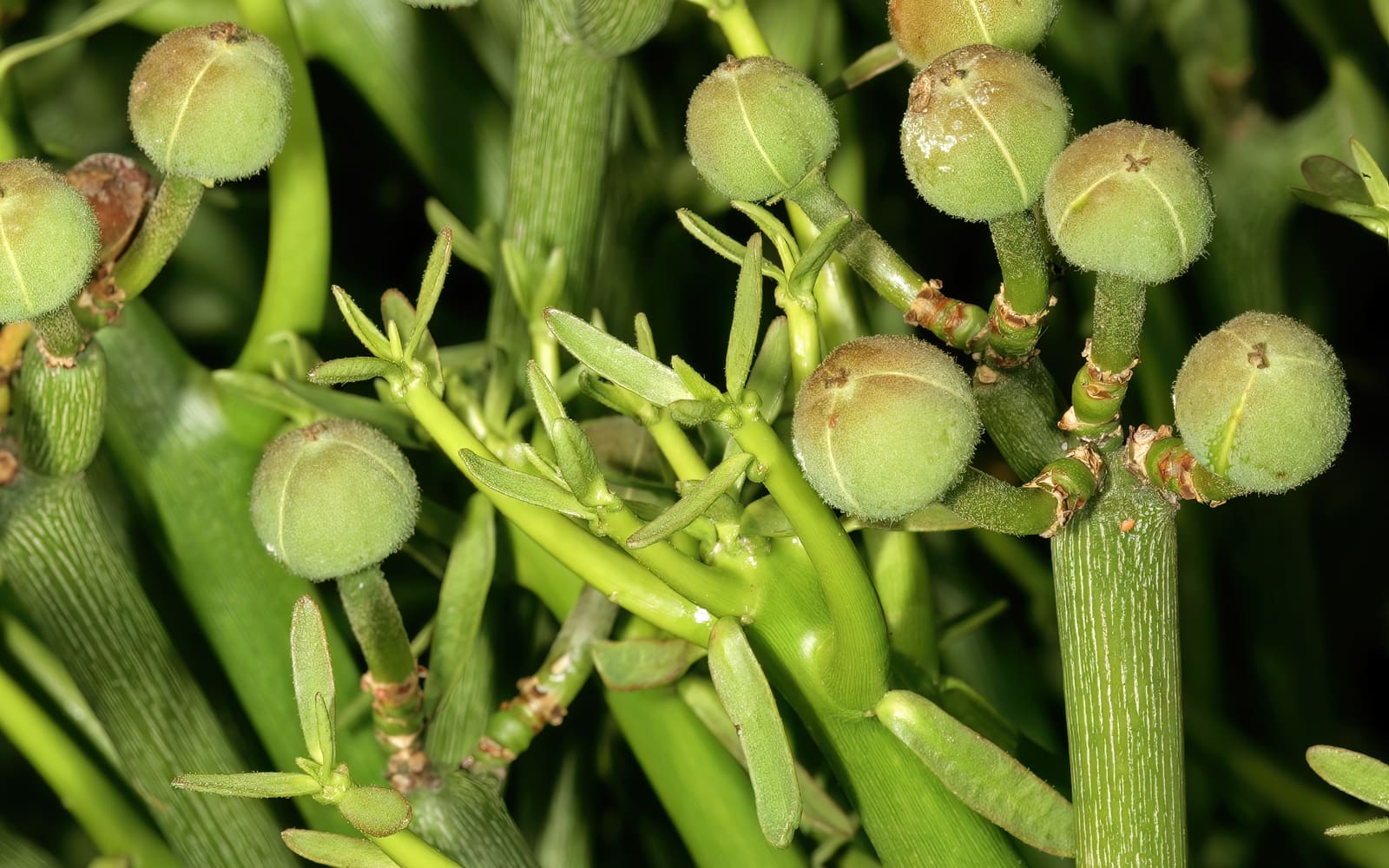
Photo by SAplants on Wikimedia Commons, CC0 1.0

Pencil cactus is one of the easiest plants to keep alive: give it your sunniest window and let the soil dry out between waterings. It isn't a true cactus. It's a spineless Euphorbia, a cousin of crown of thorns and poinsettia. Treat it with respect, because the milky sap that drips from any broken stem is a strong irritant. It can burn skin, injure eyes and blister the mouth. Wear gloves and eye protection when you handle it. The ASPCA lists it as toxic to cats, dogs and horses.
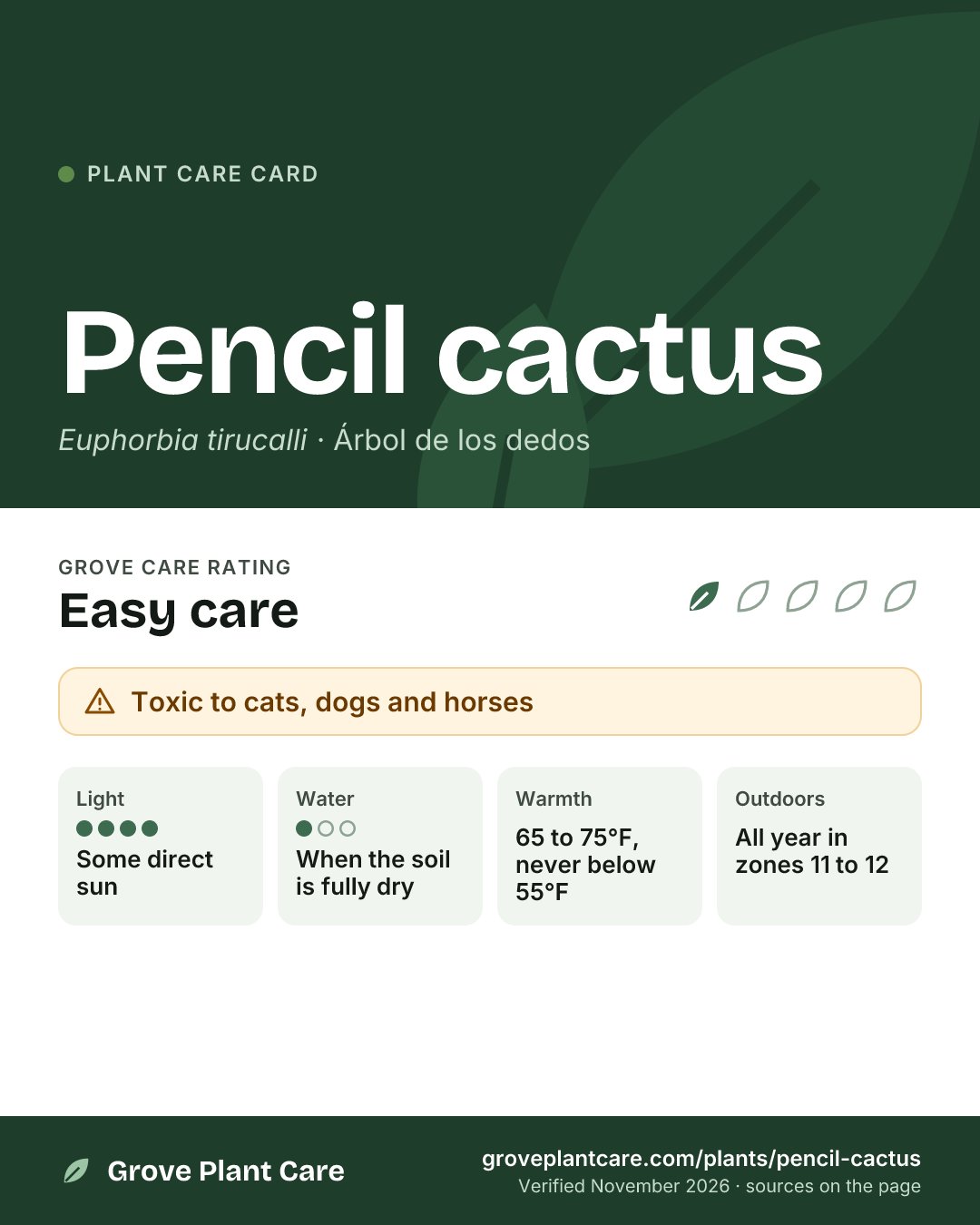
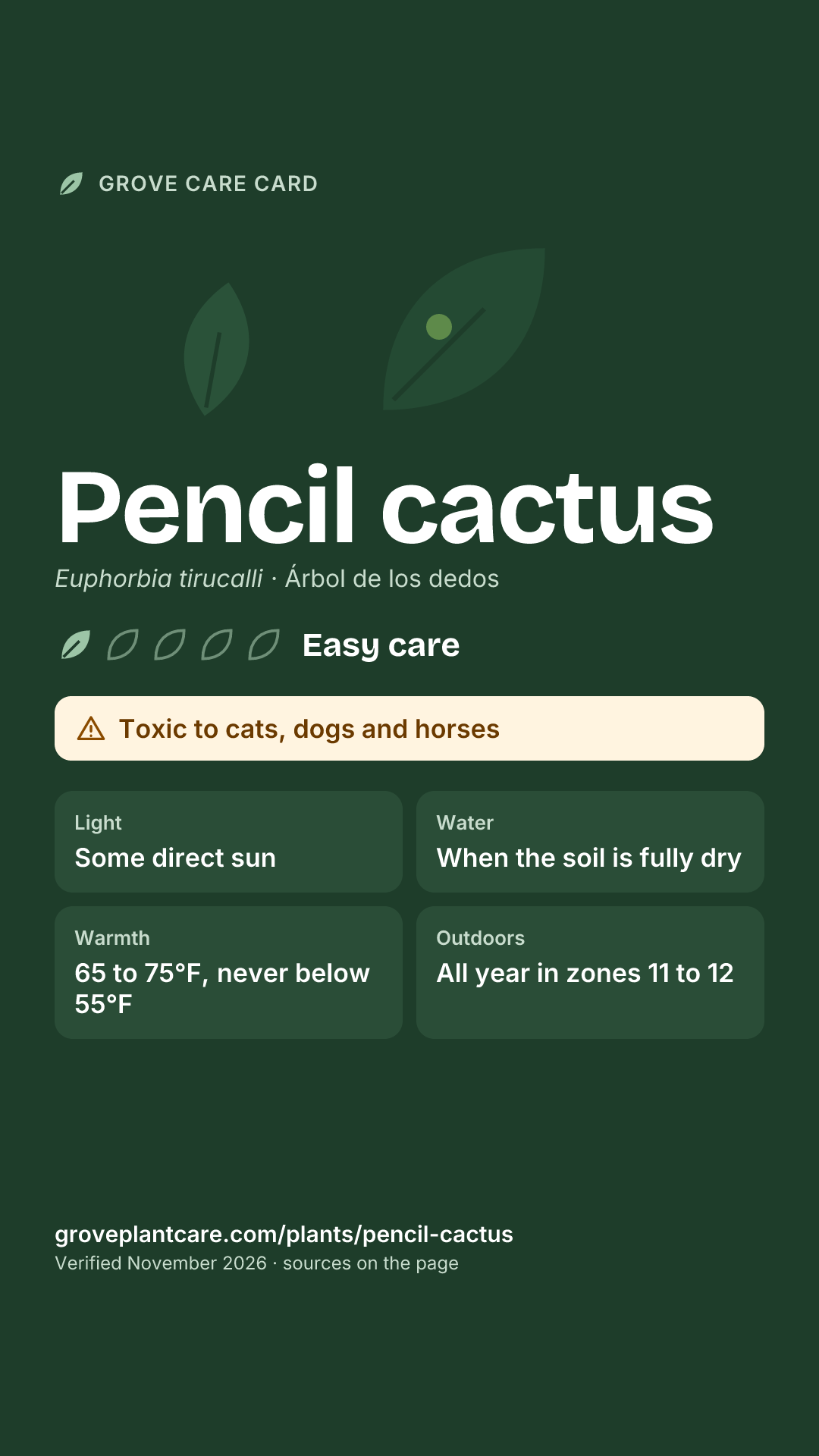
Toxic to cats, dogs and horses (ASPCA); the sap can hurt eyes
Drooling and vomiting if chewed; sap in the eye causes redness, squinting and pawing, and in bad cases corneal ulcers. The milky sap is the problem, so keep the plant where pets can’t reach or brush against it. Children: moderate severity. The milky sap causes skin rashes, can damage the eye, sometimes for good, and blisters the mouth; UC ANR says many gardeners have ended up in emergency rooms.
Pet poison line: ASPCA (888) 426-4435
Good for: sunny windows, people who forget to water, a tall, sculptural plant · Think twice if: pets or small children play near it, it would sit by a walkway where people brush past.
Needs at a glance
- Light4 of 4 · Some direct sunA sunny window with 6 or more hours of direct sun
- Water1 of 3 · Let the soil dry completelyAbout every 1 to 2 weeks in summer; barely any in winter
- Humidity1 of 3 · AverageDry indoor air is fine; NYBG says keep it below 50%
- Soil when pottedGritty, fast-draining mixPotting soil mixed half and half with coarse sand or perlite, in a pot with a drain hole
Indoors: best at 65 to 75°F (18 to 24°C). Keep it above 55°F (13°C) and away from drafts and heat vents.
How the rating adds up
0 = easiest · 1 = moderate · 2 = hardest
- Missed waterings0 of 2 · EasiestDrought tolerant; let the soil dry between waterings
- Light flexibility2 of 2 · HardestBest in full sun; shade slows it and dulls the color
- Humidity0 of 2 · EasiestPrefers dry air; skip the mister
- Pests and disease0 of 2 · EasiestFew problems; root rot if the soil stays wet
- Sensitivity to change0 of 2 · EasiestNo source reports fussiness; it just wants a cool, dry winter rest
Growing outdoors
All year: USDA zones 11 to 12, where the coldest winter nights average 40°F (4°C) or warmer.
Elsewhere: summer outside in full sun, with some afternoon shade in hot summers. Bring it in when nights reach 55 to 60°F (13 to 16°C).
- Containers and sunny windows
- Hedges, screens and rock gardens where it never freezes
- Deer and rabbit resistant
Sources: NC State, NYBG, UF/IFAS, ASPCA, UC ANR, USDA zone map, FISC, Hawaii noxious weed list, Hawaii weed risk assessment and GISD. Full list below.
Verified · How we rate plants
Is pencil cactus poisonous to cats and dogs?
Yes. The ASPCA lists pencil cactus as toxic to dogs, cats and horses because of its irritating milky sap. A pet that chews it can drool and vomit; the ASPCA's own entry says swallowing it is usually less serious than its reputation. The eyes are the bigger worry. The ASPCA warns that sap near or in a pet's eye can cause redness, swelling, squinting and pawing at the eye, and in bad cases ulcers on the eye's surface. UF/IFAS adds that chewing can burn the mouth. Keep it where pets can't reach it or brush against it. If a pet chews it and seems unwell, call your vet or the ASPCA Animal Poison Control Center at (888) 426-4435 (a fee may apply).
Is pencil cactus sap dangerous to people?
Yes, and it surprises people because the plant has no spines to warn them. NC State says the milky latex can cause mild to severe skin rashes, can damage the surface of the eye, sometimes for good, and blisters the lips and mouth if chewed. UC ANR notes that even dried sap on the stems irritates, that brittle stems snap off and drip when someone brushes past, and that many gardeners have ended up in emergency rooms. UF/IFAS has seen people burned when sap splashed during pruning. Wear gloves, long sleeves and eye protection, and wash up with soap afterward. If sap gets in an eye, get medical help right away. If a child swallows some, call Poison Help at 1-800-222-1222.
Is a pencil cactus a real cactus?
No. Despite the name, it's a succulent in the Euphorbia genus, the same group as crown of thorns and poinsettia. NYBG notes that succulent Euphorbias are often mistaken for cacti, and pencil cactus is one of the spineless ones. It does grow leaves: tiny ones at the branch tips that drop early and leave the green stems bare. The milky sap is the Euphorbia trait. Crown of thorns, its spiny cousin, has the same sap, so the same gloves-on rule applies to both.
How often should I water a pencil cactus?
Only when the soil is dry. NC State says that's about every 1 to 2 weeks indoors. Water until it runs out the bottom, let it drain, and empty the saucer. It's drought tolerant, so a missed watering is no problem. Too much water is: NC State and UF/IFAS both warn that soggy soil rots the roots. In fall, water less. From October through February, NYBG gives only enough to keep the stems from wrinkling.
How much light does a pencil cactus need?
As much as you can give it. NYBG suggests 6 to 8 hours of direct sun a day, ideally in a south window, and turning the pot weekly. UF/IFAS says full, all-day sun gives the strongest growth and the best color. NC State says it also takes bright indirect light or part shade, but it grows slower and paler there. If your windows are dim, NYBG suggests grow lights for 14 to 16 hours a day. Outdoors in hot summers, a little afternoon shade helps.
How do I prune a pencil cactus safely?
Gear up first: gloves, long sleeves and eye protection, since the sap can cause severe skin and eye irritation. Prune in spring, once it's growing. NYBG says to take out dead or damaged branches first, then cut just above a node, leaving no stub. Remove no more than a third of the plant at once. Spray the cut with water to slow the sap. The sap stains clothes and tools and turns black as it dries. Don't compost the trimmings. UC ANR adds that big outdoor plants get hard to prune, and suggests working from the bottom up so sap doesn't drip on you.
How do I propagate a pencil cactus?
From stem cuttings, with gloves on. NYBG takes a 5 inch cutting from newer growth in late spring or early summer; UF/IFAS uses 6 inch tips. Let the cut end dry and seal over in a warm, dry spot before planting. Don't root it in water. Set it in barely moist sand and peat or potting mix, keep it warm and out of hot sun, and water lightly. UF/IFAS has seen roots within about 4 weeks; NYBG says about 2 months, with a heat mat if nights drop below 60°F (16°C).
Can a pencil cactus grow outdoors?
Year round only where it's frost free. NC State lists USDA zones 11 and 12, and notes plants surviving in zone 10 in South Florida and California; NYBG calls it reliably hardy only in zone 11. No source gives an exact low, so plan on nights staying above about 40°F (4°C). In the ground it can reach 20 to 30 feet, so UC ANR says plant it well away from paths. Elsewhere, it can summer outside in full sun. Bring it in before nights fall to 55 to 60°F (13 to 16°C). It isn't on Florida's 2026 invasive plant lists or Hawaii's noxious weed list, and UF/IFAS finds it isn't a problem in Florida. The Hawaii weed risk assessment rates it high risk: it has gone wild on Kauai, Oahu and Hawaii Island.
NC State, NYBG, USDA zone map, UC ANR, UF/IFAS, FISC, Hawaii noxious weed list, Hawaii weed risk assessment
Why is my pencil cactus soft or rotting at the base?
Almost always too much water. NC State lists root rot from overwatering as its main problem, and UF/IFAS says poor drainage causes it. Check that the pot has a drain hole and the mix is gritty: NYBG uses equal parts potting soil and coarse sand or perlite in an unglazed clay pot, one size up at most. Let the soil dry fully before the next watering, and water very little in winter. Mealybugs, spider mites and aphids can show up too, but NC State says serious problems are rare.
How Grove helps
Grove sets watering around how dry the soil is, so a pencil cactus gets water only after it has dried out, and less in winter. Add a gloves-and-goggles pruning or repotting job as a task and assign it to whoever is home, so everyone knows to handle it with care.
Sources
- NC State Extension Gardener Plant Toolbox: Euphorbia tirucalli
- New York Botanical Garden Mertz Library: Pencil Tree (Euphorbia tirucalli) research guide
- UF/IFAS Charlotte County Extension: Some writings on pencil cactus (R. Mitchell, 2021, updated 2022)
- ASPCA Animal Poison Control: Pencil Cactus (Euphorbia tirucalli)
- ASPCA: Are Succulents Safe to Have Around Pets? (2021)
- UC ANR, Plant Safely in Drought-Tolerant Landscapes: Euphorbia tirucalli
- USDA ARS Plant Hardiness Zone Map (2023)
- Florida Invasive Species Council: Plant List, Category I and II and Watch List (April 2026)
- UF/IFAS Assessment of Non-Native Plants: Euphorbia tirucalli
- Hawaii Administrative Rules 4-68: plant species designated as noxious weeds (Hawaii Department of Agriculture)
- Hawaii-Pacific Weed Risk Assessment via Plant Pono: Euphorbia tirucalli (High Risk, score 12, 2022)
- IUCN Global Invasive Species Database: Euphorbia tirucalli (no entry)
- Kew WCVP data release (2026-06-04 file), plant_name_id 82539: Euphorbia tirucalli
- NC State Extension Gardener Plant Toolbox: Euphorbia milii
- New York Botanical Garden: How do I prune a pencil cactus?